
Updating Your Home's Interior Style: 2026 Guide
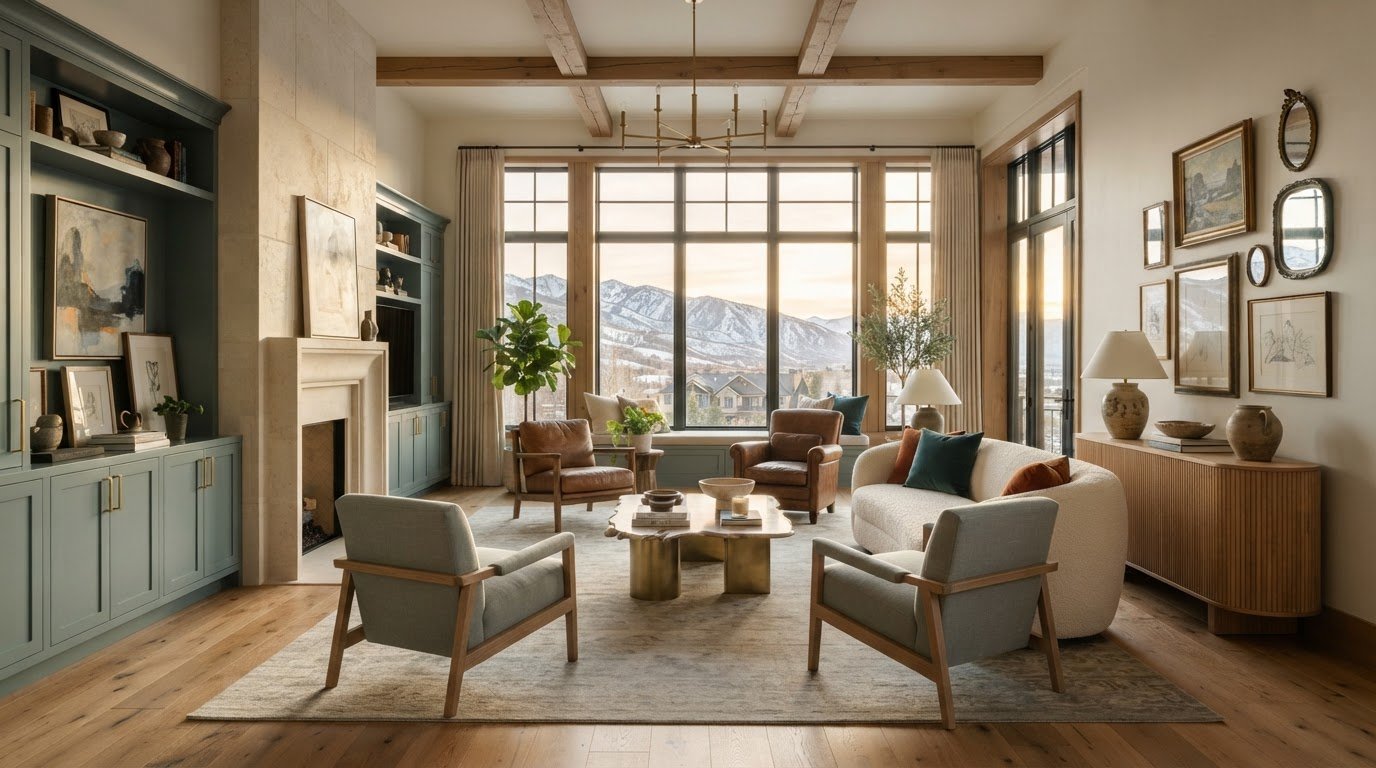
What if the best way to make your home feel current isn’t to replace everything, but to see its most meaningful details in a new light? Updating your home's interior style can start with a dated finish or a room that no longer suits your routines, while the well-loved furniture, art, and architectural features that give it character remain.
It’s natural to hesitate when one change might make nearby rooms feel out of step, or when a passing trend seems too fleeting to build a home around. A considered approach starts with what feels disconnected, then brings color, materials, lighting, and furnishings into balance. The result can feel cohesive and contemporary without losing the personal history that makes it yours.
This 2026 guide will help you decide what to refresh first, which enduring design principles can keep updates from feeling dated, and how to connect changes across your home. You’ll also find a practical way to weigh independent updates against professional design support, so each decision reflects both your space and the life you live in it.
Key Takeaways
- Updating your home's interior style can mean refining a few mismatched or dated elements, not starting from scratch.
- Create cohesion by coordinating color, materials, scale, and function while letting each room retain its own character.
- Choose the right scope for your refresh, from selective changes to a room redesign or renovation, before making commitments.
- Follow a room-by-room plan, settling foundational choices before layering in decorative details.
- Consider professional design support when multiple rooms, complex decisions, or coordination needs make a unified result harder to achieve.
Updating Your Home’s Interior Style Starts With What No Longer Fits
A home can feel subtly out of step with the people who live in it. Perhaps the dining table has become a work surface, a once-loved chair blocks the natural path through the room, or the palette no longer brings the calm you want at the end of the day. These are useful clues, not signs that everything needs replacing.
Updating your home's interior style is often a process of selective refinement: keep the elements that still serve you and adjust those that don’t. Interior design considers how a room’s arrangement, materials, light, and purpose work together. The Interior design overview offers a broader introduction to these principles and their distinction from decorating. Begin with a specific source of friction, not a trend. A new finish may look appealing, but it won’t solve a layout that makes daily routines awkward.
Before making changes, use four questions to clarify what the room needs:
- Function: Does the space support the activities that happen there?
- Visual coherence: Do the colors, materials, scale, and furnishings feel considered together?
- Comfort: Is the room pleasant to use, move through, and spend time in?
- Meaning: Which existing pieces carry personal, artistic, or enduring value?
How do you know when a room needs a style refresh?
Notice recurring discomfort, underused corners, surfaces that collect visual clutter, or furnishings that seem out of place beside the room’s proportions. Then separate practical frustrations from aesthetic preferences. A chair that’s uncomfortable is a functional concern; a color you’ve simply grown tired of is a matter of taste. Write down what you’d like to change and what already works, such as generous daylight, a useful reading spot, or a well-loved view.
What should you keep, change, or reconsider?
Look closely at furnishings, artwork, architectural details, and materials before deciding what to remove. A family table or distinctive molding may give a room its identity, even if the surrounding choices need rethinking. Consider changing elements that compete with your needs, overwhelm the room’s proportions, or undermine the atmosphere you want. For a wider perspective on balancing personal character with thoughtful decisions, explore the art of residential interior design.
The goal isn’t to preserve every object or replace every dated detail. It’s to understand why each element belongs, then make changes that give the room greater ease and harmony.
Build a Cohesive Interior Style Around Your Home’s Character
A home feels cohesive when its rooms relate through considered choices in color, materials, scale, lighting, and function. That doesn’t mean every room needs the same palette or matching furnishings. A dining room can feel expressive and a bedroom restful, while shared details create a natural sense of flow between them.
Cohesive style is a conversation between rooms, not a uniform look imposed on every room. Architecture, existing finishes, and natural light help shape that conversation. A warm wood floor may connect spaces with different wall colors, while a room with limited daylight may call for a lighter finish or carefully layered lighting. Treat these existing conditions as design cues rather than obstacles to overcome.
How do you choose a direction without copying a trend?
Start with the experience you want each room to support. Think about whether the living room should invite conversation, offer a quiet retreat, or accommodate both. Gather inspiration images, then look for recurring preferences: perhaps you’re drawn to tactile materials, muted color, sculptural forms, or a particular balance of old and new. Use those patterns as clues, not instructions to reproduce a room exactly. Ask whether a choice suits your household and home, or appeals mainly because it’s currently popular.
Which design elements help rooms feel connected?
Look for relationships rather than repetition. A color can reappear in different strengths, a wood tone can carry through adjoining spaces, and lighting can echo a shared preference for soft, warm illumination. Pay attention to transitions between flooring and finishes, the scale of furniture relative to each room, and repeated visual cues such as curved forms or framed artwork. A contrasting color or antique piece can bring individuality; a few consistent elements keep that contrast from feeling arbitrary. For a deeper foundation, explore the seven elements of interior design.
Before settling on a direction, consider how proposed changes relate to the architecture and existing finishes from room to room. If the refresh involves hiring for home improvement work, the Federal Trade Commission’s guide to avoiding home improvement scams offers practical guidance for approaching that process with care.
For a more tailored perspective on connecting materials, furnishings, and daily routines, consider Pianta Design’s residential interior design approach.
Decide Which Interior Updates Matter Most Before You Spend
A clear scope helps prevent a simple style refresh from growing into a project that changes more than your home needs. Updating your home's interior style could mean adjusting finishes and furnishings, redesigning one room around its daily use, or addressing a larger renovation. The right level depends on what’s causing the problem: a tired color scheme calls for a different response than a layout that consistently obstructs movement.
Before settling on a direction, consider the condition of the space, its functional limitations, architectural constraints, and your priorities. If a proposed change depends on moving fixed elements or replacing a finish, first confirm the home’s existing conditions and the practical requirements of the work. That understanding can shape the design plan before decisions become difficult to revise.
Is a room refresh enough, or is a renovation needed?
Use the comparison below to distinguish a visual update from a change to how the room is arranged or built. These scopes can overlap, but they involve different decisions and levels of disruption.
| Approach | Typical decisions | May suit when |
|---|---|---|
| Light refresh | Revising paint or finishes, improving lighting, editing accessories, or repositioning furnishings | The layout works, but the room feels visually tired or lacks polish |
| Room-level redesign | Reworking furniture placement, circulation, focal points, material relationships, and room-specific function | The space needs a more considered arrangement, but its basic structure can remain |
| Renovation | Changing fixed elements, finishes, or architectural features, subject to the home’s conditions and project requirements | Functional limitations or the condition of the space can’t be resolved through furnishings and surface-level changes alone |
Restraint can be a design decision. Replacing every existing item isn’t necessary for a coherent result; thoughtful editing may bring the room into balance while preserving pieces with personal meaning or lasting quality. For broader perspective on making deliberate choices about color and interior updates, explore this expert interior design wisdom from Columbia University.
How can existing furniture guide your choices?
Assess each piece for scale, condition, comfort, and visual presence. A well-made sofa that still supports daily life might need refreshed upholstery or a better position, not replacement. A cherished table may set the material palette for the rest of the room. If a gap remains, consider complementary custom furniture sized to the space rather than forcing in a standard piece. Learn more about custom furniture design when a tailored piece could resolve a specific need.
Refresh Your Home’s Interior Style With a Room-by-Room Plan
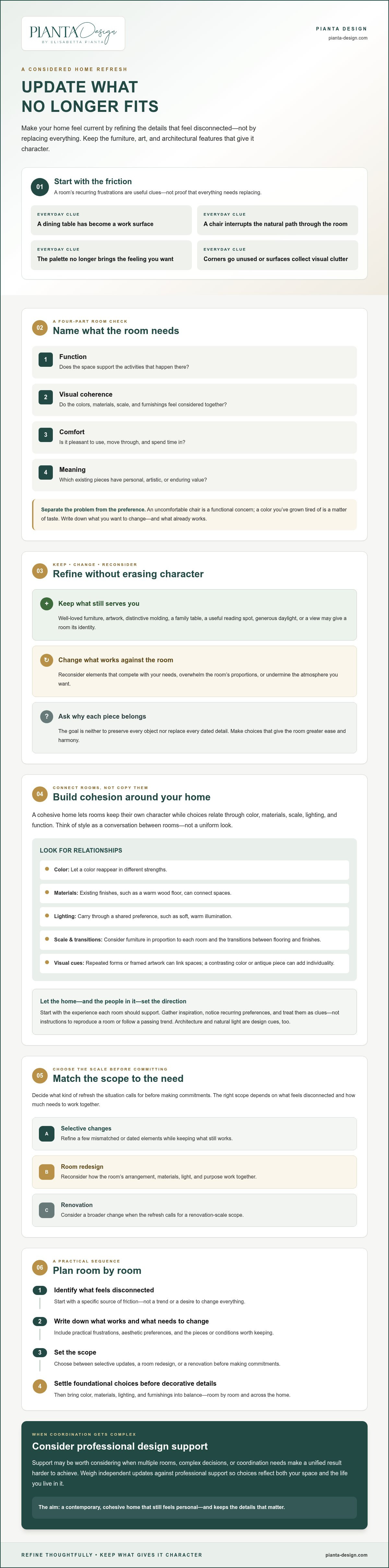
A clear sequence makes updating your home's interior style more manageable, especially when decisions in one room affect the next. Before selecting decorative accents, decide what each space needs to do and how the rooms should relate. Create a shared reference board with inspiration images, existing finishes, and examples of materials or lighting you’re considering. Pair it with a short written list of household priorities, so you can weigh appealing ideas against everyday use.
Follow the order: needs, layout, finishes, lighting, furnishings, then details. This keeps foundational decisions in place before you add decorative layers.
- Define the room’s needs. Note who uses it, what happens there, and what currently feels difficult or missing.
- Plan the layout. Consider circulation, focal points, and furniture placement before choosing accents. A reading chair, for instance, needs a comfortable position and suitable light, not just a place that looks attractive in a photograph.
- Review fixed finishes. Take stock of flooring, built-ins, architectural details, and other elements that are staying. Choose paint, textiles, and any new finishes in response to these conditions and the room’s natural light.
- Coordinate lighting. Consider how daylight changes through the space and where task, ambient, or accent lighting will support the room’s use.
- Select furnishings. Confirm that each piece suits the planned layout, proportions, comfort needs, and overall direction.
- Add and edit details. Finish with art and objects that bring personal meaning or visual interest, leaving enough breathing room for each to be appreciated.
How can regional context inform a home refresh?
Location can shape the questions you ask, but it shouldn’t dictate a signature look. In San Francisco and Miami, assess each home’s daylight, architecture, and coastal conditions individually rather than assuming every property calls for the same palette or materials. In Park City and Salt Lake City, consider the views, seasonal patterns of use, and character of the existing interior architecture. Let the home and its residents guide the choices.
Review the shared board and written priorities at each stage. If a selection appeals to one person but conflicts with the room’s function, light, or established direction, revisit it before it influences later choices. Once the room is in place, notice how it works during ordinary routines, then adjust details that feel unresolved.
For guidance connecting space planning, furnishings, finishes, and lighting across a home, explore residential interior design with Pianta Design.
When Professional Interior Design Makes a Home Refresh More Cohesive
Some updates are straightforward to make independently. Others become difficult when decisions in one room affect several others, when the layout needs rethinking, or when furniture, finishes, and lighting must be coordinated across a broader scope. In those situations, a residential interior designer can help translate separate ideas into a plan that responds to the home as a whole. That doesn’t mean every refresh needs a full-service engagement; the useful level of support depends on the decisions you’re facing.
Pianta Design brings together refined, lasting choices and modern sensibility in its residential interior design work. With more than 30 years of experience, the firm can help homeowners clarify a design direction and connect space planning, material and finish selection, lighting design, and custom furniture design. This coordinated perspective can be useful when an individual choice needs to work alongside the home’s architecture, existing pieces, and everyday routines.
What can a residential interior designer contribute?
A designer begins by understanding what the household wants to preserve, change, and achieve. Concept development can establish the overall direction; space planning can test how rooms function and relate; and considered sourcing can help align furnishings, materials, and finishes. Where the project calls for it, lighting and custom furniture design can address specific needs. The scope may focus on a single challenge or span multiple rooms, depending on the homeowner’s priorities.
The value lies in seeing how decisions interact. A fabric, for example, needs to suit the scale and use of a piece as well as the room’s palette, while lighting should support both atmosphere and practical tasks. A designer’s perspective can help prevent disconnected selections and keep valued furnishings or artwork in the conversation rather than treating them as afterthoughts.
How do you begin a considered design conversation?
Preparation doesn’t require a polished presentation. Gather photographs of the rooms, any existing floor plans, a small selection of inspiration images, and a short list of concerns. Note how each space is used, which pieces matter to you, and what you hope will feel different. These details help distinguish essential needs from ideas that are still open to exploration.
Bring questions as well as preferences. You might want to understand whether a layout can work better, how a meaningful piece could fit into a new direction, or which decisions should come first. Updating your home's interior style is a personal process, and a productive conversation starts with the life the home needs to support.
When you’re ready to discuss your home and possible design direction, explore Pianta Design.
Shape a Home That Feels Like You
A thoughtful refresh doesn’t require a complete transformation. Start with what no longer supports your routines, preserve the details that give your home meaning, and choose updates that work together across rooms. A clear sequence, from needs and layout to finishes and furnishings, helps you make decisions with purpose rather than chasing a passing trend.
Updating your home's interior style is ultimately about creating spaces that feel current because they suit the people who live in them. Some choices may be simple to make independently; more complex projects can benefit from a coordinated design perspective that brings function and character into balance.
Pianta Design brings more than 30 years of interior design experience to residential projects, with services that include space planning, custom furniture, material and finish selection, lighting design, and project management. Explore Pianta Design’s residential interiors to consider how your home’s needs might shape its next design direction.
With considered choices and a little patience, you can make room for the life you live now while keeping what makes your home distinctly yours.
Frequently Asked Questions
How can I update my home’s interior style without renovating?
You can refresh a home without renovation by rethinking furniture placement, lighting, color, textiles, and meaningful decorative pieces. Start with one room and identify what feels dated or difficult to use. Then make selective changes that work with the fixed finishes and architecture already in place. Reupholstering a valued chair, editing accessories, or improving task lighting can shift a room’s atmosphere without altering its structure.
What should I update first when refreshing a room?
Start with the room’s purpose and layout, then address finishes, lighting, furnishings, and decorative details in that order. Check how people move through the space and whether the furniture supports its daily use before choosing paint or accessories. Consider existing flooring, built-ins, and natural light as you make finish choices. Once the foundation feels resolved, art and personal objects can add character without crowding the room.
Can I mix old and new furniture in the same interior?
Yes, old and new furniture can sit comfortably together when their scale, condition, and character feel intentional in the room. Let a meaningful antique or well-loved piece guide choices such as materials, color, or silhouette. Balance it with contemporary furnishings that suit the space and your routines. Repositioning or reupholstering an existing piece may help it feel at home alongside newer selections.
How do I make different rooms feel cohesive without making them identical?
Connect rooms through a few recurring elements, such as related colors, complementary wood tones, consistent lighting character, or repeated shapes. Each space can still have its own purpose and mood. For example, a shared neutral foundation might link rooms while artwork, textiles, or accent colors vary. Consider transitions between adjoining spaces, too, so changes in flooring or finishes feel deliberate rather than abrupt.
Should I follow current interior design trends when updating my home?
Use trends as inspiration, not as a blueprint. Before adopting a popular color, material, or furniture shape, ask whether it suits your home’s architecture, your daily routines, and preferences you expect to keep. Trends can be introduced through elements that are easier to change, while lasting choices should feel right beyond the current moment. A personal reference board can help you spot enduring preferences among passing ideas.
When should I hire a residential interior designer for a home refresh?
Consider a residential interior designer when the project spans multiple rooms, involves complex decisions, or requires careful coordination among layout, furniture, materials, and lighting. Professional input can help translate household priorities into a clear design direction, though a small, well-defined refresh may be manageable independently. Pianta Design brings more than 30 years of experience to residential interiors, with services including space planning, custom furniture design, material and finish selection, and lighting design.
How can I update a home in San Francisco, Miami, or Park City?
Let each home’s architecture, light, existing finishes, and residents’ routines guide the design rather than prescribing a regional look. In San Francisco and Miami, assess each property individually, including its natural light and coastal conditions. In Park City, consider views, seasonal use, and the home’s interior architecture. Pianta Design serves homeowners in these locations, as well as Salt Lake City, with residential interior design tailored to the project’s context.
