
How to Blend Design Styles for a Cohesive Home
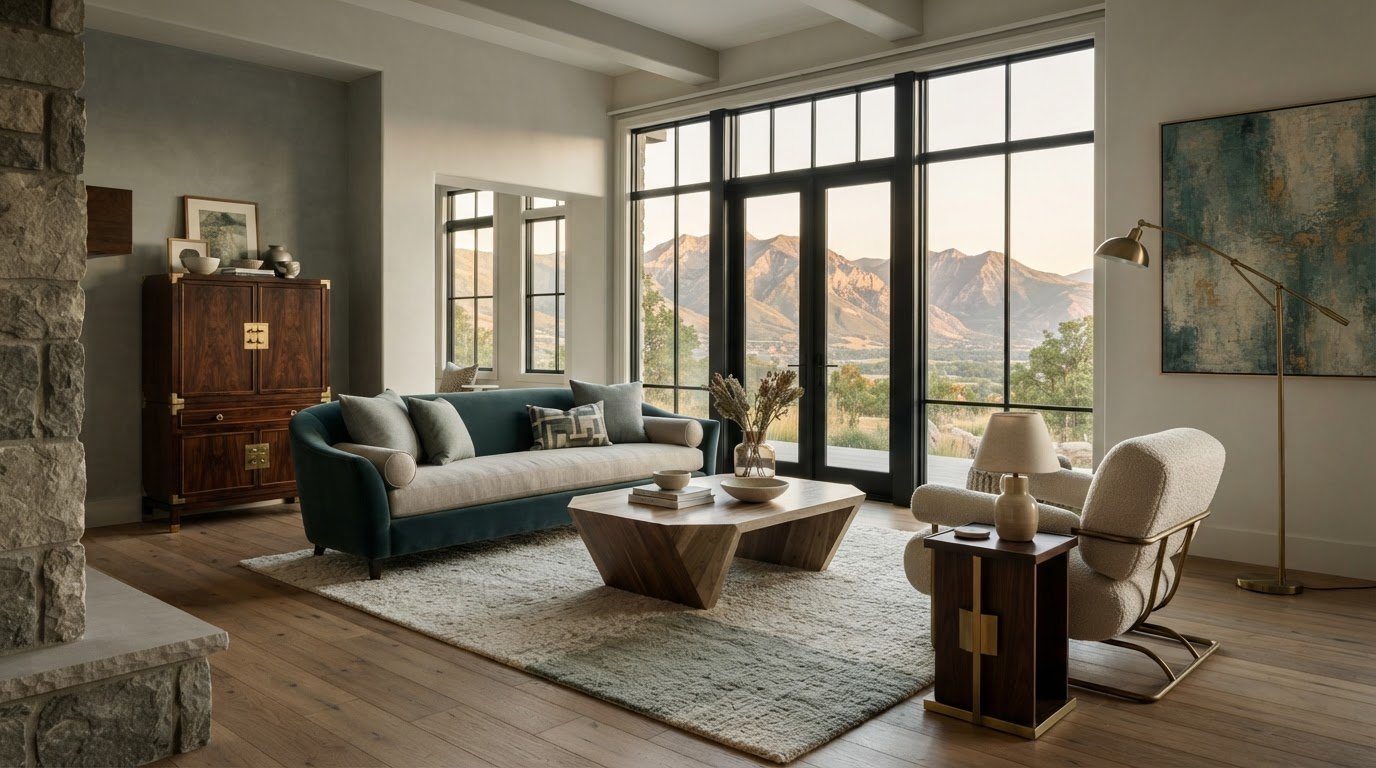
What if the pieces that seem least alike are the ones that give your home its character? An inherited wood cabinet, a sculptural contemporary chair, and vintage lighting can tell a richer story together than a room furnished in a single style. Still, it’s understandable to worry that mixing influences will look disjointed, especially when colors, shapes, and materials seem to pull in different directions. Learning how to blend different design styles seamlessly begins with finding the visual connection between them.
That connection might be a consistent palette, a repeated material, or a shared quality of line and proportion. Once you identify it, contrasting pieces can feel considered rather than competing, and treasured objects can sit comfortably alongside contemporary choices. Cohesion doesn’t require every element to match; it comes from giving each one a place within the whole.
This guide offers a practical way to combine furniture, finishes, and influences with confidence. You’ll learn how to choose a common thread, balance visual weight and texture, and refine a room without losing the character that makes it yours.
Key Takeaways
- Learn how to blend different design styles seamlessly by connecting contrasting pieces through a shared visual language rather than matching everything.
- Use palette, silhouette, scale, material, and ornament to assess whether furnishings and influences can work together.
- Build a considered plan by documenting existing pieces, their proportions, and the personal or practical reasons you want to keep them.
- Refine the room with a clear sequence of choices, then edit the arrangement so each piece has space to contribute.
- See when space planning or custom furniture may help bridge different preferences and create a more cohesive composition.
How to Blend Different Design Styles Seamlessly Without Losing Your Home’s Character
A treasured heirloom may carry years of family history, while a partner’s preference for clean, contemporary lines reflects how they want to live now. Bringing those tastes into one room can feel difficult, especially if the pieces differ in age, finish, or mood. The answer isn’t to erase those differences. It’s to find visual relationships that let them coexist with intention.
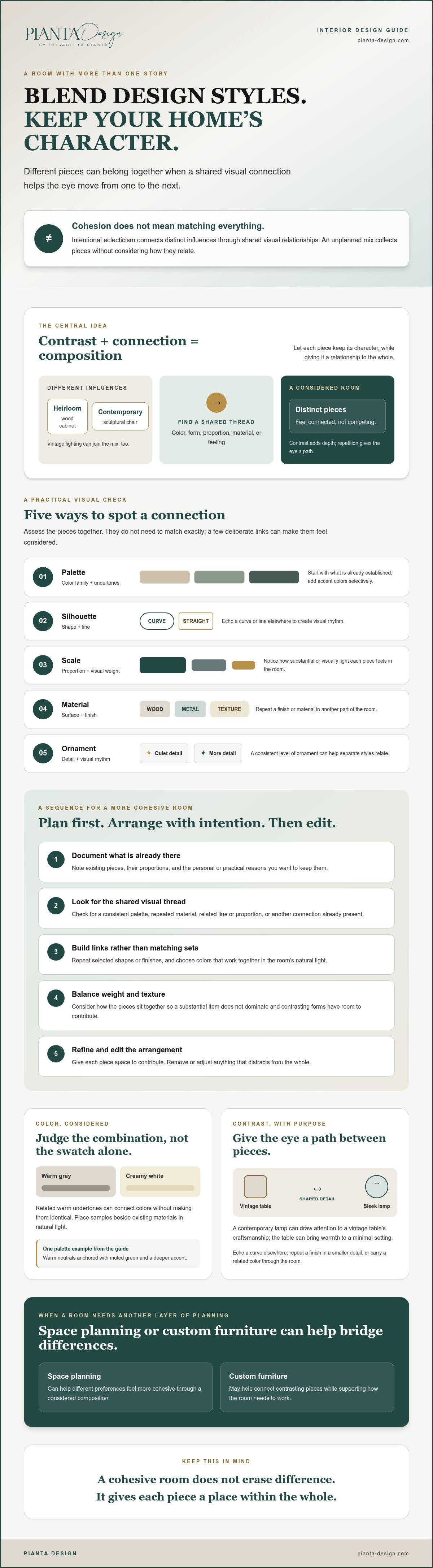
Intentional eclecticism brings distinct influences together through shared visual relationships; an unplanned mix collects pieces without considering how they relate. A room doesn’t need every object, finish, or period to match. Instead, color, scale, shape, material, and visual rhythm can create continuity across contrasting furnishings. These are among the broader interior design principles that help a space feel composed as well as expressive.
What does it mean to blend interior design styles?
Think of style as more than a label. A vintage cabinet and contemporary lighting can feel at home together if they share a warm-toned finish, similar visual weight, or a balanced contrast of solid and open forms. Repeated curves, related wood tones, or a consistent level of ornament can also link pieces without making them look like a matching set.
Eclectic design isn’t simply variety. It involves selection and arrangement: each object contributes to the room’s character, and some relationship connects it to what surrounds it. If two pieces seem unrelated, a nearby material, color, or shape may establish a connection. Without those considered links, even beautiful objects can read as a collection rather than a composition.
Why can different styles work together in one home?
Contrast gives a room depth. A sleek, contemporary lamp can draw attention to the craftsmanship of a vintage table, while the table can bring warmth to a minimal setting. Repetition creates continuity: echo a curve in another furnishing, repeat a finish in a smaller detail, or carry a related color through the room. The aim isn’t to remove contrast, but to give the eye a path between different elements.
A home may hold one person’s family pieces, another’s preferred materials, and the practical needs of daily life. Those influences can belong together without being reduced to a single aesthetic. As you consider how to blend different design styles seamlessly, first notice the relationships already present instead of adding objects to force harmony. Ask what the existing pieces share in color, proportion, texture, or feeling. That observation can reveal a more personal and persuasive direction.
Build a Shared Visual Language Across Different Design Styles
A cohesive room doesn’t depend on a single style. It depends on a few deliberate connections that guide the eye from one piece to the next. Use a simple framework: choose a palette, repeat selected forms or materials, balance visual scale, then edit anything that distracts from the whole. This gives contrasting pieces room to express their character while keeping the composition legible.
Choose a restrained palette that connects contrasting pieces
Begin with what’s already established, such as flooring, cabinetry, artwork, or a furnishing you intend to keep. Choose a dominant color family that relates to those elements, then introduce accent colors selectively. A room anchored in warm neutrals, for instance, might accommodate muted green and a deeper accent without requiring every surface to share the same hue.
Undertones can do quiet but important work. A warm gray and a creamy white may feel connected because both lean warm, even though they aren’t identical. The same principle can bring colors from different periods or traditions into conversation. Place samples beside existing materials in the room’s natural light, and assess their combined effect rather than judging each color alone. Guidance on mixing and matching furniture styles also emphasizes balancing contrast with cohesion.
Repeat shapes, materials, and proportions with intention
Repetition creates visual rhythm. Echo a curved profile in a mirror or chair, carry a wood tone into a smaller accent, or repeat a metal finish in more than one part of the room. These links don’t need to be exact matches. A few related details can be enough to make separate choices feel considered.
Scale matters just as much. A substantial traditional cabinet can dominate a room if it’s surrounded by other heavy forms; a lighter contemporary piece nearby can provide relief. Balance the cabinet with open space, slender profiles, or a restrained arrangement of smaller objects. The goal isn’t to give every item equal presence, but to distribute visual weight so no one influence overwhelms the room.
Repeated visual cues make contrasting styles feel related, even when the pieces themselves don’t match. Before adding another object, ask whether it reinforces a color, shape, material, or proportion already present. If it doesn’t, consider whether it brings enough meaning or function to earn its place. Knowing how to blend different design styles seamlessly often comes down to thoughtful editing, not adding more.
For a tailored approach to color, proportion, and furnishings, explore Pianta Design’s residential interior design.
How to Tell Whether Two Design Styles Will Work Together
Two styles don’t need to share the same history or aesthetic to belong in one room. The useful question is whether their differences can be held in balance. Compare the pieces across a few practical criteria before committing to a larger arrangement. This offers a way to assess compatibility without treating any pairing as automatically right or wrong.
Which design elements should you compare first?
Start with the room’s dominant colors and undertones, then consider silhouette, scale, material, and ornament. A carved traditional dining table and streamlined contemporary chairs, for example, could work if their finishes relate, the chairs suit the table’s visual weight, and the overall palette feels considered. A strong contrast, such as ornate craftsmanship beside clean-lined forms, can become a focal point when other elements offer continuity. The principles for mixing furniture styles likewise emphasize common ground and balance alongside contrast.
| Compare | Ask yourself |
|---|---|
| Palette | Do the dominant colors or undertones relate, even if the accents differ? |
| Silhouette | Do the shapes create a purposeful contrast, or do their outlines compete? |
| Scale | Does each piece feel proportionate to the room and to the furniture around it? |
| Material | Do the finishes support the room’s intended mood and suit everyday use? |
| Ornament | Is decorative detail balanced by simpler forms or quieter areas? |
Materials deserve both an aesthetic and a practical check. A delicate finish may not suit a frequently used surface, while a highly reflective material can draw more attention than intended. Consider how each choice will function in the room, not just how it looks beside another piece.
How much contrast is too much in a room?
Contrast begins to feel excessive when several elements demand attention at once, with no clear focal point or visual pause. This can happen when bold colors, heavily ornamented furniture, and dramatically different scales all compete. It isn’t a matter of counting styles. A room can favor one influence and use another in a smaller role; the styles don’t need equal representation.
Stand at the main entrance, then look from the room’s primary viewpoints. Notice what catches your eye first and whether it leads naturally to the next element. If unrelated palettes, awkward scale, or layers of ornament make the view feel unsettled, reduce the prominence of one competing feature or remove an unnecessary accent. This makes how to blend different design styles seamlessly a practical question: does each contrast feel deliberate within the room as a whole?
Step-by-Step Guide to Blending Styles at Home
A mixed-style room is easier to shape when you make decisions in sequence. Before shopping or moving furniture, take stock of what’s already there, agree on what matters most, and test possible connections before making lasting changes. This process helps preserve the pieces that make a home personal while giving the overall scheme a clear direction.
Start with the pieces and preferences you want to keep
Photograph existing furniture, artwork, heirlooms, and fixed finishes, including flooring and cabinetry. Make a short note beside each item: why it matters, how it’s used, and whether its size or condition affects the room. Then ask everyone who shares the home to name a few priorities and identify any non-negotiable pieces. A family chair might matter for its history; a particular table may stay because it serves daily needs.
Next, look for possible relationships among those items. Notice recurring colors, shapes, textures, and proportions before choosing anything new. For a useful foundation in how balance, color, and texture contribute to a room, see this guide to the elements of interior design.
Test the composition before committing to major changes
Gather reference images, fabric samples, and finish references on a simple mood board. Include photographs of the existing pieces you plan to keep, so you can judge proposed choices against the actual room rather than an idealized image. Look for a consistent feeling and a few visual connections, not an exact match between every reference.
Before buying or replacing furniture, assess materials and colors together in the space. Natural light shifts throughout the day, and lamps can change how a finish or fabric reads after dark. View samples near the pieces they’re meant to complement, and consider their scale from the room’s main entrance and seating areas.
- Make one change at a time. If an arrangement feels crowded, move or reduce one competing element before reconsidering the whole room.
- Keep meaning and function in view. First try a different position or pairing for a valued object instead of removing it automatically.
- Review the room as a whole. Step back between adjustments and check whether the focal points, circulation, and visual balance still feel natural.
Gather what matters, test how it relates, then edit in context. That’s a reliable sequence for turning different preferences into a thoughtful room, and it keeps decisions grounded in the home you actually live in. If space planning or custom furnishings would help bring the composition together, explore residential interior design with Pianta Design.
When Professional Interior Design Helps Different Styles Feel Cohesive
Combining styles can become more complex when preferences differ across a household, treasured pieces don’t suit the room’s proportions, or decisions in one space affect the next. A residential interior designer can help translate individual references into a shared direction, then coordinate space planning, materials, finishes, and furnishings so the result feels considered across the home, not just in one room.
What can an interior designer contribute to a mixed-style home?
Concept development turns a collection of preferences into a design direction. A designer can look beyond style labels to identify common ground in color relationships, proportions, materials, or the mood each person wants the space to have. Space planning helps determine where furnishings belong, how their scale relates to the room, and whether circulation and everyday function remain comfortable. For broader context, explore this residential interior design guide.
This coordination is especially useful when a home’s rooms connect visually. A palette or material choice in one area may influence the next, while furniture placement affects how the whole home is experienced. The aim isn’t to make every room identical. It’s to create a coherent progression in which each space retains its own character.
How custom furnishings and considered sourcing can unify a room
Sometimes the missing link is a piece designed for the exact space. A custom furnishing can draw on the shape of one existing piece and the finish or proportions of another, helping contrasting elements feel related. It can also address a practical mismatch, such as a treasured furnishing that doesn’t suit the available dimensions or the room’s layout. Learn more in this custom furniture design guide.
Considered sourcing can support that same cohesion by evaluating craftsmanship, materials, and finishes alongside the pieces already in the home. Pianta Design, led by Principal Designer Maria Pianta, brings more than 30 years of interior design experience to residential work that includes concept development, space planning, custom furniture, and material selection. The firm collaborates with Italian manufacturers on bespoke furnishings.
Pianta Design provides residential interior design in Park City, Salt Lake City, San Francisco, and Miami. If you’re weighing how to blend different design styles seamlessly across a home, professional guidance can help clarify the relationships between your preferences and the practical needs of each space. Explore Pianta Design’s residential interior design work.
Create a Home That Reflects Your Story
A cohesive home doesn’t have to follow a single design style. The most compelling combinations come from meaningful pieces connected by considered choices in color, proportion, material, and scale. Start with what you want to keep, test how new elements relate in the room, and edit thoughtfully so contrast adds character rather than visual clutter.
Learning how to blend different design styles seamlessly is less about finding a perfect match and more about creating relationships that feel natural to you. A consistent visual thread can bring together personal history, different preferences, and the comforts of contemporary living while allowing each room to retain its own character.
When you’d like support shaping those choices into a home-wide direction, Pianta Design offers residential interior design led by Principal Designer Maria Pianta, who brings more than 30 years of experience. Services include concept development, space planning, custom furniture, and project management. Explore Pianta Design’s residential interior design approach.
With a clear vision and room for the pieces that matter, you can create a home that feels balanced, personal, and distinctly yours.
Frequently Asked Questions
Can you mix different interior design styles in one room?
Yes, different interior design styles can work together in one room when a few visual relationships connect them. Look for common ground in color undertones, material, shape, or proportion, then let one element provide contrast. For example, a vintage cabinet and contemporary lighting may feel balanced if their finishes or visual weight relate to other details in the space. Cohesion comes from thoughtful connections, not making every piece match.
How many design styles can you mix in one home?
There’s no fixed number of styles a home can include. What matters is whether the influences feel connected across rooms through a considered palette, repeated materials, or related shapes. If each room introduces several unrelated colors, finishes, and focal points, the home may feel unsettled. Start with the pieces and preferences that matter most, then add other influences selectively, checking how each choice relates to the whole.
How do you blend modern and traditional furniture?
Blend modern and traditional furniture by balancing their silhouettes, scale, finishes, and visual weight. A substantial traditional piece can sit comfortably beside a lighter modern form if the room has enough space and another detail, such as a related wood tone or color, connects them. Let one contrast stand out, then keep surrounding elements more restrained. Consider how the materials will look together and how each piece serves the room’s daily needs.
How do I combine different interior design styles with my partner?
Begin by having each person identify the furnishings, colors, and qualities they most want to keep, along with why they matter. Separate non-negotiable pieces from preferences that can adapt, then look for shared priorities such as warmth, simplicity, or particular materials. A mood board can help both partners assess options together before purchasing. Agree on a few connecting elements, rather than expecting every room or object to represent each person equally.
What is the 80/20 rule in interior design?
The 80/20 rule is a flexible design guideline: use one dominant style or visual direction for most of a room, then introduce a smaller proportion of contrasting elements for character. It isn’t a required formula, and the proportions don’t need to be measured literally. Think of it as a reminder to give the room a clear foundation while choosing accents with intention. Adjust the balance to suit your space and the pieces you value.
How do I make an eclectic room look cohesive rather than cluttered?
Give the room a clear visual thread and edit anything that competes with it. A restrained palette, repeated material, or recurring shape can help varied furnishings feel related. Choose a focal point, leave space around important pieces, and avoid giving every object equal attention. Step back and view the room from its main entrance. If your eye jumps between too many unrelated details, reduce or reposition one element before adding anything else.
Should furniture match when mixing different design styles?
No, furniture doesn’t need to match for a room to feel cohesive. Instead, connect selected details, such as similar undertones, a repeated finish, or complementary proportions. Matching every piece can make a space feel overly uniform, while unrelated choices without a connecting element may appear accidental. Consider how each item works with the room’s scale and function. For homes in Park City, Salt Lake City, San Francisco, or Miami, the same principle applies: relate the pieces, not necessarily the styles.
