
Post-Renovation Interior Styling: How to Make a Newly Updated Home Feel Complete
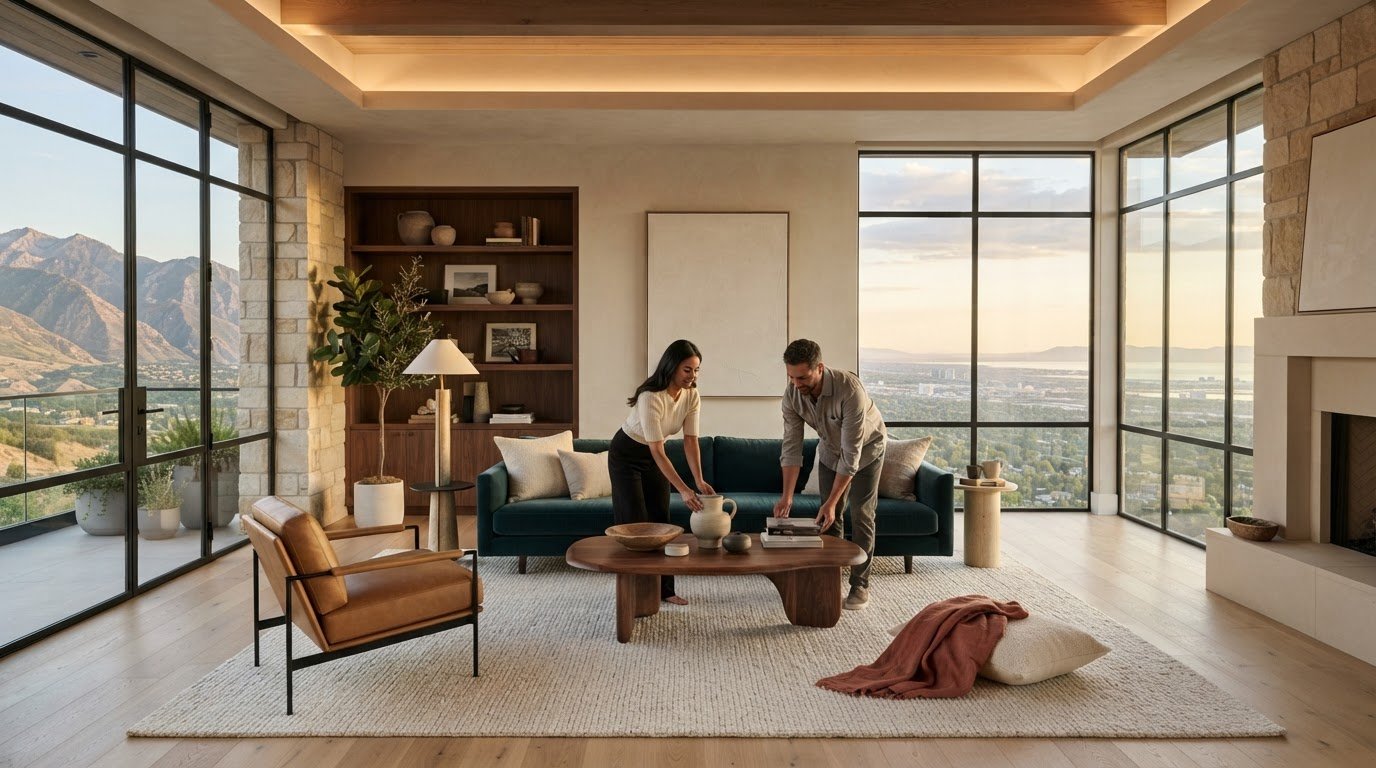
A renovation may not be the final step in making a home feel finished. Fresh surfaces and considered architectural details can transform a room, yet the space may still feel bare or disconnected once the work is done. Post-renovation interior styling adds the next layer, bringing the architecture into conversation with furnishings, light, and the details of daily life.
It’s natural to want to fill an empty room quickly, but choosing pieces before considering their scale, purpose, and relationship to the home can leave the result feeling less cohesive. A thoughtful sequence makes the process more manageable and helps each decision support both the design and the way your household lives.
In this guide, you’ll learn how to move from the architectural foundation to a balanced, comfortable interior. We’ll cover how to assess a room, select appropriately scaled furnishings, layer lighting, introduce textiles, and choose art and finishing details that feel personal. The aim isn’t to complete every room at once, but to create a home that feels harmonious, lived-in, and true to you.
Key Takeaways
- Assess what the renovated rooms already offer, then identify where function, warmth, or visual connection is still missing.
- Follow a deliberate order, from layout and anchor furnishings to lighting, textiles, art, and finishing details.
- Choose furnishings for their proportions and everyday purpose. Judge each piece in relation to the room, not by a product photograph alone.
- Style one room or connected zone at a time to build a coherent direction throughout the home.
- Consider design support when coordinating furniture, lighting, materials, or art feels complex. Professional guidance can complement the renovation without replacing construction work.
Post-renovation interior styling: begin by reading the rooms you have
A renovation can refine a home’s architecture without making every room feel settled. New floors, fresh wall finishes, and carefully placed built-ins create a strong foundation, but furnishings, soft materials, art, and lived-in details add warmth and purpose. A room may feel sparse not because anything is wrong, but because the layers that connect it have yet to be introduced.
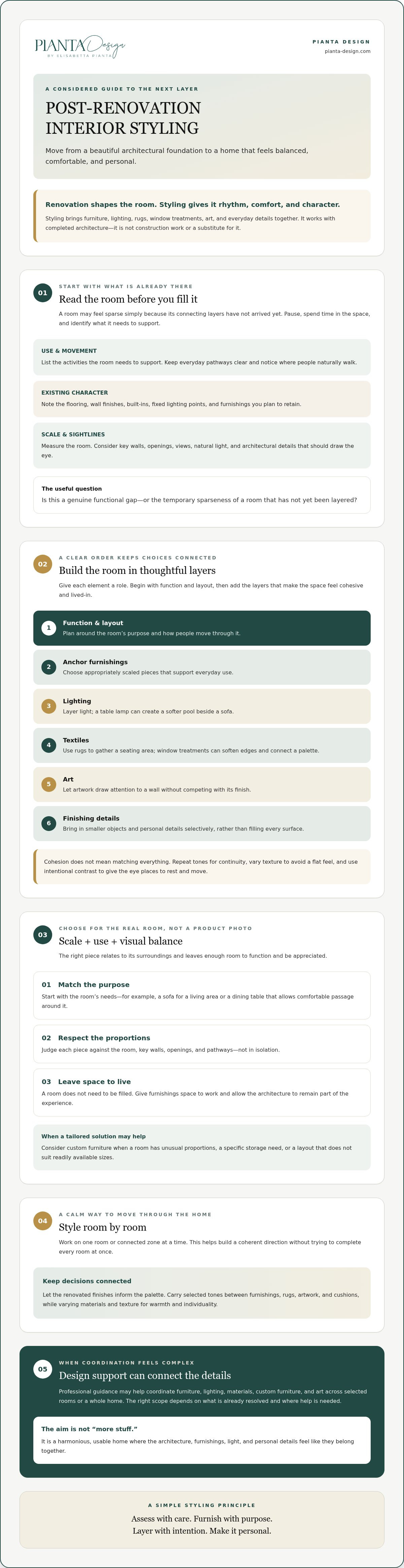
Renovation shapes the room; styling gives it rhythm, comfort, and character. Post-renovation interior styling is the process of furnishing and layering completed spaces. It is not construction work or a substitute for it. Start with what’s already there: the room’s proportions, natural light, architectural features, and the routines it needs to support. For an overview of how spatial planning and aesthetics work together, explore Interior design.
What does post-renovation interior styling include?
Styling brings together furniture, lighting, rugs, window treatments, art, and accessories so a room feels cohesive and usable. A rug can define a seating area on an open floor. A table lamp can add a softer pool of light beside a sofa. Art can draw attention to a wall without competing with its finish. These choices work with the completed architecture rather than changing the room’s structure.
A focused styling project may address furnishings and finishing layers in selected rooms. A broader interior design engagement can also connect space planning, materials, lighting, custom furniture, and art across a home. The right scope depends on what’s already resolved and where you need help.
How to assess a newly renovated room before furnishing it
Pause before shopping. Spend time in the room at different points in the day. Notice how you use it, where people naturally walk, and which window, view, fireplace, or architectural detail should draw the eye. A room that looks empty in a photograph may need one well-scaled anchor piece, not a collection of smaller objects.
Make a brief room record before choosing furnishings:
- Use and movement: List the activities the room must support and keep everyday pathways clear.
- Existing character: Record flooring, wall finishes, built-ins, fixed lighting points, and furnishings you plan to retain.
- Scale and sightlines: Measure the room and note the proportions of key walls, openings, and views.
This pause helps you distinguish a genuine functional gap from the temporary sparseness of a room that hasn’t yet been layered. Once you understand the architecture, each choice can feel intentional rather than like an attempt to fill space.
Build a cohesive interior by layering function, texture, light, and personality
A room feels complete when its layers relate to one another, not when every surface holds something. Keep the process clear: begin with function and layout, place the anchor furnishings, then add lighting, textiles, art, and smaller objects. Each choice should have a role, whether it supports a daily routine or adds warmth and individuality to the renovated architecture.
A cohesive room isn’t made by matching every element. It emerges from the thoughtful relationships between them. Let the existing renovation finishes inform the palette without dictating it. A stone surface might suggest a warm neutral or a subtle contrasting color, while timber flooring can work with linen, wool, or ceramics. Repeating a tone in a rug, artwork, and cushions creates continuity. Varying texture keeps the room from feeling flat, while intentional contrast gives the eye places to rest and move.
Which furnishings and textiles should come first?
Start with how the room needs to work and how people move through it. Choose appropriately scaled anchor pieces, such as a sofa for a living area or a dining table that allows comfortable passage around it. Then consider the rug and window treatments. A rug can gather furniture into a purposeful arrangement, while curtains or shades soften hard edges and connect the room’s palette.
Standard furniture can work beautifully, but a room’s dimensions or daily needs may call for a more tailored solution. Consider custom furniture design if the room has unusual proportions, a specific storage need, or a layout that doesn’t suit readily available sizes. The aim is not to fill every space, but to give each piece room to function and be appreciated.
How do lighting, art, and collected objects finish a room?
Layer light around the room’s activities and existing electrical points. Ambient lighting provides general illumination, task lighting supports reading or work, and accent lighting can draw attention to art or architectural details. Several thoughtfully placed sources offer more flexibility than relying on a single overhead fixture.
Hang art in relation to furniture, sightlines, wall proportions, and natural focal points. For example, a piece above a console should feel connected to the furniture beneath it rather than stranded high on the wall. Finish with a small, edited selection of meaningful objects. Leave some surfaces clear, and let personal pieces add character without competing for attention.
If you’re coordinating furnishings, finishes, lighting, and art across connected rooms, integrated residential interior design can help bring those decisions into a coherent whole.
Choose post-renovation furnishings by scale, use, and visual balance
A renovated room doesn’t need an entirely new inventory. Keeping a well-made chair, dining table, or treasured cabinet can give a refreshed interior continuity and personal meaning. Ask whether each piece suits the room as it is now: its proportions, circulation, finishes, and the way your household uses it. In post-renovation interior styling, a few carefully chosen additions may create more harmony than replacing everything at once.
Ready-made furnishings come in established sizes and forms, while custom furniture can respond to a particular dimension, storage requirement, or focal role. Neither is automatically the better choice. Compare pieces by fit, function, material, and how they relate to what you’re keeping. A durable upholstery fabric, for example, can still feel refined when its texture and color complement the room’s stone, wood, or other finished surfaces.
How can you tell whether furniture is the right scale?
Measure before ordering, not after delivery. Record the room dimensions, doorways, circulation paths, and the footprint available for each piece. Check how a table’s height and proportions relate to its chairs, and whether people can move comfortably between seating, doors, and adjoining spaces. Product photographs rarely show these relationships clearly, so compare dimensions with your own room rather than relying on appearance alone.
Use a floor plan to test an arrangement, or mark the proposed footprint on the floor with painter’s tape. If possible, try temporary placement with existing pieces before committing. Sit, walk through, and notice whether the layout supports how you live. These checks can help prevent a handsome piece from overwhelming a room or interrupting its flow.
When should you consider custom furniture or bespoke details?
Custom design may be worth exploring when a room has unusual dimensions, standard storage doesn’t meet a specific need, or one piece should anchor the space. A tailored console can make use of a narrow wall; a built-in may provide storage without crowding a compact room. Material and craftsmanship choices can also help a new piece sit naturally beside retained furnishings and renovation finishes.
For a deeper look at when tailored proportions and details can be useful, explore the article on custom furniture design. Whether you choose ready-made or custom pieces, base the decision on measurement, everyday use, and visual balance. Thoughtful selection helps a renovated home feel considered without erasing the character it already holds.
Follow a room-by-room styling sequence without undoing the renovation
A clear sequence helps you make considered choices without crowding new architecture or buying pieces that don’t belong. In post-renovation interior styling, work through one room or connected zone at a time, carrying a consistent palette and material sensibility from space to space. This lets you see how each decision relates to the home as a whole while keeping the process focused.
Before sourcing replacements, take inventory of what you already own. An heirloom cabinet, favorite chair, or well-used table may bring the personal character a newly renovated room needs. Consider its condition, scale, and relationship to the finishes. Not every older piece will suit every space, but age alone isn’t a reason to discard it.
What should you measure and decide before sourcing?
Start with a practical room record: dimensions, doorways, circulation routes, existing furnishings, storage needs, and the activities the room must support. Then rank priorities by comfort, function, visual impact, and frequency of use. A family room used every day may need a seating arrangement before decorative accessories; a rarely used guest room may call for a more modest first pass.
Before shopping, write a short visual direction for the room. Note a few preferred materials, tones, and forms, along with any finishes or furnishings you’re keeping. Then follow this order:
- Inventory and prioritize: Identify what stays and what the room needs most.
- Measure and plan: Check furniture footprints, pathways, and clearances.
- Place anchor pieces: Establish the main arrangement around the room’s use.
- Layer thoughtfully: Add lighting, then textiles and art.
- Edit: Bring in selected personal objects and remove anything that feels redundant.
Finish each room or connected zone before moving on. This gives you a chance to assess proportions and comfort in place, rather than making decisions for the entire home from isolated product images.
How can styling reflect a home’s location without feeling themed?
Location is context, not a decorating prescription. Homes in San Francisco, Miami, Park City, and Salt Lake City may differ in architecture, daylight, views, or material conditions, but the property itself should guide the choices. Observe its orientation, windows, existing finishes, and quality of light instead of assuming every home in a city has the same needs. For example, assess the actual daylight before settling on textile colors or window treatments.
For a broader perspective on connecting a home’s character with the way its residents live, explore residential interior design with Pianta Design.
When a post-renovation interior designer can bring the details together
You may be comfortable styling a room yourself when its layout is clear, the key furnishings fit, and you have time to make decisions gradually. Professional guidance can help if connected rooms feel inconsistent, furniture choices are difficult to judge, or you’re coordinating lighting, materials, art, and retained pieces across the home. Post-renovation interior styling doesn’t require replacing everything or committing to a comprehensive redesign. The right level of support depends on what’s already resolved and where decisions feel uncertain.
A residential interior designer can bring an integrated perspective to those open questions. Space planning can refine furniture placement and circulation, while material and finish selection, lighting design, art consultation, and custom furniture design can connect individual choices to the home’s architecture and daily use. These are options to consider, not a checklist of services every homeowner needs. Pianta Design is led by Principal Designer Maria Pianta, who brings more than 30 years of industry experience to residential design.
What can a residential interior designer contribute after construction?
Once construction is complete, the focus shifts to how the finished rooms function and feel. A designer can help assess whether a seating arrangement supports conversation, whether lighting suits the room’s activities, and how art or furnishings relate to existing finishes. If a space needs a tailored piece, custom furniture design may be relevant. If the rooms already work well, the priority might be a more coherent selection of lighting or art. The scope can reflect the home’s actual needs rather than a predetermined package.
How to prepare for a post-renovation design conversation
A little preparation makes it easier to discuss practical needs and the atmosphere you want to create. Gather room measurements, renovation plans if available, photographs, and a list of furnishings or heirlooms you hope to keep. Note what feels unresolved, such as an awkward circulation path, insufficient storage, or a room that feels too formal for everyday use. Describe the qualities you’d like the spaces to convey, such as calm, welcoming, quietly expressive, or suited to gathering.
These observations provide a useful starting point for discussing how the home can support your routines while reflecting its architectural character. For a conversation about your home’s next design chapter, explore residential interior design with Pianta Design.
Let the renovated home become fully your own
A newly updated home comes into balance through choices that respect its architecture and support the way you live. Post-renovation interior styling works best as a considered progression: understand the rooms, choose furnishings for their scale and purpose, then bring light, textiles, art, and personal details into a coherent whole. You don’t need to replace everything. Retained pieces and meaningful objects can give finished spaces a sense of history and belonging.
If coordinating those decisions feels difficult, design expertise can help connect the details without making every service or purchase essential. Pianta Design, led by Principal Designer Maria Pianta, brings more than 30 years of interior design experience to work spanning space planning, custom furniture, lighting, materials, and art consultation.
Explore residential interior design with Pianta Design and consider how your home might better reflect your daily routines and the atmosphere you want to create. With thoughtful choices made at a measured pace, renovated rooms can become comfortable, cohesive, and unmistakably yours.
Frequently Asked Questions
What is post-renovation interior styling?
Post-renovation interior styling is the process of furnishing and layering rooms after construction is complete. It brings finished architecture into everyday use through choices such as furniture, rugs, window treatments, lighting, art, and accessories. Unlike construction work, styling doesn’t change the room’s structure. It works with existing features and finishes to create spaces that feel comfortable, cohesive, and personal.
How do you style a home after a renovation?
Begin by assessing how each room is used, where people move, and which features deserve attention. Record dimensions, existing finishes, and furnishings you plan to keep. Set priorities, then choose anchor pieces that suit the room’s proportions and routines. Add lighting, textiles, and art in relation to those furnishings, then edit smaller objects. Working room by room helps keep the home’s overall direction consistent.
When should I start styling after a renovation?
Start when the work affecting a room is complete and you can take reliable measurements. Confirm that key features, such as built-ins and lighting points, are in place before committing to furniture or window treatments. You don’t need to furnish every room at once. Let your priorities guide the pace: begin with spaces you use most, then move to lower-priority rooms as time and decisions allow.
Can I keep my existing furniture after renovating?
Yes. Assess each piece by its condition, scale, function, and relationship to the renewed interior rather than replacing everything by default. A well-made chair or family cabinet may bring welcome character if it fits the room and supports how you use it. Check its dimensions against circulation and other furnishings, and consider whether its material, color, or finish works with the renovated surfaces.
How do I make renovated rooms feel cohesive?
Give the home a shared visual direction, then carry a few materials, tones, or shapes between rooms. For instance, a warm wood tone might appear in furniture and a frame, while varied textiles and finishes add depth without making everything match. Keep the architecture and existing finishes in view, and use contrast selectively. Cohesion comes from thoughtful relationships between elements, not identical furnishings in every room.
Should I hire an interior designer after a renovation?
Consider professional help if you’re unsure how to arrange furniture, coordinate sourcing, or connect lighting, materials, and art across several rooms. You can also manage the process yourself if your needs are clear and you’re comfortable making decisions gradually. Pianta Design, led by Principal Designer Maria Pianta, brings more than 30 years of experience to residential design. For homes in Park City, Salt Lake City, San Francisco, and Miami, the property’s architecture and light can inform those choices.
What should I buy first when furnishing a renovated room?
Before buying, measure the room, doorways, and intended furniture footprints, then consider daily activities and clear pathways. Prioritize an anchor furnishing, such as a sofa for a living room or a dining table for meals, because its dimensions influence the rest of the arrangement. Test the layout on a floor plan or with temporary markers. Add decorative objects only after the room’s essential functions and proportions feel resolved.
