
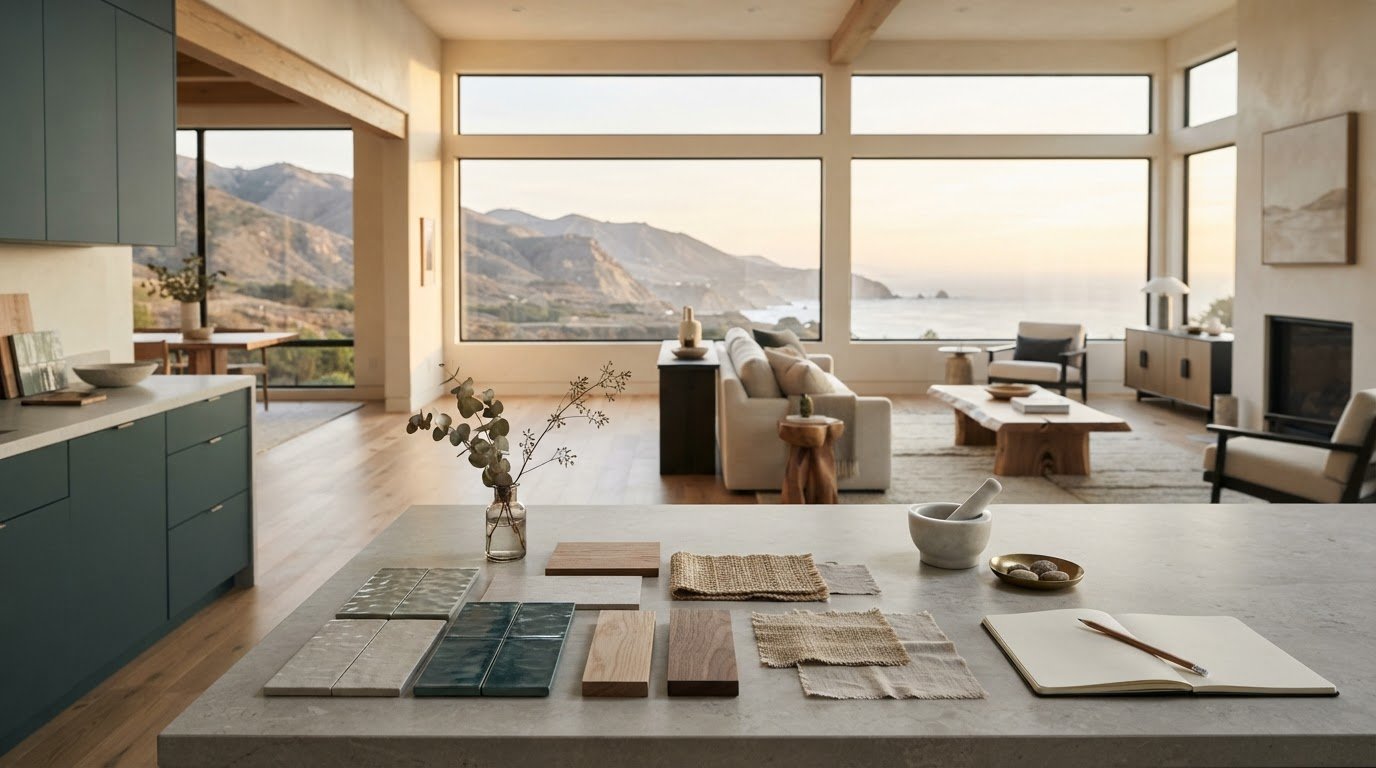
What if a beautiful finish came with a claim you couldn’t easily verify? When specifying non-toxic materials for a healthy home, labels such as “low-VOC” can be useful, but they don’t tell the whole story. “Non-toxic” has no single, universal meaning. A product’s ingredients, emissions, durability, and care requirements all matter. It’s understandable to want choices that feel reassuring without sacrificing comfort, character, or lasting performance.
A more confident approach starts with documentation and clear priorities. This guide explains what ingredient disclosures, emissions information, and certifications can tell you, and how to compare them without treating any one label as a complete answer. You’ll also learn how to focus on the rooms and materials most relevant to your household, then coordinate those choices with the home’s palette, function, and long-term design intent. The result is a practical, room-by-room framework for making considered selections while preserving an elegant, cohesive interior.
Key Takeaways
- Separate ingredient disclosures, indoor-air emissions, and exposure considerations to understand what a material claim actually tells you.
- Compare paints, flooring, cabinetry, adhesives, upholstery, rugs, and mattresses using consistent criteria for documentation, performance, care, and design.
- When specifying non-toxic materials for a healthy home, treat certifications as evidence against defined criteria, not as universal guarantees.
- Prioritize selections room by room, balancing household needs and project scope with durability, maintenance, and available documentation.
- Integrate material choices with the home’s palette, function, and long-term design intent for a cohesive result.
What Does Specifying Non-Toxic Materials for a Healthy Home Really Mean?
“Non-toxic” can sound like an absolute promise: a material contains no harmful chemicals and poses no risk. That’s not a reliable way to interpret the term. Materials are made from chemical substances, and a broad label alone doesn’t explain which ingredients are present, what may be released into indoor air, or how people might encounter them in daily life.
A useful definition: Specifying a non-toxic material means making a considered choice based on available ingredient and emissions information, how the material will be used, and the needs of the people in the home. It’s a decision-making approach, not a guarantee of absolute safety. Ingredient transparency and safety claims are not interchangeable: a disclosure can help you understand a product, while a claim needs context and supporting evidence.
It also helps to distinguish hazard from risk. A substance’s hazard profile describes its potential to cause harm under certain conditions; real-world risk depends in part on exposure, including how much contact occurs, by what route, and for how long. A hazard finding by itself doesn’t establish the level of risk in a particular room or use. That’s why specifying non-toxic materials for a healthy home means looking beyond a single ingredient or label to the full product and its intended application.
How materials can affect the indoor environment
Potential exposure pathways include inhaling substances released into the air, skin contact with a surface, and contact with dust that can collect on furnishings or floors. These are considerations, not proof that a specific material will cause harm. Emissions can vary with formulation, installation conditions, ventilation, and time after installation, so weigh product information alongside where and how the material will be used.
Ground decisions in specific documentation rather than generalized wellness language. An ingredient disclosure or emissions report addresses a more defined question than an unqualified phrase such as “clean” or “chemical-free.” The aim is not to create alarm around everyday materials, but to compare evidence carefully and make proportionate choices.
Why a healthy-home specification is room-specific
Each room places different demands on its finishes. In a bedroom, you may focus on materials near the sleeping area and the room’s ventilation. In a kitchen, moisture, frequent cleaning, and surface durability may matter more. High-use living areas call for a balance of regular contact, maintenance, and comfort. Household sensitivities and project scope also shape priorities.
A room-by-room approach lets you weigh documentation alongside function, care, and atmosphere, rather than applying one material rule uniformly throughout the home. Thoughtful residential interior design brings these distinct needs into a coherent whole, aligning material choices with the home’s palette, daily rhythms, and long-term design intent.
Which Materials Should You Compare When Specifying a Healthier Home?
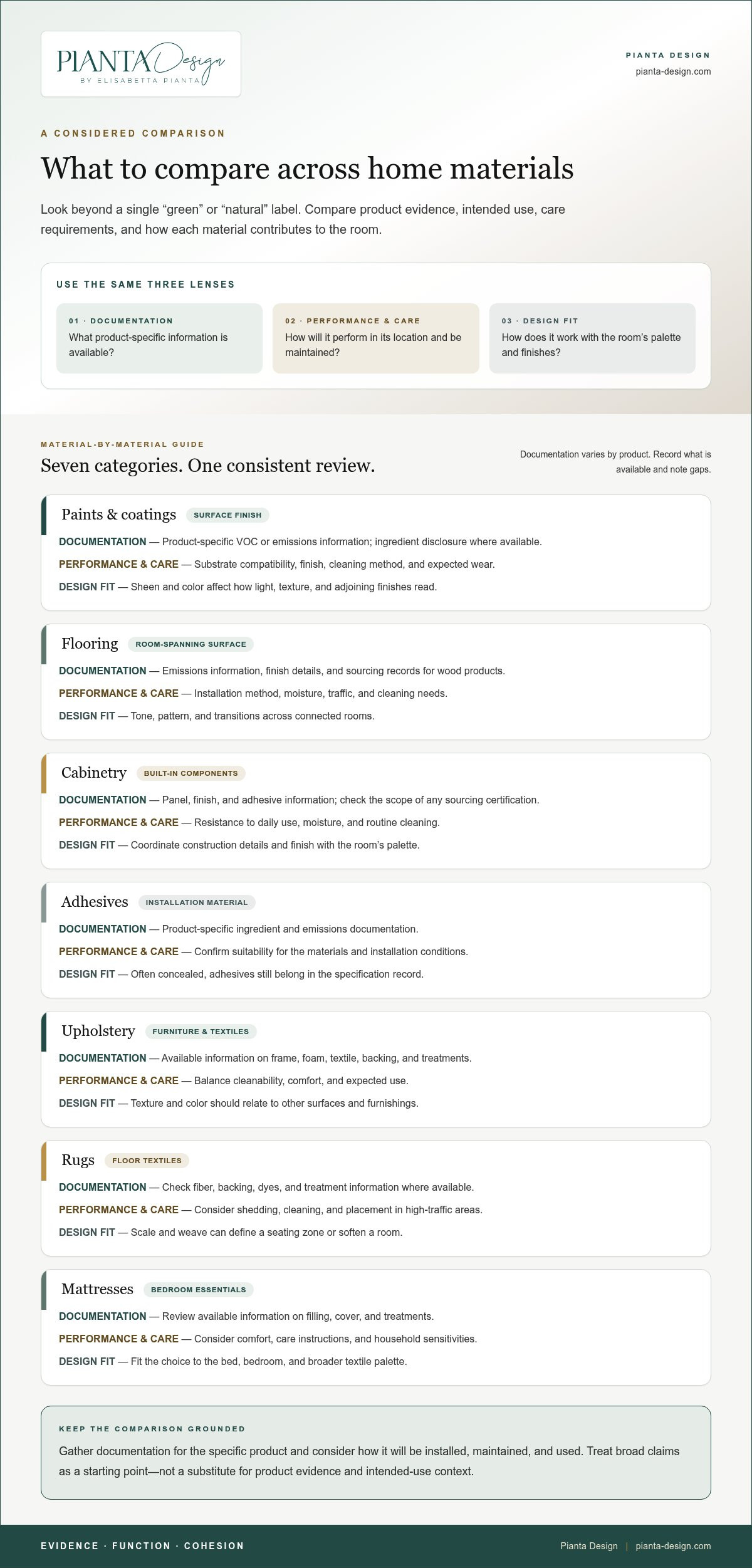
A useful comparison looks beyond a single “green” or “natural” label. Gather documentation for the specific product and consider how it will perform in its intended location, how it will be installed and maintained, and how it contributes to the home’s visual language. Material selection depends on both product evidence and intended use.
The table below offers a consistent starting point. Documentation varies by product, so record what’s available and note gaps rather than assuming a broad claim applies to every component.
| Material category | Documentation to compare | Performance and care | Design considerations |
|---|---|---|---|
| Paints and coatings | Product-specific VOC or emissions information; ingredient disclosure where available. | Review substrate compatibility, finish, cleaning method, and expected wear. | Sheen and color affect how light, texture, and adjoining finishes read. |
| Flooring | Emissions information, finish details, and sourcing records for wood products. | Consider installation method, moisture, traffic, and cleaning needs. | Assess tone, pattern, and transitions across connected rooms. |
| Cabinetry | Panel, finish, and adhesive information; check the scope of any sourcing certification. | Compare resistance to daily use, moisture, and routine cleaning. | Coordinate construction details and finish with the room’s palette. |
| Adhesives | Product-specific ingredient and emissions documentation. | Confirm suitability for the materials and installation conditions. | Often concealed, adhesives still belong in the specification record. |
| Upholstery | Available information on frame, foam, textile, backing, and treatments. | Balance cleanability, comfort, and expected use. | Texture and color should relate to other surfaces and furnishings. |
| Rugs | Check fiber, backing, dyes, and treatment information where available. | Consider shedding, cleaning, and placement in high-traffic areas. | Scale and weave can define a seating zone or soften a room. |
| Mattresses | Review available information on filling, cover, and treatments. | Consider comfort, care instructions, and household sensitivities. | Fit the choice to the bed, bedroom, and broader textile palette. |
Paints, finishes, flooring, and adhesives
Low-VOC information can help compare products, but it isn’t a complete safety verdict or a substitute for other product-specific evidence. Evaluate a finish alongside its substrate and installation method. The same coating may serve different purposes on different surfaces, and cleaning requirements and expected wear affect whether it remains appropriate over time. For wood, review sourcing documentation and the specific materials covered by any certification.
Furniture, upholstery, rugs, and bedding
Look beyond the visible textile. A furniture specification may include the frame, foam, fabric, backing, and treatments; rugs and mattresses likewise have components that deserve separate consideration. Natural origin alone doesn’t establish suitability for every household or use. Component-level decisions also affect comfort, care, durability, and appearance, as explored in these custom furniture design considerations.
For research that can help frame material questions, the Healthy Materials Lab offers resources on healthier building materials. A considered specification brings evidence and aesthetics together, selecting finishes that serve each room while supporting a cohesive whole. Pianta Design’s residential material and finish selection coordinates material choices with a home’s functional and visual goals.
How to Compare Non-Toxic Labels, Certifications, and Material Claims
A label is most useful when you know what it evaluates. A certification applies to defined criteria, product types, and verification scope; it doesn’t automatically cover every component, finish, or use of an item. As you compare products, distinguish independently documented certification from a manufacturer’s own statement, then check what evidence supports broader marketing language. This turns specifying non-toxic materials for a healthy home into a clear review of claims rather than a search for one perfect seal.
What certifications and emissions labels can tell you
Programs address different questions. GREENGUARD certification concerns chemical emissions, including volatile organic compounds, while GREENGUARD Gold sets stricter limits. For textiles, OEKO-TEX and GOTS may appear in product documentation, but their names alone don’t establish which textile, component, or criterion is covered. Check the current program requirements and the specific product’s certification scope before comparing labels. They aren’t interchangeable, and a certification is evidence against defined criteria, not proof that an item is universally safe or chemical-free.
Regulatory or public-health guidance can help put a product claim in context, but it should match the material and issue being assessed. For example, wood-composite products raise different documentation questions from upholstery textiles. The HUD Healthy Homes Program offers guidelines and resources for creating healthier living environments. Use authoritative guidance to frame a decision, not to imply that a particular product has been endorsed or certified.
How to read a product specification sheet
Start by confirming that the document identifies the exact product and version being considered. Then check the date, the applicable test or certification, and which parts of the product are included. A furniture label, for instance, may not describe its frame, foam, covering, backing, and treatments equally. If a certificate applies only to a textile, don’t assume it covers the entire upholstered piece.
- Product identity: Match the name, model, finish, and relevant components to the selection under review.
- Evidence: Note the test or certification cited, its issuing program, and the product categories it covers.
- Scope and date: Check whether the documentation applies to the whole product or only one component, and when it was issued or updated.
- Gaps: Record missing ingredient or emissions details as unknowns. A gap is not proof of harm, but it limits what you can conclude from the available evidence.
Compare like with like: an emissions result doesn’t answer every ingredient question, and an ingredient disclosure doesn’t establish performance in every installation. Record the claim, supporting document, scope, and unresolved details alongside practical considerations such as durability and care. That makes selections easier to review as the project develops.
Careful residential design brings these details into conversation with function, finish, and visual continuity. Explore Pianta Design’s residential design services as part of a coordinated approach to choosing materials across the home.
A Practical Checklist for Specifying Materials Across Your Home
A clear process turns health priorities into choices that can be compared, coordinated, and carried through a project. Begin with the rooms and materials that matter most, then weigh available documentation alongside performance, care, and design. This makes specifying non-toxic materials for a healthy home a practical exercise in setting priorities, recording decisions, and reviewing what is ultimately installed.
Set priorities before choosing finishes
Start with how the household lives. Note known sensitivities, children or pets, maintenance preferences, and the demands of each room. Separate essential criteria, such as a particular type of product documentation or suitability for a frequently cleaned surface, from preferences such as color, texture, and visual continuity. Include ventilation and installation conditions in planning, while recognizing that they don’t guarantee the absence of exposure.
- Define project scope. Identify which rooms and materials are part of the work. In a focused renovation, prioritize the surfaces being replaced; in a whole-home project, coordinate choices across connected spaces.
- Rank room-specific needs. Consider how each space is used, its moisture and cleaning demands, how much wear materials will receive, and any household sensitivities. A bedroom and a busy kitchen may call for different priorities.
- Set essential criteria. Decide which documentation, performance needs, and care requirements a selection must meet. Keep aesthetic preferences visible too, but distinguish them from the conditions a material needs to satisfy.
- Compare specific products. Review product identity and available ingredient, emissions, sourcing, or certification information alongside durability, installation method, maintenance, and finish. Compare like with like, and record what remains unknown.
- Review before installation. Check that the selected product matches the project record, including its finish and intended location. If a substitution is proposed, evaluate it against the criteria and design role of the original rather than accepting it on appearance alone.
Document selections and manage substitutions
Keep a shared specification record with the manufacturer, exact product name, composition details where available, relevant product sheets and certification records, finish schedule, intended room, and approval status. The interior design elements of color, texture, proportion, and light help ensure that documented material choices also contribute to a coherent interior.
Specification rule: Document the exact product and approved alternatives before installation. For each alternative, state which attributes must remain consistent, such as documented criteria, intended use, performance, care, finish, and visual relationship to surrounding materials. Preserve the reason for any change and its supporting records. This creates a clear reference for project review and helps selections stay aligned as work progresses.
Pianta Design’s residential design services bring household priorities and design intent into a coordinated material plan.
How Pianta Design Integrates Material Selection Into a Healthy-Home Vision
A thoughtful material plan begins well before a finish is chosen. It takes shape through concept development and space planning, where household priorities, the purpose of each room, and the desired atmosphere become part of one residential design vision. Material and finish selection then supports that vision, connecting product information with the tactile and visual character of the home.
For Pianta Design, specifying non-toxic materials for a healthy home is part of a broader design conversation, not a promise that any single finish can guarantee wellness. Product documentation informs decisions alongside function, craftsmanship, care, and the way materials relate across rooms. With more than 30 years of interior design experience, the firm brings material choices into an individualized process shaped around each home and the people who live in it.
Bring health priorities and design intent into one brief
Household priorities can become room-by-room criteria: the kinds of product information that matter, the maintenance a surface must accommodate, and the durability needed for daily use. Those criteria sit alongside the palette, textures, and visual continuity that give an interior its distinctive character. A finish that suits a quiet bedroom may not be the most practical choice for a frequently used kitchen, so selections are considered in context rather than isolation.
Craftsmanship and bespoke sourcing can also help align material choices with a project’s proportions and design intent. Pianta Design collaborates with Italian manufacturers for craftsmanship and bespoke solutions, bringing that expertise into consideration where it serves the project. The aim is a considered balance: a well-documented selection that also feels composed, comfortable, and enduring within the home.
Move from material schedule to a finished interior
Once selections are made, a clear schedule can record the exact products, finishes, intended locations, and supporting documentation. That record gives the design team a shared reference as the project advances. Concept work establishes direction; space planning clarifies how rooms function; material specifications connect those decisions to surfaces and furnishings. Project management helps carry documented selections through implementation and keep decisions aligned with the design intent.
Coordination matters at every scale. The tone of a floor influences how cabinetry reads; upholstery and rugs shape the balance of texture in a living area; repeated finishes can create continuity without making each room feel identical. If a selection changes, the documented criteria and intended design role provide a basis for considering alternatives rather than relying on a broad marketing claim or appearance alone.
With careful planning, health priorities and a refined interior can inform the same set of decisions. The result is not a claim of perfect safety, but a cohesive home shaped by attention to evidence, performance, care, and beauty. Begin your residential design journey with Pianta Design to bring those considerations into a thoughtful design conversation.
Specifying Non-Toxic Materials for a Healthy Home: Shape a Home That Reflects What Matters Most
The next step doesn’t need to be a whole-home transformation. It can begin with a single room, a renovation already on your horizon, or a clearer picture of how you want your home to feel and function. Bring those priorities into the design conversation early, so material decisions can support daily life while contributing to an interior that feels considered and distinctly yours.
Specifying non-toxic materials for a healthy home isn’t about pursuing a flawless label or a one-size-fits-all solution. It’s about making thoughtful choices, understanding what available information can tell you, and shaping those choices around the people and spaces they serve. With careful design, evidence and elegance can belong together.
Begin your residential design journey with Pianta Design, and take the first step toward a home shaped with intention, beauty, and care.
Frequently Asked Questions
Is low-VOC paint the same as non-toxic paint?
No. “Low-VOC” describes volatile organic compound content or emissions according to a particular basis; it doesn’t address every ingredient or possible exposure route. A paint may have low reported VOC content while containing other additives a household may wish to understand. Compare documentation for the exact paint and finish, and consider the room and application. Treat “low-VOC” as one useful data point, not a synonym for “non-toxic.”
Can natural materials still cause allergies or sensitivities?
Yes. Natural origin doesn’t rule out an individual reaction or sensitivity. For example, someone may find a particular plant fiber, wood species, or natural latex unsuitable, even if its source is renewable or minimally processed. If a household member has a known sensitivity, use that information as a selection criterion and consider how the material will be touched, cleaned, or placed in the room. A healthcare professional can advise on personal medical concerns.
How long do new materials release VOCs into a home?
There isn’t one reliable timeline for every product. Emissions depend on the material’s formulation, how it’s installed, ventilation, and time, so a general number would be misleading. For a specific selection, look for product-specific emissions information and any manufacturer guidance on installation or occupancy. During work, follow applicable product instructions and maintain appropriate ventilation. A smell fading isn’t, by itself, a measurement of emissions or a complete indicator of indoor air conditions.
Are certified materials completely chemical-free?
No. Certifications assess defined attributes under a program’s criteria; they don’t mean a product contains no chemicals. A certification might address emissions for a particular product category, while another program may focus on textile attributes. Check which product and components the documentation covers, along with the certification’s stated scope. Use a label as evidence for the criteria it evaluates, not as a blanket guarantee about every aspect of a product.
Which rooms should I prioritize when choosing healthier materials?
Start with the rooms included in your project where people spend substantial time or have frequent contact with new surfaces. A bedroom renovation, for instance, may put attention on finishes and furnishings near the sleeping area; a kitchen refresh may focus on cabinetry, coatings, and installation materials. Then consider household sensitivities, room use, and available documentation. Priorities can differ across the home, so a phased project can address the most relevant spaces first.
Do rugs and upholstered furniture matter in a healthy-home material plan?
Yes. Rugs and upholstered pieces bring fibers, backing, fillings, finishes, and cleaning requirements into daily use. A large rug in a frequently used family room has different placement and maintenance considerations from a small decorative rug in a rarely used space. For upholstery, look beyond the visible fabric to available information about the frame, padding, and treatments. Choose materials and care routines that suit the household and the way each room is used.
What does a material specification schedule include?
A schedule links each selection to its place in the design: product and manufacturer, finish or color, intended room, relevant documentation, and any approved alternative or change. It can also record the current document version and selection status, helping prevent an earlier option from being mistaken for the final choice. For residential projects in Park City, Salt Lake City, San Francisco, and Miami, Pianta Design integrates material and finish selection into a coordinated design plan.
