
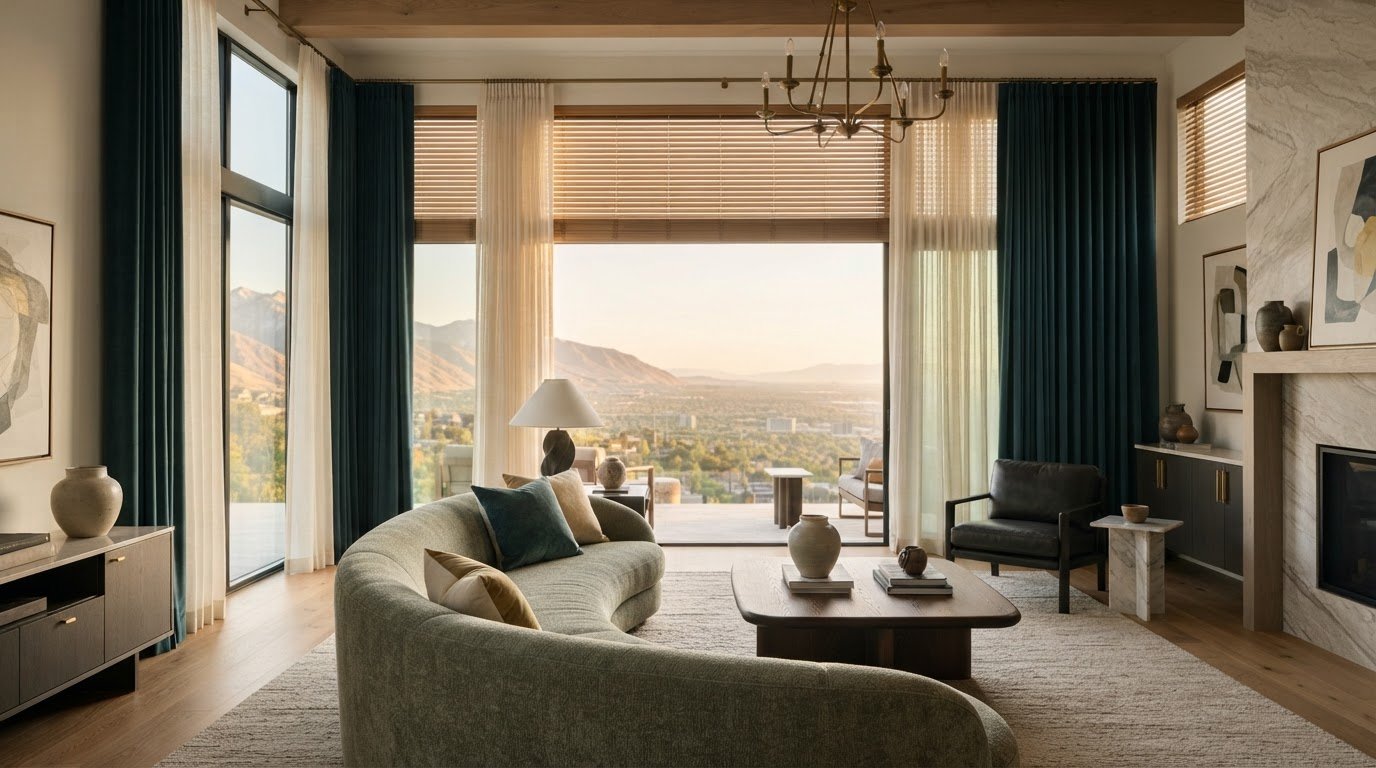
What if the best way to create privacy isn’t to cover the window completely, but to understand what it needs to do throughout the day? When selecting window treatments for privacy and style, it’s natural to want seclusion without sacrificing the sunlight, openness, or visual character that make a room feel welcoming. Start by checking sightlines and daylight, then choose a treatment that suits the architecture and furnishings.
This guide compares the privacy and daylight trade-offs of shades, blinds, curtains, and layered combinations. It also explains how to account for each room’s use, nearby views, and daily routines, so a bedroom can feel restful and a living space can stay bright without feeling exposed. Use the practical checks below to compare options, then consider how fabric, texture, and proportion connect each treatment to the wider interior.
Key Takeaways
- Start with the room’s purpose, nearby sightlines, and daylight before choosing a window treatment.
- Compare drapery, shades, blinds, and shutters by how they balance privacy, light adjustment, and visual presence.
- Privacy and natural light aren’t always competing goals; opacity, coverage, adjustable slats, and layering shape the balance.
- Assess window orientation, floor level, surrounding buildings, and daily routines room by room.
- When selecting window treatments for privacy and style, coordinate tone, material, and visual weight with the room’s finishes and furnishings.
Selecting Window Treatments for Privacy and Style Starts with the Room
Before choosing a fabric, finish, or silhouette, decide what each window needs to do. Window treatments are functional and decorative: they shape privacy and daylight while influencing a room’s scale, texture, and visual character. A beautiful treatment that leaves a street-facing room feeling exposed, or dims a space that depends on natural light, may not serve the home well.
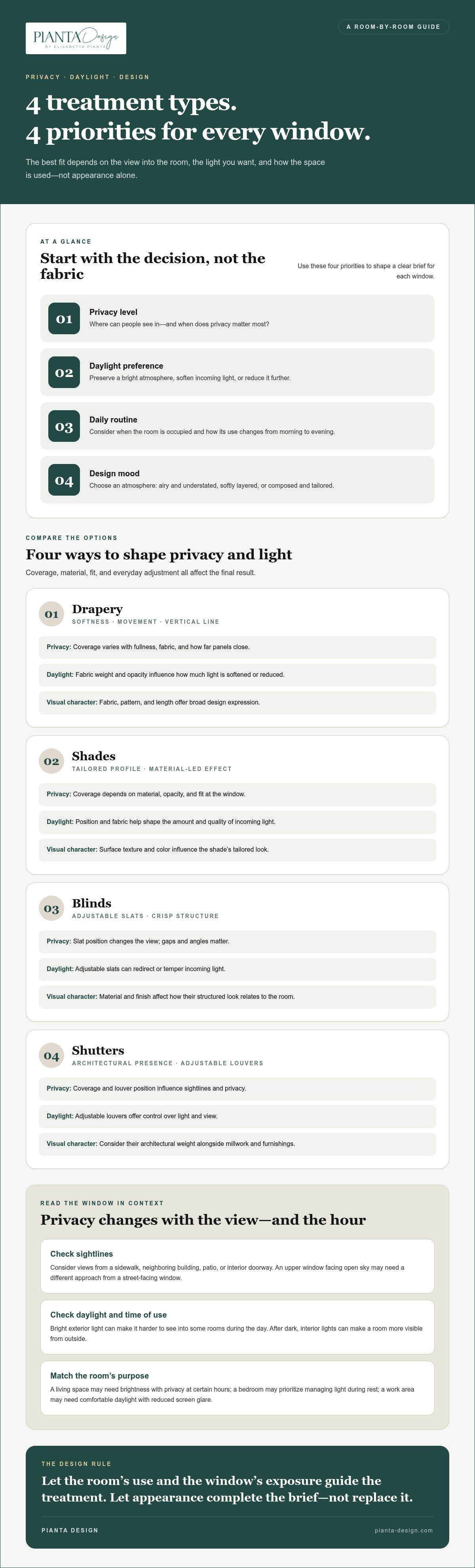
Let the room’s daily use and the window’s exposure guide the treatment; appearance should complete the brief, not replace it. Privacy isn’t simply present or absent. It changes with the view into the room, the time of day, and the balance of light indoors and outside.
What does privacy mean at different windows?
A street-facing window has different sightlines from an interior doorway. Check what someone could see from a sidewalk, neighboring building, or patio where people regularly spend time. Then consider views between rooms: a treatment that softens a direct view from a hallway may be unnecessary on an upper window facing open sky.
Light changes the equation. During the day, a bright exterior can make it harder to see into some rooms; after dark, interior lights can make the room more visible from outside. Consider the window in the conditions when the room is actually used. The treatment’s material, coverage, and position all matter. Blinds come in different forms and materials that affect how they adjust light and views; this overview of types of window blinds and their functions offers useful background.
How should daylight and room function shape the brief?
First, distinguish between wanting softened daylight and wanting to reduce light more substantially. A living space may benefit from a bright, open feeling while needing privacy at certain hours. In a bedroom, managing light during rest may matter more. A work area might call for comfortable daylight with reduced glare on screens. These are priorities, not prescriptions: the right balance depends on the room, its exposure, and how you use it.
Write a short brief for each window before comparing treatments. Make it specific:
- Privacy level: Note where views into the room come from and when privacy matters most.
- Daylight preference: Decide whether you want to preserve a bright atmosphere, soften incoming light, or reduce it further.
- Routine: Consider when the room is occupied and how its use changes from morning to evening.
- Design mood: Describe the atmosphere you want, such as airy and understated, softly layered, or composed and tailored.
This room-by-room brief turns a broad design decision into clear priorities. When comparing options, ask how each one handles the specific sightline, light level, and routine you noted, rather than choosing from appearance alone.
Compare Window Treatment Types by Privacy, Light, and Style
Each treatment category offers a different visual language and way to manage a window, but the category alone won’t tell you exactly how private or bright a room will feel. Treatment type points to a set of possibilities; material, construction, fit, and everyday use determine the final privacy outcome. Use the comparison below as a starting point, then weigh the details against the window and the wider interior.
| Treatment | Typical privacy control | Daylight adjustment | Visual presence and flexibility |
|---|---|---|---|
| Drapery | Coverage varies with fullness, fabric, and how far the panels close. | Fabric weight and opacity influence how much light is softened or reduced. | Adds softness and a strong vertical line; fabric, pattern, and length offer broad design expression. |
| Shades | Coverage depends on the shade’s material, opacity, and fit at the window. | Position and fabric help shape the amount and quality of incoming light. | Often has a tailored profile; surface texture and color influence its visual character. |
| Blinds | Slat position changes the view through the window, though gaps and angles matter. | Adjustable slats can redirect or temper incoming light. | Can read as crisp and structured; material and finish affect its relationship to the room. |
| Shutters | Coverage and louver position influence sightlines and privacy. | Adjustable louvers offer control over light and view. | Make a more architectural statement and can relate closely to existing millwork. |
When do drapery and shades make sense?
Drapery brings softness, movement, and a considered vertical line, making it a natural way to frame a window and complement the room’s proportions. Shades offer a more tailored appearance, with a broad range of material and coverage effects. For either, consider opacity and fit: a sheer textile and a closely woven one shape light and privacy differently, while gaps around the edges can affect coverage. For general industry perspectives on window coverings and design, explore the Window Coverings Association of America.
How do blinds and shutters differ in character?
Blinds use adjustable slats to help shape incoming light and sightlines, giving them a responsive, defined character. Shutters have a more architectural presence, so consider their visual weight alongside existing millwork, trim, and furnishings. Ask whether their lines complement these details or make the window feel more prominent than intended. The right balance depends on the room’s proportions and overall design.
When selecting window treatments for privacy and style, compare the whole composition, not just the material sample. A soft drapery panel may balance a room with substantial built-in details, while a streamlined treatment may sit more quietly among expressive furnishings. Pianta Design’s residential interior design work considers window choices alongside layout, finishes, and lighting, helping bring practical needs and a room’s character together.
The Privacy-versus-Daylight Trade-Off: What to Consider
Privacy and natural light aren’t always an all-or-nothing choice. The balance depends on how a treatment is made and used: fabric opacity affects how much light passes through, coverage influences views around the edges, and adjustable slats can change the angle of both light and sightlines. Layering can provide more than one setting, though it adds visual and practical considerations.
These details don’t guarantee a particular level of privacy. What’s visible depends on the material, lighting on each side of the window, and the viewer’s position. Start with two questions: how should the room feel during the day, and what needs to change after dark?
How do day and night change privacy needs?
During daylight, a bright exterior and a dimmer interior can make a window feel more screened from outside. After sunset, lamps and overhead lighting may make the room more visible, even with the same treatment in place. Observe the window at the hours you use the room, and check sightlines from places where people pass or gather.
Daytime screening might mean softening a direct view while preserving a sense of openness. Evening expectations may call for fuller coverage. The two needs can coexist, but may require different positions or layers.
Can layered window treatments offer more flexibility?
Yes. A decorative layer, such as drapery, can bring softness and color, while a separate light-filtering layer provides another way to adjust the window through the day. Open one layer to welcome daylight, then draw both when you want a more enclosed mood. The result depends on fabric, fit, and how the layers overlap.
Layering also takes up visual and physical space. Check whether the combined fabrics feel balanced with the furnishings, whether the hardware aligns neatly, and whether there’s enough wall space for panels to sit without crowding doors, built-ins, or artwork.
Use these trade-offs to compare possibilities rather than expecting one treatment to solve every need:
- Sheer or more open materials: Can preserve a light, airy feel, but may provide less screening, depending on lighting and viewpoint.
- More opaque coverage: Can reduce light and views through the window, while making the room feel more enclosed when drawn.
- Adjustable slats: Let you change the direction of incoming light and the view, though the angle and spacing influence what remains visible.
- Layered treatments: Offer different configurations for different moments, but require careful coordination of fabric, hardware, and visual weight.
For a practical test, look from both sides of the window at the times privacy matters most. Note whether you want to preserve a view, soften incoming light, or create fuller coverage. This makes selecting window treatments for privacy and style a more informed design decision, with daylight and evening privacy considered together.
A Room-by-Room Process for Choosing the Right Treatment
A repeatable assessment helps turn a broad set of options into a considered choice for each window. Record what the room needs, observe its exposure, then judge materials in the context of the full interior. This grounds selecting window treatments for privacy and style in how the home is actually used.
What should you assess before narrowing the options?
Start with the room’s main activity, its privacy concern, and the quality of daylight you’d like to preserve. Note window orientation, floor level, nearby buildings, and outdoor areas that may create sightlines. Look from inside and, where possible, consider the view toward the window from outside. Record architectural details, window proportions, nearby furnishings, and any existing hardware that could affect the composition.
- Document the room. Note its primary use, the times it’s occupied, and whether its atmosphere should feel bright, restful, intimate, or formal. Include practical constraints, such as furniture positioned close to the window.
- Map sightlines. Mark views from sidewalks, neighboring buildings, shared outdoor spaces, and interior passages. Floor level and window orientation can change how exposed a room feels, so assess each opening individually.
- Assess daylight. Observe how natural light moves through the room during the hours you use it. Notice where direct sun falls, which areas feel dim, and whether screens, artwork, or seating receive glare.
- Compare treatment types. Use your notes to weigh drapery, shades, blinds, shutters, or a layered approach. Compare likely coverage, ways to adjust light, and how each option relates to the window’s shape and surrounding details.
- Review the whole composition. Consider the treatment alongside flooring, wall finishes, upholstery, furnishings, trim, and hardware. Plan how it will look both open and closed, then include measuring and installation planning in the project sequence.
How can you judge whether a choice suits the interior?
View material samples in the room, not just under showroom lighting. Hold them beside flooring, upholstery, and wall finishes, and compare them at different times of day; daylight can reveal shifts in color and texture. Check the treatment’s visual weight against the window and furnishings. A substantial fabric may feel balanced with generous proportions, while a quieter finish can preserve a sense of openness.
Consider the full silhouette in both positions. When open, the treatment should sit comfortably beside the view and surrounding trim. When closed, its color, texture, and scale become a more prominent part of the room. These details connect to the seven elements of interior design, where line, color, texture, and space work together to shape a cohesive interior.
For a home that would benefit from a coordinated, room-by-room design approach, explore Pianta Design’s residential interior design, where layout, finishes, and light can be considered as part of one composed interior.
Bring Privacy and Style Together with a Cohesive Design Plan
A home feels connected when its rooms share a quiet visual logic, not when every window is dressed identically. Treatments can vary to suit privacy, daylight, and the character of each room while still relating through a restrained palette, repeated textures, or consistent hardware finishes. One room might call for a softer fabric presence, another for a more tailored profile; a shared tone or material cue can help them feel part of the same composition.
How can treatments feel connected across a home?
Begin with the transitions between spaces. In adjoining rooms, related colors, finishes, or fabric textures can create continuity, especially where several windows are visible at once. Consider the visual weight of each treatment alongside trim, flooring, and furnishings. A substantial treatment may anchor a generous room, while a lighter profile can preserve openness in a compact space.
Then let each room’s needs guide the specific choice. A private bedroom and a light-filled living room may call for different levels of coverage, even if they share a palette. The goal is a considered rhythm: repeated details establish harmony, while differences in form and function keep the home from feeling overly uniform.
When can an interior designer add value to the decision?
Window treatments influence more than the view. Their scale affects how a window relates to nearby furniture, while color and texture connect the opening to flooring, wall finishes, and other materials. Space planning helps account for circulation and furniture placement; material selection gives the treatment a deliberate relationship to the surrounding finishes. Considering these choices together can prevent a practical decision from feeling disconnected from the room’s architecture or intended atmosphere.
Pianta Design brings more than 30 years of residential interior design experience to the composition of a home, considering layout, materials, and light as connected elements. Its design services include space planning, material and finish selection, lighting design, and project management. This broader perspective is useful when rooms have different needs but should still feel cohesive. It frames selecting window treatments for privacy and style as part of shaping the interior, rather than a finishing choice made in isolation.
As you refine your plan, look across the home and ask what should remain consistent, what should respond to each room, and how the treatments will relate to the furnishings and finishes already in place. A residential design plan can bring those practical and aesthetic considerations together in a cohesive vision.
Shape a More Considered Home, One Window at a Time
A window treatment can influence how a room feels throughout the day and across the seasons. Treat the decision as part of the home’s design: choose a direction that respects each room’s character while contributing to a calm, connected whole. Selecting window treatments for privacy and style is less about finding a single perfect covering and more about creating a home that supports the way you live.
For homes in Park City, Salt Lake City, San Francisco, and Miami, Pianta Design brings window choices into a broader residential design plan, connecting them with the character and composition of the interiors.
Explore Pianta Design’s residential interior design to bring window treatments, space planning, and material choices together in a cohesive home design.
Frequently Asked Questions
Can window treatments provide privacy while still letting in natural light?
Yes, some treatments can soften views while allowing daylight into the room, though the result depends on fabric, fit, lighting, and the angle of view. For example, a light-filtering shade may preserve a bright atmosphere better than a fully opaque covering, but it may not provide the same privacy after dark. Think about the specific view you want to soften, and assess samples in the room’s actual light.
What window treatment is best for privacy at night?
A treatment with more opaque material and coverage suited to the window can offer greater evening privacy, but no category guarantees the same result in every setting. A shade or drapery panel may work differently depending on gaps at the edges and how it’s positioned. Before settling on a choice, turn on the room’s usual lamps after dark and check the window from likely outside viewpoints.
Are blinds or shades better for privacy?
Neither is automatically better. Blinds let you angle slats to alter light and sightlines, while shades provide coverage according to their material, opacity, and fit. For a window facing a close neighboring building, adjustable slats may be useful if you want to redirect the view; a shade may suit a simpler, uninterrupted look. Compare how each option performs at the hours the room is occupied.
How do I choose window treatments for a street-facing room?
Start by checking what passersby can see at standing and seated height, including views through the window from an entrance or sidewalk. Consider whether you want daytime screening, evening coverage, or both. In a living room, you might preserve a view from the sofa while giving the window fuller coverage after dark. Selecting window treatments for privacy and style means accounting for those different situations, not just the window’s appearance.
Can I use different window treatments in different rooms?
Yes. Different rooms can have distinct treatments while still feeling connected through a shared palette, finish, or fabric texture. A bedroom’s needs may differ from those of a dining area, and matching every window could ignore those differences. Instead, choose each treatment for its room, then repeat a subtle design detail across adjoining spaces. From a hallway, notice how the choices read together rather than judging each window alone.
How do I make window treatments match my interior design?
Compare samples with the materials already in the room, including flooring, upholstery, wall finishes, and trim. Look at them in daylight and under evening lighting, then consider both the open and closed appearance. A home in Park City, Salt Lake City, San Francisco, or Miami can benefit from the same design principle: Pianta Design coordinates window choices with space planning and material selection for a cohesive interior.
Should window treatments be installed inside or outside the window frame?
Either placement may suit a window, depending on its depth, trim, nearby hardware, and the look you want. An inside-frame position keeps the treatment visually close to the window, while an outside-frame placement can create a different sense of coverage and proportion. Before deciding, note handles, locks, sills, and adjoining walls, then consider how the placement will relate to the room’s architecture and furnishings.
