
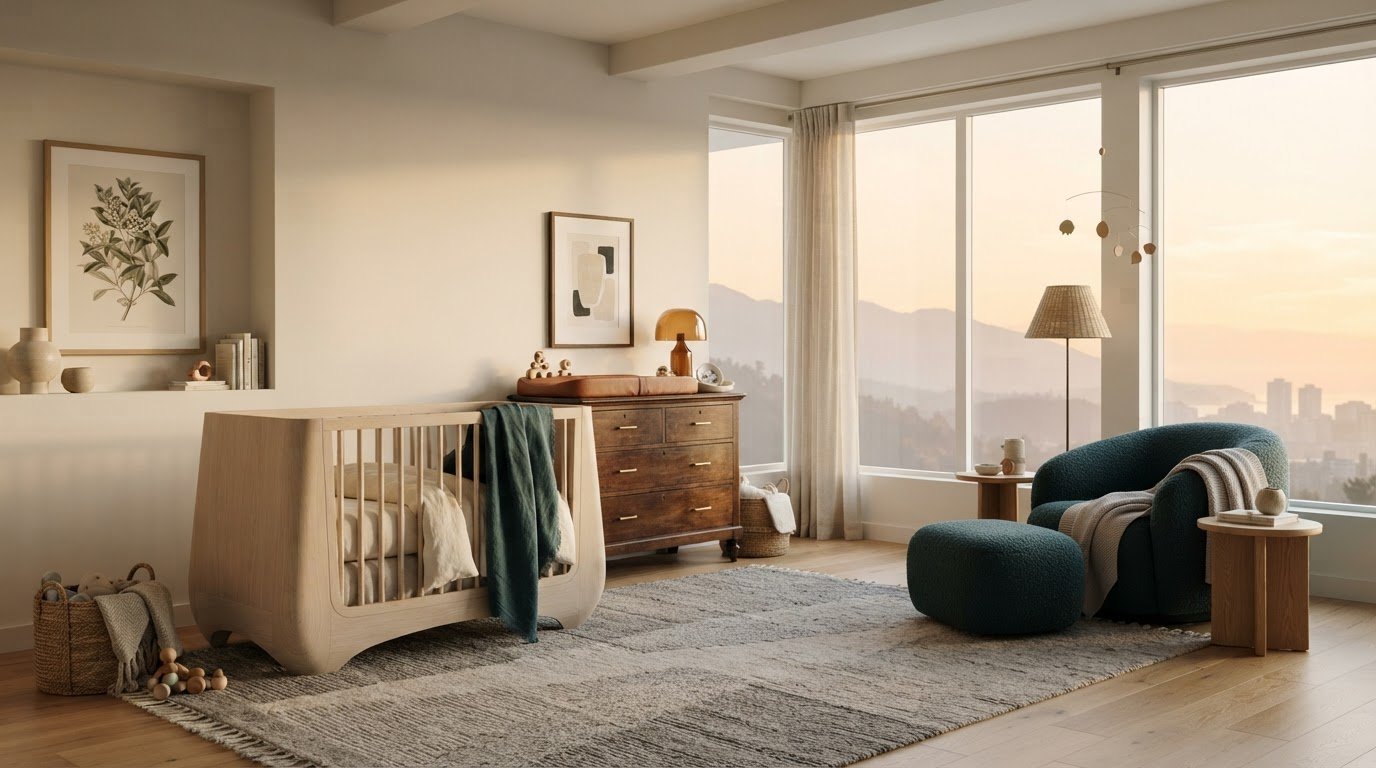
A nursery doesn’t need to be designed from scratch or filled with furniture to feel complete. Sophisticated nursery and kids’ room design starts with the essentials for sleep and changing, then makes thoughtful use of adaptable furniture, open floor space, and a calm foundation that can evolve as a child grows. Personal touches add warmth without overwhelming the room.
It’s natural to want a nursery to feel special from the start while wondering how its design will work beyond the baby years. A thoughtful plan can balance both, making the room welcoming now and easier to reimagine later.
This guide explores how to choose versatile furniture, build a layered palette, and add playful details with intention. It also considers how layout, storage, lighting, and textiles can shape a refined, personal nursery that is ready to change.
Key Takeaways
- Prioritize sleeping and changing in a small nursery, and leave open floor space rather than crowding the room with furniture.
- Bring antiques and contemporary pieces together through a considered mix of finishes, textiles, and personal keepsakes.
- Choose a calm, adaptable foundation, then introduce character with accents that can evolve as your child grows.
- When you want a cohesive room planned around your home and family, Pianta Design’s Residential Interior Design can help shape the space.
1. Choosing nursery furniture beyond traditional clichés
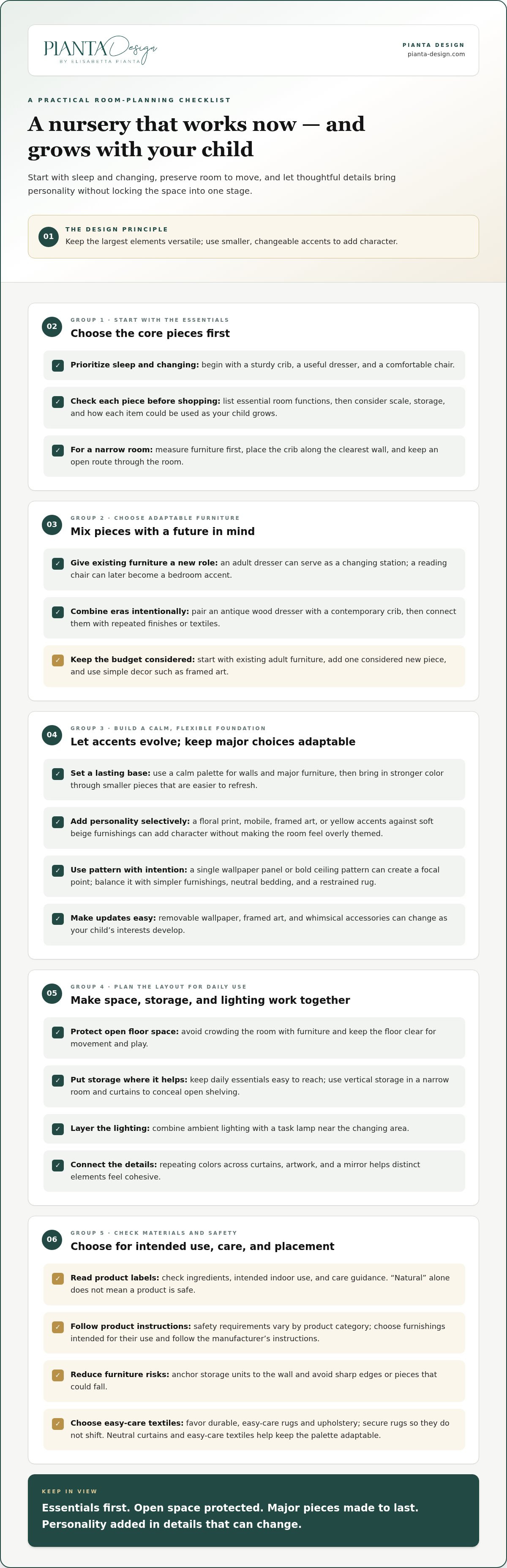
For a refined, timeless nursery, choose a sturdy crib, a useful dresser, and a comfortable chair in a restrained palette. Add personality with a floral print, mobile, or framed art rather than matching every piece. In a narrow bedroom, measure furniture first, place the crib along the clearest wall, and preserve an open route through the room.
Mix eras with intention: pair an antique wood dresser with a contemporary crib, then tie them together with repeated finishes or textiles. An adult dresser can serve as a changing station, while a reading chair can later become a bedroom accent. Before shopping, list the room’s essential functions and compare each piece’s scale, storage, and potential use as your child grows.
For paint and materials, read product labels for ingredients, intended indoor use, and care guidance; don’t assume “natural” alone means safe. Safety requirements vary by product category, so follow the manufacturer’s instructions and choose furnishings intended for their use. Anchor storage units to the wall, and avoid sharp edges or pieces that could fall.
A polished room on a budget can start with existing adult furniture, one considered new piece, and simple decor such as framed art. In a narrow room, use vertical storage and curtains to conceal open shelving, and keep the floor clear for movement. Combine ambient lighting with a task lamp near the changing area, and place storage where daily essentials are easy to reach.
For rugs and upholstery, favor durable, easy-care materials, and secure rugs so they don’t shift. Layering a smaller rug over carpet can add texture, while neutral curtains and easy-care textiles keep the palette adaptable. Choose each piece for its intended use, care instructions, and place in the room, not appearance alone.
2. Sophisticated, adaptable nursery design
Sophisticated nursery and kids' room design combines a calm foundation, considered pattern, and room to play. A neutral palette can feel distinctive through tactile pieces, thoughtful lighting, and an expressive detail, such as yellow accents against soft beige furnishings. The result feels composed rather than themed around a single stage of childhood.
To help a nursery transition into a stylish room for a growing child, keep its largest elements versatile. A dresser can remain useful for storage, while removable wallpaper, framed art, and whimsical accessories can change as interests develop. Choose a lasting palette for walls and major furniture, then introduce stronger color through smaller pieces that are easier to refresh.
Use contrast with intention. A single wallpaper panel can establish a focal point, while simpler furnishings keep competing patterns from making the room feel busy. A bold ceiling pattern, for example, can add character overhead, balanced by neutral bedding and a restrained rug. Repeating colors across curtains, artwork, and a mirror helps distinct elements feel connected.
Style and function work together when the layout preserves open floor space and keeps daily essentials accessible. Secure storage units to the wall, and avoid furnishings with sharp edges or a risk of falling as a baby becomes mobile. These practical decisions should shape the plan before decorative choices, helping the room remain visually coherent and safer to use.
For a personalized plan, thoughtful nursery and kids’ room design can bring layout, finishes, and changing needs together.
Pianta Design: Residential Interior Design
Pianta Design’s Residential Interior Design service can translate a nursery vision into a cohesive plan that balances daily routines, personal style, and room to grow. For a distinctive fit or finish, Custom Furniture Design can complement the broader interior concept.
From mood boards and floor plans to 3D visualizations for client approval, each stage helps clarify how the room’s layout, materials, and furnishings work together before the design is finalized. This is a natural next step when you want a considered approach to adapting a room for a child.
To discuss your nursery or kids’ room, contact Pianta Design or visit pianta-design.com.
Shape a Room That Grows With Your Family
A child’s room can become a setting for new rituals, changing interests, and quiet moments of independence. Treat the design as a living framework: preserve what feels personal, and let smaller details evolve as your child’s needs and tastes take shape. That balance is the lasting promise of sophisticated nursery and kids' room design.
When you’re ready to bring the room into harmony with the rest of your home, Pianta Design offers Residential Interior Design and Custom Furniture Design. Its Commercial Interior Design can support projects beyond the home.
Contact Pianta Design about your nursery design, and take the next step toward a room your family can grow into with confidence.
Frequently Asked Questions
How can you convert a room to a nursery?
Plan a room conversion by identifying its role in daily care, then arranging furniture before choosing finishes. For example, position the crib away from a busy doorway and place a chair near a lamp and storage for nighttime routines. Keep decorative choices easy to update so the room can later become a child’s bedroom.
What are some thoughtful ways to curate a gender-neutral nursery?
Create a gender-neutral nursery with a quiet base and personal details that are easy to change. A curated selection of illustrations, books, or keepsakes can add meaning without tying the room to a fixed theme. Coordinate accent colors, then vary textures with woven baskets or soft furnishings for depth. The result feels individual while remaining adaptable.
What is trending when it comes to nursery decor ideas?
Nursery inspiration often pairs immersive motifs with tactile furnishings, such as cloud-patterned wallpaper, a bouclé armchair, and a soft custom rug. Nature-inspired wall details and botanical prints offer another way to bring character into the room. Choose one dominant motif, then let complementary textures add interest without competing for attention.
Which non-toxic paints and materials are best for nurseries and kids' rooms?
Read product labels for ingredients, intended indoor use, and care guidance; don’t assume that “natural” means safe. Choose materials and furnishings for their intended use, and follow the manufacturer’s instructions.
