
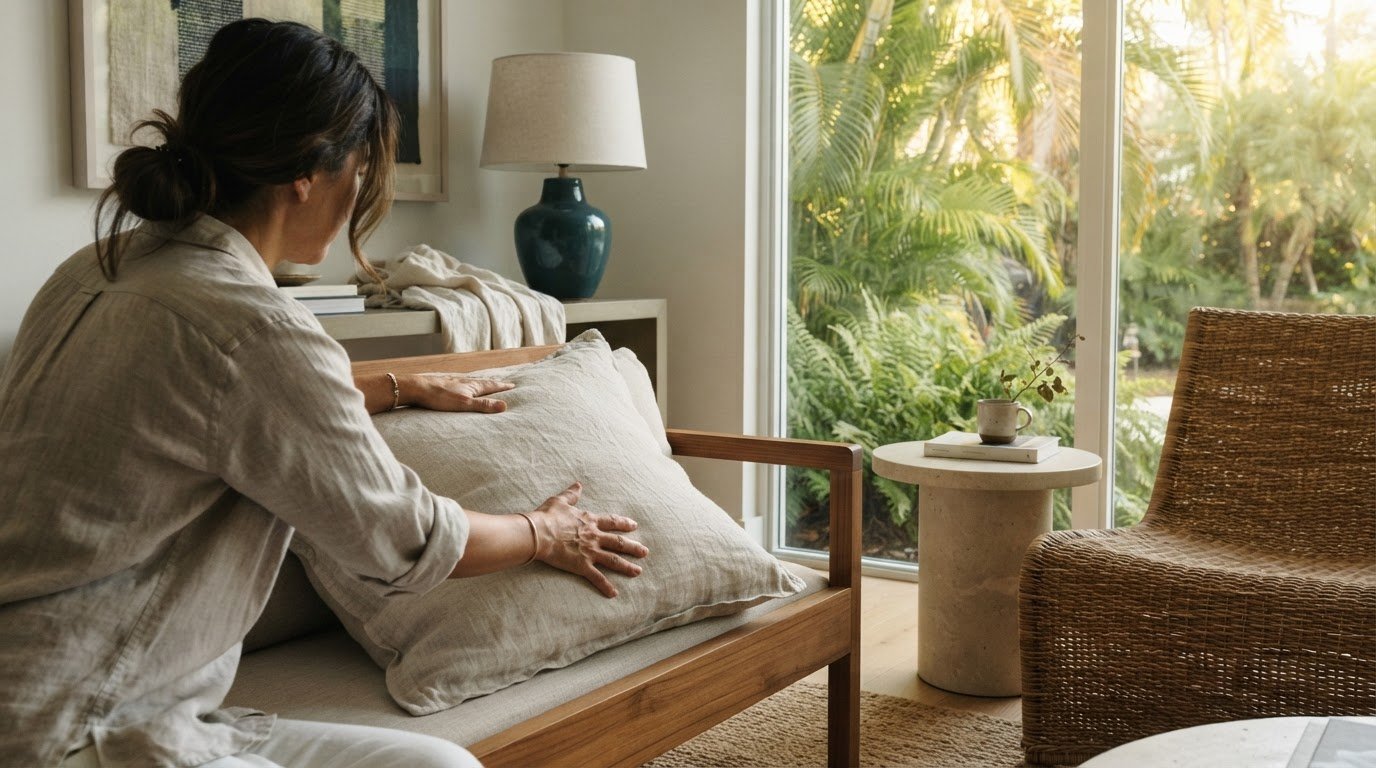
A complete redesign isn’t necessary to make a luxury interior feel in step with the season. Seasonal decor for a luxury home works best when a considered palette and a few tactile changes complement the architecture and furnishings already in place. Try lighter linens and woven materials for summer, then richer fabrics, warm lighting, and restrained metallic accents as winter arrives.
It’s natural to want a seasonal refresh without losing the calm, cohesive character that makes a home feel distinctly yours. Treat color, texture, and materials as a coordinated composition, not a collection of separate decorations. This guide covers seasonal palettes, luxurious layers for colder months, airy summer fabrics, and natural materials such as wicker and teak, with practical ways to refresh a space while preserving its elegance and balance.
Key Takeaways
- Build a seasonal color palette around your home’s existing finishes, then use a small number of considered accents to introduce the season.
- Balance plush winter layers and reflective details so the room feels inviting without becoming visually crowded.
- Mix contrasting textures, such as smooth stone with woven materials, to add depth while keeping the composition refined.
- Choose summer materials for their light, natural character, and let their textures bring warmth and interest to the space.
1. Seasonal color palettes and materials
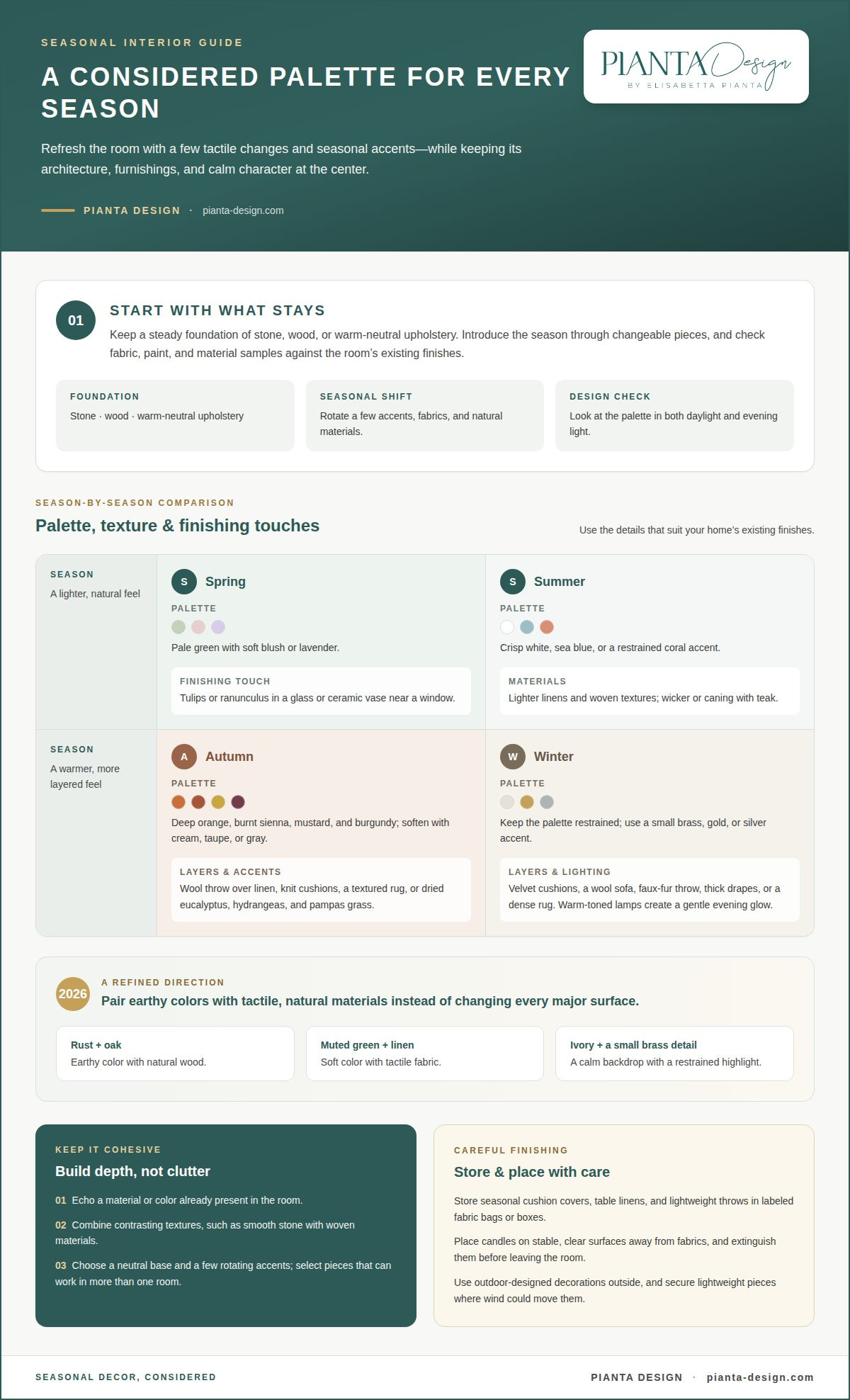
Start with a steady foundation of stone, wood, or warm-neutral upholstery, then bring in seasonal colors through smaller, changeable pieces. For spring, pair pale green with soft blush or lavender; in summer, try crisp white, sea blue, or a restrained coral accent. Arrange fabric, paint, and material samples on a design board to see how each shade works with the room’s finishes. This step helps keep a changing palette cohesive across living spaces.
Autumn calls for a richer palette: deep orange, burnt sienna, mustard yellow, and burgundy bring warmth, while cream, taupe, and gray soften their intensity. Layer a wool throw over a linen sofa, add knit cushions, and choose a textured rug to deepen the room without relying on one bold color. Dried eucalyptus, hydrangeas, or pampas grass add natural texture, while plum or forest-green table linens can carry the palette into the dining room.
For 2026, a refined seasonal direction is to combine earthy colors with tactile, natural materials rather than changing every major surface. Consider rust with oak, muted green with linen, or ivory with a small brass detail; these examples create visual interest while preserving a calm backdrop. The best palette is one that relates to the home’s architecture and feels balanced in both daylight and evening light.
Make seasonal decor for a luxury home more reusable with a neutral base and a few rotating accents. Store cushion covers, table linens, and lightweight throws by season in labeled fabric bags or boxes, and choose pieces that work in more than one room. Dried branches and durable vessels can return each year; fresh flowers add a brief seasonal note.
For seasonal lighting and outdoor decorations, place candles on stable, clear surfaces away from fabrics, and extinguish them before leaving the room. Follow the manufacturer’s instructions for lights, use decorations designed for outdoor conditions outside, and secure lightweight pieces where wind could move them. A discreet candle or diffuser can complement autumn materials without competing with their visual warmth.
2. Winter textiles, lighting, and metallic accents
In winter, build quiet luxury with texture before adding seasonal ornament. Layer velvet cushions over a wool sofa, or place a faux-fur throw beside thick drapes and a dense rug. These pieces soften hard surfaces and make a living room feel more intimate. Keep the palette restrained, then add a small brass, gold, or silver accent to catch the light without overwhelming the fabrics.
Lighting shapes that atmosphere. Place lanterns or candles on a stable mantel or dining table, and use warm-toned lamps to create a gentle evening glow. Smart designer lighting can combine integrated dimming, motion sensors, and adjustable color temperatures with artisan forms. A lighting plan that considers both function and mood helps a room transition from bright daytime use to calmer winter evenings.
For spring, add botanical accents such as tulips or ranunculus in a glass or ceramic vase. Place them near a window, where natural light brings out their color. Sheer, light-colored curtains can preserve privacy while letting daylight into the room, and their airy appearance contrasts beautifully with heavier traditional drapery. In winter, heavier curtains can frame the windows and complement the room’s plush layers.
Designer seasonal decor and luxury holiday decorations are best selected to suit the room’s scale, palette, and materials. Start by defining the desired effect, such as a subtle metallic highlight or a botanical centerpiece, then choose individual pieces that work with existing furnishings instead of relying on a matching set. For integrated fixtures or layered illumination, professional lighting design can align the light sources with the room’s layout and use.
Velvet or faux-fur cushions and throws add a luxurious touch, while heavy drapes and thick rugs help a space feel warm and inviting. Lanterns, candles, and warm lighting create a cozy glow; gold, silver, or brass accents add a festive note. Use high-shine finishes sparingly so they stand out.
3. Layering luxurious seasonal textures
Begin with the room’s permanent features, such as oak flooring, a marble fireplace, or a sculptural sofa. Choose seasonal touches that echo an existing material or color instead of introducing a competing scheme. A jute rug beneath polished furniture, for example, softens the contrast and adds depth. Repeat a texture in a smaller detail, such as a woven tray or linen pillow, to connect the room’s elements.
In an entryway, a textured runner can define the approach, while a ceramic bowl or seasonal branch creates a restrained focal point on a console. In the living room, layer pillows in contrasting weaves and place a throw where it adds comfort without obscuring the furniture. In the dining room, a tactile runner and natural centerpiece enrich the table while leaving space for serving.
Think in layers: start with a larger anchor, add a softer mid-scale texture, then finish with one small tactile accent. An oversized rug can ground a seating area; nubby cushions and a smooth stone object add contrast above it. Pair matte surfaces with a subtle sheen for dimension. These combinations help seasonal decor for a luxury home feel integrated, not like a temporary display.
Consider professional design support when seasonal changes need to work across connected rooms or alongside custom furnishings. Residential Interior Design can bring together space planning, material choices, and visual direction; mood boards, floor plans, and 3D visualizations can help shape the concept for approval. The scope is design-focused, not a promise of seasonal decorating or installation. This approach suits homeowners seeking continuity between an existing interior and considered seasonal updates.
4. Summer materials such as wicker and teak
Bring a lighter feel to summer rooms with woven textures and natural materials. Wicker or caning on a chair adds visual openness beside a teak table, while terracotta and pearl details create softer contrasts. Make one material the focal point, then echo its texture in a basket or tray. This keeps the composition intentional rather than crowded.
For an outdoor living area, pair teak furniture with weather-resistant cushions and a woven rug. Add throws for cooler evenings, and arrange lanterns to extend the seating area’s warm, inviting feel. A sculptural planter can anchor the setting; choose a shape and finish that relate to the nearby furniture. Together, these layers give a patio or terrace a considered, room-like presence.
Inside, combine summer textures with a few precise, bright accents. A bowl of fresh flowers, citrus fruit, or herbs brings color to a dining table without requiring a full seasonal display. Add a floral or citrus-scented diffuser, or use candles as a simple evening detail. Keep the arrangement low and compact where people gather, so the table remains practical.
Contrast can bring a room to life. A small velvet pillow adds depth to a sunlit space, especially beside linen or woven upholstery, while a shell or oystershell object offers a restrained coastal reference. Choose one statement piece and leave the surrounding surfaces clear. The effect comes from balancing tactile materials, open space, and the room’s existing palette.
For a cohesive summer refresh, consider how each material relates to adjacent finishes, furniture, and outdoor views. Plan a summer material palette with professional guidance to bring those choices into alignment.
Pianta Design
Pianta Design helps shape seasonal updates into a cohesive part of the home, especially when color, materials, lighting, and existing furnishings need to work together. Its design process can develop a clear direction through mood boards, floor plans, and 3D visualizations, giving each choice a place within the wider interior. This support is useful when a simple change of textiles or accents calls for a more considered approach, or when several connected rooms need a consistent seasonal character. Residential Interior Design and Custom Furniture Design can also inform how new details relate to the room’s proportions and permanent pieces. For a thoughtful seasonal refresh shaped around your home, contact Pianta Design.
Shape a home that evolves with the seasons
A seasonal decor plan for a luxury home can do more than mark a change in weather. It can create a considered rhythm between the home’s enduring character and the way you want each season to feel. Before making a change, decide what should remain constant, such as a favorite artwork, a distinctive finish, or the balance of a cherished room. Let new details grow from that anchor, so each refresh feels personal rather than temporary.
When several rooms need a shared direction, thoughtful design can connect their colors, materials, and furnishings without making them identical. Pianta Design offers Residential Interior Design, Commercial Interior Design, and Custom Furniture Design to support cohesive spaces shaped around their purpose. The next step can be a conversation about the atmosphere you want to create and how seasonal choices might complement the interiors you already value.
Contact Pianta Design to plan your seasonal decor, and begin shaping a home that feels beautifully in tune with the seasons.
Frequently Asked Questions
What are the key principles of seasonal decorating in a luxury home?
Keep the home’s underlying design consistent, and let seasonal details shift the mood without competing with its architecture. Consider each room’s purpose before choosing accents: a quiet reading corner may call for a softer touch than a formal dining area. Limit new elements, repeat a finish where it feels natural, and remove anything that distracts from the room’s focal point.
How can you decorate a luxury home for spring, summer, fall, and winter?
Let each season inspire a modest change in atmosphere while the main furnishings stay in place. In spring, pare back accessories and add botanical details. In summer, lighten bedding and window treatments. For fall, bring autumnal color to the dining table. In winter, introduce richer accents and softer lighting. Moving a few details between rooms makes the change feel considered rather than repetitive.
Which high-end materials, textures, and finishes work best for seasonal decor?
Choose materials for their contrast, feel, and relationship to the room’s existing surfaces. Linen and cotton offer a relaxed note, while wool and velvet feel denser and more tactile. Marble, stone, brass, and woven finishes add variety through contrasts between hard and soft. Before introducing a new material, consider its scale and visual weight beside nearby furniture, flooring, and artwork.
Should you hire a luxury seasonal decorating service, and what does it include?
Consider professional design support when seasonal changes need to work across connected rooms or with custom furnishings. It can include space planning, material choices, visual direction, mood boards, floor plans, and 3D visualizations; it is design-focused, not seasonal decorating or installation.
