

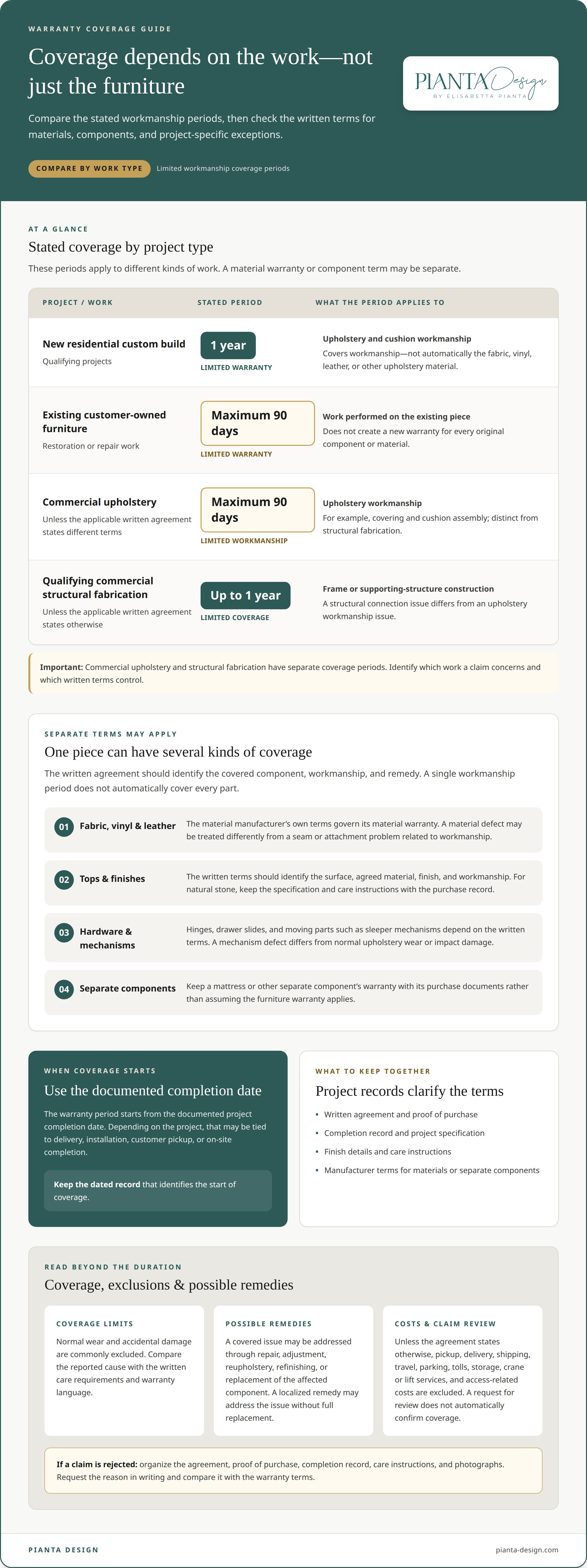
For qualifying new residential custom builds, the limited upholstery and cushion workmanship warranty lasts 1 year. Warranty and support for custom furniture can differ by component, so that period doesn’t automatically apply to every top, hardware item, fabric, vinyl, leather, or residential piece.
A clear written warranty matters as much as the duration: it explains which workmanship is covered, when coverage begins, and what remedy may apply if a covered issue arises. Fabric, leather, and other upholstery materials are governed by the manufacturer’s own terms, while work performed on existing customer-owned furniture receives a maximum 90-day limited workmanship warranty.
This guide explains how coverage periods vary across upholstery, cushions, furniture materials, and commercial work, and what written project terms can change. You’ll also learn what to look for in a warranty before approving a custom piece, so the protections and exclusions are clear alongside the design, materials, and finish.
Key Takeaways
- Learn when coverage starts and which project records can help clarify the agreed specification, finish, and care requirements.
- See how warranty terms may distinguish manufacturing or workmanship issues from wear, accidental damage, and environmental changes.
- Understand how commercial upholstery and structural fabrication coverage periods can differ, and what written project terms may change.
- Find out what to expect from a claim, including possible remedies and the costs or access arrangements that may fall outside coverage.
Coverage periods for tops, hardware, fabrics, vinyl, and leather
A furniture top is its finished surface, such as wood or stone. Its warranty depends on the written terms, which should identify the surface, finish, and workmanship. Hardware includes functional components such as hinges and drawer slides. Clear warranty and support for custom furniture rely on terms that distinguish a component defect from damage caused by impact or misuse.
Upholstery workmanship covers how fabric or leather is cut, stitched, and attached. Qualifying new residential custom builds receive a 1-year limited upholstery and cushion workmanship warranty. That period applies to workmanship, not automatically to the upholstery material. A fabric, vinyl, or leather manufacturer’s terms govern its material warranty, so a single piece may have separate coverage for construction and surface materials.
Mechanism coverage applies to moving components, such as sleeper mechanisms. The written terms determine whether a mechanism defect is covered and how it is assessed. For example, a problem with a sleeper’s opening mechanism is different from normal upholstery wear or damage caused by impact.
Existing-furniture restoration or repair means work performed on furniture already owned by the customer. That work receives a maximum 90-day limited workmanship warranty. Its coverage concerns the work performed, rather than creating a new warranty for every original component or material.
Shipping, pickup, and repair costs depend on the written agreement. Unless it states otherwise, coverage excludes pickup, delivery, shipping, travel, parking, tolls, storage, crane or lift services, and access-related costs. A covered issue may be addressed through repair, adjustment, reupholstery, refinishing, or replacement of the affected component. Good warranty and support for custom furniture also means understanding that full replacement isn’t required when a localized remedy reasonably addresses the covered issue.
If you notice a problem, report it and provide the requested photographs or records. A request starts an evaluation but does not automatically confirm coverage. Review the written terms for maintenance guidance and replacement-part provisions before approving the project.
How long is the limited warranty valid?
A warranty period is the stated span of coverage, starting from the documented project completion date. For custom furniture, that date may be tied to delivery, installation, customer pickup, or on-site completion. Keep the dated record that identifies the start.
Customer-supplied material is fabric, leather, or another component provided by the buyer. The written terms should explain how defects in that material are handled and distinguish them from workmanship issues. For a natural stone surface, the terms should identify the agreed material and finish and explain how concerns are assessed. Keep the original specification and care instructions with the purchase record.
A manufacturer’s warranty governs its fabric, leather, or other upholstery material. A material defect may therefore be covered under different terms from a seam or attachment problem related to workmanship. Normal wear and accidental damage are commonly excluded from furniture warranties. Assess spills, scratches, impacts, and environmental changes against the written care requirements and the reported cause.
A written exclusion sets out coverage limits or excluded damage, while liability language addresses responsibility or remedies. Read both alongside the project-specific agreement, especially if its terms differ from a general warranty policy. Keep the warranty for a mattress or other separate component with its purchase documents rather than assuming the furniture warranty applies.
Warranty coverage varies between custom makers and large retailers, so compare the written terms for covered components, exclusions, and remedies rather than relying on the provider category. Furniture warranties typically apply to the original purchaser and require proof of purchase. A full warranty may not expressly restrict a transferee’s rights while it remains in effect, according to the U.S. Government Publishing Office.
If a maker rejects a claim, organize the agreement, proof of purchase, completion record, care instructions, and photographs, then request the reason in writing. Compare that explanation with the warranty language and keep the response with your records. Clear material and finish planning can help document the selected surfaces and care requirements from the outset.
Limited warranty duration
A limited warranty is a written promise covering specified defects for a defined period, subject to stated terms. For commercial upholstery workmanship, the maximum limited workmanship warranty is 90 days unless the applicable written agreement states different terms. Qualifying commercial structural fabrication may receive coverage of up to 1 year unless that agreement states otherwise. These periods apply to different work, so identify whether a claim concerns upholstery or structural fabrication.
Structural fabrication is the construction of a furniture frame or supporting structure. Upholstery workmanship covers how the covering and cushions are assembled. A loose seam, for example, raises a different issue from a structural connection. Check that the written agreement identifies the covered work, warranty period, and controlling document if the project terms differ from a general policy.
Normal wear is gradual change from ordinary use, rather than a defect in materials or workmanship. Limited warranties commonly exclude normal wear and accidental damage. Natural variation in wood and other materials can also differ from a manufacturing defect. Keep the agreed specification, finish details, and care instructions together to clarify whether a reported change is consistent with the selected material or may be a covered issue.
A liability limitation describes the responsibilities or remedies set out in the agreement. A governing-law clause names the state’s law the agreement says applies. State-dependent rights may affect how limitations are treated, so read the clause alongside the full warranty and project terms. Avoid assuming that one maker’s language establishes the same rights for every state or contract.
If you report a defect, gather the purchase record, project agreement, completion date, and clear photographs before attempting a repair. The claim evaluation determines whether the issue falls within the stated coverage. A covered concern may be resolved by repairing or replacing the affected component; full furniture replacement is not required when a localized remedy reasonably addresses the problem. Record the response and proposed remedy with the original documents.
Warranty periods for new residential custom furniture
A residential custom build is furniture made for use in a home and tailored to a project. For qualifying new builds, the limited warranty covers upholstery and cushion workmanship for 1 year. This period applies to workmanship, not automatically to every material or component in the finished piece.
Upholstery workmanship is the labor involved in cutting, sewing, attaching, and finishing a covering. Cushion workmanship concerns how the cushions are constructed. Coverage starts from the documented project completion date, which may be delivery, installation, customer pickup, or on-site completion. Retain the dated record that applies to your project.
A covered defect falls within the warranty’s written scope. A workmanship problem in an upholstered seat, for example, may be assessed differently from a stain, accidental tear, or normal wear. Fabric, leather, and other upholstery materials follow their manufacturers’ warranty terms. Review these separately from workmanship coverage, particularly when the proposal names a specific material or finish.
The original purchaser is the person who bought the furniture under the original order. Furniture warranties typically apply to that purchaser and require proof of purchase. Keep the invoice, approved specifications, completion record, and care instructions together. These documents identify the intended materials and help distinguish the agreed design from later alterations.
Replacement means providing a new item or component as a remedy. A warranty issue may instead be resolved through repair, adjustment, reupholstery, refinishing, or replacement of the affected component. Full replacement is not required when a localized remedy reasonably addresses the covered issue. Submitting a request begins an evaluation but does not establish coverage.
Before approving a residential proposal, read the written warranty alongside the project-specific terms. Confirm which upholstery and cushion workmanship receives the 1-year period, when that period starts, and how a concern is reported. This makes the distinction between covered workmanship, manufacturer material terms, and excluded damage easier to understand before the piece enters your home.
Pianta Design: Custom Furniture Design
Pianta Design’s Custom Furniture Design helps shape a piece around its intended setting, proportions, and material choices. This is a natural next step when warranty terms raise questions about how a custom piece will be specified, used, and documented. Clear design decisions can make the agreed components and finishes easier to identify in project documents.
For a single room, Residential Interior Design can align custom furniture with the wider scheme. Commercial Interior Design and Yacht Interior Design address different project contexts, where use and setting influence design priorities. The right starting point depends on the space and the role the furniture needs to serve.
For a considered approach to a custom piece or interior, contact Pianta Design.
Make clarity part of the design
Good warranty and support for custom furniture starts with treating documentation as part of the design process. Intended use, selected materials, finish details, and project terms all shape how a piece should be understood and cared for. Agreeing on these details early helps connect the design to clear written expectations.
When planning a custom piece, consider how it will function in the room, from everyday use to the surfaces around it and the details that make it personal. These choices help shape a complete project brief and give you a practical basis for discussing the written terms. That way, visual harmony and a clear understanding of the project can go hand in hand.
For a considered next step, contact Pianta Design to discuss your project. Thoughtful planning can help bring clarity to the decisions ahead and confidence to the space you’re creating.
Frequently Asked Questions
What do I need to do to get warranty service?
Begin with the written warranty’s claim procedure, then identify the piece and the issue. Provide the order or invoice, completion or delivery record, clear photographs of both the full item and the defect, and a concise account of when the problem appeared. Keep copies of everything you send, and wait for an assessment before altering or repairing the affected area.
What if I have multiple pieces of furniture to report?
Describe each piece and issue separately, even if the items appear on one order. Include the item description, its location, the observed problem, and photographs of the relevant area. For example, describe a loose chair joint separately from a mark on an upholstered bench. Include the shared order record to connect both items to the purchase.
What if I have questions?
If a warranty clause is unclear, identify the wording and request a written explanation of its coverage and assessment process. For example, ask whether the concern falls under the upholstery material manufacturer’s terms or the maker’s workmanship terms. When planning a custom piece, define its intended use and materials early so they can be specified clearly.
What is (and is not) covered?
Coverage depends on the written terms and the cause of the reported problem. A manufacturing or workmanship defect may be treated differently from normal wear, accidental damage, spills, or environmental changes. Material warranties may also differ from workmanship coverage. Read the exclusions alongside the remedies, which may address a covered issue through repair, adjustment, or replacement of the affected component.
What warranty coverage do custom furniture makers typically provide?
Common terms distinguish new residential upholstery and cushion workmanship from repairs to existing furniture or commercial work. Qualifying new residential custom builds receive a 1-year limited upholstery and cushion workmanship warranty. Existing customer-owned furniture work receives a maximum 90-day limited workmanship warranty. Commercial upholstery workmanship receives a maximum 90-day limited warranty unless the written agreement states otherwise.
How long do custom furniture warranties last in the United States?
There isn’t one duration that describes every type of custom furniture work. Qualifying new residential upholstery and cushion workmanship coverage lasts 1 year; existing-furniture workmanship coverage has a maximum 90-day period. Commercial structural fabrication may receive coverage of up to 1 year unless the applicable written agreement states otherwise. The relevant terms identify the work covered and the period that applies.
