

A newly designed home keeps its quiet polish through thoughtful, consistent care. Knowing how to maintain the look of your newly designed home means protecting floors from scratches and grit, cleaning surfaces with suitable methods, addressing wall scuffs promptly, and following the builder’s maintenance recommendations. Small, considered habits help preserve the materials and details that make a space feel complete.
It’s natural to want that sense of freshness to last, especially when every finish, texture, and line has been chosen to work in harmony. The most effective approach is straightforward: match your care to the materials, address everyday marks promptly, and make routine upkeep part of how you live in the home.
This guide covers practical ways to protect floors with rugs and furniture pads, clean surfaces without harsh products, touch up minor wall damage, and follow builder guidance. Regular care helps your home remain composed, comfortable, and distinctly yours.
Key Takeaways
- Reduce scratches and uneven wear by pairing protective pads with thoughtfully placed rugs.
- Keep finishes looking their best with regular cleaning methods suited to each material, and address spills promptly.
- Handle minor wall marks gently; reserve patching and paint touch-ups for more noticeable damage.
- Use the builder’s walkthrough, maintenance recommendations, and home-system manuals as a guide to ongoing care.
1. Protecting floors with rugs and furniture pads
Protect new floors with felt pads beneath furniture legs and rugs along busy pathways. Use coasters on countertops and trivets beneath hot cookware to help prevent marks. Knowing how to maintain the look of your newly designed home often starts with these simple barriers, which shield delicate finishes from everyday contact.
Check pads whenever you move a chair, dining table, or bedside cabinet. Replace any that shift, wear thin, or collect grit, since trapped debris can scratch flooring. Lift furniture rather than dragging it across hardwood or polished stone. Rotate rugs monthly, or at least seasonally, to help distribute wear evenly and preserve their appearance.
Before furnishing a room, measure its dimensions, doorways, walkways, and window clearances. A sofa that blocks a passage or a dining chair that catches on a rug can mark floors over time. Sketch the space with essential pieces first: a bed and bedside tables in the bedroom, a sofa and table in the living room, or a dining table with room to pull out the chairs.
Choose a calm foundation for major furniture, such as an ivory sofa or a natural-wood dining table. This can work with changing rug patterns and accent colors, so refreshing smaller details won’t require replacing large pieces. Place rugs according to how the room functions, keeping living-room seating partly on the rug and dining chairs supported when pulled back.
Knowing how to maintain the look of your newly designed home also means furnishing with intention. Start with essentials, then observe how sunlight, movement, and daily habits shape each space. Add a rug where foot traffic concentrates, or a side table beside the chair where drinks are often set down. This gradual approach protects finishes while allowing each room’s balance and character to emerge through use.
2. Regular cleaning and deep cleaning
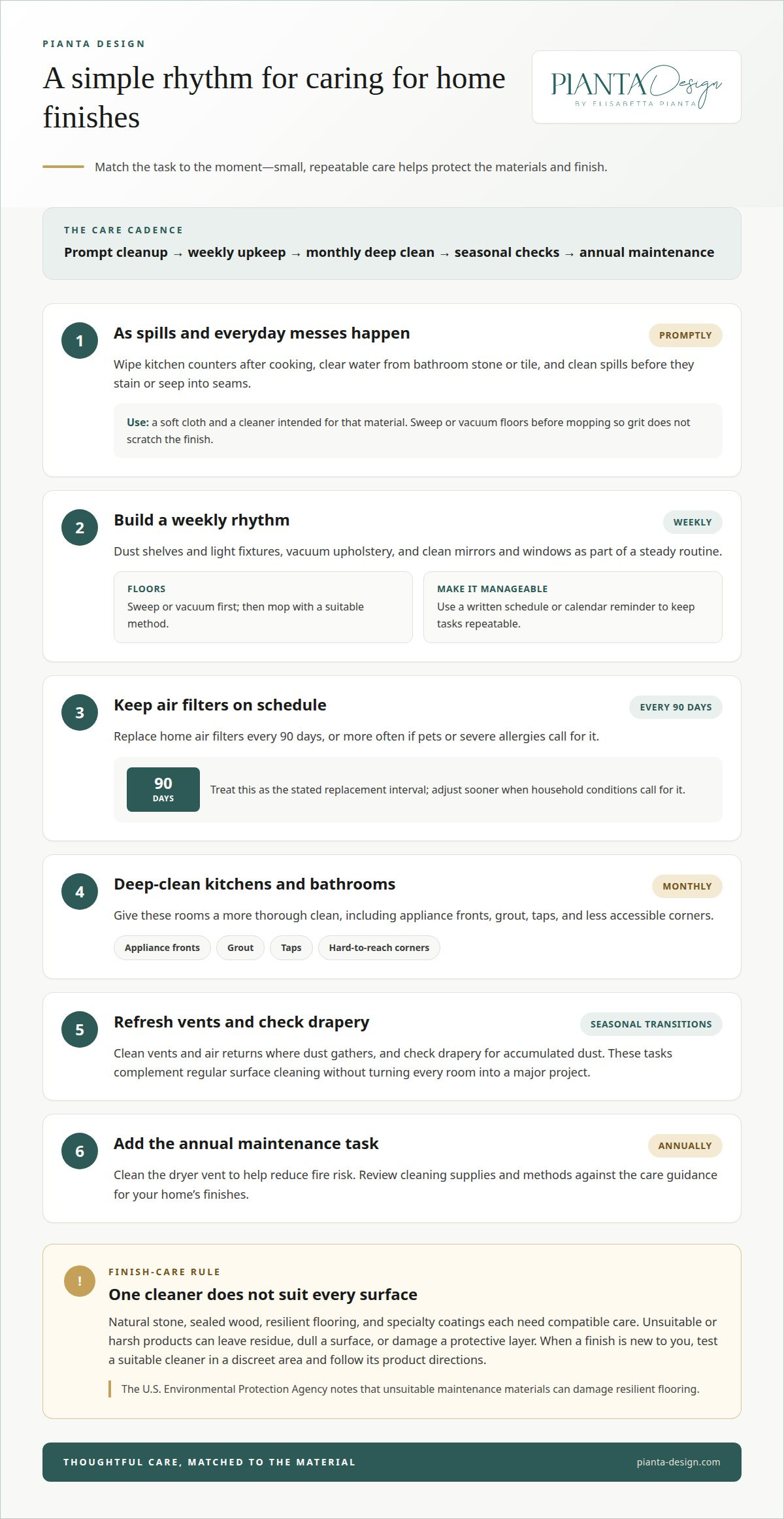
A steady cleaning routine preserves a home’s finishes more effectively than occasional intensive effort. Wipe kitchen counters after cooking, clear water from bathroom stone or tile, and clean spills promptly before they stain or seep into seams. Use a soft cloth and a cleaner intended for each material. The U.S. Environmental Protection Agency notes that unsuitable maintenance materials can damage resilient flooring.
Build regular home cleaning around small, repeatable tasks. Dust shelves and light fixtures, vacuum upholstery, and clean mirrors and windows as part of a weekly rhythm. Sweep or vacuum floors before mopping, so grit doesn’t scratch the finish. Replace home air filters every 90 days, or more often if pets or severe allergies call for it. A written schedule or calendar reminder helps make keeping the home orderly feel manageable.
Once a month, deep-clean kitchens and bathrooms, including appliance fronts, grout, taps, and less accessible corners. At seasonal transitions, clean vents and air returns where dust gathers, and check drapery for accumulated dust. These tasks complement routine surface cleaning without turning every room into a major project at once.
Annually, clean the dryer vent to help reduce fire risk. Also review your cleaning supplies and methods against the care guidance for your home’s finishes. The wrong cleaner can leave residue, dull a surface, or damage a protective layer; harsh products on resilient flooring are a particular concern. Natural stone, sealed wood, and specialty coatings each need compatible care, so avoid assuming one solution suits every room.
When a finish is new to you, test a suitable cleaner on a discreet area first, then follow its product directions. Thoughtful material and finish selection can help align a room’s aesthetic with practical care needs, from a kitchen countertop to bathroom flooring, supporting a timeless look through consistent habits.
3. Removing wall scuffs and repairing paint
Start with the gentlest method: press a damp, soft sponge against a wall scuff, then wipe without scrubbing hard. A magic eraser may lift stubborn marks, but test it on a discreet patch first, since abrasive pressure can dull some paint finishes. For a dark shoe mark near a doorway, work from the edge inward and stop if the paint begins to change.
For deeper scratches or chipped paint, remove loose fragments, patch the damaged area, and touch it up with matching paint. Keep the repair compact and apply paint in thin layers, following the product directions. Record each room’s paint color and finish in your home documents, alongside relevant builder paperwork. This makes future touch-ups easier to match.
Color relationships matter when repairing a visible wall. Compare the paint with nearby flooring, trim, and furniture, then check the shade beside a window in natural light. A coordinated palette might pair warm white walls with oak furniture, or muted green with cream upholstery. Even a beautiful color can look different under evening lamps, so view it in daylight and artificial light before refreshing a larger area.
For countertop stains, use a cleaning method suited to the specific material, then wipe the area promptly. During monthly cleaning, notice recurring marks around handles, light switches, and chair backs. If several walls look tired, refreshing one accent wall can create a focal point without repainting the entire room. In an open-plan space, a carefully chosen wall color can also distinguish a dining area from the living zone.
Updating a room with paint can feel exciting, but preserve the balance of the existing palette. Sample a small area first, then assess it beside artwork, textiles, and larger furnishings. A measured touch-up can restore a composed finish, while a considered color change gives the room fresh expression without competing with its established pieces.
4. Following builder maintenance recommendations
Use the construction manager’s walkthrough to learn how specific systems and finishes need care. Note maintenance instructions for appliances, heating equipment, exterior seals, and interior surfaces, then keep them with the manuals and completed warranty documents. A clear record helps you follow the builder’s recommendations and address repairs before small concerns spread.
Before the 1-year builder warranty ends, consider a home inspection to identify issues the builder may still have to fix for free. Keep dated notes and photographs of concerns, such as a window that sticks or a damp area near a wall. This creates a practical record for discussing possible warranty repairs before the coverage period ends.
Some upkeep can be handled as part of ordinary home-care habits. Check annually that door and window hardware remains secure, and inspect exterior paint, caulking, and seals seasonally, in spring and fall. Keep downspouts clear and confirm the lawn slope carries water away from the foundation. Vacuum interior floors regularly, and include an annual walk around the exterior to notice changes.
Which home maintenance tasks require a licensed professional or permit? The answer depends on the task and local requirements, so don’t assume a repair is permit-free or suitable for DIY. Work involving electrical, plumbing, structural, or major system repairs calls for professional assessment; permit requirements depend on the project and jurisdiction.
Build a simple calendar with seasonal exterior checks, hardware inspections, and the maintenance dates listed in appliance and system manuals. For example, pair a spring check of caulking with a review of any winter damage. Timely attention helps protect the home’s structure and the finishes that elevate its design.
For a home where design decisions and practical upkeep work together, explore residential interior design for a considered approach to materials, finishes, and everyday living.
Pianta Design
Pianta Design creates residential interiors where visual harmony and everyday function work together. Whether you’re planning a refresh, adapting a room to new needs, or considering furnishings and finishes for your home, the firm’s design expertise can bring those decisions into a cohesive whole. Its residential interior design, custom furniture design, lighting design, and interior architecture services support a considered approach to the spaces and details you live with every day.
Thoughtful design also considers how materials, light, and furniture choices will meet the rhythms of a home, making upkeep part of a larger vision rather than an afterthought. For guidance on shaping a home that feels personal and enduring, contact Pianta Design.
Let Your Home Evolve With You
A thoughtfully designed home doesn’t need to remain frozen in its original moment. Its character can deepen as your routines change, meaningful objects find their place, and rooms adapt to the way you live. The lasting answer to how to maintain the look of your newly designed home is to care for its details while allowing the spaces to remain personal and responsive.
As you consider a future refresh, look beyond individual finishes and ask how the entire room should feel. A change in lighting, a considered furniture piece, or a new arrangement of art can shift the atmosphere without losing the design’s original coherence. Thoughtful guidance can connect these decisions and keep your home’s evolution intentional.
If you’re ready to explore what could come next for your space, contact Pianta Design. Let each new choice build on what already makes your home feel like yours.
Frequently Asked Questions
How do you maintain a newly designed home?
Maintain your home by pairing regular care with attention to how each room is used. Keep soft cloths, surface-appropriate cleaners, and touch-up paint together, and note which finish belongs to each room. A dining area, for example, may need more attention around chair backs, while a quiet reading nook benefits from dusting around shelves and lamps.
What cleaning schedule should you follow for a new home?
Set a schedule around daily use, then put less frequent jobs on a calendar. A short daily reset can clear kitchen counters and return items to their places; a weekly plan can rotate through upholstery, window treatments, and overlooked corners. Give extra attention to areas that collect buildup, such as appliance interiors or spaces beneath movable furniture, and adjust tasks as household routines change.
How do you maintain indoor paint, wallpaper, and decorative finishes?
Use care methods suited to each finish, since paint sheen, wallpaper texture, and decorative coatings respond differently to moisture and friction. Dust textured wallpaper gently with a soft tool, and avoid scrubbing painted walls unless the finish’s care instructions allow it. Keep a record of paint colors and product details to help match future repairs, especially in rooms with changing daylight.
How can you keep a newly designed home looking current without frequent renovations?
Refresh a room through movable details rather than replacing built-in elements. Changing a lampshade, rearranging artwork, or bringing in a different cushion cover can shift the mood while preserving the larger design. Edit accessories instead of adding more, and choose pieces that reflect your interests rather than every passing trend. This keeps the home expressive and polished without making constant renovation the default.
