
Beyond the Catalog: Discovering Alternatives to Mass-Produced High-End Furniture
True luxury isn't found in a glossy catalog that reaches a million mailboxes; it lives in the quiet details of a piece crafted for you alone. You might feel that the market is saturated with the same predictable brands, leading many discerning homeowners to seek authentic alternatives to mass-produced high-end furniture. It's often frustrating to wait months for a piece that lacks soul, only to realize your "exclusive" investment is actually a standardized product of a global assembly line. You deserve a space that reflects your specific journey rather than a corporate mood board.
We'll show you how to transcend these limitations by embracing bespoke design and artisanal sourcing, creating a home that feels curated and singular. This exploration will guide you through the process of accessing exclusive manufacturers and selecting materials that hold their value over time. By moving beyond the catalog, you'll discover how a professional eye for detail and direct relationships with Italian artisans can transform your living environment into a legacy of craftsmanship and personal expression.
Key Takeaways
- Learn how to identify the "mass-luxury" paradox where high price tags often mask production-line methods and material compromises.
- Discover how to source authentic alternatives to mass-produced high-end furniture by accessing hidden Italian workshops that aren't available to the general public.
- Understand the philosophy of bespoke commissions, where pieces are designed to complement specific architectural proportions rather than just filling a room.
- Explore why artisanal furniture serves as a functional art investment, holding its value and character far longer than global retail brands.
- Recognize the essential role of an interior designer as the bridge between your aesthetic vision and the technical execution of a custom masterpiece.
The Paradox of Mass-Produced High-End Furniture
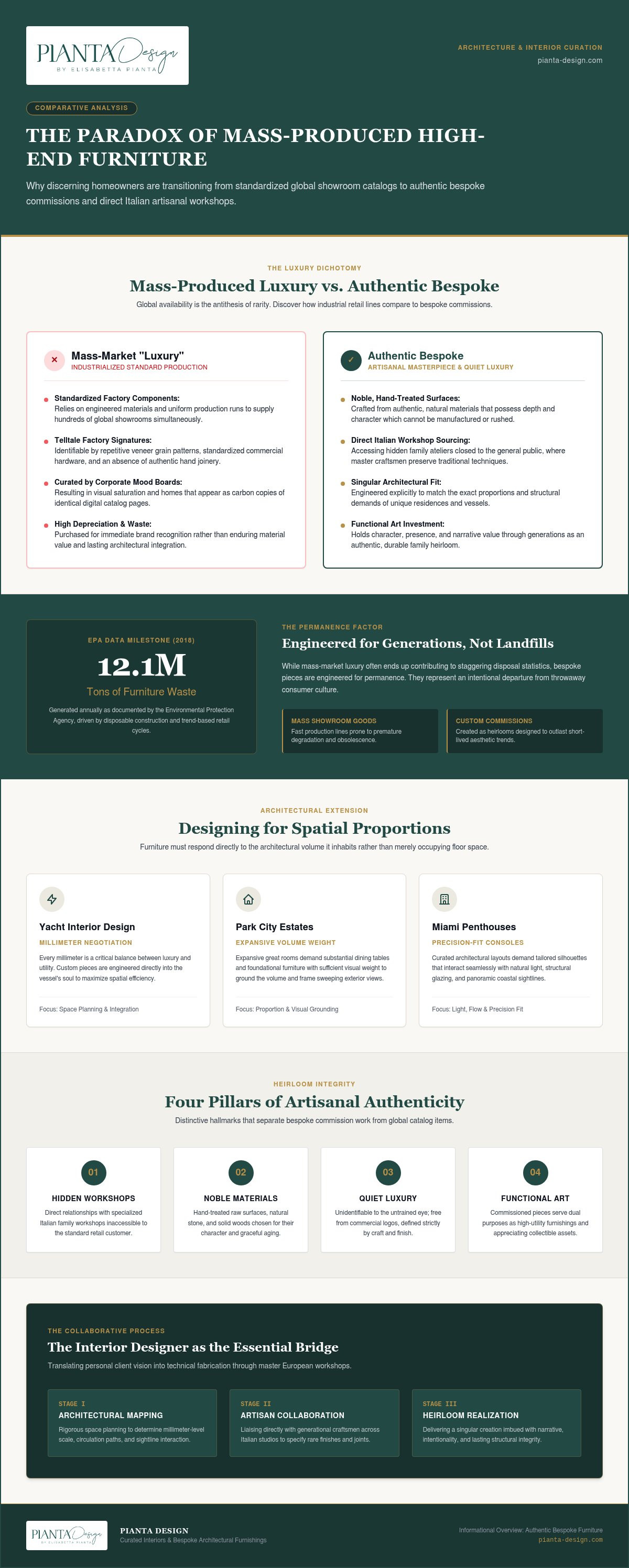
The allure of a recognizable logo often masks a disappointing reality: the industrialization of the exceptional. We live in an era where "luxury" is frequently defined by marketing budgets rather than the touch of a master craftsman. When a furniture brand scales to operate hundreds of showrooms globally, the very essence of exclusivity begins to evaporate. True sophistication isn't found in a product that can be ordered in ten cities simultaneously; it's found in the singular, the rare, and the unrepeatable. Many discerning homeowners now seek alternatives to mass-produced high-end furniture because they realize that global availability is the antithesis of rarity.
This "Mass-Luxury" paradox creates a disconnect where high price tags meet production-line methods. To maintain global inventory, large brands often compromise on material integrity, opting for engineered components or standardized finishes that lack the depth of natural, hand-treated surfaces. Tracing the history of furniture design reveals a slow shift from the singular workshop to the global factory, a transition that has homogenized our living spaces. Today, the most recognizable brands are often the least exclusive, leading to a significant shift toward "Quiet Luxury" where the most coveted pieces are those that remain unidentifiable to the untrained eye.
Defining Authentic Luxury vs. Mass-Luxury
Authentic luxury exists at the intersection of rarity, artisan skill, and a personal narrative that connects the object to its environment. While high-end retail focuses on immediate gratification and brand recognition, bespoke craftsmanship prioritizes the slow, deliberate process of creation. It's the difference between buying a finished product and commissioning a legacy. In the world of premium interiors, scarcity isn't a marketing tactic; it's a natural byproduct of using noble materials and techniques that cannot be rushed. Choosing alternatives to mass-produced high-end furniture ensures that your home tells a story of intentionality rather than just purchasing power.
The Saturation of the Modern Luxury Market
Social media has accelerated a visual "sameness" that makes even the most expensive homes feel like carbon copies of a digital catalog. When everyone follows the same global trends, the result is a sterile perfection that lacks soul. You can identify mass-produced signals even in expensive pieces by looking for repetitive grain patterns, standardized hardware, and a lack of joinery details that define hand-built work. Escaping this saturation requires a move toward the unique, ensuring your environment reflects a curated life rather than a corporate mood board.
Bespoke Commissions: The Ultimate Alternative
True sophistication in a home isn't achieved by filling it with recognizable silhouettes from a showroom floor. It emerges when the furniture is treated as an extension of the architecture itself. Bespoke commissions represent the pinnacle of alternatives to mass-produced high-end furniture, offering a level of intentionality that no global brand can replicate. When you commission a piece, you aren't simply acquiring an object; you're participating in a creative lineage where the maker's hand is visible in every joint and finish. It's an emotional resonance that transforms a house into a curated sanctuary.
The environmental impact of disposable design further underscores the value of these singular creations. While mass-market luxury often ends up as waste-with furniture contributing to approximately 12.1 million tons in 2018 according to EPA data-bespoke pieces are engineered for permanence. They are functional art investments, designed to outlast trends and endure for generations. This shift toward the unique allows for perfect scale and proportion, ensuring that a grand dining table in a Park City mountain estate feels just as grounded as a precision-fit console in a Miami penthouse.
Custom Furniture Design for Unique Architectures
Every environment dictates its own rules. In the precise world of yacht interior design, every millimeter is a negotiation between luxury and utility, requiring pieces that are literally built into the vessel's soul. Conversely, the expansive volumes of a Utah great room demand furniture with enough visual weight to anchor the space. Meticulous space planning serves as the essential foundation here, allowing us to define how a custom piece will interact with light, movement, and the surrounding views.
The Commissioning Process: From Concept to Heirloom
The journey begins with a collaborative dialogue that moves far beyond standard catalog swatches. We explore rare veneers, hand-applied patinas, and textiles that aren't available to the general public. This level of detail ensures the final commission harmonizes perfectly with the overarching residential interior design vision. By choosing these tailored alternatives to mass-produced high-end furniture, you gain access to a world of uncompromising quality. If you're ready to transcend the limitations of the showroom, exploring our custom furniture design services can help you realize a space that is truly yours alone.
Authentic Italian Craftsmanship: Sourcing Beyond the Showroom
The "Made in Italy" hallmark is frequently co-opted by global retailers to justify premium pricing, yet there's a vast difference between industrial Italian brands and artisanal Italian studios. While large showrooms offer high-quality products, they're still subject to the limitations of mass production. The most compelling alternatives to mass-produced high-end furniture are found in the small bottegas tucked away in regions like Brianza or Tuscany. These hidden workshops don't have retail storefronts or digital catalogs; they rely on a heritage of skill passed down through generations. Pianta Design bridges the gap between these elusive makers and your home, leveraging 30 years of direct collaboration to source pieces that are truly unrepeatable.
Accessing these workshops requires more than just a budget; it requires a deep-seated professional network. We work directly with manufacturers who prioritize the integrity of the object over the efficiency of the assembly line. This relationship allows us to influence the creation process from the initial material selection to the final hand-applied finish. When you move beyond the recognizable labels, you gain access to a level of detail that industrial brands simply can't achieve at scale.
The Artisan Tradition in Modern Design
Modern aesthetics don't have to sacrifice the warmth of hand-built furniture. The artisan tradition thrives by applying ancient techniques, such as intricate marquetry or hand-burnished patinas, to contemporary silhouettes. Small-batch production ensures that quality control isn't just a statistical sampling but a personal guarantee from the maker. This dedication to the craft results in furniture that possesses a distinct "soul," a quality that's immediately felt when you enter a room. By choosing these alternatives to mass-produced high-end furniture, you're preserving a cultural legacy while elevating your daily environment.
The Logistics of International Sourcing
Navigating international procurement involves more than just shipping; it requires an understanding of an evolving trade landscape. As of July 2026, furniture imported from the EU is subject to a 15% flat tariff under a new trade agreement, a factor we manage seamlessly for our clients. Our role extends to rigorous quality control at the source, ensuring that every commission meets our exacting standards before it leaves the workshop. Building a custom furniture design portfolio with international flair means handling the complexities of customs and logistics so you can focus on the aesthetic evolution of your space.
Longevity and Investment: The Value of the Unique
A home is more than a shelter; it's an evolving gallery of your life's choices. When you invest in alternatives to mass-produced high-end furniture, you're shifting your perspective from consumption to curation. Mass-market luxury items, despite their high entry price, often depreciate the moment they enter a residence because their value is tied to a fleeting brand trend rather than intrinsic rarity. In contrast, a bespoke commission acts as a functional art investment. These pieces maintain their allure because they cannot be replicated by a machine or found in a standard retail inventory.
The distinction between a purchase and an investment lies in the concept of provenance. Investment-grade furniture is defined by its provenance and craftsmanship, ensuring that each detail serves a purpose beyond mere decoration. When a table is hand-carved from a single slab of ethically sourced walnut or a chair is upholstered in limited-run textiles, it carries a narrative that grows richer with time. This longevity is the ultimate mark of sophistication, separating a temporary interior from a permanent legacy that survives generations.
The Sustainability of Artisanal Production
Choosing artisanal quality is a deeply conscious act of environmental stewardship. By moving away from the "disposable luxury" cycle, you significantly reduce the carbon footprint associated with global logistics and short-lived products. Artisanal production prioritizes durable, non-disposable design, utilizing noble materials that age gracefully rather than deteriorating. Supporting small-scale makers ensures that rare skills are preserved, fostering an ethical ecosystem that values the maker as much as the final object. This "buy once and buy well" philosophy is the most effective way to create a sustainable, high-end environment.
Furniture as Part of Your Legacy
The most beautiful homes are those that tell a story spanning generations. Pieces created specifically for your lifestyle carry an emotional weight that mass-produced items never could. Beyond sentiment, these unique acquisitions enhance the resale value of high-end real estate by offering a level of finish that is impossible to duplicate. A curated interior signals a level of quality that discerning buyers recognize immediately. If you're ready to begin building your own collection of legacy pieces, you can explore our bespoke design services to start your journey today.
Navigating the Journey: Why You Need an Interior Designer
Creating a singular home requires more than just taste; it requires the orchestration of diverse talents and technical expertise. An interior designer acts as the essential bridge between a conceptual vision and the rigorous realities of manufacturing. While many seek alternatives to mass-produced high-end furniture to escape the predictable, the path to a bespoke interior is paved with logistical and technical complexities that demand professional oversight. The designer’s role is to ensure that every custom piece doesn't just exist in isolation but contributes to a cohesive, sophisticated narrative that reflects your specific lifestyle.
Professional procurement and sourcing commissions are not merely administrative tasks; they're acts of curation that protect your investment. A designer manages the risks of custom manufacturing by vetting workshops, interpreting technical specifications, and ensuring that the final product meets the original design intent. This level of involvement is what separates a collection of expensive objects from a truly curated environment. By managing these alternatives to mass-produced high-end furniture, a designer allows you to enjoy the creative process without the burden of technical friction.
Expert Project Management and Oversight
The transition from a workshop in Italy to a residence in Miami or a mountain estate in Park City involves a complex chain of custody. We manage every link, from the initial technical drawings that guide the maker to the final site visits during the build phase. This oversight ensures that scale and proportion are perfectly executed according to the architectural constraints. Quality control is constant, ensuring that the materials and finishes selected in the studio are the ones that arrive at your door. We handle the logistics of international shipping and customs, providing a seamless experience for projects that span continents.
The Final Layer: Art and Lighting
A bespoke interior isn't complete until the interplay of light and art is addressed with the same level of precision as the furniture itself. We integrate custom pieces with professional lighting design to highlight textures and silhouettes, creating a dynamic environment that shifts with the time of day. Art consultation further refines this narrative, ensuring that the walls speak the same language as the furnishings. This holistic approach is what creates a home that feels both intimate and grand. To begin your own journey toward a singular living environment, Schedule a consultation with Pianta Design today.
Creating a Legacy of Singular Design
True luxury is never found in a showroom window; it's cultivated through intentionality and the courage to step away from the predictable. By choosing alternatives to mass-produced high-end furniture, you prioritize a home that reflects your specific narrative rather than a corporate blueprint. This shift toward bespoke commissions and artisanal sourcing ensures that every piece in your residence or yacht serves as a functional art investment, holding its value far beyond the lifespan of a catalog trend.
Pianta Design brings over 30 years of experience to this creative process, offering exclusive access to premier Italian manufacturers that remain hidden from the general public. Our specialized expertise in yacht and residential interiors allows us to navigate the technical complexities of custom design with absolute precision. You don't have to settle for the mediocre when the exceptional is within reach. Begin your journey toward a singular home with Pianta Design and transform your environment into a lasting masterpiece of craftsmanship and soul.
Frequently Asked Questions
What are the best alternatives to mass-produced luxury furniture brands?
Bespoke commissions and direct sourcing from small-batch artisanal workshops represent the premier alternatives to mass-produced high-end furniture. These options bypass the homogenization of global retail, offering pieces designed for specific architectural contexts. By looking toward independent makers in regions like Brianza, Italy, you secure items with visible hand-finished details and noble materials that global production lines cannot replicate. These choices ensure your home remains a singular reflection of your personal taste.
Is custom furniture more expensive than high-end retail brands?
Custom furniture often carries a premium, with genuinely bespoke pieces sometimes costing 30% to 60% more than standard high-end retail options. However, this cost reflects the elimination of mass-market compromises. While retail prices include significant marketing and showroom overhead, bespoke investments focus on material integrity and artisan labor. The result is a piece that holds its functional and aesthetic value far longer than a depreciating, brand-name item found in a catalog.
How do I know if a piece of furniture is truly artisanal or just expensive?
Look for signals of the maker's hand, such as unique grain patterns in solid wood or hand-burnished patinas on metal. Truly artisanal furniture avoids the repetitive, sterile perfection of machine-made goods. You should also examine the joinery; hand-cut details indicate a level of technical precision that mass-produced items lack. Provenance is key, so ask for documentation regarding the specific workshop and the artisan's heritage to ensure the piece is an authentic creation.
Why should I work with an interior designer for furniture procurement?
A designer acts as a technical bridge, managing the risks of custom manufacturing while curating a cohesive narrative. We handle the complexities of procurement and sourcing commissions, leveraging 30 years of industry relationships to access workshops that don't sell to the public. From technical drawings to final site visits in Miami or San Francisco, professional oversight ensures that your vision is executed without the logistical friction or quality compromises common in retail.
How long does it typically take to receive a bespoke furniture commission?
Lead times for custom furniture generally range from 4 to 16 weeks, though complex commissions can take three to six months. Upholstered pieces typically arrive within 6 to 12 weeks, while specialized solid wood furniture may require a longer waitlist. These timelines reflect the time, attention, and deep focus required to achieve a perfect result. Unlike the hurried pace of global distribution centers, the bespoke process prioritizes quality over immediate gratification.
Can custom furniture be designed for specific environments like yachts or mountain climates?
Yes, specialized design is essential for extreme environments where mass-market pieces often fail. In yacht interior design, we focus on precision fit and moisture-resistant materials to withstand maritime conditions. For mountain estates in Park City, we select stable hardwoods and finishes that won't crack in low humidity. Custom design allows us to select specific materials that protect the integrity of the piece against these unique environmental stressors, ensuring long-term durability.
What is the investment value of artisanal furniture compared to mass-produced luxury?
Artisanal furniture serves as a functional art investment that retains value through its rarity and provenance. Mass-produced luxury items tend to depreciate quickly because they're subject to shifting retail trends and global saturation. A unique, hand-crafted piece is often viewed as an heirloom, enhancing the overall resale value of high-end real estate by signaling a commitment to quality. It's a choice that favors long-term appreciation over the fleeting appeal of a brand logo.
How do I access exclusive Italian furniture manufacturers?
Accessing these hidden workshops requires a deep professional network built over decades of direct collaboration. Many premier Italian makers don't operate retail storefronts or digital catalogs, working exclusively through established design firms to maintain their standards. Pianta Design leverages 30 years of experience with these manufacturers to provide our clients in California, Florida, and Utah with alternatives to mass-produced high-end furniture that are otherwise unavailable in the standard global marketplace.
