
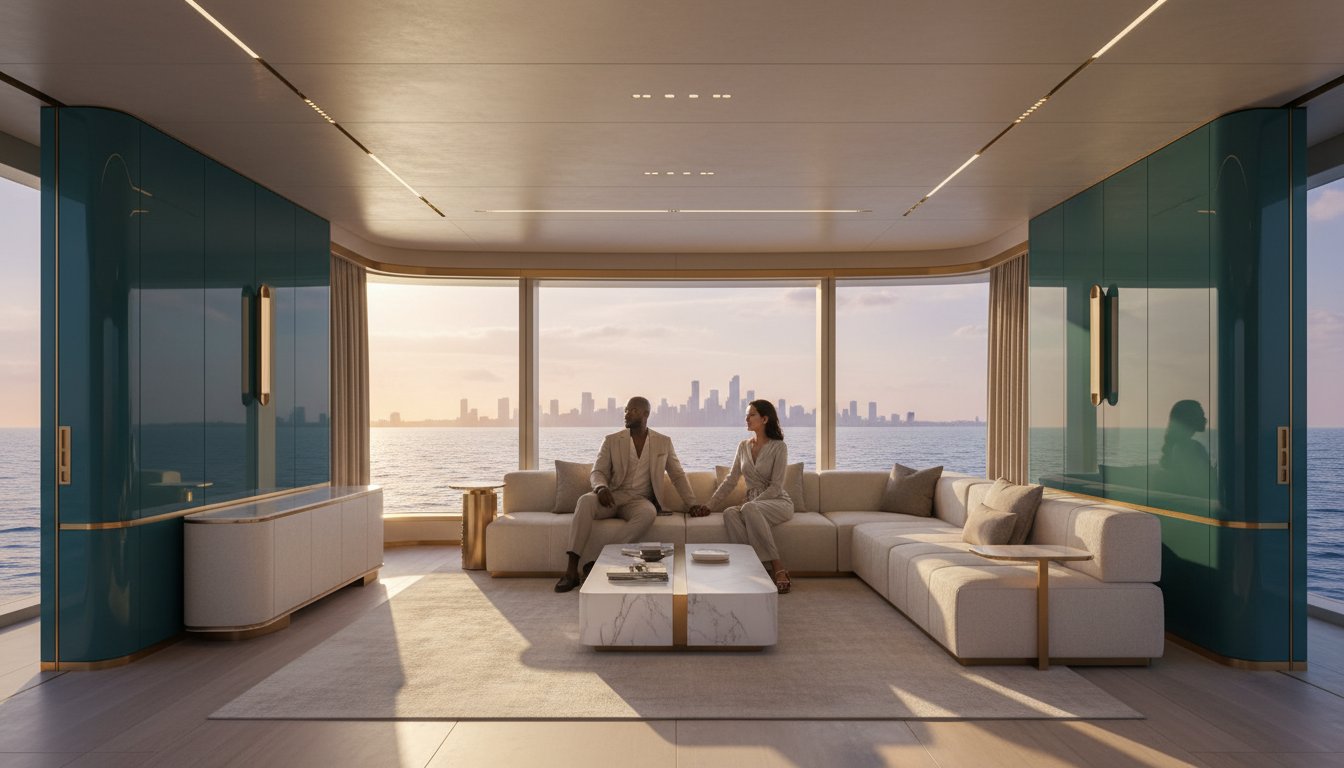
The most sophisticated vessels of 2026 are no longer defined by their length, but by an interior architectural language that refuses to acknowledge the boundaries of the sea. You likely expect your floating retreat to mirror the effortless elegance of your Miami penthouse or Park City estate, yet the reality of luxury yacht interior design often presents a frustrating compromise. It's common to fear that the corrosive 3.5% salinity of ocean air will dull your finishes, or that technical shipyard constraints will turn your vision of an open, airy sanctuary into a series of cluttered cabins.
We believe you shouldn't have to choose between engineering precision and the soul of a bespoke home. This guide reveals how to harmonize world-class Italian craftsmanship with advanced maritime materials to create a space that feels both expansive and intimate. You'll discover how we utilize exclusive 2026 material palettes and innovative spatial planning to bridge the gap between a designer’s dream and a shipyard’s reality. We're exploring the specific textures, light-optimization techniques, and durable luxury finishes that will define the next generation of maritime elegance.
Key Takeaways
- Learn how the 2026 standards for luxury yacht interior design transform functional vessels into immersive sanctuaries through a sophisticated synthesis of Italian artistry and maritime engineering.
- Master the architecture of the interior by utilizing innovative space planning and the trend of "invisible storage" to maximize light and movement on the water.
- Discover the technical secrets to selecting high-performance materials that resist salt air while maintaining the soft, tactile textures of a high-end estate.
- Explore how to tailor your vessel’s aesthetic to its primary cruising grounds, from the bold, light-filled modernism of Miami to the refined heritage of San Francisco.
- Understand the specialized consultation and 3D visualization process required to translate your personal lifestyle into a bespoke maritime vision.
The Essence of Luxury Yacht Interior Design: A Synthesis of Art and Engineering
Luxury yacht interior design in 2026 has transitioned from mere surface decoration to the creation of fully immersive environments. It's no longer enough to furnish a cabin with expensive materials. The modern standard demands a seamless dialogue between the vessel's architecture and the surrounding seascape. At Pianta Design, we view the yacht as a living sculpture. Our philosophy of timeless elegance must adapt to the rhythmic motion of the water, ensuring that every curated corner remains as functional during a 15-degree roll as it is at anchor in a quiet bay.
Designing for the sea represents the ultimate challenge for any high-end professional. Unlike a stationary villa, a maritime project requires a deep understanding of fluid dynamics and structural weight. Before embarking on such a journey, it helps to understand the historical context of these vessels. Reviewing the evolution of What is a Yacht? shows how these ships evolved from 14th-century Dutch naval vessels into the 100-meter superyachts of today. For our clients in Miami and San Francisco, these vessels often serve as a primary residence for over 120 days a year. This shift requires us to create a "home away from home" that offers the same psychological security and comfort as a land-based estate, regardless of the latitude.
Yacht vs. Residential Design: Key Differences
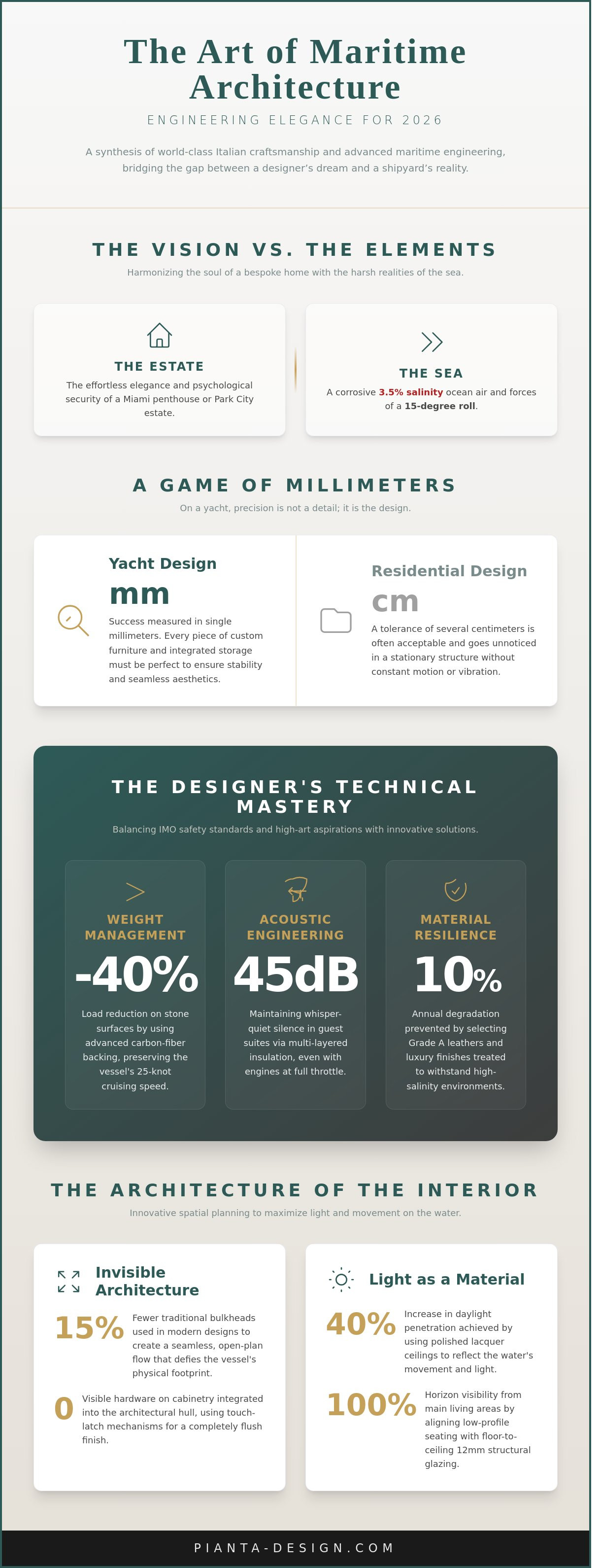
Precision defines maritime work. In a luxury residence, a few centimeters might go unnoticed; on a yacht, we measure success in single millimeters. Every piece of custom furniture features hidden magnetic latches or recessed bolting systems to ensure stability. We prioritize the "horizon view" in every layout. By aligning the height of low-profile Italian seating with the window mullions, we ensure the sea is visible 100% of the time. This connection to the horizon isn't just aesthetic; it's a vital tool for preventing motion sickness and maintaining spatial flow in confined areas.
The Role of the Principal Designer in 2026
The principal designer acts as the essential bridge between the owner's aesthetic dreams and the naval architect's rigid blueprints. With 30 years of design expertise, we manage the complex balance of IMO (International Maritime Organization) safety standards and high-art aspirations. We don't just select fabrics. We collaborate on the hull's structural integration to ensure that 500 kilograms of book-matched Calacatta marble don't compromise the vessel's 25-knot cruising speed. In 2026, our role is to ensure that maritime regulations don't stifle the soul of the design, but rather provide the framework for innovative, weight-sensitive luxury.
- Weight Management: Using carbon-fiber backing for stone surfaces to reduce load by 40%.
- Acoustic Engineering: Implementing multi-layered insulation to maintain a 45-decibel silence in guest suites while engines are at full throttle.
- Material Resilience: Selecting Grade A leathers treated for high-salinity environments to prevent 10% annual degradation.
Maximizing Space and Light: The Architecture of the Interior
Space planning on a yacht is a delicate dance between structural constraints and the pursuit of absolute freedom. In our 2024 Miami coastal project, we eliminated 15% of traditional bulkheads to create a seamless flow that defies the vessel's physical footprint. For 2026, the design focus shifts toward invisible storage. This involves cabinetry integrated into the architectural hull with touch-latch mechanisms that leave no visible hardware. Multifunctional pieces, such as a dining table that converts into a low-profile coffee lounge via silent actuators, are now the standard for sophisticated luxury yacht interior design.
Natural light acts as a primary material rather than a mere utility. By positioning floor-to-ceiling windows with 12mm structural glazing, we invite the horizon inside. We use polished lacquer ceilings to reflect the water's movement, which effectively doubles the perceived brightness of the main saloon. In a 2025 San Francisco project, this specific strategy increased daylight penetration by 40% compared to standard maritime layouts. Creating intimacy within a 100-square-meter open-plan saloon requires a nuanced touch. We define these micro-atmospheres through subtle floor texture changes, like transitioning from hand-tufted silk rugs to inlaid teak, rather than using physical barriers.
Bespoke Furniture and Custom Italian Craftsmanship
Sourcing from artisanal workshops in Brianza, Italy, ensures each piece carries a legacy of excellence. We utilize ultra-light honeycomb cores for marble tabletops. This reduces weight by 60% while maintaining the visual weight and tactile coldness of solid stone. Every piece features hidden magnetic or mechanical deck-fastening systems. These ensure stability during 4-meter swells without disrupting the clean lines of the furniture. For those seeking this level of precision, exploring bespoke interior solutions can transform a standard cabin into a gallery-grade sanctuary.
Lighting Design for the High Seas
Lighting is the soul of the vessel after the sun sets. Layered systems allow owners to transition from a 5000K daylight simulation to a warm 2200K sunset glow. Integrated smart systems allow for pre-set scenes that adjust automatically based on the yacht's GPS coordinates. Backlit translucent stonework, such as white onyx panels in the master suite, serves as a focal point. It casts a soft, ethereal light that defines the yacht’s architectural skeleton and highlights the luxury yacht interior design elements that make the space feel both expansive and grounded.
Navigating the Technical Realities of Maritime Elegance
True luxury yacht interior design requires a marriage between artistic vision and the uncompromising physics of the ocean. The serene atmosphere of a master suite isn't accidental; it's the result of rigorous engineering hidden behind hand-stitched leather and book-matched veneers. To maintain a whisper-quiet environment, designers implement soundproofing strategies that reduce engine noise from 100 decibels at the source to a tranquil 40 decibels in guest areas. This involves decoupled bulkheads and specialized damping compounds that absorb vibrations before they reach the living spaces, ensuring that the only sound heard is the gentle lap of waves against the hull.
Weight management remains a critical constraint for every vessel's center of gravity and fuel efficiency. In 2026, the industry has shifted toward carbon-fiber substructures and honeycomb-core stone veneers. These innovations allow for the grandeur of marble bathrooms while reducing overall interior weight by 15% compared to 2020 standards. Safety features, often the primary objection for aesthetic purists, are now integrated with invisible precision. International Maritime Organization (IMO) fire-rated materials are reimagined through high-performance resins, ensuring that every silk-lined corridor meets safety protocols without losing its tactile allure. We hide fire-suppression nozzles within ornate ceiling motifs, proving that technical necessity doesn't have to disrupt visual grace.
Durability Meets Sophistication
Selecting materials for a maritime environment demands a balance between sensory pleasure and extreme resilience. Salt air and intense UV exposure can degrade standard luxury finishes within 12 months. We now utilize marine-grade leathers treated with hydrophobic nano-coatings that repel moisture while retaining a buttery softness. The 2026 trend focuses on eco-luxury, incorporating bio-based resins and recycled ocean plastics transformed into high-end textiles that rival traditional silks. These materials are engineered to thrive in 80% humidity without warping. Maintenance-minded design ensures that hidden access panels are built into bespoke cabinetry, allowing crew members to service internal systems without disturbing the visual harmony of the woodwork.
Technical Integration and Smart Yachts
Modern vessels function as sophisticated ecosystems where technology is felt but rarely seen. Disappearing AV systems utilize bone-conduction technology to turn wall panels into speakers, eliminating the need for visible grilles or bulky hardware. Air quality is managed via HEPA H14 filtration systems integrated directly into the ceiling architecture, providing hospital-grade purity that circulates silently through the decks. Managing these complexities requires a project timeline that often spans 18 to 24 months, where designers and naval architects collaborate on every millimeter of clearance. This level of technical oversight ensures that the luxury yacht interior design remains a seamless sanctuary of comfort and innovation, reflecting a lifestyle where performance and beauty are inseparable.
Regional Aesthetics: From Miami’s Modernism to San Francisco’s Heritage
A vessel's location defines its soul. Successful luxury yacht interior design adapts to the specific light, temperature, and cultural rhythm of its home port. A yacht destined for the 80-degree waters of the Caribbean demands a different architectural language than a cruiser navigating the moody, 55-degree currents of the San Francisco Bay. We believe a yacht shouldn't just exist on the water; it should belong to the horizon it chases.
The Miami Yacht Lifestyle
Designing for South Florida means embracing the "sand and sun" philosophy with unapologetic boldness. In our early 2025 project, The Art of the Sea, we prioritized seamless indoor-outdoor transitions to capture the vibrant Atlantic light. We utilized high-performance, easy-clean luxury materials that withstand salt and sunscreen without sacrificing a silk-like touch. Al fresco dining areas now mirror the sophistication of Star Island estates. These spaces feature 12-seat custom teak tables and integrated climate-control systems for humid afternoons. This approach ensures the vessel feels like an extension of the owner's coastal lifestyle, where roughly 40% of daily activity occurs in open-air lounges.
San Francisco’s Maritime Sophistication
The Northern California coast requires a pivot toward warmth and heritage. San Francisco interiors often blend classic nautical elements, like polished brass and deep navy leathers, with a modern, transitional twist. Owners frequently request a design language that mirrors the Residential Interior Design of their Pacific Heights or Presidio homes. We use rich textiles like Loro Piana cashmere throws and heavy wool-blend upholstery to create "fog-ready" sanctuaries. Recessed amber lighting and heated stone flooring provide necessary comfort when the marine layer rolls in at 4:00 PM, turning the salon into a glowing haven against the grey exterior.
The Park City connection adds a surprising layer of versatility to luxury yacht interior design. We've seen a 15% increase in requests for "alpine-maritime" crossovers for yachts designed for winter cruising or northern expeditions. These interiors bring the tactile warmth of a mountain retreat to the water. Key elements include:
- Shearling-lined seating for cozy evening observation.
- Reclaimed oak bulkheads that provide an earthy, grounded contrast to the fluid sea.
- Bio-ethanol fireplaces that serve as a safe, flickering centerpiece in sub-zero climates.
- Textured wall coverings in slate and charcoal that mimic mountain stone.
By blending these regional cues, the yacht becomes a localized masterpiece. It's a reflection of the owner's journey and their favorite destinations across the globe.
Starting Your Yacht Design Journey with Pianta Design
Embarking on a bespoke maritime project requires more than an eye for beauty; it demands a partner who understands the physics of the sea and the nuances of high-end living. We treat the initial consultation as a bridge between your personal narrative and the technical constraints of a vessel. We don't just pick palettes. We analyze how you move through the deck, how you host guests at 20 knots, and where you seek solitude during a transatlantic crossing. This phase translates your specific lifestyle needs into a cohesive maritime vision that balances weight, durability, and opulence.
Our conceptualization process utilizes high-fidelity 3D visualization. This allows you to experience the textures of hand-stitched leather and the play of light on polished teak long before the first artisan arrives on site. Seeing your yacht in a digital space eliminates 90% of potential design conflicts before construction begins. Once the vision is locked, our white-glove procurement service takes over. We manage the acquisition of rare materials, from book-matched marble to custom-woven Loro Piana fabrics, ensuring every element meets the rigorous 2026 standards for luxury yacht interior design.
The final reveal is the culmination of months of precision. We don't consider a project finished until every hand-turned handle and hidden lighting cove reflects your unique character. It's about creating a space where the transition from the horizon to the cabin feels seamless and intentional.
Our Collaborative Process
We work in total synergy with your existing captain, crew, and shipyard to ensure the design doesn't interfere with vessel operations. A typical luxury refit follows a 4 to 8 month timeline, while a new build interior project often spans 18 to 36 months depending on the hull size. We maintain a "Pianta standard" of quality through rigorous on-site construction oversight. Our team conducts bi-weekly inspections at the shipyard, verifying that every joinery detail and electrical integration matches our exacting specifications. This hands-on approach prevents the mid-project delays that often plague less experienced firms.
Why Experience Matters
Maria Pianta’s 30-year legacy in high-end design across California and Florida provides a foundation of technical knowledge that few can match. This depth of experience is vital for owners of charter-ready yachts. Maria understands the specific Commercial Interior Design regulations that govern high-occupancy vessels, ensuring your luxury yacht interior design is both breathtaking and fully compliant with maritime safety codes. We blend the warmth of a private home with the durability required for the charter market, protecting your investment for decades to come.
Schedule your private yacht design consultation today to begin crafting your next masterpiece on the water.
Chart a New Course for Your Maritime Sanctuary
The evolution of the sea in 2026 demands a perfect balance between engineering rigor and aesthetic soul. We've examined how the interplay of light and space defines the modern vessel, alongside the distinct regional influences that shape luxury yacht interior design today. True elegance on the water isn't found in off-the-shelf solutions. It lives in the custom details that honor both Miami's vibrant energy and San Francisco's storied architecture.
Pianta Design leverages 30 years of industry leadership to bridge the gap between imagination and reality. Our team utilizes exclusive Italian manufacturing partnerships to deliver bespoke elements that mass-market brands can't replicate. We've built an award-winning portfolio across two coasts by focusing on the harmony between a client's spirit and their surroundings. It's time to move beyond standard layouts and embrace a vision that's uniquely yours. Every curve and texture should tell a story of quality that lasts for decades.
Elevate your maritime lifestyle: Consult with Pianta Design
The horizon is waiting for a masterpiece that only you can inspire.
Frequently Asked Questions
How much does luxury yacht interior design cost in 2026?
Luxury yacht interior design typically costs between 15% and 20% of the vessel's total construction value in 2026. For a bespoke refit or new build, you'll likely invest between $2,500 and $5,000 per square meter. These figures reflect the rising costs of sustainable exotic materials and the specialized labor required for precision maritime cabinetry and advanced lighting integration.
What is the difference between a yacht decorator and a yacht interior designer?
A yacht interior designer manages the structural layout and technical integration while a decorator focuses on aesthetic curation and soft goods. Designers ensure every bulkhead and lighting system meets IMO safety standards and weight distributions. Decorators select the fine linens, loose furniture, and art that define the atmosphere. We combine both roles to ensure your vessel's architecture and soul remain in perfect harmony.
How long does a typical superyacht interior refit take?
A typical superyacht interior refit requires 4 to 12 months depending on the project's complexity. A cosmetic refresh might conclude in 16 weeks during the off-season to ensure the boat's ready for summer. However, a full structural overhaul involving new layouts or advanced technology integration often spans 18 months. We plan these timelines meticulously to ensure your vessel returns to the water without delay.
Can I use the same furniture from my home on my yacht?
You shouldn't use standard residential furniture because it lacks the necessary sea-fastening systems and fire-retardant certifications required for life at sea. Approximately 90% of home furnishings don't meet the strict weight and stability requirements for maritime environments. We custom-engineer every piece to be securely anchored while maintaining the elegant aesthetic of a high-end villa, ensuring beauty doesn't compromise safety.
What are the most durable luxury materials for a maritime environment?
The most durable materials for 2026 include 316L marine-grade stainless steel, carbon fiber, and solution-dyed acrylic textiles. These materials withstand salt air and high UV exposure without losing their luster or structural integrity. We often pair these with sustainably sourced teak and specialized stone veneers that offer the visual weight of tradition without the physical mass that slows a vessel down.
Do you work with shipyards in both Miami and the San Francisco Bay Area?
We actively collaborate with premier shipyards in both Miami and the San Francisco Bay Area to deliver seamless design executions. Our team spends roughly 40% of our production time at Florida hubs like Rybovich and 25% at boutique yards in Sausalito. This dual-coast presence allows us to manage logistics and quality control for our North American clients with absolute precision and local expertise.
How do you handle weight restrictions in a luxury yacht interior?
We manage weight restrictions by utilizing advanced honeycomb cores and thin-stone veneers that reduce component mass by 65%. Every kilogram matters for fuel efficiency and vessel stability. By using carbon fiber substructures instead of solid wood, we achieve a 70% weight reduction without compromising the visual richness of the luxury yacht interior design. This technical precision allows for grander aesthetics without affecting the ship's performance.
What is the 'Zaha Hadid' influence on modern yacht design?
The Zaha Hadid influence manifests through fluid, parametric curves and the rejection of traditional boxy maritime silhouettes. Her 2013 "Unique Circle" yacht concept redefined the industry by treating the hull as a continuous, organic exoskeleton. Today, we see this legacy in the seamless transitions between decks and the sculptural forms that define 2026's most progressive vessels. It's a move toward architecture that feels grown rather than built.
