
Luxury Patio and Outdoor Space Design: A Guide to Choosing the Right Approach
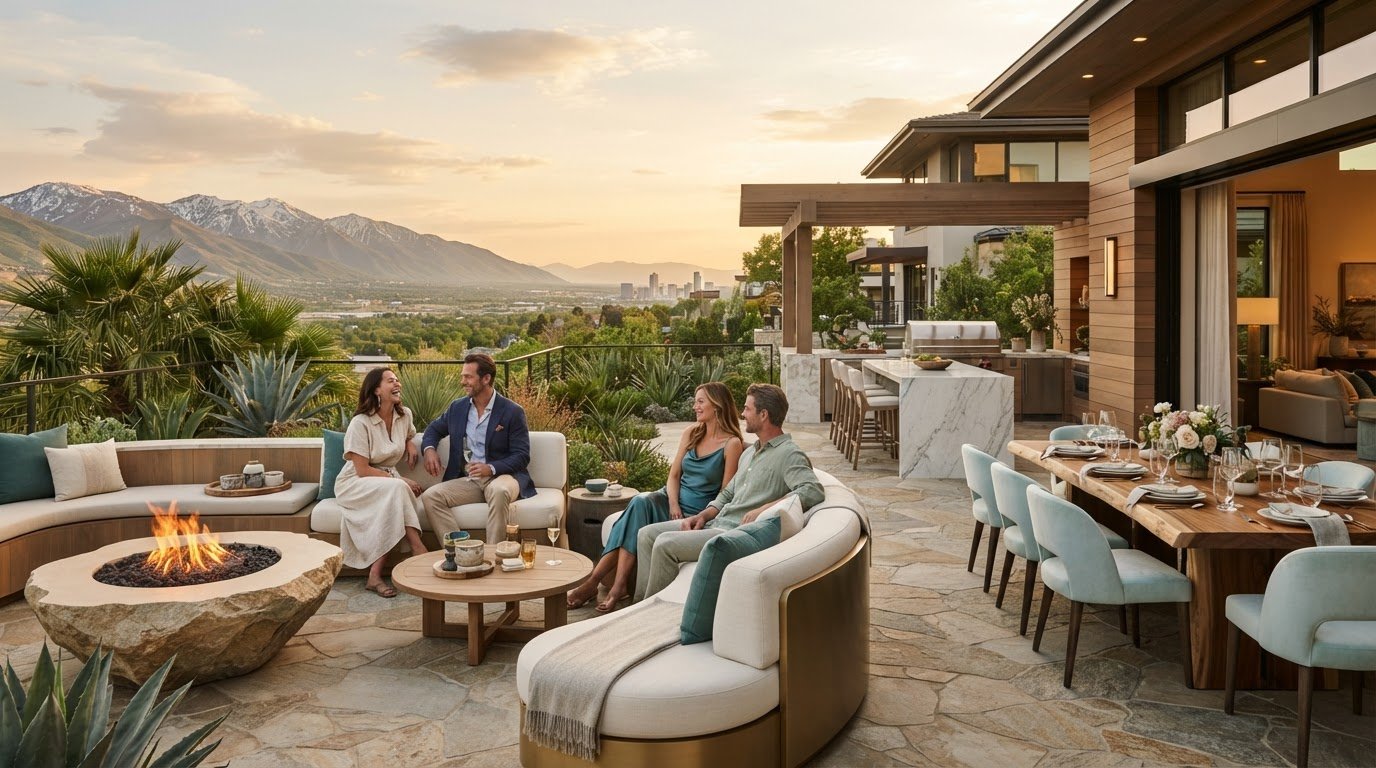
The most luxurious patio isn’t necessarily the one with the rarest stone or the most elaborate features. In luxury patio and outdoor space design, lasting refinement comes from choices that suit the home, the site, and the way people use the space.
If you’re unsure how to carry your interior style outdoors, or whether a material can handle the patio’s exposure and upkeep needs, start by addressing those questions in the design process. A thoughtful approach balances visual harmony with comfort, use, and practical performance. This guide offers a framework for comparing design directions and material options, so your patio feels like a considered extension of your home rather than a separate composition.
You’ll learn how to create a cohesive indoor-outdoor transition, plan for relaxing and entertaining, and weigh materials against local conditions and maintenance needs. We’ll also look at when a designer can help coordinate space planning, finishes, and custom furnishings, and why it’s important to clarify project scope and construction responsibilities early.
Key Takeaways
- Start luxury patio and outdoor space design by identifying how you want to use the space, from dining and entertaining to a quiet retreat.
- Compare design approaches by scope, then assess materials for appearance, comfort, exposure, and ongoing care.
- Review the patio’s specific local conditions early so an elegant choice also suits the setting and your maintenance preferences.
- Evaluate potential firms by portfolio relevance, project deliverables, responsibilities, and communication. Ask for examples of comparable exterior work.
- Use lifestyle, home connection, site conditions, materials, and scope as a framework for decisions and for identifying where professional support may help.
Luxury Patio and Outdoor Space Design Starts With How You Want to Live
A refined outdoor room begins with more than a furniture plan. It brings the home’s architecture, the character of its setting, and the people who use it into a considered relationship. In luxury patio and outdoor space design, beauty matters, but so do comfort, movement, and the everyday routines that make a space inviting.
Start by describing an ordinary week, not just an ideal gathering. Who will use the patio, how often, and at what times of day? A household that eats outdoors regularly may need a dining area close to the kitchen, while someone who values quiet mornings may prioritize a sheltered seat with an open view. For a family, clear circulation between the home and poolside seating may matter more than a formal entertaining zone. Separate daily needs from occasional celebrations and seasonal use to keep the plan purposeful.
Think in zones, even if the patio is compact: arrival, dining, lounging, or poolside seating where applicable. Then consider how people will move between them. A path that cuts through a conversation area can make an otherwise attractive layout feel awkward. Sightlines influence where seating belongs, while shade, privacy, and access affect how comfortable each zone feels throughout the day. These choices connect to broader principles of garden design, including the relationship between layout, hardscape, and planting.
How should a patio relate to the home?
Look at the rooms beside the patio and how people move between them. A dining room door may suggest a natural place for outdoor dining; a living room opening may make a lounge feel like a continuation of the interior. Note door swings, thresholds, views, and the route people take when carrying food or drinks. These practical details can shape the plan as much as the patio’s proportions.
Continuity doesn’t require identical furnishings or finishes indoors and out. Instead, repeat selected cues, such as a related color, a compatible material, or a similar sense of proportion, while choosing outdoor pieces for their setting and use. The result feels connected without becoming a copy of the interior. For a broader perspective on creating harmony throughout the home, explore luxury residential interior design.
Before selecting finishes or furnishings, write a brief that captures who will use the space, daily activities, preferred atmosphere, key views, and essential zones. This shared reference gives each design decision a purpose and helps the outdoor area feel composed, comfortable, and distinctly yours.
Compare Outdoor Design Approaches, Materials, and Comfort Before You Commit
Once your priorities are clear, decide how much of the patio to address at once. A phased refresh might begin with seating or lighting, while a coordinated furnishing plan considers how pieces, finishes, and zones work together. A broader design-led renovation may involve more extensive planning and coordination with other project professionals. The right approach depends on your goals, the existing space, and how much coordination you want to manage.
How do you compare design-led and piecemeal approaches?
Choosing items individually over time can offer flexibility, but it may leave questions of scale, finish, and placement to resolve as the space evolves. A unified plan establishes an overall direction before selections are made. That doesn’t automatically include procurement, installation, or construction oversight, so clarify each responsibility rather than assuming it’s part of design. For broader outdoor site work, the American Society of Landscape Architects offers information on residential landscape architecture, a discipline distinct from interior design.
Compare options using the same criteria. A simple checklist can show where proposals differ:
- Aesthetic fit: Does the direction relate to the home’s architecture and your intended atmosphere?
- Upkeep: What cleaning, care, or maintenance does each finish require?
- Comfort: Are seating, surfaces, shade, and circulation suited to the way you’ll use the patio?
- Coordination: Who aligns furnishings, finishes, and related design decisions?
- Responsibilities: Which tasks are included, and which belong to suppliers or construction professionals?
What should you assess when selecting outdoor finishes?
Look beyond a sample’s color. Consider its texture underfoot or to the touch, how it feels in sun or shade, and whether its visual character complements the home. Assess the property’s exposure to sun, moisture, temperature changes, and wind, along with the level of ongoing care you’re willing to take on. Suitability depends on the specific site and product, so ask suppliers or qualified professionals for written performance specifications, care guidance, and confirmation that a finish is appropriate for its intended use.
For example, a surface that looks harmonious beside interior flooring may feel too hot or require more upkeep than you prefer in its outdoor location. Compare samples in context, and consider how color and texture relate to nearby materials rather than selecting each element in isolation. This is central to luxury patio and outdoor space design: visual refinement should go hand in hand with comfort and practical expectations.
Before committing, document the proposed scope, selection responsibilities, and any construction work that sits outside the design agreement. If you’re exploring how interior design capabilities might contribute to a cohesive home and patio vision, review Pianta Design’s interior design services and confirm whether the specific exterior scope is supported.
Address the Main Concern: Will a Luxury Patio Work in Its Local Setting?
Luxury doesn’t mean choosing the most dramatic finish and asking the space to accommodate it. A successful patio feels composed because its materials, furnishings, and layout respond to the property while supporting comfort and everyday use. In luxury patio and outdoor space design, site review isn’t a technical step to leave until later. It helps shape the design brief from the beginning.
Conditions can vary within a city, a neighborhood, and even a single property. California, Florida, and Utah are useful contexts for distinct site assessments, not shortcuts to assumptions about weather or material performance. A San Francisco home, a Miami residence, a Park City property, and a Salt Lake City home each call for attention to their own orientation, exposure, drainage, and intended use. Confirm location-specific requirements with qualified local professionals rather than relying on broad regional generalizations.
What local conditions should be reviewed before choosing finishes?
During a site review, note how the space behaves over the course of the day and through relevant seasons. Record the direction and duration of direct sun, changing shade, drainage patterns, wind exposure, and the position of nearby trees or other vegetation. These observations can inform where seating belongs, whether a finish is exposed or sheltered, and what care may be practical. The American Society of Landscape Architects’ residential design resource offers a broader perspective on outdoor spaces.
- San Francisco and the nearby Bay Area: Verify conditions at the specific property instead of assuming consistent weather or exposure across the region.
- Miami: Ask local professionals to assess the property’s actual exposure, drainage, and any seasonal considerations relevant to the proposed work.
- Park City and Salt Lake City: Confirm site-specific exposure and seasonal needs with local professionals before finalizing finishes or furnishings.
These checks don’t replace professional guidance. Ask suppliers for product-specific suitability and care information, and confirm applicable project requirements with qualified local professionals. Don’t assume a finish or construction detail is appropriate simply because it has worked elsewhere.
How can comfort and upkeep remain part of a refined design?
Elegance should be felt as well as seen. Consider shade where people will sit, comfortable seating for the way they plan to linger, and lighting that supports intended use. Privacy, clear circulation, and convenient access can also make a space more welcoming without adding visual clutter.
Before choosing furnishings or finishes, discuss routine cleaning, protective care, and possible replacement expectations. A material’s appearance matters, but so does the effort required to maintain it in its actual location. Include these practical considerations in the design conversation alongside color, texture, and architectural fit.
Takeaway: Outdoor material choices should respond to verified site conditions and realistic care needs.
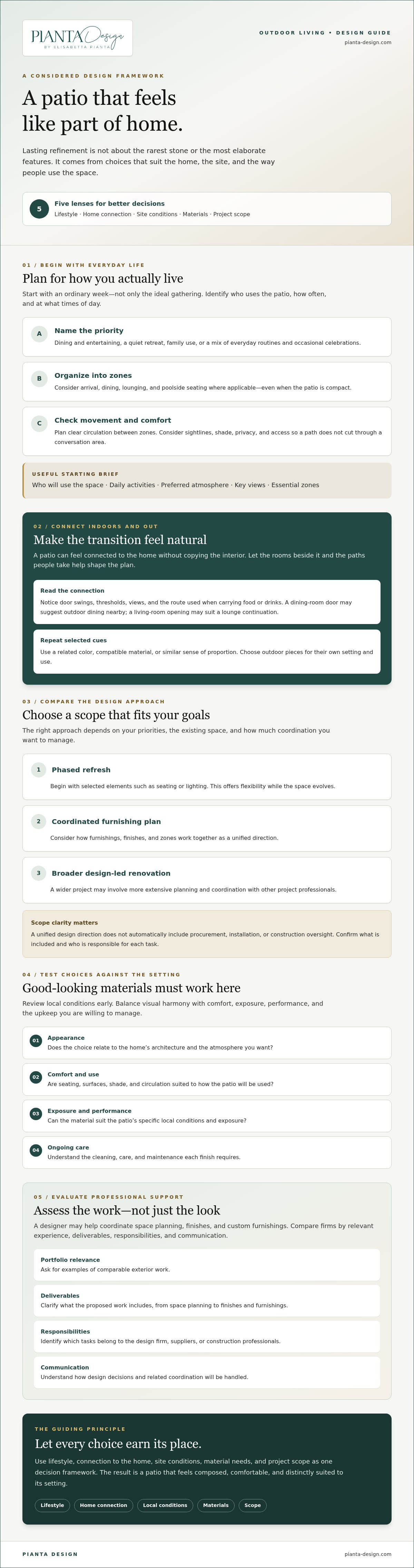
How to Evaluate a Luxury Outdoor Design Firm and Project Scope
The right partner for luxury patio and outdoor space design should understand both the home and the practical boundaries of the work. A polished portfolio is a starting point, not proof that a firm has experience with your specific exterior project. Ask for relevant examples, clarify what the firm will deliver, and establish who is responsible for each step before moving forward.
What questions reveal whether a firm suits your project?
Use this sequence to assess fit and make conversations with prospective firms more focused:
- Portfolio fit: Ask to see work relevant to your home, design priorities, and the outdoor space you’re considering. Discuss how the firm connects architecture and client routines in its design process.
- Site needs: Clarify who measures the site and identifies information that may require input from other professionals. Ask how existing conditions will inform design decisions.
- Deliverables: Confirm what you’ll receive, such as plans, finish selections, or furnishing recommendations, and which decision milestones are part of the process.
- Responsibilities: Ask who handles sourcing, procurement, technical coordination, contractor communication, and construction. These are distinct responsibilities. Interior design or project management shouldn’t be assumed to include landscape architecture or construction labor.
- Communication: Agree on the primary point of contact, how questions and approvals will be managed, and how changes to the proposed scope are discussed.
Ask directly whether the firm has relevant exterior-space experience and request examples before drawing conclusions. Pianta Design offers residential interior design, space planning, material and finish selection, custom furniture design, and project management. Confirm whether the firm accepts your patio project and which responsibilities apply to the exterior scope.
How should you assess custom furnishings and project coordination?
Bespoke furniture may be worth exploring when standard dimensions don’t suit a particular layout, function, or spatial constraint. Ask how a custom piece would address the brief, who develops and approves its specifications, and who manages sourcing, anticipated lead times, delivery, and installation coordination. Confirm which steps are included in the design agreement and which are handled by suppliers or other project professionals.
For more context on the design questions that can inform made-to-measure pieces, read these custom furniture design considerations. If you’re exploring whether Pianta Design’s interior design capabilities align with your project, review Pianta Design’s services and confirm the specific scope directly.
Bring Your Luxury Patio Vision Into a Cohesive Home Design
A considered outdoor space grows from a clear set of priorities: how you want to live, how the patio relates to the home, what the site can support, how much care materials require, and what the project scope includes. Keeping these factors in view helps each decision contribute to a connected whole rather than a collection of isolated selections.
Where can Pianta Design’s experience contribute?
Pianta Design’s capabilities include residential interior design, space planning, custom furniture design, and material and finish selection. These disciplines may be relevant to continuity between the home and patio, subject to the firm confirming the specific project scope. Led by Principal Designer Maria Pianta, the firm brings more than 30 years of experience and has offices in California, Florida, and Utah.
That background should be considered in context, not as confirmation of a standalone outdoor design service. Before proceeding, ask whether Pianta currently accepts patio or exterior-space projects, which deliverables and project-management responsibilities apply, and what other professionals may be needed. Pianta Design does not provide landscape architecture or construction labor, so clarify who would handle those services if your project requires them.
What should you prepare for an initial design conversation?
A concise project brief can make an early conversation more productive. Gather photographs of the patio and adjoining rooms, approximate dimensions, and any existing plans. Note the activities you want to accommodate, the visual qualities you’re drawn to, your maintenance expectations, and the decisions that matter most. If you’re still defining how finishes, proportion, lighting, and furnishings relate across the home, the elements of luxury interior design offer useful context for thinking about visual coherence.
Bring questions, too. Ask how the firm would approach the relationship between the interior and outdoor space, what information it needs to assess the project, and how responsibilities would be divided among the design team, suppliers, and any construction or landscape professionals. Confirm that proposed services match your priorities before treating them as part of the scope.
For homeowners considering luxury patio and outdoor space design, the next step can be a focused discussion about project fit, location, goals, and the level of design support desired. Pianta Design’s residential expertise may offer a relevant perspective on the home’s overall design. Confirm exterior availability, deliverables, and partner responsibilities directly before making plans.
Shape an Outdoor Space That Belongs to Your Home
A considered patio begins with how you want to live, then takes shape around the home, the site, and the care its materials require. In luxury patio and outdoor space design, visual harmony matters, but so do comfort, practical use, and a clearly defined project scope. Evaluate each design choice against those priorities, and confirm what a firm will deliver before assuming exterior work is included.
Pianta Design’s residential interior design, space planning, custom furniture design, and material selection capabilities may be relevant to creating continuity between indoor and outdoor areas, depending on project fit. Led by Principal Designer Maria Pianta, the firm brings more than 30 years of design experience, has offices in California, Florida, and Utah, and collaborates with Italian manufacturers. Confirm patio project availability, specific deliverables, and partner responsibilities directly.
To explore how your home’s design goals might guide the conversation, discuss your project with Pianta Design. Share your priorities and location, whether you’re in Park City, Salt Lake City, San Francisco, or Miami, and confirm the project scope and responsibilities before moving ahead.
Frequently Asked Questions
What does luxury patio and outdoor space design include?
Luxury patio and outdoor space design brings layout, comfort, materials, and the home’s architecture into one considered plan. Depending on the project, this may involve defining dining and lounging areas, selecting outdoor furnishings and finishes, and considering shade, lighting, privacy, and circulation. Site conditions and intended use shape the choices. If the project involves landscaping or construction, confirm which qualified professionals are needed and who is responsible for each part.
How do I choose materials for a luxury outdoor space?
Choose materials by balancing appearance and feel with site exposure and care requirements. Assess where the finish will be used, how much sun, moisture, wind, or temperature variation it may encounter, and how it fits the home’s architecture. Ask the supplier or a qualified professional for product-specific performance and maintenance guidance. Compare samples in context, and discuss cleaning, protective care, and replacement expectations before making selections.
Can an interior designer help with a patio or outdoor living area?
An interior designer may help connect an outdoor area to the home through space planning, furnishings, lighting, and material relationships. The exact contribution depends on the designer’s experience and agreed project scope. Pianta Design offers residential interior design, custom furniture design, space planning, lighting design, and material and finish selection. Confirm directly whether the firm accepts your exterior project and which services or project-management responsibilities would apply.
How do I make an outdoor space feel connected to my home?
Relate the patio to the rooms beside it through proportion, color, texture, and a thoughtful transition at doors and thresholds. For example, outdoor furnishings might echo the interior’s palette without copying its exact fabrics or finishes. Consider how views, access, and circulation link the spaces, too. A cohesive design feels like a natural extension of the home while using materials and furnishings suited to outdoor conditions.
What should I ask before hiring an outdoor space designer?
Ask to see examples of relevant exterior-space work and how the designer would address your home’s architecture, routines, and site conditions. Clarify the deliverables, decision milestones, communication process, and who handles measurements, sourcing, approvals, technical coordination, and contractor communication. Request a clear description of included and excluded services. Don’t assume design, procurement, project management, landscape architecture, and construction are all part of one scope.
Does a luxury patio design firm handle construction and landscaping?
Not necessarily. Design, landscape architecture, and construction labor are distinct responsibilities, so ask the firm to specify what it provides and which other professionals your project may require. Pianta Design does not provide general contracting, construction labor, or landscape architecture. Confirm directly whether project management is available for any exterior work, along with who will manage construction and any landscape design or installation.
How should outdoor design differ between Miami, San Francisco, and Park City?
Begin with the property, not assumptions about the city. In Miami, San Francisco, Park City, or Salt Lake City, assess the specific site’s orientation, shade, drainage, wind exposure, vegetation, and intended seasonal use. Ask local professionals to verify relevant material performance and project requirements before finalizing selections. Pianta Design has offices in Florida, California, and Utah, but exterior project availability, scope, and responsibilities should be confirmed directly for your location.
