
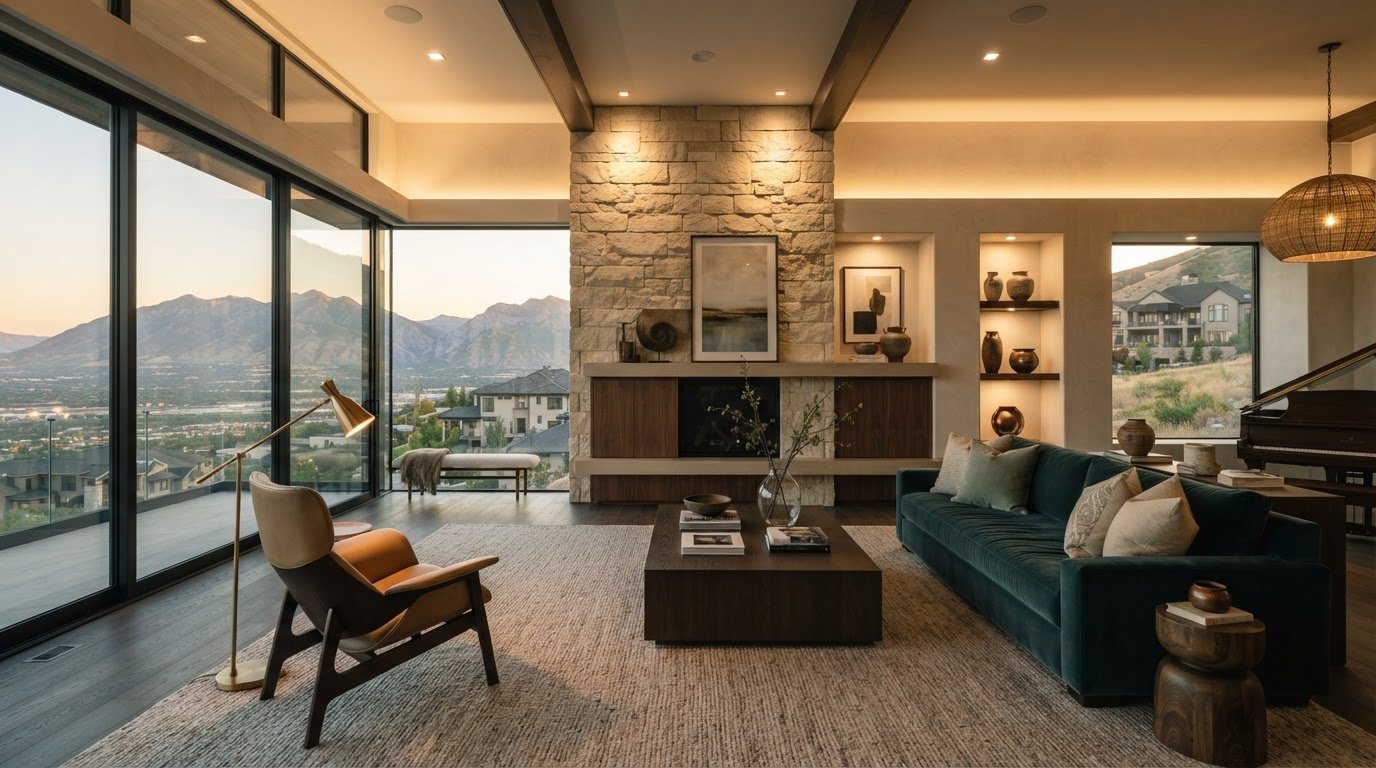
What if a room’s lighting felt more considered without adding another fixture? Learning how to layer lighting in a room starts with looking beyond the number of lamps and ceiling lights. A space can feel flat, dim, or harsh when the light doesn’t suit how you use it, even when the room has plenty of fixtures.
It’s natural to wonder where each light belongs, or whether a better result requires a renovation. Often, balance comes from understanding the role of each source: ambient lighting establishes an overall glow, task lighting supports focused activities, and accent lighting brings depth to architectural details and objects you want to highlight.
This guide explains how these layers work together and how to shape a flexible plan around your room’s activities, natural light, and atmosphere. A practical room-by-room overview will help you decide where lighting can make the greatest difference, without relying on fixture count alone. The result is a space that feels comfortable and inviting through changing routines and times of day.
Key Takeaways
- Learn how ambient, task, and accent lighting serve different purposes, then combine them to create a balanced room.
- Discover how to layer lighting in a room by starting with daily activities, mapping zones, and considering how the space changes throughout the day.
- Use furniture placement, ceiling height, and sightlines to guide where lighting belongs.
- Find out how to avoid glare, uneven brightness, and competing focal points without adding fixtures just for the sake of it.
- Apply a simple room-by-room checklist and learn when coordinated lighting design can help connect light with the wider interior.
How to Layer Lighting in a Room: What the Three Layers Do
A single overhead fixture can leave a room bright in one spot and shadowy in another, with little distinction between a place to read and a corner meant to feel restful. Understanding how to layer lighting in a room begins with a shift in perspective: plan light around what the space needs to do and how you want it to feel, rather than relying on one source to do everything.
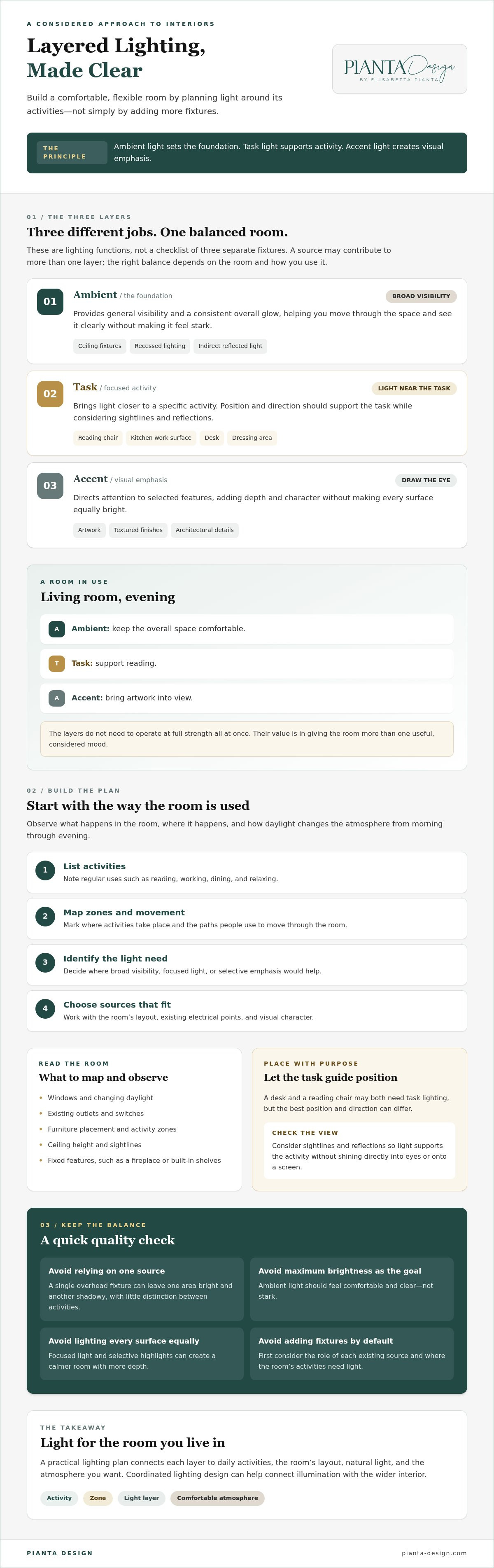
Ambient light makes a room broadly visible, task light supports a specific activity, and accent light draws the eye to a feature. These are functions, not a checklist of three separate fixtures. One carefully chosen source may contribute to more than one layer, while the right balance depends on the room, its layout, and how you use it.
This approach sits within the broader discipline of Architectural lighting design, which considers light as part of a space’s visual experience as well as its practical use. Thinking in layers helps connect illumination with the architecture and the activities that bring a room to life.
Ambient lighting: the room's comfortable foundation
Ambient lighting provides general visibility, giving the room a consistent foundation rather than concentrating brightness in a single pool. Ceiling fixtures, recessed lighting, and indirect light reflected off a surface can all contribute. The aim isn’t maximum brightness. It’s comfortable illumination that lets you move through the space and see it clearly without making the room feel stark. A ceiling fixture may establish this layer, but it doesn’t have to carry the entire lighting plan.
Task and accent lighting: focus and visual emphasis
Task lighting brings light closer to an activity: beside a chair for reading, over a kitchen work surface, near a dressing area, or at a desk. Accent lighting serves a different purpose, guiding attention toward artwork, a textured finish, or an architectural detail. Together, these layers give ambient light greater precision and depth. A room can feel calmer when the entire space isn’t equally bright, with focused light supporting what you’re doing and selective highlights giving the interior a stronger sense of character.
Consider a living room in the evening: ambient light can keep the overall space comfortable, task light can support reading, and an accent source can bring artwork into view. The layers don’t need to operate at full strength all at once. Their value lies in giving the room more than one useful, considered mood.
How to Plan Ambient, Task, and Accent Lighting Around Room Activities
A useful lighting plan begins with observation, not a fixture catalogue. Before deciding how to layer lighting in a room, notice what happens there, where it happens, and how daylight changes the atmosphere from morning through evening. A living room might serve as a reading space, a work-from-home spot, and a place to gather, with each activity calling for a different relationship to light.
Start with a room-use and activity map
Walk through a typical day and note recurring activities and where they take place. Mark the reading chair, dining surface, desk or work area, and the paths people use to move through the room. Also record windows, existing outlets and switches, and fixed features such as a fireplace or built-in shelves. Observe these areas at different times before changing anything. A work surface that feels bright in the morning may be shadowed by evening.
Use your notes to make a simple plan:
- List activities. Include regular uses, from reading and working to dining or relaxing.
- Map zones. Mark where each activity takes place, along with circulation paths.
- Identify the light need. Decide where broad visibility is needed, where focused light would help, and which details merit emphasis.
- Choose sources. Select lighting that serves those needs and works with the room’s layout, existing electrical points, and visual character.
Match each zone with a suitable lighting layer
Begin by considering the room’s general ambient coverage, then add focused light where activities call for it. A desk and a reading chair may both need task lighting, but the ideal position and direction will differ. Place each source near its task while considering sightlines and reflections, so the light supports the activity without shining directly into the eyes or onto a screen.
Accent lighting is more selective. It can draw attention to a piece of art or reveal the texture of a wall finish, but not every surface needs emphasis. Light becomes part of the room’s visual composition here: its relationship to scale, contrast, and balance matters as much as its practical function. Explore the elements of interior design for a broader perspective on how these choices shape a cohesive space.
There’s no universal fixture count or arrangement. A well-placed lamp, an existing ceiling source, or an architectural feature may already contribute to the plan. If you’d like help coordinating light with layout, furnishings, and finishes, consider Pianta Design’s lighting design as part of a considered interior.
Where to Place Layered Lighting for a Balanced Room
Good placement responds to the room as it’s furnished and lived in. A light that works above an open floor may be poorly positioned once a tall bookcase, artwork, or a favorite reading chair enters the picture. A useful rule is simple: place lighting according to the room’s activities and layout, not by applying the same fixture pattern everywhere.
To plan how to layer lighting in a room, sketch the space from above. Mark furniture, windows, doors, and circulation paths, then add each proposed light source with an arrow showing where its light should fall. Label its purpose, such as general visibility, reading, food preparation, or highlighting art. This simple diagram can reveal dark areas, obstructed sightlines, and spots where several sources might compete.
Living rooms and bedrooms: balance general light with intimate zones
In a living room, consider the seating arrangement first. A floor or table lamp near a reading chair can provide focused light, while a separate source may suit a sofa or conversation area. Highlight artwork selectively rather than lighting every wall equally. Furniture height and lamp shades affect where light falls, so check whether a source is visible from seated positions and whether it creates glare.
Bedrooms often serve several purposes too. Lighting near a bed can support reading, while a dressing area may need clearer, more direct illumination. Softer general light can help the room feel settled in the evening. Table and floor lamps offer flexibility when their placement suits the furniture and available space, but no single arrangement is right for every bedroom.
Kitchens and dining rooms: light work surfaces and gathering areas
In a kitchen, place focused light where hands and tools meet the work surface. Think about where you stand while preparing food: a source behind you may cast shadows across the counter, while a light in your direct line of sight can feel uncomfortable. Look for reflections from glossy surfaces too, and adjust the direction or position to preserve clear, comfortable visibility.
A dining area benefits from light that gives the table presence without overpowering the rest of the room. Consider the table’s position, ceiling height, and views across the space before choosing a source or its location. The result should support meals and conversation while maintaining a connection to the surrounding rooms. For a wider view of how furnishings, finishes, and light work together, explore the art of residential interior design.
How to Avoid Harsh, Flat, or Overcomplicated Layered Lighting
Layered lighting doesn’t require filling every corner with a fixture or starting a major renovation. The aim is to give light a clear purpose, then adjust its placement and quality until the room feels comfortable. More fixtures add sources; better lighting creates useful choices for how a room looks and functions.
Why more fixtures do not automatically create better lighting
Several sources aimed at the same surface can make a room feel busy, while bare or poorly directed light may cause glare from a screen, glossy tabletop, or polished finish. Uneven brightness can leave one area uncomfortably bright beside another that feels dim. Instead of redesigning the entire room, identify one problem zone first. A reading corner that feels shadowy, for example, may need a better-positioned source rather than another light in the center of the ceiling.
As you consider how to layer lighting in a room, look at both the source and what it illuminates. A fixture’s shape, shade, direction, and position all affect how light reaches a surface and how it feels from a seated or standing viewpoint. Purposeful placement and suitable light distribution matter more than fixture count.
Choose light quality and controls with care
Light quality affects how a room’s colors and materials appear. Color temperature describes whether light reads as warmer and more golden or cooler and more neutral. Color rendering refers to how naturally colors appear under that light. In a coordinated interior, consistency between nearby sources can help finishes and furnishings feel harmonious, while a deliberate contrast may suit a particular mood or task.
Dimmers can let you soften a room’s illumination for a quieter evening or raise it for an activity that needs clearer visibility. Separate switches can also give different groups of lights independent control, so you don’t have to turn on every source at once. These options depend on the existing setup and the products selected.
- Check that the bulb, fixture, and dimmer are compatible before purchasing.
- Review product guidance for dimming, control type, and intended use.
- Test the lighting in the room, since finishes and placement influence the result.
Product specifications vary, so confirm details with the manufacturer or a qualified professional rather than assuming all bulbs, fixtures, and controls work together. For a lighting plan that considers the room as a whole, explore professional lighting design.
A Simple Room-by-Room Lighting Plan and When to Seek Design Help
A finished lighting plan should make sense in daily use, not only on paper. Whether you’re refining one room or considering how to layer lighting in a room as part of a broader update, use this checklist to review the whole experience. Test the arrangement in the morning, during the day, and in the evening before settling on final choices. Natural light, changing activities, and the mood you want can all affect how the room feels.
Use this checklist to refine a lighting scheme
- Activities: Confirm that each regular activity has suitable light, from reading or working to preparing food or getting dressed.
- Zones: Check that the lighting supports the different areas of the room and the paths between them.
- Layers: Make sure the plan provides comfortable general illumination, focused light where needed, and selective emphasis without forcing every source to be on at once.
- Placement: Look for dark corners, distracting glare, and several bright focal points competing for attention. Consider how the light falls around the furniture and finishes.
- Controls: Review whether switches are conveniently located and whether separate lighting zones can be adjusted to suit different activities.
- Open questions: Record uncertainties about wiring, controls, or installation and discuss them with a qualified professional before making changes.
Live with the proposed setup for a while if you can. Notice whether the reading area feels comfortable, whether the room remains welcoming after daylight fades, and whether you can adjust the atmosphere without switching on every light. These observations can clarify what works and what still needs attention.
When a lighting designer can help bring the room together
Professional planning may be useful when a room has several functions, an unusual layout, or lighting decisions that need to coordinate with a renovation. Light doesn’t sit apart from the rest of the interior: furniture placement, finishes, architectural features, and daily routines all influence where it belongs and how it should feel.
Pianta Design offers lighting design and residential interior design, bringing these considerations into the wider composition of a home. The firm works on residential interiors in Park City, Salt Lake City, San Francisco, and Miami. If you’d like to explore support for a considered residential interior, Explore Pianta Design.
Create a More Considered Lighting Plan
A balanced room isn’t defined by how many fixtures it holds, but by how thoughtfully light supports its changing uses. Ambient, task, and accent lighting each bring a distinct quality, and their placement should follow the room’s activities, furniture, and architectural details. Start with the areas that feel uncomfortable or underlit, then consider how the space feels at different times of day before making larger changes.
As you decide how to layer lighting in a room, remember that flexibility matters as much as appearance. Suitable placement and controls can help a room shift from focused work to a quieter evening atmosphere without overwhelming it with unnecessary fixtures.
For a home where lighting, layout, and finishes need to work in concert, Pianta Design brings more than 30 years of interior design experience to its residential interior design and lighting design services. Serving homeowners in Park City, Salt Lake City, San Francisco, and Miami, the firm can help shape a considered residential interior. Explore Pianta Design to discuss a home that feels both functional and inviting.
Frequently Asked Questions
What are the three layers of lighting in a room?
The three layers are ambient, task, and accent lighting. Ambient light provides general visibility throughout the room; task lighting supports activities such as reading, cooking, or working; and accent lighting draws attention to features like artwork or architectural details. Think of these as lighting functions, not necessarily three separate fixtures. A well-positioned source may contribute to more than one layer, depending on its direction and purpose.
How do you layer lighting in a living room?
Start by identifying how you use the living room, then place ambient light for comfortable overall visibility and add focused sources where activities happen. A reading chair may benefit from a nearby lamp, while artwork or a textured wall can be highlighted selectively. Consider furniture arrangement and seated sightlines to reduce glare. You don’t need to illuminate every area equally; aim for flexible light that suits both conversation and quieter moments.
Can you layer lighting without recessed lights?
Yes, recessed lights aren’t required to create a layered scheme. A ceiling fixture, table or floor lamps, and carefully directed accent sources can serve different purposes without altering the ceiling. Begin with the room’s existing light and identify any areas that feel uncomfortable or underlit. Then consider whether a movable lamp or a change in placement could help. If electrical work is needed, ask a qualified professional about appropriate options.
How many light sources should a room have?
There’s no universal number. The right amount depends on the room’s size, layout, natural light, and activities. Instead of counting fixtures, check whether the space has comfortable general visibility, useful light for key tasks, and enough visual emphasis to support its focal points. A compact room may work well with a few carefully placed sources, while a larger or multi-use space may call for more distinct lighting zones.
What is the difference between ambient and accent lighting?
Ambient lighting supports general visibility across a room, while accent lighting highlights a selected feature. For example, ambient light helps you move through a living space comfortably, whereas accent light might draw attention to a painting, a sculptural object, or an interesting surface. The two serve different purposes, so accent lighting shouldn’t be expected to illuminate the whole room. Used together, they can create both a practical foundation and visual depth.
How do you avoid harsh lighting in a room?
Soften harsh lighting by considering its direction, position, and brightness. A source aimed at a reflective surface or placed directly in your sightline can create distracting glare. Check for sharp contrasts between bright and dim areas, then adjust a fixture’s direction or use separate controls to reduce competing sources. Dimmers may offer more flexibility, but verify that the bulb, fixture, and dimmer are compatible before purchasing or making changes.
Should all the lights in a room have the same color temperature?
Not always, but nearby sources usually feel more cohesive when their color temperatures are compatible. Warmer light tends to appear golden and relaxed, while cooler light can feel more neutral. A deliberate contrast may suit different activities, but an unplanned mix can make finishes and furnishings appear inconsistent. Compare the light sources in the actual room, since surrounding materials affect how their color reads. Check product details before selecting bulbs or fixtures.
For homeowners in Park City, Salt Lake City, San Francisco, and Miami, Pianta Design offers residential interior design and lighting design, informed by more than 30 years of interior design experience.
