
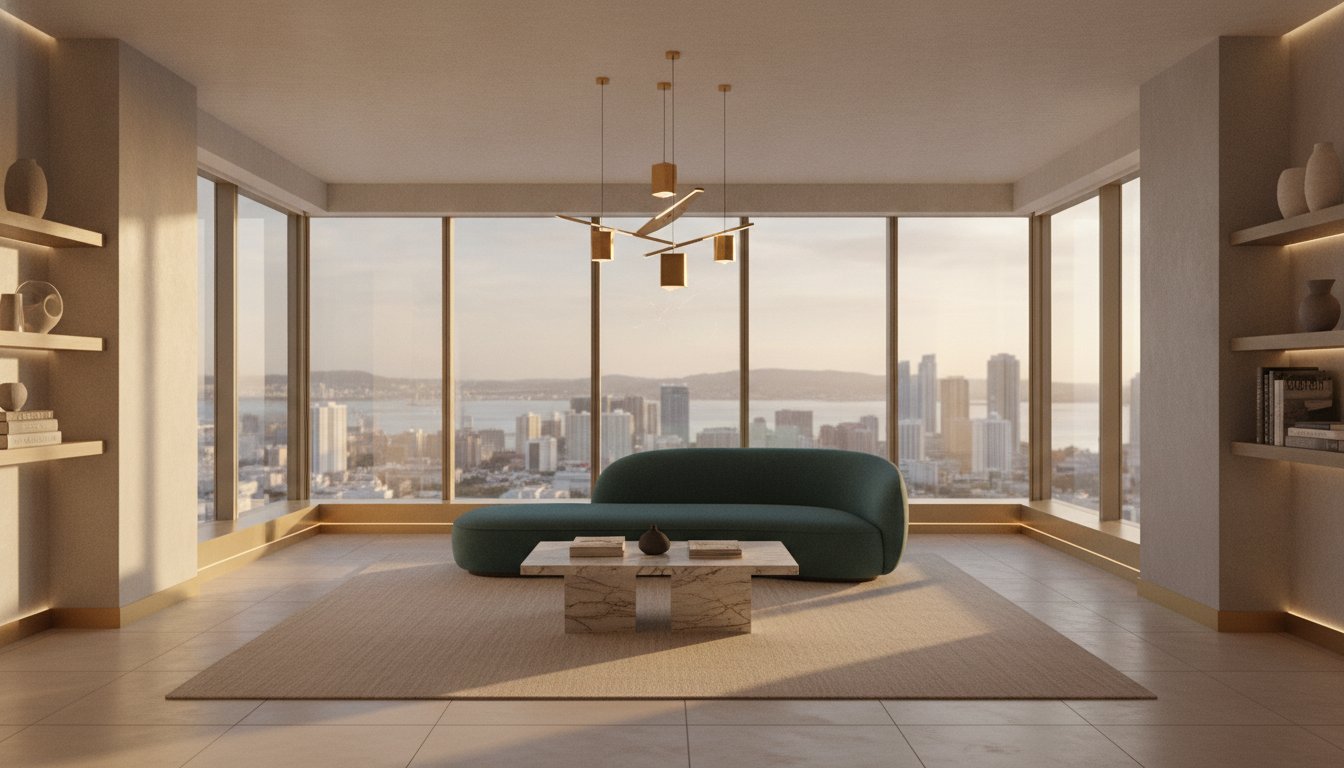
Why do so many world-class suites feel like transient corridors rather than true destinations? In an era where travelers seek emotional resonance over mere marble floors, the traditional approach to luxury hospitality interior design is undergoing a profound transformation. You likely recognize that today's guests are no longer satisfied with generic hotel aesthetics that lack a distinct soul or personality. They crave the intimacy of a private residence combined with the effortless precision of a five-star environment.
Creating this new era of sanctuary requires a delicate balance of artistic philosophy and technical rigor. This guide explores the strategic planning and bespoke craftsmanship needed to command premium rates while ensuring operational efficiency. We'll examine how to blend high-end residential aesthetics with commercial-grade durability, and how expert procurement management can solve the persistent challenge of sourcing unique, high-quality furniture. From the residential-to-hospitality crossover to the enduring allure of Italian craftsmanship, you'll discover how to craft spaces that aren't just visited, but truly felt.
Key Takeaways
- Understand the evolution from the "Design Hotel" to the "Sanctuary" concept and how it redefines the guest experience through psychological comfort.
- Learn how to apply residential design elements like scale and texture to create world-class hospitality environments that offer the intimacy of a private home.
- Discover why investing in bespoke luxury hospitality interior design pays off by balancing aesthetic excellence with the extreme durability required for commercial use.
- Master the five-step strategic planning process and see why involving designers at the pre-architectural stage is vital for a project's success.
- Explore how Pianta Design's 30-year legacy and direct ties to Italian manufacturers elevate properties in key markets like Miami, San Francisco, and Park City.
Defining Luxury Hospitality Interior Design in 2026
In 2026, the concept of a high-end stay has moved beyond the transactional. Modern luxury hospitality interior design is no longer just about the visual impact of a grand lobby or the thread count of the linens; it's a sophisticated synthesis of architecture, environmental psychology, and invisible service. It's the art of creating a world that anticipates needs before they're voiced. Luxury hospitality design is the intentional curation of spatial layers and sensory touchpoints that shepherd a guest through an emotional journey from arrival to departure, ultimately fostering a profound sense of sanctuary. This foundational tone is established long before the first piece of furniture is placed, rooted deeply in the principles of interior architecture.
The Shift from 'Hotel' to 'Sanctuary'
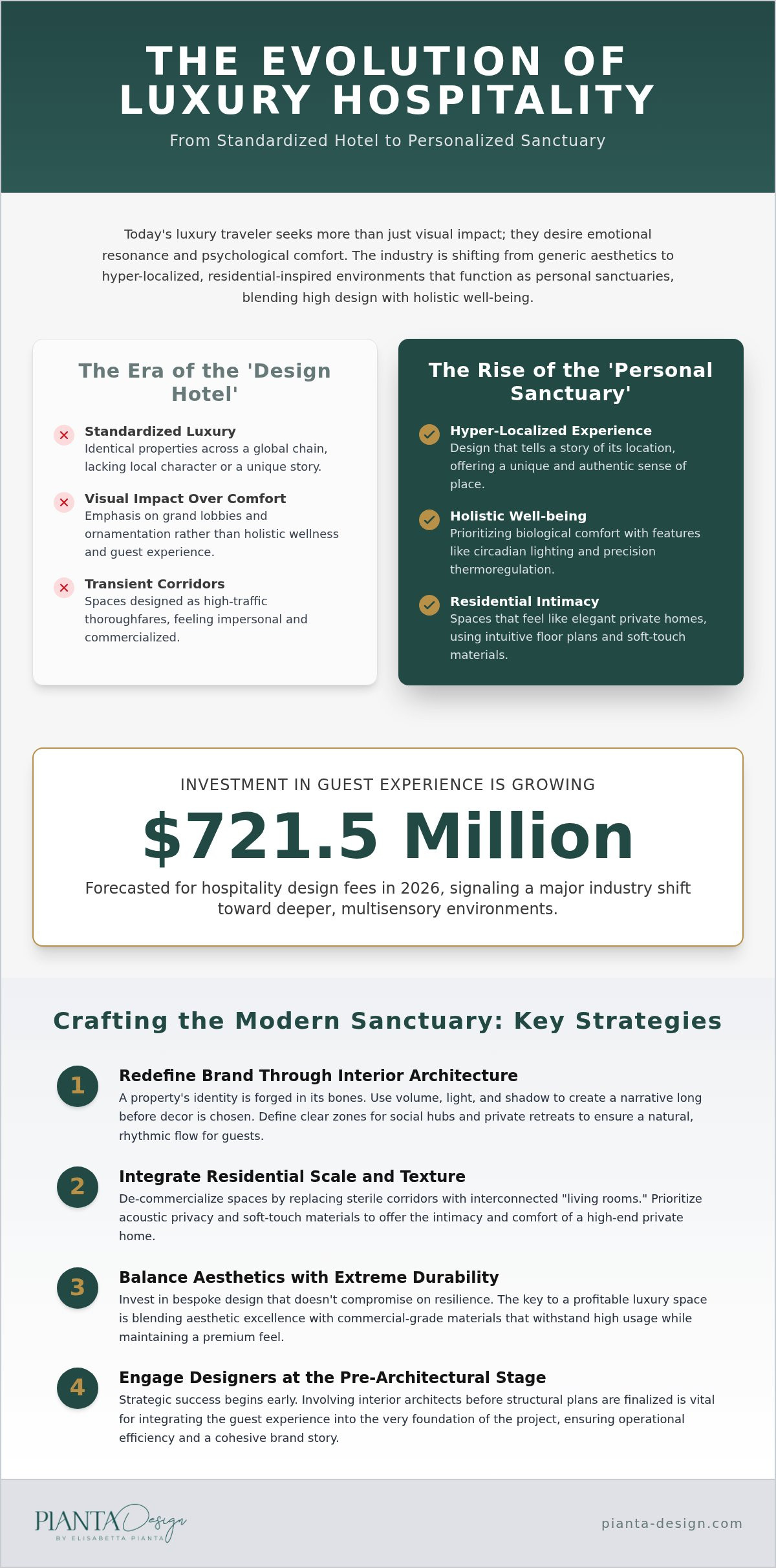
The industry is witnessing a decisive departure from "standardized luxury," where every property in a global chain looks identical. Today's travelers seek hyper-localized experiences that tell a story of the soil they're standing on. In 2026, the "Design Hotel" has matured into the "Sanctuary." This evolution of luxury hospitality interior design prioritizes holistic wellness and biological comfort over mere ornamentation. With hospitality design fees forecasted to reach $721.5 million in 2026, the investment is clearly shifting toward these deeper, multisensory guest experiences. We're seeing advanced features like precision thermoregulation and lighting systems that respect circadian rhythms become standard in high-end suites. This shift is particularly evident in the rise of extended-stay luxury in markets like Miami and Park City, where guests don't just visit; they inhabit the space for weeks or months at a time, demanding an environment that supports their total well-being.
Why Brand Identity Starts with Interior Architecture
A property's brand identity isn't a logo on a towel; it's the way a room breathes. Structural elements communicate a narrative through volume, light, and shadow before a guest even interacts with the decor. We often draw inspiration from Le Corbusier-inspired functionalism, yet we soften those clean lines with modern warmth to avoid clinical coldness. The discipline of Interior design at this level requires a mastery of commercial interior design to effectively define the boundaries between public social hubs and private, quiet zones. By focusing on these architectural foundations, we ensure that the transition from a bustling lounge to a silent suite feels like a natural, rhythmic exhale. This spatial clarity is what allows a brand's story to unfold with dignity and grace, ensuring the environment remains timeless rather than trendy.
The Intersection of High-End Residential and Hospitality Design
The most captivating destinations today don't feel like hotels; they feel like the world's most elegant private residences. This shift toward residential-inspired hospitality is driven by a guest who no longer wants to be a number in a database. They want to be a guest in a home. In cities like San Francisco and Miami, where luxury living is a baseline expectation, the demand for sophisticated luxury hospitality interior design has never been higher. Achieving this requires a deep understanding of how elements of interior design like scale and texture can be recalibrated for a larger stage without losing their personal touch.
Bringing Home Comfort to Global Destinations
The de-commercialization of hospitality spaces begins by reimagining the lobby not as a high-traffic thoroughfare, but as a series of interconnected living rooms. Through thoughtful luxury hospitality interior design, we prioritize acoustic privacy and soft-touch materials to create an atmosphere of immediate quietude. Our approach to space planning often eliminates the sterile corridor feel by introducing residential floor plans that feel intuitive and inviting. We believe that a guest's first breath inside a room should be one of relief, not one of orientation to a complex commercial system.
This level of precision is often informed by our work in luxury yacht interior design. On a yacht, every millimeter counts; there's no room for waste. We bring that same exacting standard to land-based properties, ensuring that every corner serves a purpose while maintaining an air of effortless luxury. It's about the invisible details, the way a drawer glides or the silence of a closing door, that define true premium quality.
Sensory Storytelling Through Material and Finish Selection
The choice of materials is where a property's story truly begins to breathe. We select natural stones, hand-rubbed metals, and rare woods for their psychological impact and their ability to age with grace. These aren't just aesthetic choices. They're strategic decisions for brand longevity. In a recent Miami project, we utilized sea-inspired textures and mineral greens to anchor the guest experience, creating a visceral connection to the coastal surroundings. This tactile approach ensures the environment remains grounded and authentic. If you're looking to redefine your property's identity, exploring our masterclass on bespoke environmental creation can provide the foundation for a truly unique sanctuary.
Navigating the Complexity of Luxury Hospitality Projects
The investment in sophisticated luxury hospitality interior design often faces scrutiny regarding its tangible returns. Is a bespoke environment truly worth the capital? The answer lies in the distinction between decoration and durability. In high-end properties, the cost of frequent replacements due to poor material choices far outweighs the initial investment in premium, resilient finishes. True luxury isn't fragile; it's engineered to withstand the rigors of high-traffic use while maintaining an impeccable facade. Working with a seasoned interior designer ensures that the poetic vision of the project never compromises the prose of its operation. This balance requires a deep understanding of back-of-house logistics, ensuring that service paths are as considered as the guest-facing salons.
Operational Efficiency vs. Design Purity
Designing for five-star environments involves a constant dialogue between aesthetic purity and operational necessity. We believe that smart space planning is a strategic tool that directly impacts the bottom line by reducing staff labor costs and improving service speed. When a layout is intuitive, the staff moves with more grace and less effort. This efficiency extends to the integration of technology. In 2026, smart rooms are expected to be invisible; they should anticipate a guest's needs through intuitive controls that don't require a manual. By prioritizing high-traffic durability without sacrificing the "residential feel" discussed earlier, we create spaces that remain pristine years after the grand opening. It's a meticulous process of selecting materials that age into a beautiful patina rather than showing signs of wear and tear.
The Role of Bespoke Italian Craftsmanship
To create an un-copyable brand experience, one must look beyond the catalogs of mass-market suppliers. Sourcing directly from Italian manufacturers provides a level of detail and soul that "contract-grade" alternatives simply cannot emulate. This is where custom furniture design becomes a critical component of a property's identity. In competitive markets like Miami or San Francisco, bespoke pieces serve as a mark of exclusivity that commands premium rates. These items aren't just furniture; they're functional art pieces designed specifically for the unique dimensions and narrative of your property. Authentic craftsmanship ensures longevity, meaning the furniture remains a valuable asset rather than a disposable expense. This commitment to one-of-a-kind solutions allows a property to stand as a singular destination in a sea of standardized luxury.
Strategic Planning for Hospitality Renovations and New Builds
Strategic planning for a premium property is the bridge that spans the gap between a developer's vision and a guest's memory. It's a rigorous, five-step discipline that begins with Narrative Discovery and moves through Concept Visualization, Spatial Mapping, and Technical Specification before concluding with Strategic Procurement. The Concept Phase acts as the soul of the project, distilling the property's essence into a cohesive visual and sensory language that guides every subsequent choice. To ensure this soul isn't lost in technical translation, premier interior design firms must be involved at the pre-architectural stage, allowing the interior's emotional logic to influence the building's structural bones.
In 2026, the realities of global supply chains demand a proactive approach to procurement and sourcing. We leverage our long-standing relationships with Italian artisans to secure materials that define the vanguard of luxury hospitality interior design, ensuring that the final execution remains faithful to the initial vision. This early involvement prevents the common pitfall where aesthetic dreams are compromised by late-stage logistical hurdles or budget overruns.
Conceptualization and Space Planning for Guest Flow
Mapping the guest journey is an exercise in empathy. We visualize the transition from the grand scale of a lobby to the hushed intimacy of a private suite; every turn is an opportunity for discovery. Inspired by the fluid forms of Zaha Hadid, we use curves and organic shapes to guide movement naturally, avoiding the rigid, institutional feel of traditional layouts. This strategic mapping also serves the business. By optimizing the flow through revenue-generating areas like artisanal bars and curated retail lounges, we ensure the space is as profitable as it's beautiful. If you're ready to begin your property's transformation, our team can help you select the right design partner for your specific market needs.
Lighting Design as a Mood and Revenue Driver
Lighting has evolved from a functional necessity into a powerful experiential tool. In modern hospitality, we use circadian lighting systems that mirror the natural progression of the day, helping guests feel grounded and refreshed regardless of their time zone. This attention to biological comfort encourages longer stays and higher guest satisfaction. Beyond wellness, lighting acts as an architectural highlighter, casting a soft, intentional glow on custom finishes and curated art, transforming a simple room into a living gallery. In the world of luxury hospitality interior design, light is the invisible thread that binds the aesthetic and the emotional experience together.
Pianta Design: Elevating Hospitality in Miami, San Francisco, and Park City
Pianta Design stands as a definitive partner for developers seeking to transcend the ordinary through luxury hospitality interior design. With a strategic presence in San Francisco, Miami, and Park City, we bring a nuanced understanding of how premium environments must adapt to their specific cultural and geographic contexts. Principal Maria Pianta's 30-year legacy isn't merely a record of time; it's a testament to a philosophy of timeless sophistication that refuses to settle for the ephemeral or the mass-produced. We don't just design rooms; we orchestrate entire atmospheres where the final, soul-defining layer is often found in our specialized art consultation. This service ensures that every curated piece serves as a silent narrator of the property's unique story, anchoring the guest's emotional experience in a sense of true place and authenticity.
Our Integrated Project Management Approach
The transition from a visionary concept to a physical reality is where most hospitality projects lose their luster. We bridge this critical gap through rigorous project management and construction oversight. Our role is to act as the guardian of the design's integrity, ensuring that the execution remains faithful to our initial 3D visualizations down to the smallest detail. Through frequent site visits and uncompromising quality control, we manage the technical complexities of interior architecture while maintaining the artistic spirit of the project. This meticulous oversight ensures that the "Sanctuary" we promised during the strategic planning phase is exactly what the guest experiences upon opening the door, free from the compromises that often plague large-scale developments.
Procurement Excellence: Exclusive Sourcing for Exclusive Spaces
True exclusivity cannot be found in a standard catalog. Our procurement process is defined by three decades of direct collaboration with premier Italian manufacturers. These relationships allow us to source bespoke materials and finishes that are simply unavailable to the general public or standard commercial firms. Whether it's a rare, hand-selected stone for a Miami lobby or custom-engineered metalwork for a Park City lounge, our sourcing strategy ensures your property possesses a tactile signature that is entirely its own. We manage the entire lifecycle of these Italian bespoke items, from initial specification to final installation. We invite you to elevate your hospitality project with Pianta Design and discover how thirty years of expertise can transform your property into a world-class destination that commands premium rates and enduring loyalty.
Shaping the Future of the Guest Sanctuary
The evolution of the guest experience rests on the delicate synthesis of residential intimacy and commercial precision. We've seen that a truly successful project begins long before the first guest arrives; it's rooted in a narrative that respects the individual's emotional journey and a structural logic that ensures long-term durability. By prioritizing bespoke Italian craftsmanship and rigorous strategic planning, you can create a destination that doesn't just provide a room, but offers a profound sense of sanctuary.
Pianta Design brings more than 30 years of industry expertise and direct, exclusive access to Italian manufacturers to every environment we shape. With offices located in Miami, San Francisco, and Park City, our team is uniquely equipped to translate global aesthetic movements into localized, one-of-a-kind spaces. Our principal-led approach ensures that your investment in luxury hospitality interior design results in a property that is as operationally seamless as it is visually arresting.
If you're ready to set a new standard for your property's identity, we invite you to Schedule a Consultation for Your Next Hospitality Project. Let's begin the journey of crafting your property's legacy together.
Frequently Asked Questions
What is the difference between commercial and luxury hospitality interior design?
Luxury hospitality interior design transcends the standard requirements of commercial utility by prioritizing emotional resonance and bespoke intimacy. While standard commercial design focuses on high-traffic durability and brand consistency, luxury design treats each space as a unique sanctuary. It integrates residential-grade textures and custom furniture to create a profound sense of place. This approach ensures that guests feel personally cared for, rather than just processed through a high-volume environment.
How long does a full-scale luxury hotel renovation typically take?
A full-scale luxury renovation is a complex undertaking that generally spans 12 to 24 months from the initial concept to the final reveal. This timeline accounts for the meticulous strategic planning, technical drafting, and the procurement of custom pieces from Italian artisans. Every project is unique; however, the emphasis on bespoke craftsmanship and construction oversight ensures that the final sanctuary is worth the investment of time and meticulous attention.
Why is Italian craftsmanship preferred for luxury hospitality projects?
Italian craftsmanship is synonymous with an uncompromising commitment to material quality and artisanal detail that mass-market production cannot replicate. We leverage 30 years of direct relationships with Italian manufacturers to source exclusive woods, hand-rubbed metals, and rare stones. These bespoke elements provide a tactile signature that defines a property as a singular destination. This heritage of excellence ensures that every piece of furniture is as durable as it is beautiful.
How can interior design improve a hotel's return on investment (ROI)?
Strategic interior design directly impacts a property's financial performance by enabling it to command premium daily rates through perceived exclusivity. Beyond aesthetics, we use space planning to maximize revenue-generating areas like artisanal bars and retail lounges. High-quality, durable finishes also lower long-term maintenance and replacement costs. A well-designed environment fosters guest loyalty and positive reviews, which are essential drivers for occupancy in competitive markets like Miami or San Francisco.
Do you offer interior architecture services for new hospitality builds?
Yes, Pianta Design provides comprehensive interior architecture services to ensure that a property's structural bones align perfectly with its intended emotional narrative. We incorporate the latest A117.1-2026 accessibility standards from the initial drafting phase to ensure universal usability. By involving our team early, we can influence spatial volumes and lighting paths before construction begins. This holistic approach prevents costly mid-build corrections and ensures the building functions as a seamless, unified sanctuary.
What are the key hospitality design trends for 2026?
In 2026, the industry is shifting toward multisensory experiences that prioritize emotional well-being and hyper-localization. Key trends include:
- Wellness integration through biophilic design and circadian lighting.
- Hyper-local storytelling using regional materials and craftsmanship.
- Warm, grounding color palettes featuring mineral greens and olive tones.
- Sustainability as a standard practice for material selection.
This evolution of luxury hospitality interior design ensures that properties feel authentic and deeply connected to their surroundings.
How do you handle procurement for international hospitality projects?
Our procurement process is built on 30 years of industry experience and deep ties to Italian artisans. We manage the entire lifecycle of sourcing, from initial material selection to final installation oversight on-site. This includes navigating the complexities of international logistics and quality control to ensure that every bespoke item meets our exacting standards. Our direct collaboration with manufacturers allows us to provide exclusive solutions that aren't available through standard commercial catalogs.
Can you integrate sustainable design into a luxury hospitality project?
Sustainable design is an integral part of our philosophy, as true luxury and environmental responsibility are now inextricably linked. We prioritize the selection of noble, resilient materials that offer longevity and reduce the need for frequent refurbishments. Our lighting design incorporates energy-efficient LED systems and occupancy sensors to meet 2026 energy mandates. By focusing on air quality and natural materials, we create environments that support both the health of the planet and the well-being of the guest.
