
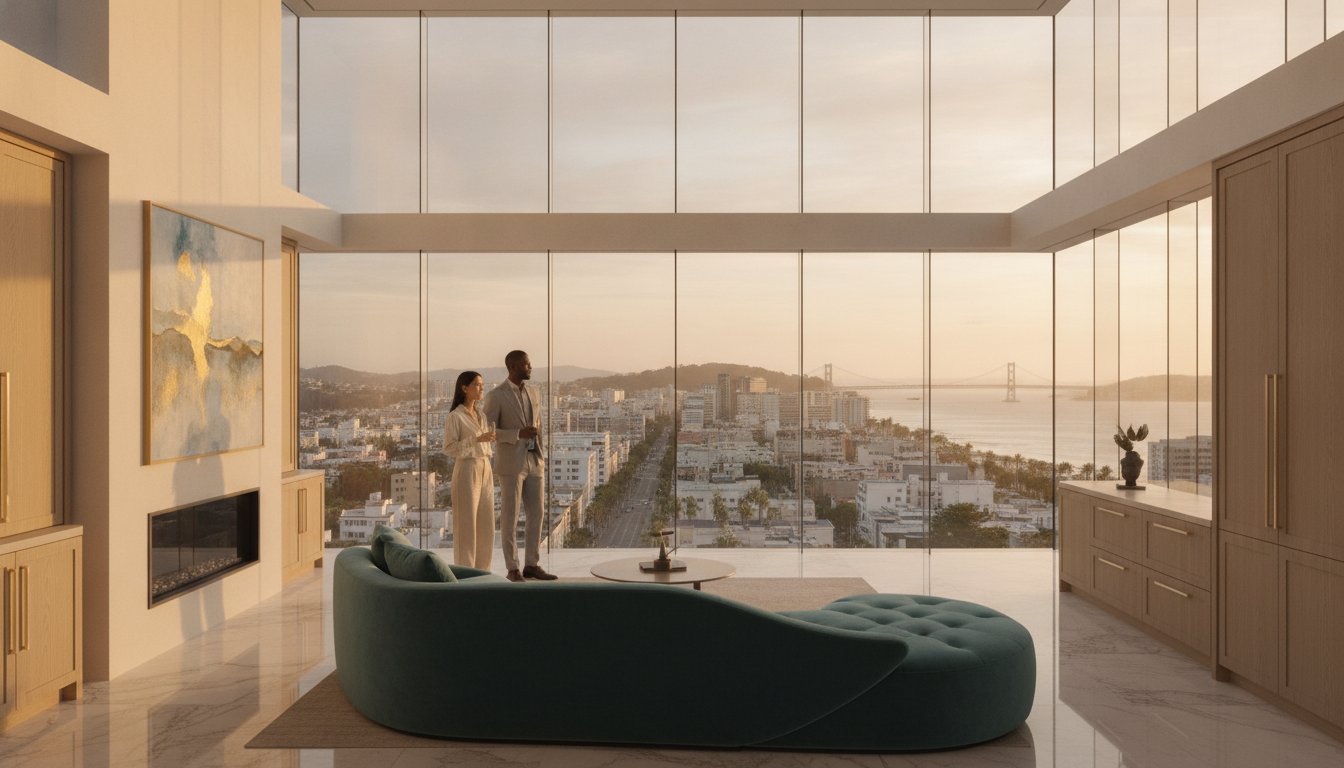
True luxury isn't found in the price tag of a velvet sofa; it's found in the invisible architecture that dictates how a room breathes and holds its value over decades. You've likely felt the tension between wanting a home that reflects your personal journey and the nagging fear that an overly unique choice might alienate a future buyer. It's a valid concern in a market where U.S. home renovation spending is projected to reach a record $524 billion by early 2026. Understanding how an interior designer increases property value is the essential bridge between these two desires, turning potential risks into calculated rewards.
By integrating strategic interior architecture with bespoke finishes, you don't just decorate a room; you engineer an asset. This guide reveals how high-end design transforms a residence into a high-yield lifestyle investment that pays dividends in both daily joy and market equity. We'll explore the art of the strategic spend, the power of exclusive Italian craftsmanship, and the ways professional project management safeguards your most significant asset. You'll discover how to create a sanctuary that remains a sound financial instrument, ensuring every detail contributes to a cohesive, prestigious, and timeless environment.
Key Takeaways
- Learn the distinction between temporary home staging and permanent interior architecture that establishes a long-term design premium for your residence.
- Discover how sophisticated space planning eliminates underutilized areas to maximize your home's marketable square footage and functional flow.
- Understand how an interior designer increases property value by integrating bespoke Italian craftsmanship and custom furniture that mass-market solutions cannot replicate.
- Identify regional value drivers, such as maximizing natural light in San Francisco or achieving seamless indoor-outdoor transitions in Miami's luxury market.
- Explore the financial benefits of professional procurement and construction oversight to safeguard your budget and protect your investment from technical errors.
Beyond Aesthetics: The Financial Logic of Professional Interior Design
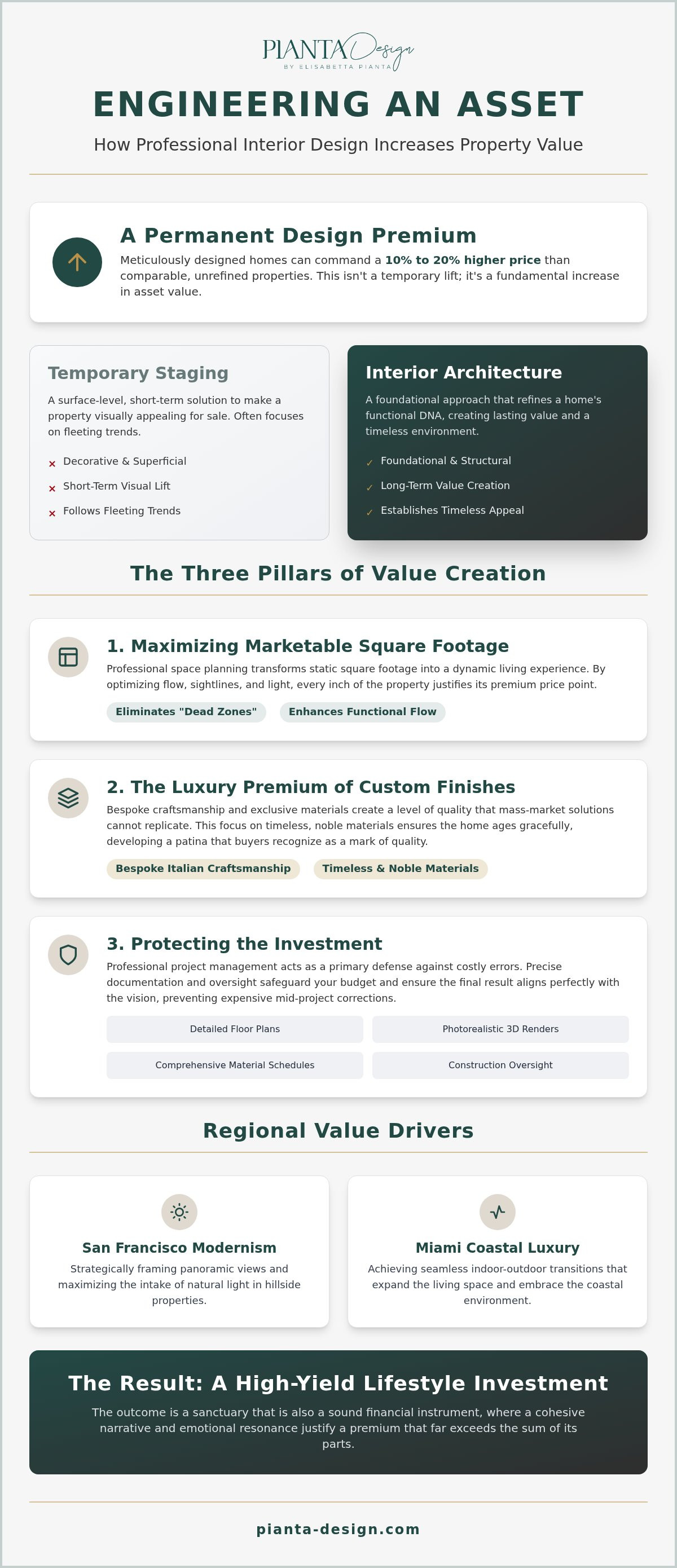
Investing in a luxury property requires a mental shift. You must move from viewing design as a purely decorative expense to understanding it as a sophisticated form of value engineering. While home staging might offer a temporary visual lift for a weekend showing, true interior architecture creates a permanent design premium that fundamentally alters a property's appraisal. Industry experts often observe that a meticulously designed home can command a 10 to 20 percent higher price than a comparable but unrefined space. This isn't merely about the choice of a chandelier; it's about how an interior designer increases property value by refining the home's functional DNA.
The ROI of Timeless Sophistication vs. Fleeting Trends
Chasing fleeting digital trends found on social media can inadvertently anchor a property to a specific, soon-to-be-dated era. A professional residential interior design expert prioritizes a "cost-per-year" perspective, selecting noble materials and classic silhouettes that age with grace. Consider the difference between a trendy, high-maintenance finish and a hand-honed natural stone. The latter doesn't just endure; it develops a patina that buyers recognize as a mark of quality. By balancing your personal aesthetic with broader marketability, a designer ensures the home remains a sanctuary today and a liquid asset tomorrow.
Design as a Risk Mitigation Strategy
Renovation regret is a costly reality for many homeowners who attempt to manage complex projects without a master plan. A designer serves as the primary defense against contractor errors and mismatched finishes. Through precise documentation, the risk of expensive mid-project corrections is significantly reduced. This technical precision often includes:
- Detailed floor plans that optimize spatial flow and eliminate "dead zones."
- Photorealistic 3D renders that allow you to experience the space before construction begins.
- Comprehensive material schedules that ensure every finish aligns with the overall vision.
Beyond the technical, a designer creates a cohesive narrative throughout the property. This emotional resonance is what ultimately closes high-end transactions. When a home feels harmonious and intentional, it speaks to a buyer's desire for order and tranquility. This feeling justifies a premium that far exceeds the sum of the materials used. By eliminating the friction of poor layout or inconsistent style, you're not just selling a house; you're selling a completed, high-yield lifestyle.
Maximizing Marketable Square Footage Through Interior Architecture
Square footage is a static number on a real estate listing, but the way that space feels determines the final offer. Professional space planning is the silent engine of property value. It isn't just about fitting furniture into a room; it's about the scientific optimization of sightlines, movement, and light. When an expert eliminates "dead zones"—those awkward corners or poorly defined transition spaces—the perceived size of the home expands without adding a single brick. This technical precision is a primary way how an interior designer increases property value, ensuring every inch of the floor plan justifies its premium price point.
Space Planning: Turning Square Footage into Living Experience
A skilled interior designer views a home as a series of interconnected experiences rather than a collection of isolated rooms. In high-stakes markets like the San Francisco hillsides or the rugged landscapes of Park City, this means framing a panoramic view through strategic placement or optimizing "the golden triangle" in a master suite to ensure effortless utility. By creating distinct, purposeful zones within an open-plan layout, a designer provides the privacy modern families crave while maintaining the airy, expansive atmosphere that luxury buyers expect. This balance of intimacy and grandeur is a hallmark of high-yield residential assets.
The Value of Interior Architecture and Fixed Elements
While loose furnishings can be moved, interior architecture remains part of the property's permanent title. This is where the most significant equity is built. Custom cabinetry, integrated wine cellars, and sophisticated millwork are often viewed by appraisers as "furniture for the house" that stays with the deed. These elements create a sense of permanence and "legacy" that mass-market solutions cannot replicate. High-end built-ins don't just provide storage; they define the room's character and architectural symmetry, which are critical factors during a high-end appraisal.
Lighting design also plays a structural role in this equation. Rather than being a decorative afterthought, integrated architectural lighting highlights noble textures and extends sightlines, making ceilings feel higher and rooms feel more grand. If you're looking to refine the structural soul of your home, exploring professional space planning services can reveal hidden potential in your current footprint. By repurposing an underutilized alcove into a high-value home office or a jewel-box bar, you transform "wasted" space into a marketable unique selling proposition that resonates with sophisticated investors.
The Luxury Premium: Custom Furnishings and Exclusive Materials
In the upper echelons of real estate, rarity is the most persuasive currency. While high-end retail brands offer a baseline of quality, they often fail to command a significant premium because they are, by definition, accessible to many. A residence filled with recognizable, off-the-shelf luxury pieces lacks the soul of a custom-commissioned environment. This level of curation is precisely how an interior designer increases property value; they transform a home from a collection of products into a singular, irreplaceable asset. By sourcing exclusive materials and leveraging direct relationships with Italian manufacturers, a designer ensures that the home’s interior is as unique as its geographic coordinates.
Bespoke vs. Branded: Defining True Exclusivity
The distinction between high-end retail and designer-exclusive sourcing is the difference between a house that is "furnished" and one that is "curated." Professional custom furniture design allows for the resolution of unique spatial challenges that mass-produced pieces cannot address. In a luxury yacht or a complex architectural residence, every centimeter must be intentional. Artisanal craftsmanship doesn't just solve functional puzzles; it appreciates over time. A hand-carved walnut table or a custom-cast bronze fixture carries a weight of history and intentionality that resonates with buyers who value the heritage of European craftsmanship over fleeting brand names.
Curating a High-Value Art and Material Palette
Tactile luxury is a powerful, often subconscious, driver of value during a property walkthrough. The weight of a heavy silk curtain or the cool, solid feel of hand-selected natural stone creates an immediate sense of permanence. An interior designer acts as an art consultant and material scientist, ensuring that every finish is both beautiful and resilient. For instance, selecting materials that withstand the intense humidity of Miami or the harsh UV exposure and snow cycles of Park City is a form of investment protection. Authenticity in textiles and stones outlasts synthetic alternatives, ensuring the property maintains its "just-completed" luster for years. When art and noble materials are integrated into the home's architecture, the property’s status is elevated, signaling to prospective buyers that they are entering a space of uncompromising quality and sophisticated taste.
Regional Value Drivers: From San Francisco Modernism to Miami Coastal Luxury
Luxury real estate is intrinsically tied to its environment. A home's value is often a reflection of how well it harmonizes with local culture and topography. This is specifically how an interior designer increases property value; they interpret regional nuances into a cohesive architectural language. In the compact, historic neighborhoods of San Francisco, like the Duboce Triangle or Pacific Heights, the challenge is often maximizing natural light and preserving historical character while introducing modern functionality. A designer's ability to navigate these constraints creates a unique selling proposition that mass-market renovations simply cannot match.
Conversely, Miami coastal luxury demands a different set of priorities. Here, the focus shifts to seamless indoor-outdoor transitions and a yacht-inspired sleekness. High-end buyers expect a residence that feels like a natural extension of the Atlantic. This requires high-performance materials that can withstand salt air and intense humidity without sacrificing aesthetic purity. In the rugged landscapes of Park City or the rising urban centers of Salt Lake City, the mountain modern aesthetic takes center stage. Value is driven by durability and lifestyle-specific amenities. A meticulously designed mudroom or a sophisticated après-ski lounge isn't just a convenience; it's a marketable asset that speaks to the specific rituals of mountain living.
Market-Specific Design Expectations
Designing for the view is a universal luxury requirement, but the execution varies significantly. In Florida, this means orienting interiors toward the expansive Atlantic horizon. In California, it might mean framing the Golden Gate Bridge or a lush hillside. Tech-centric investors in San Francisco also place a high premium on invisible smart home integration. The technology must enhance the lifestyle without cluttering the visual field or distracting from the architectural narrative. These regional expectations define the "standard" of luxury, and meeting them is essential for maintaining a property's competitive edge.
Designing for the Local Lifestyle
Every region has its own pulse. In Miami, rooftop entertaining areas with climate-resilient furniture are essential for a property to compete at the highest level. In contrast, the hybrid-work professional in San Francisco requires multi-functional spaces that transition from a private office to a sophisticated living area. For those seeking to align their residence with these regional demands, exploring bespoke interior design services ensures your property is perfectly positioned for its specific market. By addressing these local nuances, a designer creates a home that is both a personal sanctuary and a highly liquid financial asset.
Navigating the Design Process to Protect Your Investment
The final stage of value creation lies in the meticulous management of the renovation process itself. A designer's role transitions from visionary to financial steward, ensuring that the capital you deploy actually translates into equity. One of the most tangible ways how an interior designer increases property value is through professional procurement. Access to trade-only pricing and direct relationships with exclusive manufacturers often offsets a significant portion of design fees. Beyond the numbers, designers act as a critical buffer against construction errors. By providing constant oversight, they ensure that the technical reality matches the architectural intent, preventing the "renovation drain" of costly rework and extended timelines.
In the 2026 luxury market, a "turn-key" status is a major value driver. High-net-worth buyers are often time-poor and prefer to pay a premium for a finished, professionally curated sanctuary rather than navigate a multi-year renovation themselves. This move-in readiness significantly reduces the property's days on market and often sparks competitive bidding. Professional coordination also mitigates the drain of holding costs, such as property taxes and insurance, by streamlining the schedule and ensuring that artisans and materials arrive in a synchronized sequence. It's about maintaining the 30 percent rule of home value to ensure you don't over-improve for the neighborhood while still maximizing the home's unique potential.
The Designer as Project Lead
Selecting an experienced interior design firm is essential for owners managing multi-state portfolios. Whether you're coordinating Italian imports for a Miami penthouse or custom millwork for a Park City retreat, the logistics are formidable. A lead designer manages these global supply chains and ensures that the original design intent isn't diluted by local contractor substitutions. This level of professional rigor protects the integrity of the investment from the first concept to the final installation, ensuring the home's quality is deep-seated rather than superficial.
Preparing Your Property for the Future
Future-proofing is the final layer of investment protection. This involves integrating wellness rooms, EV charging infrastructure, and flexible layouts that accommodate evolving lifestyle needs. A well-documented project also serves as a logbook of quality for future buyers. Providing detailed material schedules and technical drawings during the due diligence phase of a sale proves the home's hidden value. Ultimately, the most valuable residences are those that possess a clear, professional soul. They stand as a testament to intentionality, enduring quality, and a lifestyle that's both aspirational and deeply grounded in functional excellence.
Securing Your Legacy Through Intentional Design
A luxury residence is far more than a collection of curated rooms; it's a sophisticated financial asset that requires expert stewardship to reach its full market potential. We've explored how the integration of permanent interior architecture, bespoke Italian craftsmanship, and strategic space planning creates a lasting design premium. These elements ensure your home remains a liquid investment that transcends fleeting trends. Understanding how an interior designer increases property value allows you to move forward with the confidence that every aesthetic choice is anchored in technical precision and market logic.
With over 30 years of expertise in luxury residential and yacht design, Pianta Design bridges the gap between personal sanctuary and high-yield asset. Our direct access to exclusive Italian manufacturers and comprehensive project management ensures your vision is executed without compromise or costly error. Your environment should be a reflection of your standard of living and a testament to your foresight as an investor. Elevate your property's potential with Pianta Design's master-planned interiors. We invite you to transform your space into a timeless masterpiece that captures the essence of sophisticated living.
Frequently Asked Questions
How much value does an interior designer add to a home?
Professionally designed homes in elite markets like San Francisco or Miami often command a 10 to 20 percent premium over standard listings. This uplift occurs because a designer refines the home's functional DNA and architectural flow rather than just applying surface aesthetics. This is essentially how an interior designer increases property value; they transform a standard floor plan into a high-yield lifestyle asset that resonates with the specific expectations of high-net-worth investors.
Is it worth hiring an interior designer for a small renovation?
Even for minor updates, a professional ensures that every dollar spent contributes to the home's long-term equity. In compact urban spaces like Salt Lake City or San Francisco, a small renovation can easily fail if the scale or materials are mismatched. A designer provides the technical documentation and space planning necessary to avoid renovation regret. They act as value engineers who prevent the costly mistakes that often occur when homeowners manage high-end finishes without a master plan.
What is the difference between an interior designer and a decorator in terms of property value?
The distinction lies in the permanency of the work. While a decorator focuses on soft furnishings and color palettes, an interior designer engages with interior architecture and structural elements that stay with the title. This includes custom cabinetry, integrated lighting, and floor plan optimization. These fixed elements are what appraisers value most. By modifying the physical footprint and structural soul of the home, a designer builds equity that remains long after the furniture is removed.
Do buyers prefer neutral designs or professionally 'personalized' spaces?
Buyers in luxury markets like Park City or Miami seek a balance of timeless sophistication and unique character. While stark, impersonal neutrals can feel hollow, a professionally designed space uses noble materials and custom textures to create a professional soul. This approach avoids the risk of over-personalization while providing the warmth and exclusivity that command a premium. It's about creating a sanctuary that feels intentional and complete rather than just a blank canvas for the next owner.
How do I calculate the ROI of an interior design project?
To calculate the ROI, you must weigh the total design investment against the projected appraisal uplift in your specific market. In tech-centric San Francisco or the coastal enclaves of Miami, the return is often found in the design premium mentioned earlier. You should also consider the reduction in holding costs; a turn-key, master-planned property typically sells faster. This liquidity, combined with the higher final offer, determines the true financial success of the project and your overall investment.
Can an interior designer help with yacht resale value?
Bespoke yacht interior design is a critical factor in maintaining the liquidity of a maritime asset. A professionally executed refit using high-performance materials and Italian craftsmanship ensures that a vessel stands out in a crowded resale market. By optimizing the interior architecture and custom furnishings, a designer preserves the yacht's prestigious status and functional appeal. This specialized expertise is essential for owners who view their vessels as both personal retreats and significant financial investments that must hold value.
What are the most value-adding interior design upgrades for 2026?
For the 2026 market, value is driven by wellness rooms, integrated smart technology, and the use of authentic, natural materials. Buyers are moving away from stark whites toward deeper, earthier tones and noble textures like hand-honed stone. In locations like Park City, high-performance mudrooms and après-ski lounges are essential value drivers. These upgrades prioritize the relationship between the environment and lifestyle, ensuring the property meets the evolving demands of sophisticated, world-traveled residents who value both form and function.
How does professional lighting design impact home appraisal?
Professional lighting design is often the invisible factor that distinguishes a luxury property during an appraisal. By highlighting noble textures and extending sightlines, integrated architectural lighting makes rooms feel more grand and ceilings appear significantly higher. It isn't merely a decorative choice; it's a structural tool that defines the mood and perceived volume of the space. In high-end markets, this level of technical precision signals a standard of quality that justifies a higher valuation and attracts more discerning buyers.
