
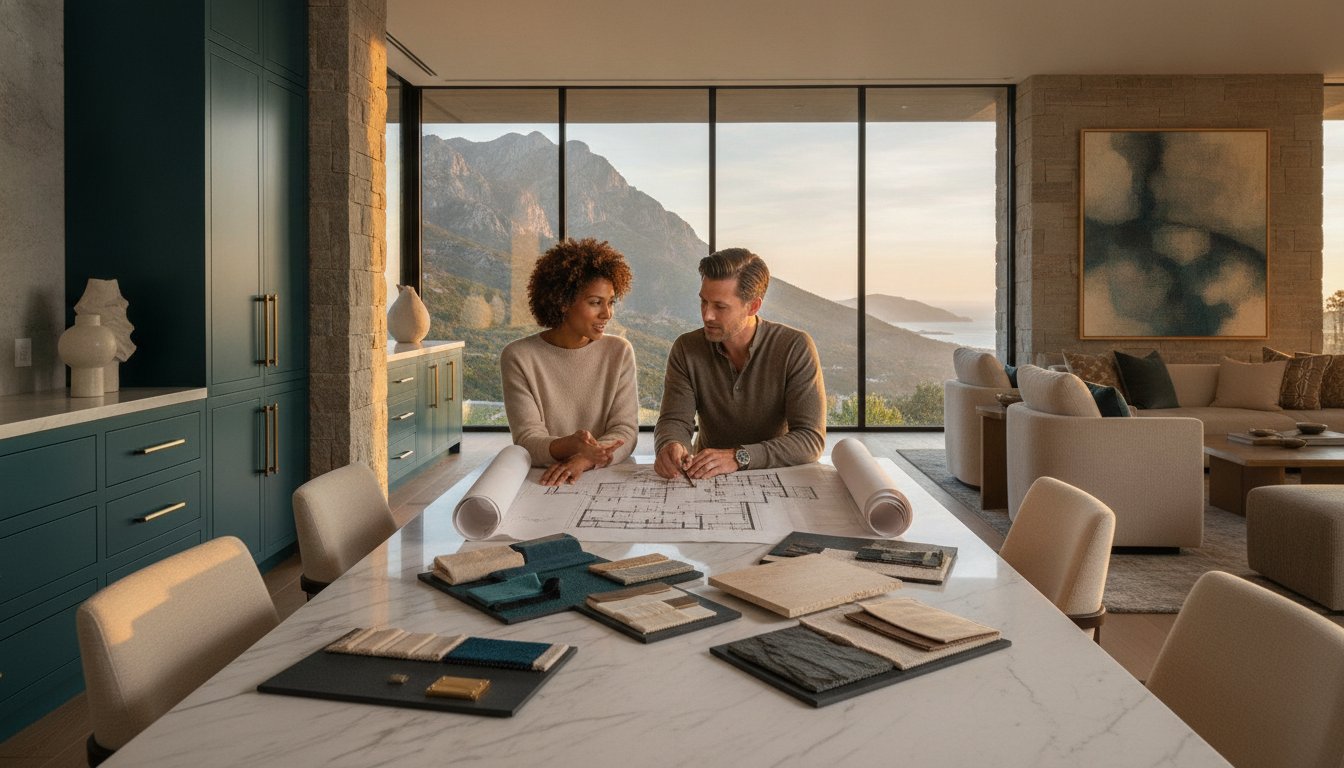
Can a home truly be a sanctuary if it only reflects one half of the souls living within it? You've likely spent evenings scrolling through architectural archives, envisioning a space that breathes with timeless elegance, only to find that your partner views the prospect of a renovation as a daunting gauntlet of disruption. It's a delicate dance, balancing your desire for a refined aesthetic with their practical anxieties over budget or the fear that their own personality might be erased in the process. Navigating the nuances of getting buy-in from your partner on a design project requires more than just persuasive arguments; it demands a shared vision of a curated lifestyle.
We've developed a sophisticated framework designed to transform hesitation into enthusiastic collaboration, ensuring your next home transformation is a source of mutual joy rather than friction. You'll discover how to align your aesthetic values, address the logistics of investment, and leverage professional mediation to create a legacy home that celebrates both of your unique perspectives. By shifting the conversation from construction to creation, you can build a roadmap that honors your shared future while respecting the peace of your present.
Key Takeaways
- Understand that a home transformation is an emotional expression of identity, requiring a shift from discussing decor to curating a shared lifestyle legacy.
- Master the art of getting buy-in from your partner on a design project by conducting a visual audit to uncover the harmonious overlap in your aesthetic preferences.
- Reframe project costs as strategic capital improvements that enhance property value and daily well-being through the longevity of high-quality craftsmanship.
- Discover the ideal timing and atmosphere for presenting your vision, leading with the emotional "why" before introducing technical floor plans and logistics.
- Learn how a professional designer acts as a neutral mediator to resolve aesthetic stalemates and translate disparate desires into a singular, cohesive reality.
The Psychology of Home: Why Design Buy-In is Emotional
In the world of high-end aesthetics, design buy-in isn't merely a formal agreement on a floor plan or a selected textile. It's the profound alignment of lifestyle values between two people who share a sanctuary. When we discuss our homes, we aren't just talking about architecture; we're discussing the most intimate expression of our personal identity. This is why the process of getting buy-in from your partner on a design project can feel so delicate. The home is a vulnerable space where our habits, memories, and aspirations intersect. If a partner feels their taste is being erased, they don't just see a new sofa; they see a loss of belonging.
A "Design Gap" often emerges early in the process. One partner typically acts as the catalyst, fueled by a vision of what the space could become, while the other might hesitate, anchored by the comfort of the familiar or the weight of logistical concerns. Bridging this gap requires a shift in perspective. You must move away from the idea of "convincing" your partner, which implies a winner and a loser, and move toward "collaboration." When the project becomes a shared journey of discovery, defensiveness dissolves, replaced by a mutual commitment to a higher standard of living.
Understanding the 'Protector' vs. the 'Visionary' Dynamic
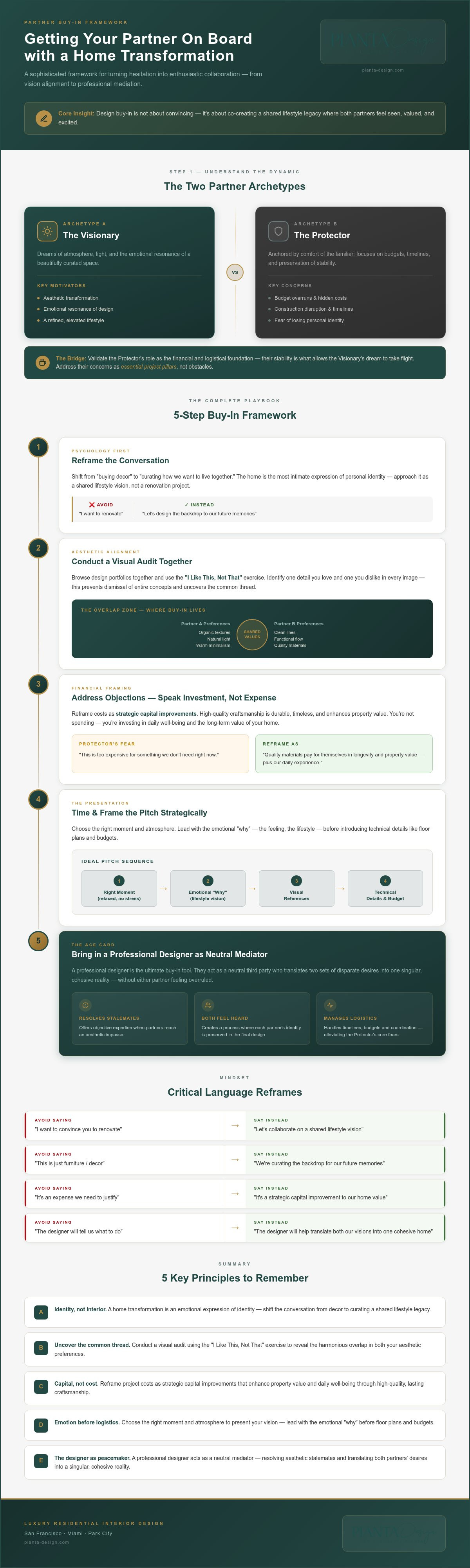
In most luxury transformations, we see two distinct archetypes: the Visionary and the Protector. The Visionary dreams of the atmosphere, the light, and the emotional resonance of a room. The Protector, conversely, focuses on the "how," often manifesting as anxiety over budgets, construction timelines, and the preservation of value. To succeed in getting buy-in from your partner on a design project, you must first validate the Protector’s role. Acknowledge that their desire for stability and fiscal responsibility is the foundation that allows the Visionary's dream to take flight. By addressing these concerns as essential project pillars rather than obstacles, you create a safe space for the creative vision to flourish.
The Link Between Environment and Relationship Harmony
It's a quiet truth that a poorly planned environment contributes to daily friction. Whether it's a kitchen that lacks flow or a lighting scheme that feels clinical, the physical space dictates the rhythm of your relationship. Engaging in professional residential interior design is about more than just aesthetics; it's a strategic investment in your long-term well-being. When you shift the focus from "buying furniture" to "curating how we want to live together," the conversation changes. You're no longer debating a price point; you're designing the backdrop for your future memories, ensuring every square foot supports the harmony you've built as a couple.
Auditing Your Aesthetics: Finding the Common Thread
Aesthetic alignment is rarely about finding a middle ground where both parties feel they've settled for less. Instead, it's a process of distillation. Before you present a definitive plan, performing a visual audit is essential for getting buy-in from your partner on a design project. This exercise moves the conversation away from rigid labels like "modern" or "traditional," which often carry different meanings for different people. For one, "modern" might suggest clinical glass; for another, it evokes the warm, organic minimalism of a Mediterranean villa. By focusing on the fundamental elements of interior design, such as the play of natural light and the volume of space, you can identify the textures and atmospheres that resonate with both of you.
The 'I Like This, Not That' Exercise
Practicality often bridges the gap between vision and hesitation. Spend an evening reviewing portfolios from premier interior design firms together, but with a specific rule: you must identify one detail you love and one you dislike in every image. This granular approach prevents the immediate dismissal of an entire concept. Perhaps your partner dislikes a room's color palette but finds the architectural molding exquisite. Capturing these nuances helps in getting buy-in from your partner on a design project because it creates a digital "safe space" where their taste is documented and respected. You aren't just looking for a style; you're looking for the visual synergy that exists in the overlap of your preferences.
Blending Clashing Styles into a Cohesive Narrative
When styles appear to clash, such as a preference for stark minimalism versus a desire for plush coziness, the solution often lies in the quality of materials. High-end textures, such as hand-knotted silk rugs or honed marble, can provide the warmth one partner craves while maintaining the clean lines the other demands. This is where custom furniture design becomes an invaluable tool. It allows you to create pieces that act as a bridge between two worlds. Consider a case where we combined the sharp, architectural sleekness of Italian manufacturing with the organic, tactile warmth required for a Park City retreat. The result wasn't a compromise; it was a unique, elevated narrative that neither could have achieved alone. If you find yourself at an aesthetic stalemate, exploring bespoke solutions can often reveal the path forward.
The Language of Investment: Addressing Financial and Functional Objections
When the conversation turns to numbers, many visionary partners feel their creative momentum stall. However, the secret to getting buy-in from your partner on a design project lies in shifting the vocabulary from "cost" to "capital improvement." A luxury renovation isn't a consumption of resources; it's a strategic enhancement of your primary asset. While fast furniture offers immediate gratification, it lacks the enduring value of Italian craftsmanship. Pieces sourced through direct relationships with heritage manufacturers don't just furnish a room. They provide a legacy of quality that withstands the test of time, effectively reducing the long-term cost of ownership through durability and timelessness.
Addressing the stress objection is equally vital. Most partners fear the disruption of construction and the weight of decision fatigue. This is where the role of an interior designer becomes a powerful tool for alignment. By acting as a full-service project manager, the designer handles the technical execution and vendor coordination, shielding the household from the chaos of the build. You aren't just buying a new aesthetic; you're buying back your time and mental peace.
Quantifying the Intangibles of Luxury
Value in the premium sector is often found in what you don't see. Bespoke procurement ensures that every element is tailored to the specific dimensions and light of your home, preventing the costly mistakes of buying twice. Professional firms bring thirty years of industry experience to the table, offering a level of precision that a DIY approach simply cannot replicate. Getting buy-in from your partner on a design project becomes significantly easier when they realize that professional management mitigates risk and ensures the project remains a source of inspiration rather than a burden on their schedule.
Functional Upgrades That Win Over Skeptics
Focusing on high-use areas provides a tangible return on investment that even the most pragmatic partner can appreciate. Whether it's a kitchen optimized for culinary flow or a primary suite designed as a recovery sanctuary, functional improvements pay daily dividends in well-being. We often apply commercial interior design principles to residential spaces, particularly in home offices, to maximize productivity and ergonomic comfort. Technical upgrades like sophisticated lighting design and refined interior architecture should be presented as essential infrastructure. These aren't decorative afterthoughts; they're the invisible threads that hold the harmony of the home together.
The Pitch: How to Present the Project to Your Partner
The moment you choose to share your vision is as critical as the vision itself. Presenting a major home transformation during a rushed morning or after a grueling workday invites resistance rather than reflection. Instead, curate an atmosphere of ease. A quiet dinner or a relaxed weekend afternoon provides the mental space required for a thoughtful dialogue. When getting buy-in from your partner on a design project, your goal is to transition from an individual desire to a shared aspiration. Lead with the emotional "why." Before you ever unroll a floor plan, speak to the feeling of the finished space. Focus on the serenity of a decluttered primary suite or the warmth of a dining room designed for hosting the people you love.
Step 1: Lead with Shared Goals
Begin the conversation by identifying a shared friction point that affects your daily harmony. Perhaps you've both noticed that the kitchen becomes a chaotic bottleneck during breakfast, or the living room lacks the lighting necessary for true evening relaxation. By using "we" language, you reinforce the idea that this project is a partnership, not a personal whim. A single, clear sentence can define your purpose: "We deserve a home that feels as effortless as it is beautiful, where every room supports our life together." This approach ensures your partner feels like a co-creator from the very first sentence, rather than a spectator to your plans. When they see their own comfort reflected in your goals, the path to getting buy-in from your partner on a design project becomes much smoother.
Step 2: Present the Solution, Not the Problem
Once the shared goal is established, present the professional solution as the bridge to that reality. This is the time to show, rather than just tell. Use 3D visualizations and tactile material samples to make the abstract feel tangible. Explain how a professional designer handles the complexities that cause anxiety, such as vendor coordination and technical execution. At Pianta Design, our turnkey process is designed to remove the burden of management from your shoulders. With over 30 years of industry experience, we provide a safety net for your investment, ensuring the process is as refined as the result. If you're ready to transform your shared vision into a concrete plan, schedule a private consultation to explore the possibilities together.
The Designer as Mediator: Why Professional Help is the Ultimate Buy-In Tool
In the final stages of getting buy-in from your partner on a design project, the most effective tool at your disposal is often an objective, professional voice. A high-end designer doesn't just curate colors and textures; they act as a sophisticated mediator between two distinct sets of desires. When a project reaches a "design deadlock," where aesthetic preferences seem irreconcilable, a designer provides a neutral rationale based on architectural principles rather than personal whim. This shifts the dynamic from a domestic argument to a professional collaboration. By translating vague, emotional desires into a technical reality, we ensure that both partners feel heard without compromising the integrity of the vision.
The true luxury of a professional firm lies in the reduction of relationship strain. Much of the friction in home transformations stems from the "messy middle"—the logistics of procurement, the management of contractors, and the inevitable troubleshooting of technical details. Offloading these burdens to a seasoned expert allows you and your partner to remain focused on the creative joy of the process. With Maria Pianta’s 30-year legacy of excellence, you aren't just hiring a stylist; you're securing a project manager who understands that the harmony of the home is just as important as the harmony of the couple living within it.
From Conflict to Curation
Professional space planning is the art of accommodating multiple needs within a single, cohesive narrative. If one partner requires a quiet zone for reflection while the other envisions a space for vibrant entertaining, we look for the "Italian Solution." This involves using bespoke craftsmanship and custom furniture to satisfy both modern and classic tastes simultaneously. We transform the project from a source of potential conflict into a shared adventure of discovery. When you see how a single room can elegantly serve two different purposes, the anxiety of "losing" your personal taste disappears, replaced by the excitement of a curated lifestyle that neither of you could have envisioned alone.
Next Steps: The Initial Consultation
The path toward a transformed home begins with alignment. Our initial consultation at Pianta Design is specifically structured to bridge the gap between partners, facilitating a "Style Discovery" phase that uncovers your shared aesthetic DNA. We invite you to explore the possibilities of your space by viewing our portfolios, which showcase our work across Miami, San Francisco, and Park City. This first meeting is a safe, inspired environment where questions are answered and visions are unified. Getting buy-in from your partner on a design project becomes an effortless transition when they see the level of precision and care we bring to every detail. We welcome you to reach out and begin this journey together, ensuring your home becomes the ultimate reflection of your collective success.
Creating a Shared Legacy: Your Path to a Harmonious Home
Home is more than a collection of curated objects; it's the physical manifestation of your shared life and future aspirations. Successful alignment begins by acknowledging the emotional weight of our surroundings and finding the common thread in your aesthetic visions. By reframing the project as a strategic capital investment and a commitment to daily well-being, you transform a potential source of friction into a collaborative journey. Mastering the nuances of getting buy-in from your partner on a design project requires leading with the emotional benefit while showing how professional guidance protects your shared peace.
With 30 years of high-end design expertise and exclusive Italian manufacturing partnerships, Pianta Design acts as the bridge between your individual dreams and a unified reality. Our full-service project management ensures the process remains refined and stress-free, allowing you to focus on the joy of creation rather than the burden of logistics. You don't have to navigate these complex decisions alone. Schedule a Consultation with Pianta Design to Align Your Vision and begin crafting a home that reflects the best of both of you. Your sanctuary is waiting.
Frequently Asked Questions
What if my partner and I have completely opposite design styles?
Opposite styles are an opportunity for a unique synthesis rather than a conflict. By focusing on high-end textures and bespoke solutions, we can marry disparate tastes into a cohesive narrative. For instance, custom furniture design allows us to blend minimalist forms with the warmth of noble materials. This ensures that both personalities are reflected in the space, creating a home that feels like a shared sanctuary rather than a compromise.
How do I bring up the budget for a luxury design project without causing an argument?
Reframe the discussion from immediate cost to long-term capital improvement and property value. Focus on the durability of Italian manufacturing and the functional ROI of improved space planning. When you present the project as a way to enhance your daily lifestyle and secure a legacy asset, the conversation shifts from spending to investing. This strategic approach is essential for getting buy-in from your partner on a design project without triggering financial defensiveness.
Should we hire an interior designer before or after we agree on a vision?
You should ideally hire a designer before finalizing your vision. A professional acts as a neutral mediator who can translate conflicting desires into a technical reality. By involving Pianta Design early, we facilitate the style discovery phase, helping you find the common thread in your preferences. This prevents the design deadlock that often occurs when couples try to navigate complex aesthetic choices without an expert facilitator to guide the process.
How long does a typical high-end residential design project take from buy-in to completion?
Timelines for high-end residential transformations depend on the project's complexity and the procurement of bespoke materials. While a full-service renovation can span several months to over a year, the initial phase of getting buy-in from your partner on a design project sets the rhythm. We prioritize meticulous planning and direct relationships with Italian manufacturers to ensure that every stage, from concept to final installation, is executed with precision and respect for your time.
What are the most common objections partners have to major renovations?
The most frequent objections involve the fear of construction disruption, anxiety over value for money, and the concern that one's personal taste will be erased. Many partners also worry about the time commitment required to manage contractors. We address these by positioning the designer as a project manager who handles the stress, ensuring a turnkey experience that preserves the household's peace while delivering a result that honors both partners' identities.
How can 3D visualizations help in getting my partner's approval?
3D visualizations are transformative because they remove the guesswork from the creative process. Many partners hesitate because they cannot visualize how disparate materials and floor plans will look in reality. By presenting high-fidelity renderings, we make the abstract tangible, allowing your partner to walk through the space before a single hammer is swung. This clarity reduces the fear of the unknown and builds enthusiastic support for the final vision.
What is the role of an art consultation in finalizing a shared design vision?
Art consultation serves as the emotional anchor that harmonizes a room's design. Often, a specific piece of art can bridge the gap between clashing aesthetic preferences, such as a modern painting in a more traditional architectural setting. We use art to reflect your collective journey and personality, providing the finishing touch that makes a house feel like a home. It's a powerful tool for finalizing a vision that feels deeply personal to both individuals.
Does Pianta Design handle the construction oversight to reduce our personal stress?
Yes, Pianta Design provides full-service management that includes acting as a bridge between the conceptual vision and technical execution. We oversee the selection of materials, coordinate with vendors, and manage the procurement process to shield you from the daily stresses of construction. Our 30-year legacy of excellence is built on the belief that a luxury experience should be as seamless and refined as the final interior we create together.
