
How Luxury Interior Design Adds Value to Your Home: A 2026 Investment Guide
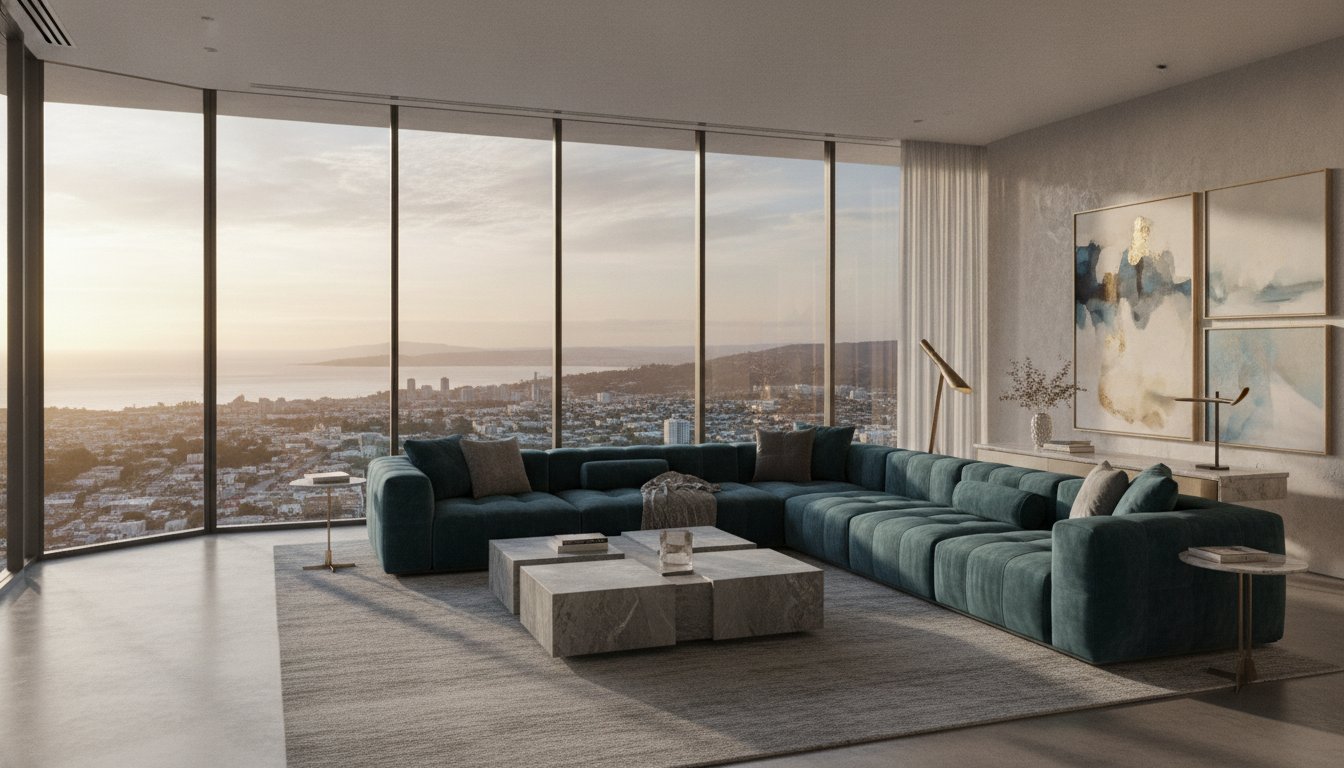
What if the most exquisite elements of your residence were actually its most resilient financial assets? You've likely felt the quiet anxiety of over-capitalizing on a property, wondering if a significant renovation will truly yield a return or simply become an elaborate sunk cost. It's a natural concern for any discerning homeowner. Sourcing rare materials and managing intricate timelines shouldn't feel like a burden that detracts from the joy of creation. This guide explores how luxury interior design adds value to your home by transforming living spaces into appreciating artisanal assets through bespoke interior architecture and direct access to Italian craftsmanship.
We'll examine the strategic shift toward wellness-focused sanctuaries and the "invisible" technology that defines the 2026 high-end market. You'll discover how professional project management and elite space planning protect your financial equity while crafting a home that perfectly aligns with a sophisticated lifestyle. From the rising demand for architecturally distinct residences in Park City to the "quiet luxury" movement in Miami, we provide the roadmap to ensure your environment remains a masterpiece of both aesthetics and investment logic.
Key Takeaways
- Understand how luxury interior design adds value to your home by distinguishing between standard market appraisals and the elevated "lifestyle equity" that attracts high-net-worth buyers.
- Discover why bespoke Italian craftsmanship and custom-commissioned furniture act as appreciating assets, offering superior durability and rarity compared to mass-produced alternatives.
- Learn how strategic interior architecture and space planning maximize the utility of every square foot, enhancing the structural integrity and resale potential of your property.
- Identify regional value drivers in markets like Miami and Park City to ensure your design choices align with specific 2026 luxury real estate trends and buyer expectations.
- Recognize the financial importance of professional project management and procurement in mitigating construction risks and securing exclusive materials through global logistics.
Redefining Home Value: Why Luxury Interior Design is a Strategic Investment
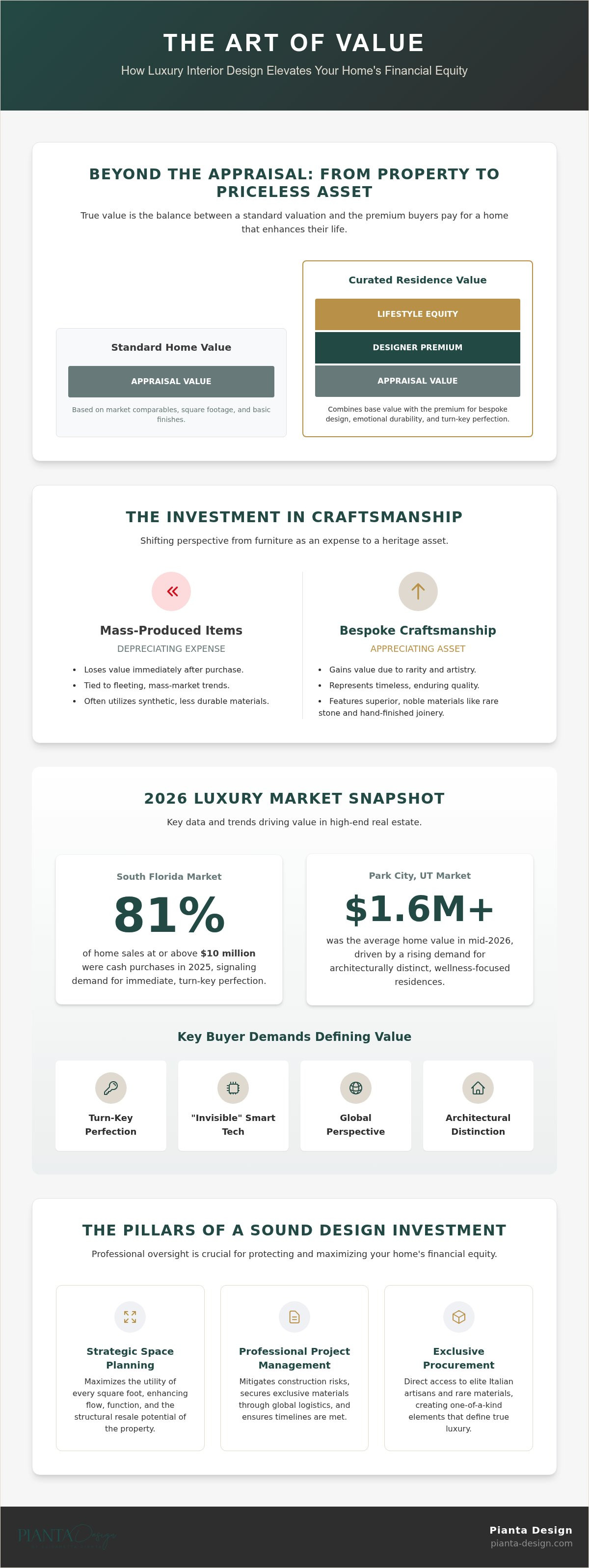
The modern definition of property worth extends far beyond the cold calculations of a standard appraisal. True value resides in the delicate balance between structural integrity and the visceral response a space evokes in its inhabitants. While the historical profession of interior design often focused on surface-level aesthetics, today's elite projects prioritize lifestyle equity. This concept represents the intangible yet powerful premium that buyers are willing to pay for a home that feels curated rather than merely decorated. It's about moving from a residence that simply houses a life to one that actively enhances it.
The "Designer Premium" isn't a mere marketing term; it's a measurable advantage. It's the result of a professional eye identifying the unique potential of a layout and elevating it through custom solutions that mass-market alternatives cannot replicate. This level of curation attracts buyers who value the harmony of a professionally planned environment over generic finishes. When you consider how luxury interior design adds value to your home, you're recognizing that a home's psychological impact is just as important as its square footage. By focusing on longevity and the artistic soul of a space, you future-proof your investment against the erosion of fleeting trends.
Financial ROI vs. Experiential Value
High-end listings with professional curation often see a significant reduction in Days on Market (DOM). In a landscape where time is the ultimate luxury, a move-in ready home that requires zero modification is a rare and desirable asset. Buyers in this sector aren't just looking for a roof; they're searching for emotional durability. This is the lasting satisfaction found in environments that promote tranquility, order, and a sense of belonging. Luxury design is the seamless fusion of fine art and strategic asset management. By investing in permanent architectural details and bespoke elements, you ensure the home's character remains timeless and its market appeal stays robust.
The 2026 Luxury Real Estate Landscape
The 2026 market demands turn-key perfection and uncompromising quality. In South Florida, where cash purchases accounted for 81% of home sales at or above $10 million in 2025, buyers expect a level of sophistication that transcends the ordinary. Generic luxury is failing to maintain value as discerning investors prioritize bespoke interiors that reflect a global perspective. Today's high-end homes must also integrate smart technology invisibly, ensuring that innovation never compromises the aesthetic narrative. In premier regions like Park City, where the average home value reached $1,606,190 in mid-2026, the demand for architecturally distinct, wellness-focused spaces continues to drive the market toward more personalized and artisanal solutions.
The Tangible ROI of Bespoke Materials and Italian Craftsmanship
High-end real estate isn't merely defined by its zip code; it's defined by the rarity and permanence of the materials within its walls. Most homeowners view furniture as a depreciating consumer expense. In the elite market, however, we treat custom-commissioned pieces as heritage assets. While retail furniture loses significant value the moment it leaves the showroom, bespoke creations often appreciate. This scarcity principle is a fundamental way how luxury interior design adds value to your home. When a space features one-of-a-kind elements that cannot be ordered from a catalog, it becomes a collector's item in its own right.
Authentic Italian manufacturing remains the global benchmark for this level of investment. With over 30 years of direct collaboration with Italian artisans, we've seen how hand-finished joinery and rare stone work endure through decades of use without losing their aesthetic soul. These materials aren't just beautiful; they're structurally superior. For instance, with architectural copper prices projected to reach $12,500 per metric ton in early 2026, the intrinsic value of high-quality metals and natural finishes continues to climb. Choosing noble materials over synthetic alternatives ensures that the home's "bones" remain valuable even as technology or minor trends shift.
Leveraging Global Sourcing Networks
Exclusive procurement adds a layer of hidden value that discerning buyers identify immediately. It's the difference between a residence that feels "staged" and one that feels "authored." By utilizing established global networks, designers can source finishes that are unavailable to the general public. This exclusivity creates a competitive edge during resale. A home featuring custom furniture design tailored to the specific proportions of the architecture commands a premium because it solves the problem of "fit" for the next owner. This level of detail transforms a property from a standard listing into a turn-key masterpiece.
Craftsmanship as a Heritage Asset
The "Craftsmanship Premium" is a tangible factor in modern residential appraisals. Buyers in 2026 are increasingly moving toward warm minimalism and biophilic design, which place a heavy emphasis on the tactile quality of surfaces. Hand-carved stone, book-matched marbles, and artisanal wood finishes aren't just decorative; they're evidence of a home built to a higher standard. This commitment to quality acts as a safeguard against market volatility. Integrating these elements through bespoke interior architecture ensures that every dollar spent is anchored in physical, enduring quality rather than fleeting fashion. Curating an environment with this level of intentionality creates a space that grows in both financial and emotional value over time.
Beyond Aesthetics: How Interior Architecture and Space Planning Maximize Equity
While many equate design with the final layer of silk and stone, true equity is built into the structural "bones" of a residence. Decoration is the transient attire of a home, but interior architecture is its permanent posture. When we discuss how luxury interior design adds value to your home, we're referring to the strategic manipulation of volume, light, and circulation. A room's value isn't just a product of its finishes; it's determined by the intelligence of its layout. By refining the architectural envelope, you create a space that feels instinctively right, a quality that high-net-worth buyers identify as a non-negotiable asset.
Professional space planning serves as a tool for maximizing square footage utility without sacrificing the sense of openness. It's about finding the hidden potential in a floor plan and reconfiguring it to serve a modern, sophisticated lifestyle. This process ensures that every inch of the property contributes to its overall market appeal and personal enjoyment. Intuitive layouts create a "flow" that feels effortless, guiding movement through the home in a way that feels both grand and intimate. This structural refinement is what separates a standard house from a masterfully designed estate.
The Value of Structural Refinement
Optimizing a floor plan in 2026 requires a nuanced understanding of the balance between open-concept living and the need for defined, private zones. High-end buyers now seek dedicated wellness areas and quiet retreats within the home's larger social framework. Integrating custom ceiling treatments and architectural millwork adds a layer of complexity that standard construction lacks. These permanent features are fundamental elements of interior design that transform a flat ceiling or a plain wall into a three-dimensional work of art. Such details signal to future owners that the property was built with a level of intentionality that justifies a premium price point.
Lighting as a Strategic Asset
Lighting is the invisible layer that determines how every other material is perceived. A poorly lit room can make the finest Italian marble look dull, whereas a layered lighting design elevates every texture and form. This isn't just about selecting beautiful fixtures; it's about technical space planning that accounts for natural light cycles and the highlighting of architectural features. Integrating high-end, "invisible" smart lighting systems offers a significant ROI by enhancing the home's atmosphere at the touch of a button. By maximizing natural light through strategic window placement and reflective surfaces, you create a vibrant, life-affirming environment that remains a top priority for luxury investors in markets like San Francisco and Miami.
Regional Value Drivers: Designing for San Francisco, Miami, and Park City Markets
Luxury is never a monolith; it's a sophisticated dialogue between a residence and its unique landscape. What defines excellence in a South Beach penthouse would feel discordant in a Nob Hill Victorian. Understanding these local market nuances is essential when determining how luxury interior design adds value to your home. A design strategy must be as geographically precise as the real estate it inhabits. By aligning your aesthetic choices with regional expectations, you ensure your investment resonates with the specific desires of the local elite, securing both immediate enjoyment and long-term liquidity.
Urban Sophistication in the Bay Area
In the high-density districts of San Francisco, the challenge lies in modernizing historical integrity without erasing the soul of the architecture. Tech-savvy buyers in 2026 are moving away from sterile, ultra-modern environments in favor of "lived-in" spaces that feature architectural details like wainscotting and picture molding. This return to traditional craftsmanship, paired with warm wood tones and textured walls, creates a sense of permanence that commands a premium. Success in this market requires a mastery of residential interior design that seamlessly integrates hidden smart home systems within a classical framework. By maximizing the utility of vertical space and optimizing natural light, you create an urban sanctuary that feels expansive despite the constraints of city living.
Coastal and Mountain Luxury Dynamics
Miami's 2026 design landscape is defined by "quiet luxury" and a relentless focus on indoor-outdoor flow. Here, we utilize yacht-grade materials that are specifically engineered to withstand high humidity and salt air without sacrificing elegance. Organic shapes and curved lines have replaced the sharp angles of the past, creating a softer, more inviting coastal aesthetic. In this cash-heavy market, where 81% of sales over $10 million are completed without financing, buyers demand a level of finish that mirrors the precision of a custom vessel. This commitment to material science is a primary way how luxury interior design adds value to your home in tropical environments.
Conversely, Park City requires an "Après-ski" sanctuary approach that emphasizes the "Modern Mountain" aesthetic. With the median sale price for single-family homes in the Snyderville Basin reaching $3,160,000 in early 2026, the demand for architecturally distinct ski-in/ski-out residences is at an all-time high. These homes must act as thermal and visual refuges, utilizing heavy textures and earthy palettes to contrast the alpine cold. Large-scale glass walls that frame mountain views are essential, but they must be balanced with intimate, wellness-focused interiors. Whether you're refining a coastal retreat or an alpine estate, the key is a tailored approach. You can explore how we bridge these regional styles by visiting Pianta Design to see our latest portfolio of location-specific masterpieces.
Securing Your Investment: The Role of Professional Project Management and Procurement
The transition from a visionary concept to a physical masterpiece is where the most significant financial risks reside. In the high-end market, a single miscommunication between trades can result in five-figure errors that compromise both the timeline and the aesthetic integrity of the residence. Precision is the ultimate safeguard. While the creative phase is often the most inspiring, the management phase is where your equity is truly secured. This meticulous level of oversight is precisely how luxury interior design adds value to your home by ensuring that the final execution matches the scale of your financial commitment.
The Designer as Project Custodian
A luxury home is a complex ecosystem of specialized artisans and technical requirements. When an interior designer acts as the project custodian, they provide a vital bridge between the architectural intent and the contractor's execution. This role involves more than simple observation; it's an active process of construction oversight that maintains design integrity at every stage. We coordinate the intricate dance between structural engineers, lighting specialists, and custom millworkers to prevent the costly delays that often plague unmanaged projects. By serving as the central point of contact, a full-service firm protects the homeowner from the exhaustion of project mismanagement, ensuring that the creative narrative remains intact through the final walkthrough.
Procurement as a Value-Add Service
The specialized logistics of procurement are a fundamental way how luxury interior design adds value to your home through exclusivity and efficiency. Managing global orders, particularly those involving direct relationships with Italian manufacturers, requires a sophisticated understanding of international shipping, customs, and "white-glove" installation. This isn't merely a clerical task; it's a strategic service that leverages established trade relationships to secure items that are unavailable to the public. These connections often provide access to superior pricing and priority production schedules that an individual homeowner simply cannot access.
Strategic procurement ensures that every material used is a verified, authentic expression of the original design intent rather than a compromised substitute. Beyond the acquisition of goods, procurement involves a rigorous quality control process. We manage the following to ensure a seamless experience:
- Custom order tracking and logistics for artisanal Italian furniture.
- Coordination of specialized freight for rare stone and fragile art pieces.
- On-site inspection of all deliveries to ensure they meet the project's exacting standards.
- Management of specialized installers for complex architectural millwork and integrated lighting.
This comprehensive approach transforms the procurement process from a logistical burden into a value-add service that guarantees the home is furnished with pieces that act as appreciating assets. It's the final, essential step in crafting a residence that is as enduring as it is beautiful.
Investing in the Art of Living
True luxury is an enduring dialogue between aesthetic soul and financial foresight. We've explored how strategic space planning and the scarcity of bespoke materials transform a residence into an appreciating asset. By aligning your environment with regional market drivers and securing it through professional project management, you ensure that every detail contributes to a legacy of refinement. Understanding how luxury interior design adds value to your home allows you to transcend fleeting trends in favor of timeless, structural equity.
Pianta Design brings over 30 years of high-end design expertise and direct access to exclusive Italian craftsmanship to every project. Whether you're refining a coastal estate, a mountain retreat, or a custom vessel, our team specializes in residential, commercial, and yacht interiors that define the pinnacle of sophistication. Begin your journey toward a more valuable home with Pianta Design.
Your residence is more than a property; it's a sanctuary where your lifestyle and your legacy converge in perfect harmony.
Frequently Asked Questions
Does hiring an interior designer actually increase my home's resale value?
Hiring a professional designer increases resale value by creating a "turn-key" property that commands a premium price. Discerning buyers often pay more for homes that require zero structural or aesthetic modification. This professional curation reduces the property's time on the market, which is a critical factor in maintaining high valuation. It's a strategic way how luxury interior design adds value to your home by appealing to the elite buyer's desire for immediate quality.
What is the typical ROI for a luxury interior design project?
The ROI for luxury projects is often measured through reduced market time and higher closing prices. While returns depend on regional demand, professionally curated homes in premier markets frequently see premiums of 15% to 25% over unrenovated counterparts. This financial gain is coupled with experiential value; the home's refined environment enhances your daily quality of life long before the eventual sale occurs.
Is bespoke furniture a better investment than high-end retail brands?
Bespoke furniture is a superior investment because it functions as a heritage asset rather than a depreciating consumer good. Retail brands, even high-end ones, lose value the moment they're delivered. Custom pieces are tailored to the specific proportions of your architecture, creating a cohesive environment that future owners perceive as a permanent part of the property's value. This exclusivity is a hallmark of truly sophisticated residences.
How does interior architecture differ from standard interior design?
Interior architecture involves the structural refinement of the space, including millwork, ceiling treatments, and layout optimization. Standard design typically focuses on the "soft" layers like furniture and window treatments. By addressing the permanent "bones" of a room, interior architecture builds lasting financial equity. This structural approach is a primary method for how luxury interior design adds value to your home, as these refinements are built directly into the property's appraisal.
Why should I invest in professional project management for my renovation?
Professional project management acts as a safeguard against the five-figure errors common in high-complexity builds. A designer coordinates between specialized artisans and contractors to ensure the final result matches the conceptual vision. This oversight prevents costly delays and material waste, effectively protecting your capital. It's an essential service for maintaining the rigorous quality standards expected in the luxury real estate market.
Can luxury design add value to a home if I'm not planning to sell soon?
Luxury design provides immediate "lifestyle equity" even if you aren't planning an imminent sale. A professionally planned environment promotes well-being through better flow, lighting, and material harmony. High-quality finishes also offer superior durability, meaning the home won't require frequent, expensive updates. You're essentially investing in a higher standard of daily living while simultaneously preparing the property for future market dominance.
What are the most value-adding luxury finishes to choose in 2026?
In 2026, the most value-adding finishes include authentic Italian stone, architectural copper, and wellness-integrated features like steam showers. Natural materials with tactile, artisanal textures are currently outperforming synthetic alternatives in appraisal value. These choices signal a commitment to quality and sustainability. Integrated smart home systems that remain "invisible" also add significant modern appeal without disrupting the home's aesthetic narrative.
How do I ensure my luxury design doesn't look dated in a few years?
To ensure longevity, prioritize "warm minimalism" and noble materials over seasonal aesthetics. Focus on classical proportions and high-quality craftsmanship that doesn't rely on fleeting visual gimmicks. By choosing finishes like hand-finished wood and natural stone, you create a timeless environment. A home built on the principles of balance and authentic materiality will remain sophisticated and desirable for decades, regardless of shifting design trends.
