
Luxury Interior Design Trends 2026: The Rise of Legacy Modernism
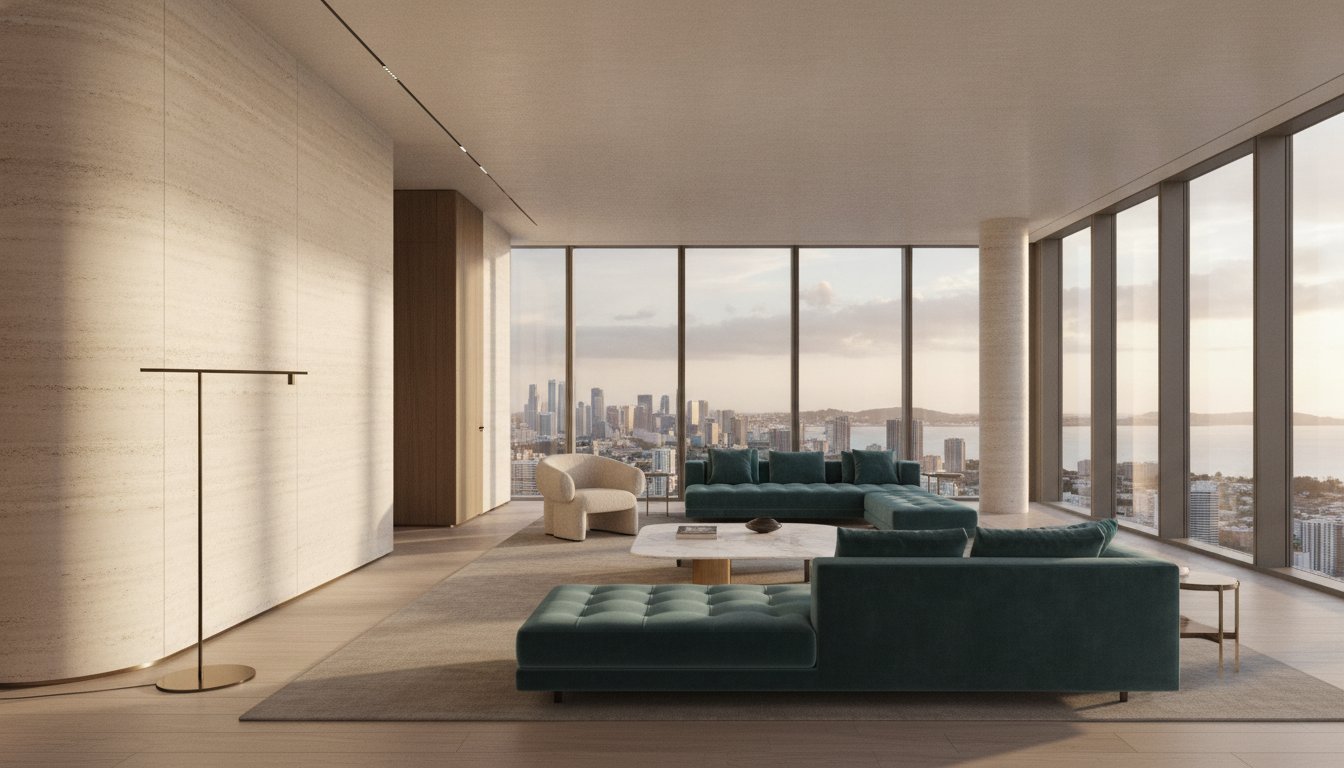
True luxury isn't about following a fleeting season; it's about curating a lifetime. While many homeowners fear their significant investments will feel dated in just a few years, the luxury interior design trends 2026 reveal a profound shift toward "Legacy Modernism." This movement marks a departure from ephemeral fads, focusing instead on a philosophy defined as Conscious Opulence. It's a world where the technical precision of yacht-grade architecture meets the soulful depth of Italian craftsmanship. You're likely seeking a way to ensure your home remains a sophisticated sanctuary that stays ahead of the curve without losing its timeless appeal.
It's natural to feel the tension of balancing cutting-edge technology with the warmth of an elegant, lived-in space. This guide promises to reveal the defining shifts in high-end residential and yacht interiors, focusing on how architectural fluidity and tactile materiality create lasting value. We'll explore the integration of high-tech wellness systems that remain invisible to the eye, ensuring your environment nurtures your well-being. You'll gain exclusive insight into the materials and bespoke design strategies that will define the most prestigious properties of 2026, helping you build a home that reflects your unique personal legacy.
Key Takeaways
- Understand the transition toward "Legacy Modernism," a philosophy that rejects ephemeral fads in favor of heirloom-quality environments and structural elegance.
- Discover how the luxury interior design trends 2026 prioritize Italian-led materiality, specifically the rise of tactile stones like unpolished marble and honed travertine.
- Learn how to adapt yacht-inspired architectural fluidity for residential use, replacing rigid layouts with organic curves and seamless spatial transitions.
- Explore the integration of sensorial design elements, including circadian lighting systems and acoustic luxury, to transform your home into a holistic wellness sanctuary.
- Gain insight into regional applications of these trends, from the tropical modernism of Miami to the tech-forward preservation strategies in San Francisco.
Legacy Modernism: Why 2026 Redefines Luxury Interior Design
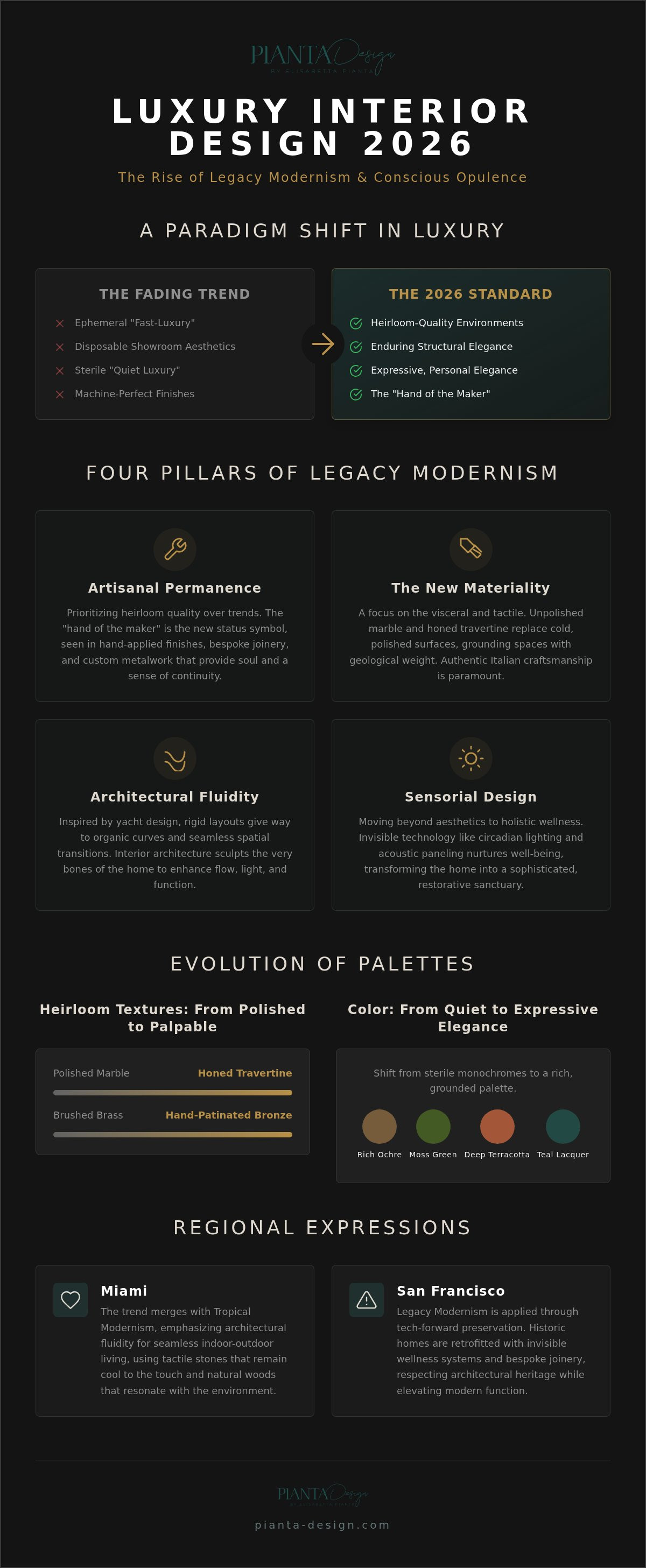
Luxury is shedding its skin. As we look toward the luxury interior design trends 2026, the industry is witnessing a decisive pivot away from "fast-luxury" and disposable aesthetics. In its place, Legacy Modernism has emerged. This philosophy prioritizes structural elegance and an enduring sense of permanence that transcends seasonal shifts. It's a sophisticated evolution of Mid-century modern principles, where the historical focus on clean lines and organic forms is now reinforced by a deep commitment to heirloom quality. Discerning homeowners are tired of spaces that feel like hollow showroom replicas; they want environments that carry the weight of history and the promise of the future.
In 2026, the "hand of the maker" becomes the ultimate status symbol. Machine-perfect finishes are being replaced by textures that tell a story of human touch and artisanal dedication. Whether it's hand-applied lime wash, bespoke joinery, or custom-forged metalwork, these subtle "imperfections" provide a soul that mass-produced items can't replicate. This shift isn't just about aesthetics. It's about the psychological impact of our surroundings. A home built on the foundations of Legacy Modernism acts as a sanctuary, fostering long-term well-being through materials that ground us in the physical world and provide a sense of continuity.
From Quiet Luxury to Expressive Elegance
The era of sterile, monochromatic "quiet luxury" is softening into something far more expressive and personal. We're seeing neutral palettes evolve into "saturated earth" tones like deep terracotta, moss green, and rich ochre. These colors provide a sophisticated backdrop for bold, architectural millwork and intricate custom ceiling treatments that define a room's character from the top down. Legacy Modernism is a sophisticated blend of 30-year durability and 2026 aesthetic innovation that ensures your investment remains relevant for decades.
The Role of the Elite Interior Designer in 2026
The modern designer's role has expanded far beyond selecting fabrics or paint colors. Today, the focus is on interior architecture, where the very bones of the home are sculpted to enhance flow, light, and function. Managing a project within a complex global supply chain requires technical precision and deep industry ties. At Pianta Design, our 30-year history and direct collaboration with Italian manufacturers allow us to make future-proof decisions. We don't just decorate; we orchestrate a complete, premium lifestyle by navigating procurement and project management with a world-class perspective. This ensures that every element of your home, from the structural layout to the final finish, reflects the luxury interior design trends 2026 while maintaining a timeless soul.
The New Materiality: Italian Craftsmanship and Heirloom Textures
The soul of a home resides in the materials that shape it. As we explore the luxury interior design trends 2026, the focus shifts from the purely visual to the visceral. We're seeing a significant rise in "tactile stone," where the cold, reflective perfection of polished surfaces is replaced by the raw, honest beauty of unpolished marble and honed travertine. These materials invite touch and ground a room in a sense of geological time, providing a weight that synthetic alternatives lack. Bespoke metalwork is also undergoing a transformative shift. The ubiquitous brushed brass of previous years is giving way to hand-patinated bronze. This living finish develops a unique character through oxidation, reflecting the light with a depth and warmth that machine-made finishes cannot achieve.
Sourcing Authentic Italian Excellence
There's a profound difference between "Italian style" and authentic Italian manufacturing. While many brands attempt to replicate the aesthetic, the epicenter of 2026 luxury remains the specialized workshops of Italy. These artisans possess a generational knowledge that ensures every piece is structurally superior and artfully finished. In a market saturated with "off-the-shelf" luxury, custom furniture design has become the ultimate status symbol. It allows homeowners to develop a material palette that bridges the gap between the clean lines of California modernism and the rich, storied traditions of the Mediterranean. When you partner with a firm that maintains direct ties to these manufacturers, you secure an exclusivity that mass-market luxury can never offer.
Heirloom Textiles and Sustainable Opulence
In 2026, sustainability is redefined as "buying once." The focus is on heirloom textiles that grow more beautiful with age. These aren't just decorative choices; they are investments in quality and longevity. Artisan-woven wall coverings are also gaining prominence, providing both acoustic insulation and a soft, visual warmth that paint cannot provide. To achieve this level of sustainable opulence, we prioritize:
- Heavy linens for their organic, breathable texture.
- Mohair for its incredible depth and natural durability.
- Vegetable-dyed leathers that develop a rich, personal patina over the years.
By integrating these textures, you create a home that feels curated rather than decorated. This approach ensures your environment remains a sanctuary of comfort and style, perfectly aligned with the luxury interior design trends 2026. Every fabric and finish is selected not just for its beauty, but for its ability to withstand the passage of time and the rigors of daily life.
Architectural Fluidity: Lessons from Luxury Yacht Interiors
Architecture is becoming more liquid. As we look toward the luxury interior design trends 2026, the rigid boundaries of traditional residential layouts are dissolving in favor of a more rhythmic, intentional flow. This shift draws heavily from the uncompromising world of superyacht design, where every millimeter is a precious resource. On water, space must be both high-functioning and aesthetically flawless; a philosophy that's now being translated into the most prestigious coastal estates. This architectural fluidity isn't just about removing walls. It's about a sophisticated approach to movement within the home, replacing sharp, aggressive corners with the "Curved Path" trend. These soft, organic transitions guide the eye and the body through a space, creating a sense of natural ease that sharp-edged minimalism often lacks.
Technical precision is the hallmark of this movement. We're seeing a surge in integrated cabinetry and "invisible" storage solutions that allow for a truly clutter-free environment. By treating storage as an extension of the interior architecture rather than an afterthought, we can maintain the purity of a room's design while ensuring it meets the demands of modern life. In coastal regions like Miami, this technicality extends to the very composition of the materials used. The rigorous selection of yacht-grade finishes prevents corrosion and wear in high-salinity coastal environments, ensuring that exterior beauty remains uncompromised by the elements.
The Influence of Superyacht Aesthetics
The visual language of the superyacht is defined by depth and luminosity. High-gloss lacquers and polished woods are used strategically to reflect light and create an illusion of infinite space. This expertise in space planning on water is now informing how we approach open-concept living on land. However, 2026 marks a move toward "capsule" spaces. Within a large, fluid floor plan, we're designing intimate, well-insulated zones that offer a sense of privacy and retreat. These capsules provide the psychological comfort of a cozy cabin while remaining part of a grander, more expansive architectural narrative.
Designing for the Horizon: Indoor-Outdoor Synergy
True luxury in 2026 is measured by our connection to the horizon. Whether framing the fog-swept bay of San Francisco or the snow-capped peaks of Park City, architectural lighting is being used to pull the exterior landscape into the primary living zones. We're creating seamless transitions where the terrace becomes a natural extension of the lounge, separated only by near-invisible glass panels. This synergy requires a deep understanding of how light interacts with different surfaces throughout the day. By aligning our interior environments with the natural solar cycle, we don't just create beautiful rooms; we create holistically nurturing environments that reflect the most sophisticated luxury interior design trends 2026.
Sensorial Design: Beyond Aesthetics to Holistic Wellness
Luxury in 2026 is an invisible experience. While previous years focused heavily on the visual, "feed-friendly" aspects of decor, the luxury interior design trends 2026 prioritize the human nervous system. We're seeing a decisive shift toward "Circadian Lighting," where advanced technology mimics the natural solar cycle to regulate sleep patterns and emotional well-being. This isn't a mere smart-home gimmick; it's a foundational requirement for modern longevity. Acoustic luxury follows a similar trajectory. By utilizing "soft architecture," integrated acoustic panels disguised as sculptural wall treatments or velvet-lined alcoves, we create "silent zones." These areas provide a necessary sanctuary from the digital noise of the outside world, ensuring that your home remains a place of profound psychological rest.
Biophilic integration has evolved far beyond the simple placement of indoor plants. In 2026, it involves complex living systems, such as hydroponic herb walls and advanced air purification systems that are architecturally integrated into the home's skeleton. The "Health Suite" has emerged as the new must-have room in high-end residential design. These spaces often feature infrared saunas, cold plunges, and dedicated meditation zones, moving wellness from a subterranean gym to a primary, light-filled part of the home's floor plan. This holistic approach ensures that every square foot of your residence actively contributes to your physical and mental vitality.
Mastering the 7 Elements of Interior Design
To achieve true sensory harmony, the 7 elements of interior design must be balanced with surgical precision. Space and light are the obvious pillars, but scent and air quality represent the invisible design layers of 2026. A high-tech smart home can feel sterile without the grounding influence of texture. We use raw silks, hand-hewn woods, and cast metals to provide a physical counterpoint to the digital interfaces that control the environment. This balance ensures the space feels human and intimate, even as it leverages the most advanced home automation available.
Lighting as a Transformative Tool
We're moving away from the harsh, uniform glare of recessed "can" lights. Instead, 2026 embraces layered, architectural lighting that highlights the home's unique textures and forms. Art consultation plays a critical role in this process. Designers must determine light placement based on the specific pigments and textures of your private collection to prevent UV damage and ensure visual depth. Smart-home systems now prioritize "mood-based" automation, adjusting color temperature and intensity based on the time of day or your desired emotional state. This level of customization allows your environment to breathe and change alongside you, perfectly reflecting the luxury interior design trends 2026.
If you're ready to transform your residence into a multi-sensory masterpiece that prioritizes your well-being, consult with our design team today to begin your journey toward holistic luxury.
Implementing 2026 Trends in Miami, San Francisco, and Park City
The most enduring luxury interior design trends 2026 find their most profound expression when they're tailored to the specific rhythm and heritage of a city. In Miami, the aesthetic is a vibrant marriage of tropical modernism and high-gloss yacht influences. We're seeing residences that mirror the luminosity of the Atlantic, utilizing the high-gloss lacquers and polished woods discussed earlier to create depth and light. For San Francisco, the challenge lies in blending tech-forward functionality with meticulous historic preservation. It's about integrating invisible smart systems into the intricate bones of a Victorian or Edwardian estate without compromising its soul. Meanwhile, Park City is witnessing an evolution of "Alpine Chic." This movement prioritizes warmer textures and strategic mountain-view optimization, ensuring that the interior feels as expansive and grounded as the landscape it inhabits.
Regional Nuances in Luxury Design
The application of these principles extends beyond the home into the commercial interior design of Miami's elite offices. In these spaces, the focus on sensorial well-being and yacht-grade materiality creates a professional environment that feels like a private, exclusive club. In San Francisco, Legacy Modernism must account for the unique verticality of the city's architecture. We use soft, curved transitions to soften the ascent between floors, creating a sense of fluid movement that feels natural rather than forced. Park City estates require a specific material palette that can withstand high-altitude conditions while maintaining an atmosphere of refined warmth. Reclaimed timbers and honed stones are essential for bridging the gap between the rugged exterior and a sophisticated, intimate interior.
Your 2026 Design Journey with Pianta Design
Initiating a project that embraces the luxury interior design trends 2026 requires more than just an eye for style; it demands significant foresight. Early-stage consultation and rigorous space planning are the foundations of a successful build. By involving a designer during the architectural phase, you ensure that every technical requirement, from circadian lighting to invisible storage, is woven into the home's DNA. At Pianta Design, we leverage our 30-year relationship with Italian artisans to procure materials that aren't available to the general market. This direct line to the epicenter of craftsmanship ensures your residence is truly one-of-a-kind. We manage the entire procurement process, navigating the complexities of the global supply chain to deliver a seamless, dignified experience.
Contact Maria Pianta today to discuss your 2026 vision and begin curating a home that serves as your personal legacy.
Crafting Your Personal Legacy
The horizon of 2026 demands a shift from the temporary to the timeless. We've explored how Legacy Modernism and yacht-grade architectural fluidity are redefining high-end spaces, moving us toward a future of "Conscious Opulence." By prioritizing Italian-led materiality and invisible, high-tech wellness systems, you ensure your home remains a sanctuary that transcends the shifting tides of fashion. These luxury interior design trends 2026 represent more than just aesthetic choices; they're an investment in a lifestyle that balances technical precision with soulful, artisanal craftsmanship.
Pianta Design brings over 30 years of industry experience to every project, offering exclusive access to premier Italian manufacturers and comprehensive project management from concept to completion. We understand that creating a world-class environment requires patience, expertise, and a global perspective. Whether you're refining a coastal estate in Miami or a historic residence in San Francisco, our team is ready to translate these visionary trends into your reality. Begin your bespoke design journey with Pianta Design today. Your home is the ultimate expression of your personal legacy, and it deserves the highest level of artistry and elation.
Frequently Asked Questions
What is the biggest interior design trend for 2026?
Legacy Modernism is the defining shift in the luxury interior design trends 2026. This philosophy moves away from disposable "fast-luxury" toward structural permanence and curated environments. It emphasizes "Conscious Opulence," where every element serves a purpose and carries a sense of history. You'll see a focus on heirloom-quality pieces and architectural fluidity that ensures a home feels anchored yet progressive in its outlook.
How do I make my luxury home feel timeless yet modern?
Achieve this balance by investing in bespoke furniture and high-quality raw materials rather than following fleeting seasonal fads. Use modern architectural techniques like "Curved Path" transitions to update the flow of your space while maintaining classic proportions. By focusing on the "hand of the maker" and authentic textures like hand-patinated bronze, you create an environment that feels contemporary today and remains relevant for decades.
Why is Italian furniture considered the gold standard for 2026?
Italian manufacturers remain the epicenter of luxury because they blend generational craftsmanship with cutting-edge material innovation. Their direct collaboration with designers allows for a level of customization that mass-market brands cannot match. In 2026, the provenance of a piece is as important as its aesthetic. Authentic Italian manufacturing ensures that your furniture isn't just a decorative object, but a durable work of art with superior structural integrity.
Can yacht design principles really be applied to a residential home?
Yes, yacht design principles are increasingly essential for high-end residential architecture, especially regarding spatial efficiency and technical precision. Superyacht aesthetics teach us how to maximize flow and light in challenging layouts. By using integrated cabinetry and invisible storage solutions common in marine environments, you create a clutter-free home. This approach is particularly effective in coastal Miami residences where yacht-grade finishes protect against high-salinity air.
What colors will be popular in luxury interiors in 2026?
The luxury interior design trends 2026 see a shift from sterile whites to saturated earth tones and deep jewel tones. Expect to see moss greens, rich terracottas, and sapphire blues paired with warm neutrals. These palettes create a sense of grounded elegance and psychological comfort. These colors aren't just for walls; they're integrated into textiles like mohair and vegetable-dyed leathers to provide visual depth and tactile warmth.
How does biophilic design go beyond just adding houseplants?
Biophilic design in 2026 involves architecturally integrated living systems that nurture physical and mental wellness. This includes advanced air and water filtration systems, hydroponic herb walls, and lighting that mimics natural solar cycles. It's about creating a holistic environment where the home's skeleton actively supports your circadian rhythm. This systemic approach transforms a residence into a "Health Suite" that fosters longevity and deep relaxation.
Is smart home technology still a trend in luxury design for 2026?
Smart home technology remains a vital component, but it's becoming invisible and intuitive. The trend is moving toward mood-based automation and wireless architectural speakers that don't disrupt the visual harmony of a room. In 2026, tech is a hidden layer that enhances sensorial design without being the focal point. It prioritizes seamless integration, allowing you to control lighting, temperature, and acoustics through minimalist interfaces that respect the home's aesthetic.
How long does a full-service luxury interior design project typically take?
A comprehensive project typically spans twelve to eighteen months, depending on the complexity of the interior architecture and procurement. Real quality requires time for deep immersion and technical precision. Since we coordinate directly with Italian artisans and manage global supply chains, the timeline accounts for bespoke manufacturing and specialized shipping. Early-stage consultation is critical to ensuring that the design journey is as seamless and dignified as the final result.
