
How Interior Designers Select Accessories for Luxury Homes: The Curatorial Process
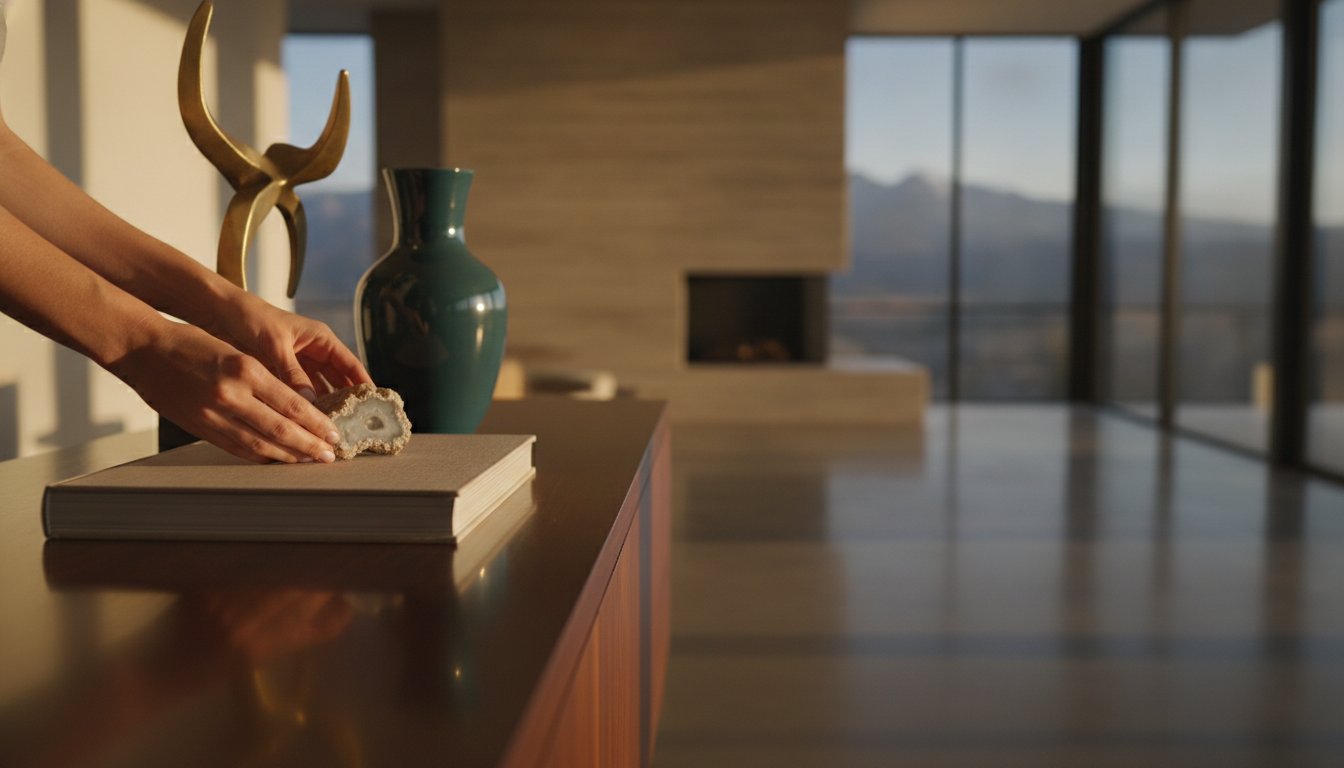
The most exquisite marble fireplace or hand-carved ceiling can feel strangely hollow without the right objects to anchor the gaze. You might worry that adding decor will only lead to clutter, or perhaps you've struggled to find unique pieces that feel worthy of your architecture. It's a common challenge in high-end residential design. Balancing the vast scale of a grand salon while avoiding mass-market replicas requires a specific, disciplined eye. Understanding how interior designers select accessories for luxury homes is about more than just shopping; it's an act of curation that bridges the gap between a house and a personal sanctuary.
In this guide, you'll discover the professional framework that elite designers use to source, scale, and layer exclusive accessories. We'll explore how to move beyond the generic to find artisanal Italian pieces and bespoke commissions that tell a personal story. You'll learn the secret to achieving a home that feels professionally polished yet deeply intimate. We'll walk through the meticulous process of selecting materials that resonate with your lifestyle, ensuring every vase, sculpture, and textile serves a higher purpose in your home's unique narrative. Through this curatorial lens, your space becomes a reflection of a life well-lived, where every detail is intentional and every object has a soul.
Key Takeaways
- Learn why the "final layer" of accessories serves as essential interior architecture, transforming a cold structure into a deeply personal, lived-in sanctuary.
- Discover how interior designers select accessories for luxury homes through exclusive access to trade-only Italian manufacturers and private artisanal ateliers.
- Master the professional framework for balancing scale and proportion, ensuring that statement pieces harmonize with grand architectural volumes rather than disappearing within them.
- Explore the nuances of regional curation, from honoring historic Bay Area architecture to selecting durable, high-aesthetic pieces for Florida’s coastal and yacht environments.
- Understand the importance of integrating procurement into early space planning to achieve a cohesive narrative and a flawless professional installation.
The Philosophy of the Final Layer: Accessories as Interior Architecture
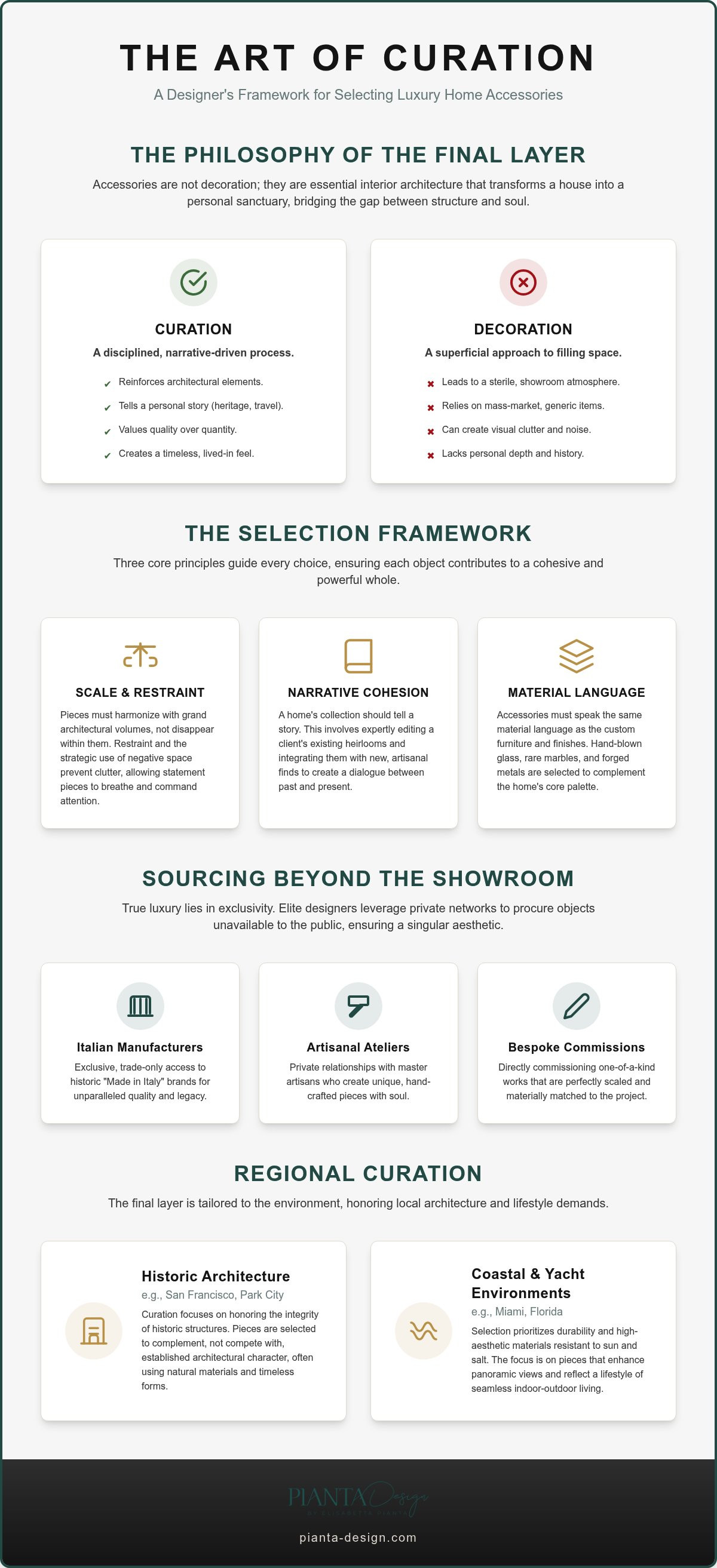
In high-end residential design, the "Final Layer" is far more than a collection of beautiful objects placed on a shelf. It serves as the essential bridge between the hard architecture of a room and the intimate, lived experience of its inhabitants. The Philosophy of the Final Layer suggests that these pieces act as the connective tissue of a home. They provide the necessary rhythm and visual weight that ground a grand space. When we examine how interior designers select accessories for luxury homes, we see a clear priority of curation over mere decoration. Decoration often feels superficial, leading to a sterile showroom atmosphere that lacks depth. Curation, by contrast, is a disciplined process that reinforces the elements of interior design by using form, light, and texture to create focal points that feel both intentional and architectural.
The Narrative Approach to Sourcing
A professional designer doesn't just fill a space; they build a collection. This narrative approach uses objects to tell a story of travel, heritage, or personal passion, ensuring the home feels like a bespoke residence rather than a staged set. There's a significant difference between filling a void and curating a meaningful grouping. The process often begins with an "editing" phase. Designers look at a client's existing pieces with a critical eye, deciding which heirlooms deserve a place in the new narrative and which should be set aside. By integrating these personal artifacts with new, artisanal finds, the home gains a sense of history and permanence that mass-market decor can't provide. It’s about creating a dialogue between the old and the new, where every piece has a reason to exist within the room's borders.
Restraint and the Power of Negative Space
In expansive luxury villas, the "clutter trap" is a common pitfall that can diminish the impact of fine architecture. Professional curation relies heavily on restraint. Knowing what to leave out is just as vital as knowing what to include. This leads to the concept of "Subdued Extravagance," where a single, high-quality piece is given the negative space it needs to breathe. When a sculpture or a hand-blown glass vessel is allowed to stand alone, its silhouette and material quality become the focus. This intentional emptiness prevents the visual noise that often plagues large rooms. By valuing the space around an object, designers ensure that the environment remains calm and orderly. This balance reflects a global perspective where luxury is defined by quality and clarity rather than sheer volume.
Sourcing Beyond the Showroom: The Value of Bespoke and Italian Craftsmanship
Elite designers operate in a world hidden from the general public. While retail showrooms offer convenience, they lack the soul and exclusivity required for a bespoke residence. The secret to how interior designers select accessories for luxury homes lies in their private network of trade-only Italian manufacturers and artisanal ateliers. These relationships, often cultivated over thirty years of industry experience, provide access to pieces that will never appear in a common catalog. By commissioning unique items directly from the source, designers ensure that a home’s aesthetic remains singular and protected from the transience of trends.
The strategy for selecting these objects often begins with custom furniture design. When a dining table is crafted from a specific rare timber or a sofa is upholstered in a custom-weave silk, the surrounding accessories must speak the same material language. This might involve hand-blown glass from Murano, rare marbles sourced from specific Italian quarries, or artisan-forged metals that mirror the architectural hardware. These procurement commissions aren't just purchases; they're investments in the home's long-term value. Authentic pieces carry the weight of history and the "Made in Italy" label, which continues to drive the global luxury market with its promise of quality and prestige.
The Italian Connection: Craftsmanship and Heritage
Leveraging relationships with generational manufacturers in Italy allows for a level of detail that defines a true residential interior design project. Authentic craftsmanship acts as a hallmark of quality. It ensures that every object ages beautifully, developing a patina that only adds to its timeless sophistication. This focus on heritage ensures that the "Final Layer" feels permanent and intentional. These pieces aren't meant to be replaced every season. They're meant to be cherished for lifetimes. The technical precision of these artisans ensures that even the smallest accessory meets the rigorous standards of a world-class interior.
Art Consultation as the Ultimate Accessory
Fine art serves as the primary "accessory" in any high-end environment. Designers act as consultants, collaborating with galleries to find pieces that harmonize with the interior architecture. This involves managing complex logistics like specialized lighting, precise hanging heights, and environmental protection for delicate works. The placement of a single, powerful canvas can define the entire mood of a room, acting as a bridge between the inhabitant's identity and the physical space. If you're looking to elevate your space with truly unique finds, exploring a professional procurement and art consultation service can bridge the gap between a house and a masterpiece.
The Selection Framework: Scale, Texture, and Narrative Cohesion
The selection of accessories for a high-end residence isn't merely a matter of filling shelves; it's a technical exercise in balancing mass and void. When we consider how interior designers select accessories for luxury homes, we see a focus on scale that respects the room's architectural proportions. In a grand salon with twenty-foot ceilings, small decorative items often disappear or, worse, create a sense of fragmented visual noise. Designers instead lean into the "Power of One," where a singular, monumental statement piece provides a grounding presence that anchors the entire space. While the "Rule of Three" is effective for intimate vignettes, grander volumes require objects with the physical weight to stand as equals to the architecture.
This framework extends to narrative cohesion, ensuring that every curated object speaks the same aesthetic language as the custom furniture and permanent finishes. It's about creating a unified dialogue where the accessories reinforce the room's core identity. This isn't achieved through simple color matching but through a shared spirit of craftsmanship and intent. Every piece should feel like it belongs to the same collection, even if the items were sourced from different continents or eras. When these elements are in harmony, the room feels settled and complete.
Mastering Scale in Expansive Spaces
In larger rooms, oversized vessels or floor-standing sculptures serve as vital architectural anchors. These pieces draw the gaze upward and bridge the gap between the floor and the ceiling, preventing the furniture from feeling "floated" in a vacuum. If you own a collection of smaller, personal items, the professional approach is to group them into a cohesive visual unit. This technique prevents the clutter that often plagues expansive villas. The impact of these pieces is frequently amplified by strategic lighting design. A focused beam can accentuate a sculpture's texture or highlight the delicate curves of a hand-blown glass piece, turning a static object into a dynamic focal point.
Material Selection and Tactile Luxury
True luxury is felt through a rich tapestry of tactile experiences. A room gains depth when matte stone is placed beside polished lacquer, or when rough-hewn wood contrasts with the smoothness of hand-woven silk. We often prioritize "living finishes" like unlacquered brass, which patinas naturally over time to reflect the home's history. These materials interact with light in distinct ways; some surfaces reflect a crisp morning glow, while others absorb the warm hues of a sunset. This careful layering of textures ensures that the environment feels responsive to its context, providing a sense of comfort that's both visual and physical. By selecting materials that reflect the home’s environmental context, designers create a space that feels grounded and authentic.
Regional Aesthetics: Curating for Miami, San Francisco, and Park City
Architecture and light are the silent partners in any curatorial process. When we look at how interior designers select accessories for luxury homes, the geographical context becomes a primary filter for materiality and color. In San Francisco, particularly within the historic Duboce Triangle, the challenge lies in balancing ornate Victorian architecture with a clean, modern sensibility. Accessories here must possess a certain architectural strength to hold their own against intricate crown moldings and high baseboards. A minimalist bronze sculpture or a series of monochromatic ceramics can provide the necessary contrast to traditional bones, creating a space that feels contemporary yet rooted in its heritage.
The quality of local light also plays a decisive role in the selection process. The cool, fog-filtered light of the Bay Area requires different surface treatments than the intense, direct sun of Miami. While San Francisco interiors benefit from materials that catch and amplify soft light, Miami homes require accessories that can stand up to high-glare environments. This regional nuance ensures that the home feels connected to its surroundings rather than appearing as an isolated capsule. By respecting these environmental factors, designers ensure that the "Final Layer" enhances the specific mood of the city it inhabits.
Miami: Coastal Elegance and Yacht-Grade Durability
In Florida, the curatorial process is heavily influenced by the proximity to the ocean and the prevalence of high-light environments. Sourcing for these spaces requires a deep understanding of luxury yacht interior design, where materials must withstand humidity and salt air without losing their luster. We often select lucite, tempered glass, and high-polished metals that mirror the movement and clarity of the water. These materials provide a sense of visual lightness that suits the coastal lifestyle. Accessories must facilitate a seamless transition between indoor and outdoor luxury living, ensuring that the terrace feels as curated and refined as the primary living suite.
Park City: Organic Sophistication and Warmth
The "Mountain Modern" aesthetic of Park City and Salt Lake City demands a different tactile vocabulary. In these homes, we use artisanal ceramics and hand-woven textiles to add essential warmth to expansive stone and timber interiors. The goal is to create organic sophistication that feels grounded yet elevated. We source sculptural wood and bronze pieces that echo the rugged mountain landscape while maintaining the refined standards of high end interior designers. This balance prevents the space from feeling overly rustic, ensuring it remains a sophisticated retreat for discerning inhabitants. If you are ready to bring this level of regional expertise to your next project, contact our design team today to begin your bespoke curation.
Integrating Accessories into the Project Lifecycle
The selection of the final layer is never a concluding thought; it is a foundational element that begins during the initial space planning phase. When a designer envisions a room, they are already calculating the sightlines for a specific bronze sculpture or the lighting requirements for a bespoke glass installation. This integrated approach ensures that the architecture supports the curation, rather than competing with it. How interior designers select accessories for luxury homes involves a deep understanding of how these objects will interact with the permanent finishes and custom millwork from day one. By planning for these pieces early, we ensure that every niche is correctly proportioned and every pedestal is properly illuminated.
Budgeting for these items is equally strategic. A professional standard in the luxury market is to allocate 10-15% of the total project budget specifically for art and accessories. This ensures that the "soul" of the home isn't sacrificed due to late-stage cost-cutting. It allows for the procurement of authentic, artisanal pieces that maintain the home's value and aesthetic integrity. Without this dedicated investment, even the most expensive architecture can feel incomplete or generic.
The Installation and Styling Day
The installation is the crescendo of the design process. It is a "White Glove" event where months of procurement and curation finally take physical form. This day is characterized by logistical precision and a high degree of artistic intuition. Designers typically bring 20% more items than the final plan strictly requires. This allows for "live-editing" on-site, as the way natural light hits a specific texture can change the intended placement of an object. We position every piece to optimize interaction, ensuring that the gaze is led through the room in a purposeful, harmonious rhythm. It's the moment when a construction project officially transforms into a bespoke residence.
Long-Term Maintenance and Evolution
A luxury home is a living entity that should evolve alongside its inhabitants. Maintaining a relationship with an interior designer allows for long-term curation and the periodic rotation of collections. This practice refreshes the home's energy without the need for a full renovation. We provide guidance on caring for delicate Italian finishes and rare materials, ensuring they age with grace. As you travel or acquire new passions, your designer acts as a lifelong curator. They help integrate new finds into your existing narrative, ensuring that your home remains a sophisticated reflection of your personal journey and global perspective.
Cultivating a Timeless Narrative for Your Home
Transforming a grand architectural shell into an intimate sanctuary requires more than a discerning eye; it demands a disciplined curatorial process. We've explored how the interplay of scale, texture, and regional light ensures that every object serves a higher purpose within your space. By understanding how interior designers select accessories for luxury homes, you move beyond the limitations of retail showrooms and enter a world of bespoke Italian craftsmanship and exclusive trade-only ateliers. This strategic approach ensures your residence feels professionally polished while remaining deeply personal and grounded in your own unique history.
With over 30 years of expertise in luxury residential and yacht design, Pianta Design provides direct access to premier Italian manufacturers and full-service procurement management. We handle the logistical complexity of sourcing and art consultation so you can focus on the joy of living in a space that reflects your global perspective. Your home is a living collection of your life's experiences, and every detail should be as extraordinary as the story it tells. Begin Your Curated Design Journey with Pianta Design today and witness the transformation of your environment into a bespoke masterpiece.
Frequently Asked Questions
How much of my budget should I allocate for accessories in a luxury project?
Professional standards in the high-end market suggest allocating 10% to 15% of the total project budget for art and accessories. This ensures the "final layer" matches the quality of the architecture and custom furniture. In luxury markets like San Francisco or Miami, this investment protects the home's overall aesthetic value. It allows for the procurement of authentic, high-end pieces that prevent a grand space from feeling unfinished or under-furnished.
Can an interior designer help me incorporate my existing family heirlooms?
Yes, an experienced designer specializes in editing and integrating personal collections into a new, cohesive narrative. We evaluate each heirloom's scale, material, and history to determine its optimal placement. By juxtaposing heritage pieces with modern artisanal finds, we create a residence that feels personal and layered. This process ensures your home tells a story that spans generations while maintaining a professionally polished and intentional atmosphere that reflects your journey.
What is the difference between a decorator and a designer when it comes to sourcing?
Designers focus on the architectural relationship between objects and the built environment, while decorators often focus on surface-level aesthetics. Understanding how interior designers select accessories for luxury homes involves looking at technical space planning and interior architecture. Designers leverage 30 years of trade-only relationships with Italian manufacturers to source bespoke items. This technical background ensures that every accessory is chosen for its structural contribution to the room's rhythm and volume.
Why is Italian craftsmanship specifically preferred for luxury home accessories?
Italian craftsmanship is the global benchmark for luxury due to its fusion of generational heritage and modern technical precision. Premier Italian manufacturers offer a level of detail in marble, glass, and metalwork that mass-market alternatives cannot replicate. These pieces age beautifully, developing a patina that adds value over time. For our clients in Park City or Miami, this connection to European artistry provides a sense of timeless sophistication and enduring quality that defines a bespoke environment.
How do you choose accessories for a luxury yacht compared to a residential home?
Yacht accessories require a higher degree of durability and logistical planning compared to land-based residences. Materials must withstand salt air, humidity, and the physical movement of the vessel. We prioritize high-grade lucite, tempered glass, and weighted sculptural pieces that remain secure while at sea. In our Miami and Florida projects, we curate these items to mirror the water's clarity; this ensures the aesthetic remains elegant without sacrificing the necessary technical resilience of the maritime environment.
What are the most common mistakes homeowners make when choosing their own decor?
The most frequent error is underestimating scale in expansive rooms, which often leads to a cluttered or "fussy" appearance. Many homeowners select pieces that are too small for their high ceilings or grand furniture. Another common pitfall is choosing mass-market items that lack material depth. Professional curation avoids these traps by prioritizing the "Power of One" statement piece over numerous smaller trinkets. This approach maintains the visual order and calm expected in a luxury environment.
How does lighting affect the selection of art and objects?
Lighting is the lens through which every object is perceived, dictating how textures and colors interact with the space. We select accessories based on how their surfaces reflect or absorb specific light qualities, such as the soft fog of San Francisco or the intense Miami sun. Strategic lighting design can turn a static sculpture into a dynamic focal point. By planning illumination early, we ensure each curated piece is showcased with the correct intensity, color temperature, and angle.
