
Formal Dining Room Design: A Refined, Practical Guide

What if a formal dining room’s greatest luxury isn’t an imposing table, but the ease with which it brings people together? Designing a formal dining room for entertaining means balancing elegance with practical details, from comfortable seating and clear circulation to a convenient place for serving. The right plan can accommodate guests without making the room feel crowded or too precious for everyday life.
When furniture, lighting, and materials work together, a dining room can feel composed yet relaxed, ready for a quiet dinner or a larger celebration. Each choice should support the experience of hosting while giving the room a distinctive, personal character.
This guide covers how to plan the layout, choose a table and seating, layer light, and bring the room together with considered finishes and details. Use these steps to create a graceful setting that supports conversation and circulation, adapts to different occasions, and makes entertaining feel more natural.
Key Takeaways
- Begin designing a formal dining room for entertaining with the way you host, so the room feels polished without being reserved for special occasions.
- Use room dimensions, openings, and serving routes to guide your table shape, orientation, and seating plan.
- Balance a dedicated dining arrangement with flexible choices that keep the room comfortable for everyday use.
- Set the layout and table scale before choosing secondary furnishings, then refine the space with coordinated lighting and materials.
- Bring space planning, custom furniture, and lighting together for a cohesive design shaped around your home and the occasions you host.
Designing a Formal Dining Room for Entertaining Starts with How You Host
A well-considered dining room feels composed without feeling untouchable. Guests can settle in, conversation can unfold, and serving can happen without disrupting the atmosphere. Designing a formal dining room for entertaining starts not with choosing a grand table, but with understanding what gatherings in your home actually look like.
Formal dining is best understood as intentional design, not a room reserved for holidays or ceremonial meals. Furniture, lighting, and materials create a considered setting, while comfort makes the space enjoyable throughout the year. The history of the dining room reflects how its role has shifted over time. Today, a room can feel refined while still responding to everyday life.
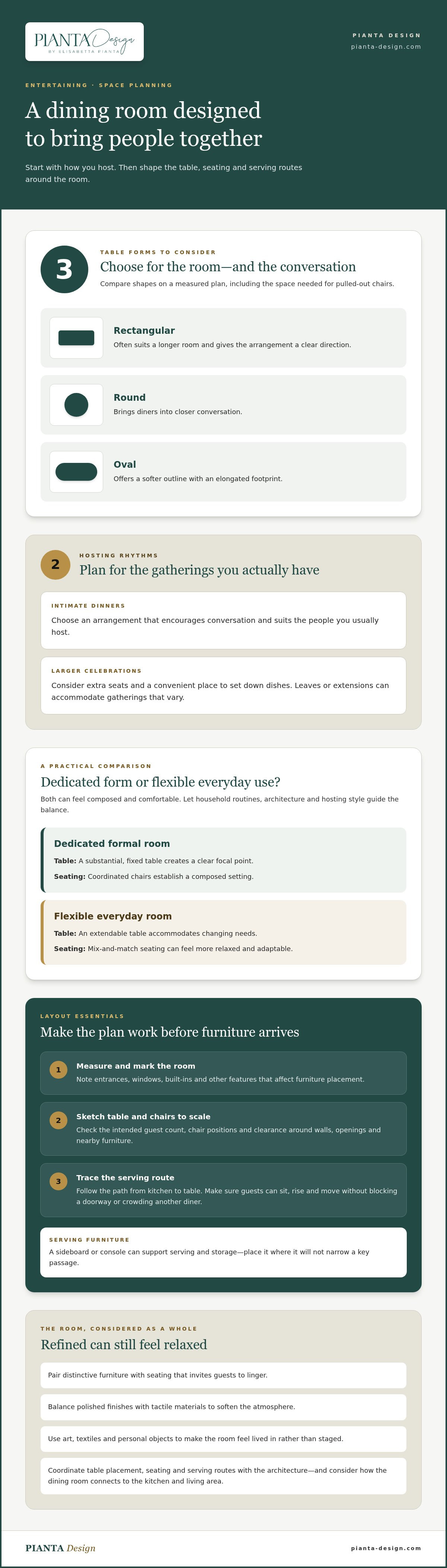
Your usual guest count, meal style, and serving preferences shape the design brief. Intimate dinners may call for an arrangement that encourages conversation, while celebrations may require extra seats and a convenient place to set down dishes. A layout that makes passing plates and reaching the table comfortable will feel more gracious than one designed only for a striking first impression. Circulation and conversation deserve as much attention as visual impact.
Turn your entertaining style into a room brief
Consider whether you host intimate dinners, larger celebrations, or a mix of both. Walk through a typical gathering in your mind: where guests arrive, whether they mingle before sitting, how food is served, and where people move once the meal begins. The room’s relationship to the kitchen and living area matters, too. A direct connection may make serving and mingling feel natural, while a separate room may benefit from a clear transition into the dining experience.
Make a formal dining room feel welcoming every day
Refinement needn’t mean stiffness. Pair distinctive furniture with seating that invites guests to linger, and balance polished finishes with tactile materials that soften the atmosphere. Art, textiles, and personal objects add depth and make the room feel lived in rather than staged. When the same setting works for an ordinary meal and a celebration, the room earns its place in daily life.
Let the brief guide the decisions that follow. A thoughtful plan can honor the room’s architecture and sense of occasion while reflecting how you genuinely gather, so hosting feels natural rather than like a performance.
Plan a Dining Room Layout That Makes Conversation and Service Flow
Room proportions, doorways, and adjoining spaces should guide the layout before you choose a table or chairs. Measure the room and note entrances, windows, built-ins, and other features that affect furniture placement. Then sketch the table and chairs to scale. This floor plan helps show whether the arrangement can seat your intended number of guests while preserving routes between the entrance, dining seats, kitchen, and serving area.
Formal dining has never required one fixed arrangement. The evolution of the formal dining room reflects changing domestic customs, and a contemporary plan can interpret the idea through proportion and purposeful use. The right layout feels considered, but guests should also be able to take their seats, rise, and move through the room without repeatedly disturbing one another.
Choose a table shape and scale for the room
A rectangular table often suits a longer room and gives the arrangement a clear direction. Round tables bring diners into closer conversation, while an oval shape offers a softer outline with an elongated footprint. Compare the options on your measured plan, including the space needed for pulled-out chairs. Choose an everyday table size that suits the number of people you usually host, and consider leaves or extensions if your gatherings vary.
Don’t judge a table by its surface alone. Mark chair positions at each place setting, then check how the arrangement relates to walls, openings, and nearby furniture. A table that fits on paper may still make the room feel cramped once chairs are occupied.
Arrange seating and serving paths around guests
Trace the route from the kitchen to the table, then imagine carrying food along it while guests are seated. Check that chairs can pull back and people can sit or rise without blocking a doorway or pressing against another diner. A sideboard or console can support serving and storage, but place it where it won’t narrow a key passage.
Walk through the plan as if you were hosting: enter the room, approach an open seat, serve a dish, and move around the table. If any step feels awkward on paper, adjust the furniture before arranging it in the room. Pianta Design’s space planning coordinates table placement, seating, and serving routes with the room’s architecture.
Compare Formal and Flexible Dining Room Choices Without Losing Comfort
A formal dining room needn’t be ornate, stiff, or saved for rare occasions. Thoughtful proportions, well-made furnishings, and a cohesive palette can create a sense of occasion without relying on decoration alone. When designing a formal dining room for entertaining, consider how dedicated and adaptable choices affect comfort between gatherings. The right balance depends on household routines, the architecture, and how you like to host.
| Design choice | Dedicated formal room | Flexible everyday room |
|---|---|---|
| Table form | A substantial, fixed table creates a clear focal point. | An extendable table accommodates changing needs. |
| Seating | Coordinated chairs establish a composed setting. | Mix-and-match seating can feel more relaxed and adaptable. |
| Lighting | A chandelier gives the table visual emphasis. | Layered, dimmable light shifts with different activities. |
| Flexibility | Furniture is arranged primarily for dining and hosting. | The room can also support reading, working, or daily meals. |
Is a formal dining room outdated or impractical?
Not when lasting qualities take precedence over passing trends. Considered proportions, craftsmanship, and materials with character can give a room enduring appeal, while personal art and textiles keep it from feeling prescribed. Use the space between hosted occasions, too: the table can be a place to read or work, and a sideboard can provide everyday storage. Restraint creates elegance, and warmth makes it inviting.
Select seating, lighting, and finishes for the experience
Upholstered chairs add softness and support for longer meals, though their fabric may need more attentive care. Less-padded chairs often have a lighter visual presence and simpler surfaces to maintain. Choose according to comfort, use, and the balance of forms in the room. Lighting shapes the experience as well: a chandelier can anchor the table, while supporting light and dimming add flexibility as the evening changes.
Choose finishes for both their look and the room’s actual use. Tactile materials bring warmth to polished surfaces, while durable choices help the room work for daily meals. Rather than treating formality and flexibility as opposites, combine the details that matter most to your household. A tailored mix can feel composed for guests and comfortable enough to enjoy every day.
Follow a Practical Sequence for Furnishing and Layering the Dining Room
A clear order of decisions helps keep the room cohesive and prevents beautiful pieces from competing with the way you use the space. When designing a formal dining room for entertaining, settle the brief and layout first, then build the palette around the furniture that will define the room.
- Define the brief. Note how you’ll use the room, how often you host, and the atmosphere you want to create.
- Measure carefully. Record the room’s dimensions, openings, and fixed features before considering furniture.
- Plan the arrangement. Test the table’s position and scale on a floor plan, including chair movement and routes through the room.
- Select the major pieces. Choose the table and chairs first, since their proportions, materials, and silhouettes set the direction for the rest of the interior.
- Layer the room. Coordinate lighting, window treatments, rugs, upholstery, and wall finishes into a palette with contrast and continuity.
- Refine in context. Review the room in daylight and after dark, then adjust details that feel too stark, dim, crowded, or visually disconnected.
Establish the furniture and material palette
Begin with the table and chairs as functional anchors and visual statements. Their finishes don’t need to match exactly: a distinctive wood table, for instance, can sit comfortably with upholstered chairs, woven textures, or metal accents when the tones and proportions feel considered. Carry that relationship through the rug, window treatments, and wall finish. Vary texture and sheen so the room has depth rather than a uniform, showroom quality. If the room calls for a piece shaped to its dimensions or character, custom furniture design can be part of the overall scheme.
Layer lighting and finishing details for entertaining
A focal fixture can establish the dining area, while supporting light adds flexibility where the layout allows. Consider the lighting across the whole scene: food should look appealing, faces should be comfortable to see, artwork should have presence, and finishes should retain their intended character. Dimming can shift the mood from an everyday meal to an evening gathering.
Keep the final details composed but usable. A low centerpiece and thoughtfully chosen linens can bring the table to life without taking up space guests need for dishes or conversation. Before calling the room finished, experience it at different times of day and with the table set as you would host. Pianta Design’s dining room design approach brings these choices into one plan.
Bring a Cohesive Formal Dining Room Design from Plan to Finished Space
A finished dining room feels considered because its decisions belong to the same vision. Space planning establishes how the room works; lighting shapes its atmosphere; materials and furnishings give the plan texture, character, and comfort. When designing a formal dining room for entertaining, these elements work best when developed together rather than selected as separate statements.
Coordinate the room’s design decisions from concept onward
Begin with a clear concept rooted in the home’s architecture and the way you host. That direction can guide the floor plan, table and chair proportions, lighting positions, and material palette, so each choice supports the room’s function and visual character. Residential interior design brings these considerations into a coordinated process, with project management helping carry the design intent through implementation.
With a clear concept, details are easier to assess. A custom-designed table or storage piece can respond to a particular room proportion, while material and finish choices connect it to the surrounding furnishings. Pianta Design has over 30 years of residential design experience, and its relationships with Italian manufacturers bring considered craftsmanship and distinctive detail to individual interiors.
Coordination matters at every scale. The placement of a light should relate to the table below it; upholstery and wall finishes should feel harmonious in daylight and evening light; and a serving piece should support the room without interrupting circulation. A coherent plan makes these decisions easier to evaluate before they become part of the finished space.
Take the next step toward a more considered dining room
Before making further selections, write down how you expect to use the room and gather its key measurements, including openings and fixed features. This preparation gives the design process a useful starting point and helps keep elegance, comfort, and movement in balance. With those priorities clear, it becomes easier to choose details that feel distinctive without compromising how the room serves you.
Pianta Design brings space planning, lighting, materials, custom furniture, and project management into a coordinated residential design approach. A dining room shaped around your home and the way you gather can make hosting feel more natural.
Create a Dining Room Ready for Every Gathering
A memorable dining room is shaped as much by how it works as by how it looks. Start with your hosting habits, then let the room’s proportions guide the layout, seating, and serving routes. Choose furnishings and materials that feel refined yet comfortable, and layer lighting to create an atmosphere suited to everyday meals and special occasions. That balance is at the heart of designing a formal dining room for entertaining.
Bringing the details together takes a considered view of the whole space. Pianta Design’s residential expertise spans space planning, lighting, furnishings, and project management, backed by over 30 years of interior design experience. Collaborations with Italian manufacturers offer another avenue for thoughtful craftsmanship and distinctive detail.
Pianta Design works with clients in Park City, Salt Lake City, San Francisco, and Miami. Explore Pianta Design’s residential interior design services to shape a dining room around your home and the way you gather.
Frequently Asked Questions
How do you design a formal dining room for entertaining?
Start with a clear brief based on how often you host, your usual guest count, and whether meals are served family-style or in courses. Measure the room, plan the table and serving routes, then coordinate seating, lighting, and finishes. This is the foundation of designing a formal dining room for entertaining. Pianta Design brings over 30 years of residential design experience to space planning, lighting, furnishings, and project management in Park City, Salt Lake City, San Francisco, and Miami.
What should a formal dining room include?
A formal dining room should include a table and comfortable seating suited to the room, clear routes for guests and serving, and lighting that creates a welcoming atmosphere. Storage, such as a sideboard, can be useful if it doesn’t obstruct movement. Consider materials and finishes together, but don’t feel obliged to match every surface. Art, textiles, and personal objects add character and connect the room to the rest of your home.
How much space should be left around a dining table?
As a planning guide, allow at least 36 inches between the table edge and nearby walls or furniture, with 48 inches offering more generous circulation where the room permits. Also account for chairs when pulled back, since guests need space to sit and rise comfortably. These are useful reference points, not universal rules. Doorways, serving routes, table shape, and the room’s actual dimensions all influence the final layout.
Is a formal dining room still practical for everyday use?
Yes. A dining room can feel refined while supporting daily meals, reading, or other regular activities. Choose comfortable seating and materials suited to how the room is used, and avoid treating the table as a surface that must always remain formally set. Flexible furniture, such as an extendable table, can adapt to different occasions. A considered design makes the room feel special when hosting and inviting the rest of the time.
Which dining table shape is best for entertaining?
The best shape depends on the room’s proportions and the way you like guests to interact. A rectangular table often suits a longer room and accommodates a clear seating arrangement. A round table can encourage a more intimate conversational atmosphere, while an oval shape softens the outline of a longer table. Consider the space chairs occupy, your usual guest count, and whether an extension will help accommodate larger gatherings.
What lighting works best over a formal dining table?
A central chandelier or pendant can anchor the table, while dimmers and supporting light help the room shift from everyday use to evening entertaining. As a guideline, hang the bottom of the fixture 30 to 36 inches above the tabletop. A chandelier’s diameter is often planned at roughly half to two-thirds of the table’s width. Consider how light affects faces, food, artwork, and finish colours before settling on a fixture.
How can I make a formal dining room feel less stiff?
Balance tailored furnishings with comfortable seating, tactile materials, and personal details. Art, textiles, and objects that reflect your taste can soften a coordinated scheme without making it feel cluttered. Use layered, adjustable lighting to create a warmer mood, and choose a centerpiece that leaves room for serving and conversation. Most importantly, use the room regularly. Familiarity helps a polished space feel welcoming rather than reserved for special occasions. Explore Pianta Design’s residential interior design services to create a dining room suited to your home and the way you gather.
