
DIY Luxury Design vs Professional Services: The True Cost of High-End Interiors
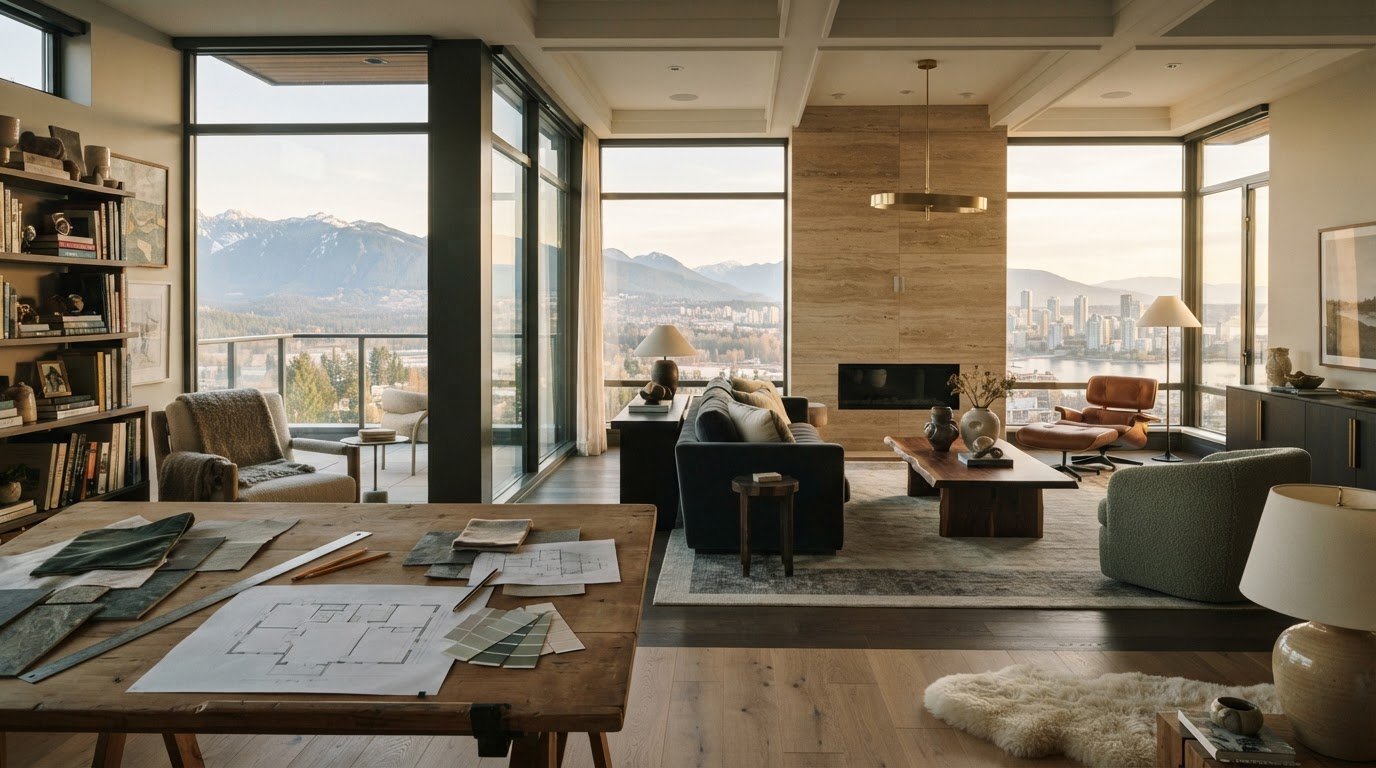
Luxury is an architectural orchestration of master craft, not an assembly of retail curation. When shaping an exceptional home, it's only natural to wonder whether you can achieve an editorial-caliber interior yourself. The debate between DIY luxury design vs professional services often seems like a choice between personal creative freedom and professional delegation; you want an environment that mirrors your taste, and sourcing every piece yourself feels like an inspiring creative endeavor.
Yet true high-end living isn't bought off showroom floors. It requires direct access to trade-only Italian artisan workshops, precise spatial tolerances, and complex project logistics where a minor miscalculation can compromise an entire room's harmony. Discover the critical differences between self-curated decorating and full-scale interior design to safeguard your architectural investment. Ahead, we examine the true friction of independent procurement, how turnkey oversight protects your property value, and what it takes to realize a cohesive, timeless sanctuary from initial concept to final installation.
Key Takeaways
- Understand why genuine high-end living requires comprehensive interior architecture and precise space planning rather than surface-level retail decorating.
- Examine the real equation of DIY luxury design vs professional services, weighing cumulative personal project hours against seamless turnkey management.
- Discover how direct access to trade-only European artisan workshops and custom fabrication creates lasting value that retail catalogs cannot replicate.
- Learn how converting aesthetic vision into detailed technical drawings prevents costly on-site contractor errors and spatial miscalculations.
- Determine the critical architectural thresholds where partnering with a premier design firm safeguards your property equity and design integrity.
Defining High-End Interiors: DIY Decorating vs Professional Interior Architecture
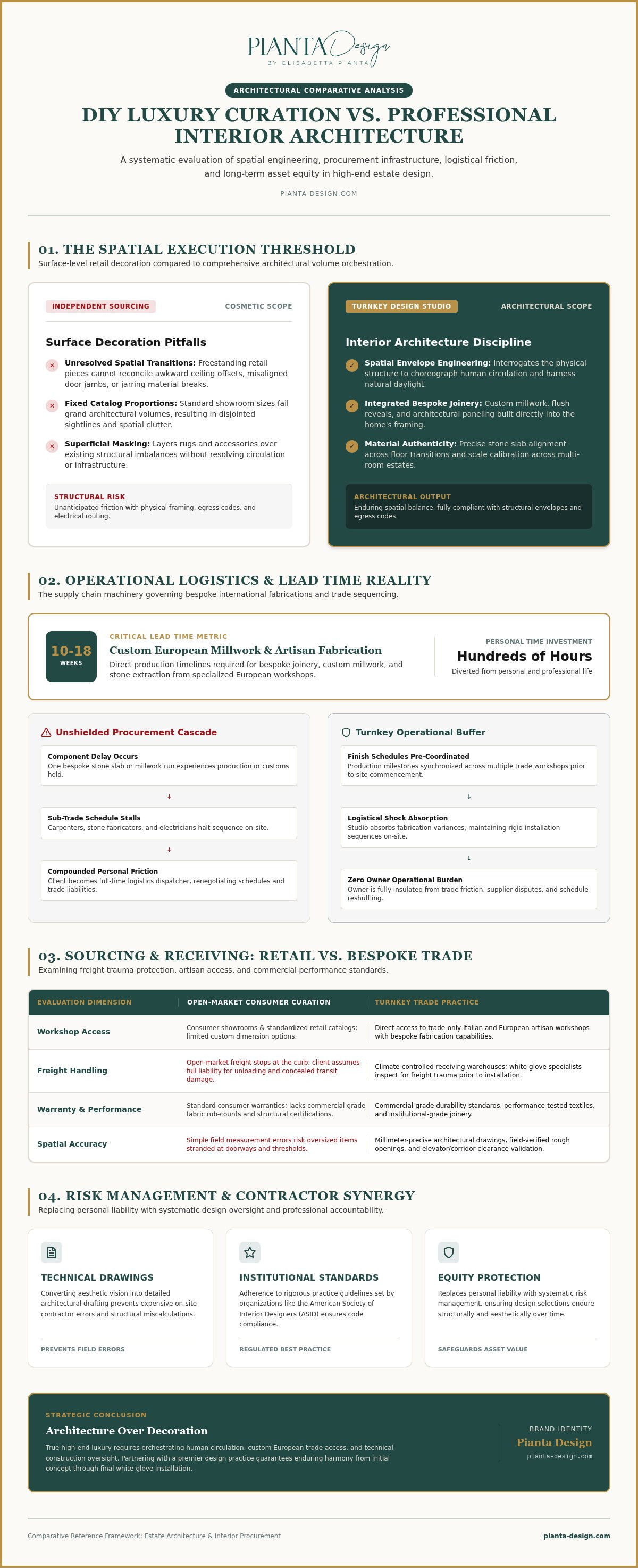
True luxury is never an afterthought applied to a drywall perimeter. When evaluating DIY luxury design vs professional services, the fundamental division lies between cosmetic adornment and true spatial composition. Decorative shopping merely addresses visual symptoms; it layers rugs, tables, and accent lighting over pre-existing spatial flaws without resolving structural flow. Professional design, conversely, begins by resolving spatial function through interior architecture. It interrogates the physical bones of a residence, orchestrating volume, sightlines, and material authenticity long before soft textures enter the room. Independent decor projects often stumble here, meeting unanticipated hurdles in structural framing, egress codes, and electrical infrastructure.
The Scope of Surface Decoration
Retail curation operates within rigid confines. Gathering pieces from high-end consumer showrooms creates an impression of luxury on a digital mood board, yet visual collages quickly unravel when confronted by three-dimensional space:
- Unresolved Transitions: Freestanding retail furnishings cannot correct awkward ceiling offsets, poorly aligned door jambs, or jarring material breaks between living zones.
- Fixed Proportions: Standardized catalog dimensions fail to honor grand architectural volumes, often leaving expansive rooms feeling disjointed or cluttered.
- Superficial Cohesion: Arranging decorative accents treats surfaces without addressing underlying spatial imbalances, masking design flaws rather than solving them.
The Discipline of Interior Architecture
Professional design reconfigures the lived experience through technical precision. Rather than simply occupying space, an architectural approach choreographs human circulation, harnesses natural daylight, and integrates bespoke joinery directly into the structural envelope of the home. This discipline requires meticulous drafting for custom wall paneling, flush reveals, and precise stone slab alignments across floor transitions.
This holistic methodology balances the foundational elements of interior design, aligning scale, light, and texture across complex estates. In the reality of DIY luxury design vs professional services, this structural discipline creates an environment of enduring harmony, transforming a property into an intentional architectural sanctuary.
Evaluating the Real Variables: A Comparative Framework
Weighing DIY luxury design vs professional services requires looking past romanticized sourcing trips to analyze the operational machinery behind extraordinary homes. Independent projects routinely underestimate the logistical friction involved in turning concepts into reality. Where an untrained eye sees individual furniture purchases, an experienced studio sees complex supply chains, trade staging, and technical coordination. Engaging a licensed practice recognized by organizations like the American Society of Interior Designers replaces personal liability with systematic risk management, ensuring that every design choice performs structurally and aesthetically over time.
Time Expenditure and Operational Logistics
Managing an estate-level interior demands hundreds of hours away from your professional and personal life. Overseeing finish schedules, tracking custom European millwork with lead times often spanning 10 to 18 weeks, and coordinating sub-trades transforms home curation into an exhausting second career. When one bespoke stone slab arrives late, the entire construction sequence stalls. Turnkey project management absorbs these shocks, insulating owners from daily friction while keeping work sequencing entirely intact.
Financial Realities and Procurement Pitfalls
The hidden costs of self-procurement surface quickly in the high-end sector. Retail purchases rarely offer commercial-grade durability warranties, and simple field measurement errors can leave an imported sectional stranded at your threshold. The core vulnerabilities include:
- Freight and Receiving Exposure: Open-market retail shipping stops at the curb. Turnkey services use climate-controlled receiving warehouses where white-glove handlers inspect shipments for freight trauma before residential delivery.
- Custom Specification Errors: Ordering textiles without verifying rub counts, flame spread ratings, or backing requirements often leads to irreversible wear within months.
- Contractor Rework: Without technical elevations specifying exact plumbing and electrical rough-ins, job sites suffer expensive teardowns and repositioning.
Regional Environmental Demands
True luxury design responds intelligently to geographic stressors. In coastal Miami, air laden with salinity corrodes standard catalog hardware and demands marine-grade finishes. Mountain chalets in Park City require materials engineered to endure extreme freeze-thaw cycles without checking or delamination. San Francisco residences face rigorous seismic regulations and historic preservation zoning that dictate joinery attachments. Navigating these regional microclimates demands the specialized curation found at Pianta Design, where architectural sensitivity protects your physical asset from premature environmental decline.
The Procurement Divide: Retail Catalogs vs Bespoke European Craft
High-end consumer storefronts offer an illusion of exclusivity, yet their inventory stems from assembly-line production designed for mass transit and rapid inventory turnover. When balancing DIY luxury design vs professional services, procurement is where aesthetic visions either mature into generational permanence or reveal their consumer origins. True luxury thrives on rare provenance: quarried slabs extracted from heritage Italian veins, hand-rubbed patinas that evolve through use, and custom bronze castings engineered to structural tolerances. Retail furniture catalogs cannot replicate this level of material integrity. They sell predetermined shapes; bespoke craft sculpts around the living architecture of your home.
Direct Collaboration with Italian Artisans
Generational European workshops preserve trade secrets passed through family hands for centuries. These master artisans rarely maintain public digital portals or commercial storefronts. Securing their output requires established industry trust and direct technical relationships, translating complex concepts into museum-caliber artifacts:
- Material Provenance: Sourcing book-matched Calacatta marble blocks, hand-stitched Tuscan saddle leathers, and hand-chiseled architectural bronze directly from source ateliers.
- Artisanal Joinery: Utilizing blind mortise-and-tenon connections and hand-rubbed oil finishes that allow solid walnut and oak to age gracefully over decades.
- Bespoke Prototyping: Translating hand sketches into detailed workshop patterns, aligning with the specialized philosophy of custom furniture design.
Dimensional Precision and Spatial Scale
Retail furniture lives in standard increments. Standard six-foot sofas often look diminutive in ten-foot volumes, while oversized sectional seating chokes essential pathways. High-end environments require absolute dimensional control. Bespoke seating contours gently along the radius of a bay window, while custom-tailored dining arrangements match ceiling coffers down to the millimeter.
Architectural millwork transforms awkward alcoves, structural chases, and irregular wall planes into seamless functional statements. In the debate between DIY luxury design vs professional services, bespoke execution ensures that every piece appears as though the home was constructed specifically around it, leaving behind the disjointed feel of mass catalog curation.
Mitigating Risk: Construction Oversight and Contractor Synergy
Misunderstandings on a luxury job site carry steep costs. In the evaluation of DIY luxury design vs professional services, construction oversight marks the line between an immaculate residence and perpetual compromise. On-site trades require exact technical documentation, not inspirational mood boards or conversational descriptions. Without dimensioned drawings detailing tight tolerance thresholds, finish carpenters, electricians, and stone masons make independent interpretations. A professional design studio acts as the essential conduit, translating elevated aesthetic concepts into the precise language of technical building specifications.
Bridging Architectural Intent and Job-Site Execution
Reflected ceiling plans, electrical junction drop schedules, and plumbing rough-in sets establish unambiguous standards for every trade on site. When unexpected framing anomalies or mechanical duct chases emerge behind opened drywall, an experienced design team resolves the challenge in the field without sacrificing the room's geometry. This technical rigor ensures flawless sequencing between trades:
- Sub-Trade Alignment: Directing finish carpenters and master stone setters so that bespoke millwork reveals align perfectly with book-matched stone slabs.
- Pre-Installation Audits: Catching structural and plumb irregularities across wall planes before fragile, non-refundable materials are installed.
- Mechanical Concealment: Integrating return air vents, linear diffusers, and access panels discreetly into the architectural envelope.
Specialized Lighting Design and Technical Rigor
Lighting reveals the sharpest contrast between amateur curation and architectural design. Proper illumination demands a calibrated balance of ambient warmth, task precision, and architectural accenting. Independent projects frequently overlook Color Rendering Index (CRI) metrics and correlated color temperatures, leaving noble European timbers and rare marbles looking flat or discolored under mismatched LEDs.
An experienced interior designer coordinates low-voltage driver compatibility, 0-10V dimming integration, and plaster-in trimless fixtures to produce effortless atmosphere. To protect your home against disjointed trade execution and technical friction, collaborate with Pianta Design for complete multi-disciplinary oversight from initial blueprint through turnkey delivery.
The Strategic Choice: When to Partner with a Premier Design Firm
Deciding between DIY luxury design vs professional services ultimately hinges on the architectural scale of your property and the permanence you seek to achieve. While personal styling can refresh a compact guest suite, sprawling residences and multi-story estates demand holistic orchestration. Master-planned execution preserves and enhances property equity by ensuring that materials, spatial proportions, and mechanical interfaces integrate effortlessly. Full-scope design isn't simply an aesthetic preference; it's a strategic safeguard against piecemeal alterations that dilute an estate's long-term market value.
Project Milestones Demanding Full-Service Practice
Certain architectural thresholds leave zero margin for trial and error. Engaging dedicated multi-disciplinary guidance becomes indispensable when projects involve:
- Extensive Structural Work and Permitting: Navigating strict historic preservation boards, municipal zoning, and seismic updates across historic San Francisco properties or coastal residences.
- Ground-Up Builds and Marine Environments: Orchestrating turnkey completions for new custom estates or complex yacht interior commissions where weight distribution, joinery tolerances, and moisture dynamics are paramount.
- Curated Private Art Collections: Designing specialized architectural illumination, climate stabilization, and bespoke placement displays to safely showcase museum-caliber works.
The Enduring Legacy of Curated Spaces
Passing retail trends fade within seasons. A masterfully articulated environment, rooted in classical balance and authentic materiality, endures for generations. Engaging a comprehensive residential interior design practice ensures that your home functions as a restorative retreat, where every sightline calms the senses and every custom finish supports daily wellbeing.
The collaborative relationship between a homeowner and a principal designer remains intimate and empowering. Your personal narrative, travel memories, and functional routines become the foundation for an elevated spatial narrative. In resolving the dilemma of DIY luxury design vs professional services, choosing premier expertise transforms a physical structure into an enduring architectural statement. Begin your transformation with Pianta Design to experience the balance, poise, and lasting equity of truly bespoke living.
Securing the True Value of Your Living Environment
Resolving the choice between DIY luxury design vs professional services comes down to lasting architectural value versus temporary surface styling. Curating an exceptional residence requires far more than open-market showroom selections; it demands rigorous spatial planning, technical trade synergy, and authentic material provenance that withstands the passage of time.
Backed by over three decades of bespoke interior excellence, Pianta Design bridges artistic ambition and technical precision through direct artisan procurement across premier Italian manufacturers. Whether crafting coastal retreats in Miami, mountain sanctuaries in Park City, or refined estates across San Francisco, complete turnkey execution protects your time and your physical asset. Your home should serve as an effortless sanctuary that elevates daily wellbeing while preserving long-term investment equity. Explore bespoke interior architecture with Pianta Design to begin shaping an environment defined by enduring poise, harmony, and tailored distinction.
Frequently Asked Questions
Can a homeowner source directly from trade-only Italian luxury furniture makers?
No, independent homeowners typically cannot access genuine trade-only Italian ateliers. Generational workshops in northern Italy partner exclusively with verified design practices. They require detailed technical drawings, precise finish schedules, and vetted white-glove logistics networks to protect their craftsmanship standards. Partnering with an established design studio grants private entry to these master fabricators, securing rare marbles, hand-rubbed patinas, and tailored joinery unavailable across consumer channels.
How does professional interior architecture differ from decorative home staging?
Professional interior architecture modifies spatial volume, internal circulation, and the physical building envelope, whereas home staging merely arranges temporary decorative furnishings. Interior architecture redesigns sightlines, custom millwork, ceiling elevations, and integrated lighting systems to transform daily living. Staging simply masks structural imperfections with surface styling. An architectural approach engineers the space itself, creating lasting harmony, functional ease, and enduring property value.
What are the most common financial mistakes made during DIY luxury renovations?
Spatial miscalculations and incorrect material specifications represent the costliest errors in DIY luxury design vs professional services. Homeowners routinely order retail furnishings that fail to fit elevators, overwhelm room proportions, or deteriorate under regional stressors like Miami's salt air or Park City's freeze-thaw cycles. Additional losses stem from uncoordinated trade sequencing, where misplaced plumbing or electrical rough-ins force expensive demolition and rework.
How do design firms coordinate with general contractors and architectural trades?
Design firms translate aesthetic visions into technical construction sets that job-site trades rely on for execution. Designers generate comprehensive reflected ceiling plans, electrical junction drop schedules, and detailed millwork shop drawings. By conducting meticulous site audits across framing, plumbing, and electrical rough-ins, professional design studios protect project flow, keeping trade specialists in San Francisco, Miami, and Salt Lake City precisely aligned with the master design.
Why is architectural lighting design considered impossible to execute via DIY retail shopping?
Retail shopping focuses solely on decorative fixtures, overlooking the nuanced science of architectural illumination. True luxury lighting balances ambient warmth, task precision, and architectural accenting using strict Color Rendering Index (CRI) standards and coordinated color temperatures. Without technical expertise in low-voltage drivers, 0-10V dimming integration, and plaster-in trimless fixtures, retail setups often produce harsh glare, uneven shadows, and electronic hums.
Is hiring an interior design firm justifiable for a secondary vacation home?
Yes, retaining a premier design firm for a vacation property is critical because remote project management invites expensive delays. Supervising contractors and freight deliveries for a mountain estate in Park City or a coastal retreat in Miami from a distance creates immense friction. In evaluating DIY luxury design vs professional services for secondary residences, turnkey management ensures you arrive at a completely appointed, stress-free haven.
What role does custom furniture play in preserving the long-term value of a residence?
Custom furniture optimizes exact room proportions while providing heirloom craftsmanship that retail inventory cannot match. Bespoke furnishings are drafted to contour around architectural columns, balance ceiling coffering, and celebrate panoramic views, eliminating awkward dead zones. Fabricated with noble hardwoods, hand-finished metals, and tailored upholstery, these unique pieces give the home a distinct identity that sophisticated buyers instantly recognize as authentic architectural refinement.
