
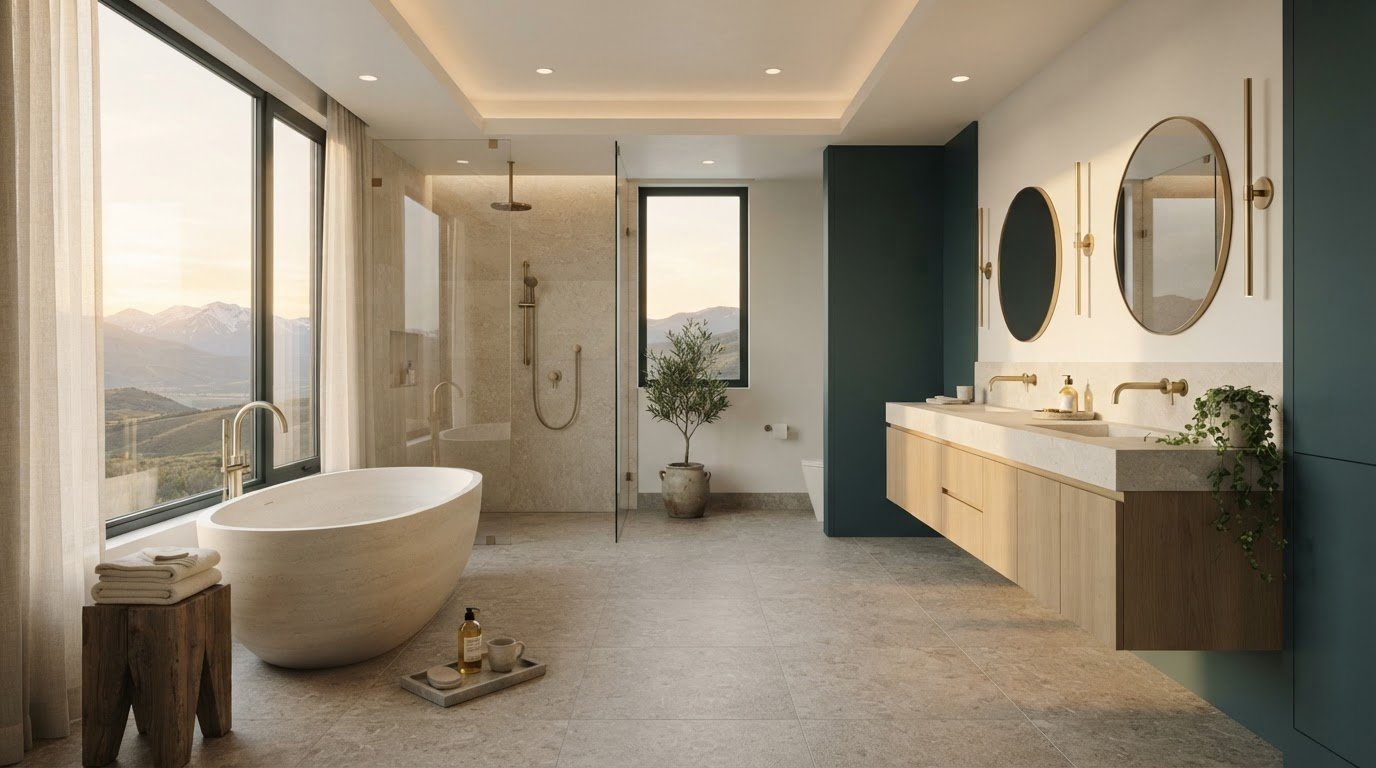
What if the most restorative feature of a master bathroom isn’t a freestanding tub or a rainfall shower, but the way the room supports your daily rituals? Creating a spa-like master bathroom starts with that shift in perspective. An inspiring image can spark ideas, but it rarely shows how layout, lighting, materials, and storage work together in a real home. The goal isn’t to recreate a hotel suite or follow a familiar template. It’s to shape a calm, cohesive space that feels distinctly yours.
Start by considering how you move through the room, what helps you begin the morning with ease, and what invites you to slow down at the end of the day. This guide covers the choices that most influence comfort and atmosphere, from space planning and layered lighting to tactile finishes and personal details. You’ll learn how to prioritize them around your routines and bring them together in a master bathroom that feels serene, refined, and genuinely livable.
Key Takeaways
- Creating a spa-like master bathroom begins with shaping the room around restorative routines, not simply adding spa-inspired accessories.
- Use circulation, visual focus, and considered storage to make the space feel calm and intuitive in everyday use.
- Layer lighting and coordinate materials to support different moments of the day while maintaining a cohesive atmosphere.
- Plan the transformation in five adaptable steps, from observing your routines to coordinating the finishing details.
- A single design vision can align concept design, space planning, material selection, lighting, and project management.
What Makes a Master Bathroom Feel Like a Spa?
A spa-like master bathroom is a personal, restorative environment that makes everyday routines feel calmer and more considered. Creating a spa-like master bathroom means bringing privacy, visual calm, comfort, and practical function into one coherent experience, rather than relying on a collection of spa-associated accessories.
A freestanding tub, scented candle, or neatly folded towel can contribute to the mood, but none can make up for a room that feels exposed, cluttered, or awkward to use. The atmosphere comes from how the whole space works: whether it offers a sense of retreat, whether essentials are within easy reach, and whether the room stays composed during ordinary, often hurried moments. General Bathroom design principles provide useful context for the room’s familiar functions. A spa-like approach gives those functions a more personal and restorative character.
Privacy is part of the experience, not an afterthought. Consider whether someone can get ready without feeling on display and whether two people can use the room comfortably at the same time. Give daily necessities a home, keep the main work surfaces as clear as possible, and make each activity feel as though it has a natural place. Those decisions help the room feel inviting as well as beautiful.
Which qualities make a bathroom feel restorative?
Visual order gives the eye a place to rest. Concealed storage keeps everyday products close without leaving every surface crowded. Consider what you see from the doorway: a clear view of a window, a composed vanity, or a considered material can make the room feel settled before the day begins. At night, putting away the objects used in the morning helps the space return to a quieter mood.
Comfort also comes through the senses. Well-considered lighting can make an evening wash-up feel less stark, while a tactile finish under hand or foot adds warmth to a familiar ritual. The effect is personal. One homeowner may find a softly textured surface calming, while another prefers a smoother, more minimal finish. Ask how each material will feel in the moments you’ll experience it, rather than choosing by appearance alone.
How can a master bathroom feel personal rather than generic?
Begin with your habits and preferences. Notice whether mornings are shared or private, what you reach for first, and which part of an evening routine you’d like to make more unhurried. Consider what privacy means in your household, too. These observations offer a more useful starting point than choosing a complete room from an inspiration image.
A reference image can highlight a detail you like, such as a material combination or sense of openness, without serving as a blueprint for the whole room. Translate those qualities into decisions that suit your space: how the room is used, what deserves visual emphasis, and which finishes feel right to live with. That tailored composition connects inspiration to practical design choices, so the finished room feels considered, functional, and unmistakably your own.
How Layout, Lighting, and Materials Create a Spa-Like Master Bathroom
Creating a spa-like master bathroom depends on how its elements work together, not on any single finish or fixture. A direct route between the vanity, shower, and bathing area can make daily movement feel natural. A balanced view of the room gives the eye a place to settle. Thoughtful lighting and materials reinforce that ease, carrying a consistent mood from the first step inside to the last evening ritual.
Layout creates ease, light shapes the mood, and materials give the room its tactile character. Treat these as connected decisions. A striking surface may deserve visual emphasis, for example, but its placement should support the room’s composition rather than compete with practical movement or draw attention away from the room’s focal point.
What layout choices help the room feel calm and intuitive?
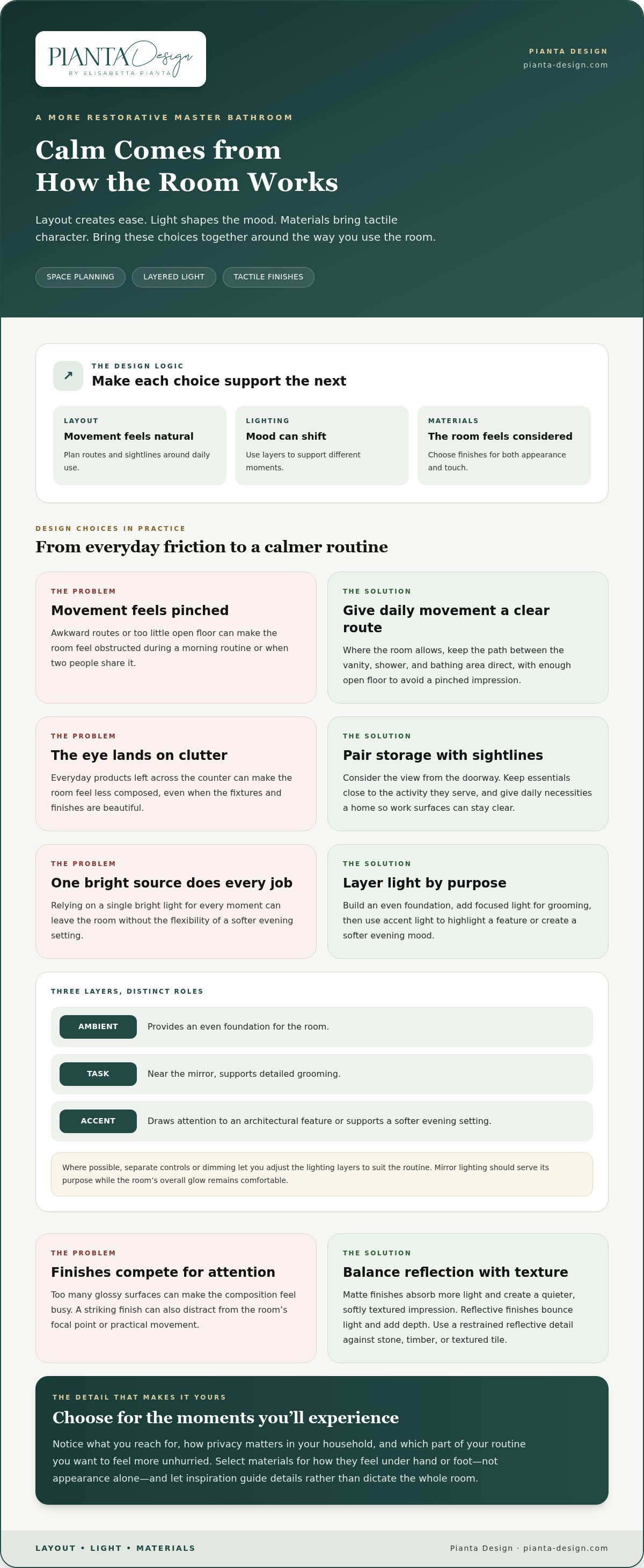
Start by tracing the routes you take. Where the room allows, keep movement between the vanity, shower, and bathing area direct, with enough open floor to avoid a pinched or obstacle-filled impression. The layout doesn’t need to be symmetrical. It should make sense for how the room is used, whether one person is moving through a morning routine or two people are sharing the space.
Then consider sightlines and storage together. A composed view from the doorway might draw attention to a window, a considered material, or a clean line of cabinetry instead of an assortment of products on the counter. Place storage close to the activity it serves: everyday grooming items near the vanity, for instance, and towels within comfortable reach of the bathing area. This keeps essentials convenient while reducing visual clutter.
How do lighting and finishes shape the atmosphere?
A layered lighting scheme gives the room flexibility without relying on one bright source for every moment. Ambient light provides an even foundation; task lighting near the mirror supports detailed grooming; and accent lighting can draw attention to an architectural feature or create a softer evening setting. Where possible, separate controls or dimming let you adjust the layers to suit the routine. Placement matters as much as the fixture: mirror lighting should serve its purpose while the room’s overall glow remains comfortable.
Finishes influence how light behaves. Matte surfaces tend to absorb more light and create a quieter, softly textured impression. Reflective finishes can bounce light around and add depth, though too many glossy surfaces may make the composition feel busy. Use contrast deliberately: a restrained reflective detail against stone, timber, or textured tile can add dimension without overwhelming the room.
Choose materials for tone and tactile character as well as appearance. Warm wood grain, softly veined stone, or finely textured tile can suggest a connection to nature, while a cooler palette may feel crisp and understated. There’s no universal spa style. Select a limited family of complementary tones and textures, then repeat them with intention so the room reads as one composition.
Pianta Design’s residential interior design brings spatial planning, lighting, and finishes into a cohesive vision for homeowners shaping these choices into a unified room.
Spa-Like Bathroom Ideas: Which Choices Change the Experience?
A candle, plush towel, or carefully chosen plant can make a bathroom feel more inviting, but accessories alone can’t turn a difficult room into a restorative one. Creating a spa-like master bathroom is less about collecting spa cues and more about choosing changes that improve how the room looks and works every day. Start with the elements that shape repeated routines, then use finishing touches to express the atmosphere you want.
The distinction is between foundations, which influence movement and function, and finishing details, which add character and reinforce a design direction. The right priority depends on the room. A cramped route may call for rethinking the arrangement, while a well-planned space may need only carefully chosen details to feel more personal.
| Design choice | What it influences | Examples |
|---|---|---|
| Foundational choices | Everyday ease, function, and the room’s overall composition | Circulation, storage placement, layered lighting, and the arrangement of essential zones |
| Finishing details | Texture, personality, and the finer expression of the design | Textiles, greenery, art, and considered decorative objects |
Which design decisions affect daily use most?
Prioritize the decisions you encounter throughout the day. A clear route between the vanity, shower, and bathing area can make movement feel more natural. Storage near the point of use keeps surfaces clear without making essentials inconvenient to reach. Lighting deserves early consideration, too: the room should support practical tasks while maintaining a composed overall mood.
These choices matter through repetition, not just at the reveal. A striking feature may make an immediate impression, but a well-positioned drawer or an intuitive approach to the vanity can quietly serve you every morning. No single element is essential in every home. For some, improved storage may be the most useful change; for others, the layout or lighting may have a greater effect.
Where do accessories and finishing touches make a difference?
Once the practical foundation is considered, textiles, greenery, art, and personal objects can bring warmth and individuality. A soft towel adds a welcoming tactile note; a plant can introduce a natural accent where it suits the room; and a small piece of art can give a quiet wall a more personal presence. Choose details with the room’s use and overall composition in mind.
Repetition helps smaller choices feel intentional. Echo a tone from the tile in a textile, or carry a material or finish through a few carefully selected objects. This creates a visual thread without requiring every item to match. Keep decoration edited, especially on surfaces used for daily tasks, so it contributes to the atmosphere rather than competing with it.
Use the table as a guide, not a fixed sequence for every project. Identify what interrupts your routine or feels unresolved, then decide whether the cause is spatial, practical, or atmospheric. That distinction helps you focus on choices that will make a meaningful difference in your bathroom.
How to Plan a Spa-Like Master Bathroom Around Your Routine
A considered plan turns inspiration into decisions that suit the way you live. Creating a spa-like master bathroom might mean refining a few elements in an existing room or rethinking it through a fuller remodel. Either way, work outward from your daily experience: define what the room needs to do, then shape its layout and visual character around those priorities.
How do you turn daily routines into a useful design brief?
Observe how the bathroom is used across a typical day. Note the activities it needs to support, the belongings that need a home, and when privacy matters. Separate practical needs, such as easier access to everyday items, from atmospheric preferences, such as a softer evening mood. Saved inspiration can help reveal recurring preferences in color, material, and lighting without requiring you to copy a complete room.
Use those observations to guide a five-step plan:
- Observe routines. Record who uses the room, what happens there, and where friction or unnecessary movement occurs.
- Define priorities. Distinguish essential functions from qualities you’d like the room to evoke. Keep the list focused on what matters most to your household.
- Plan the space. Consider the arrangement of key areas, circulation, storage, and sightlines. For a refresh, this may mean making better use of existing elements; for a larger remodel, it can inform a new floor plan.
- Select finishes. Choose materials, colors, and lighting in relation to the room’s purpose and the mood you want to create. Review selections together rather than judging each in isolation.
- Coordinate details. Bring fixtures, textiles, hardware, and accessories into the established direction. Edit choices that compete with the overall composition.
How can visual planning keep design decisions cohesive?
Drawings help make a concept tangible before individual selections are finalized. A floor plan clarifies how the room’s zones relate and how movement passes between them; elevations show the arrangement of surfaces and features on each wall. Together, they connect the practical brief to the visual composition, whether the project involves a focused update or broader changes.
Mood boards can gather references for color, texture, and lighting. 3D renderings and video animation presentations can communicate how a proposed direction may read as a complete space. These tools make it easier to assess how elements relate instead of choosing finishes one at a time. For a useful framework for evaluating composition, balance, and other design considerations, explore the published 7 Elements of Interior Design article.
The planning sequence is a guide, not a rigid formula. A cohesive design keeps the same priorities in view as the scope evolves, so functional needs and aesthetic choices continue to support one another. Work with Pianta Design on your interior design vision to develop a coordinated bathroom concept.
Create Your Spa-Like Master Bathroom with One Design Vision
A spa-like bathroom comes together through connected decisions: how the room is arranged, how its surfaces and lighting relate, and how each choice supports the people who use it. Pianta Design coordinates design from concept through installation with a single-team, single-vision approach. The aim is not to apply a fixed formula, but to shape a cohesive interior around your routines, preferences, and sense of home.
Elisabetta Pianta brings over 30 years of international experience to a design approach in which the details serve the whole. Concept design establishes the direction; space planning considers how the room functions; and material and finish selection, lighting design, and project management help carry that direction through the project. Keeping these decisions connected helps maintain a consistent point of view as the design develops.
What does an integrated master-bathroom design process bring together?
Interior architecture, interior design, and space planning inform a bathroom concept from complementary perspectives. The room’s configuration and the relationships between its elements are considered alongside its atmosphere, materials, and visual character. Construction documentation and permitting organize design information and project requirements as the work advances.
Coordination matters, too. Pianta Design collaborates with architects, builders, and contractors, helping connect the design intent across the process. Rather than treating design and execution as separate concerns, the room is considered as a whole, with a coordinated vision guiding choices from early concept through installation.
How does Pianta Design make a bathroom feel distinctly personal?
Personalization begins with understanding how you want the bathroom to serve your life, rather than starting from a template or reproducing a reference image. One household may value a calm, uncluttered vanity; another may need a different approach to storage, shared use, or privacy. These distinctions guide the concept and help align spatial planning, finishes, lighting, and smaller details.
Where suited to the project, tailor-made furniture and integrated millwork can bring a considered fit to the room, while material selections and lighting establish its character. Elements are chosen for their contribution to the overall composition as well as their everyday function. The result is not a generic version of a spa, but a personal interpretation shaped by your preferences and daily rituals. “Luxury is in each detail” captures the care this approach brings to the relationship between individual choices and the finished interior.
Creating a spa-like master bathroom is ultimately about translating personal priorities into a complete design vision. Pianta Design coordinates that vision from concept through installation, bringing the design elements into dialogue rather than treating them as separate decisions. To begin shaping a bathroom around your home and routines, start a design conversation with Pianta Design.
Shape a Bathroom That Feels Like Your Own
Turn what you’ve noticed about your routines into a clear point of view for your home. Consider which moments you want the room to support, what atmosphere feels natural to you, and which details would make the space distinctly personal. That intention can guide creating a spa-like master bathroom without relying on a borrowed template or a passing trend.
Pianta Design works on a transparent monthly flat-fee basis, with no markup on product procurement. This approach keeps the design and product selection clear as the vision takes shape, with each decision considered in relation to the room as a whole and to the way you want to live in it.
Pianta Design has offices in Park City, Utah, San Francisco, California, and Miami, Florida. Begin your master bathroom design journey with Pianta Design and shape a space that brings greater intention, comfort, and personal character to your everyday rituals.
Frequently Asked Questions
How do you make a master bathroom feel like a spa without a full remodel?
Refresh the elements you experience most without changing the room’s footprint. Clear an overfilled counter, choose coordinated towels, adjust existing lighting, and bring in one or two tactile accents, such as a bath mat or wood tray. If the room still feels unsettled, consider focused updates to hardware, paint, or storage. A few considered changes can make daily rituals feel more intentional.
Can a small master bathroom still feel like a spa?
Yes. In a compact bathroom, visual simplicity and well-planned storage can matter more than adding features. Keep frequently used items together in a drawer or cabinet, choose a consistent palette for walls and finishes, and avoid introducing too many competing patterns. A large mirror can help distribute light visually, while a glass shower screen may preserve sightlines where appropriate. Let the room’s proportions guide the design instead of trying to fit in every spa-associated feature.
What materials help create a calm bathroom atmosphere?
Materials with quiet variation can bring depth without visual noise. Consider natural stone, porcelain with a restrained pattern, wood cabinetry, or textured ceramic tile, then select a small group of complementary tones. Also consider how a surface feels underfoot or in hand and whether its finish suits your cleaning and maintenance preferences. Reviewing samples together can help you judge whether veining, grain, and color feel harmonious in your room.
How can you make a bathroom feel spa-like when it has no window?
A windowless bathroom can still feel welcoming with balanced lighting and a deliberate palette. Use evenly distributed ambient light, add task lighting at the mirror, and consider a subtle accent source to create depth. Warm-toned finishes, natural textures, and a well-composed mirror wall can soften the room’s character. Include ventilation in the overall plan to help manage moisture in an enclosed bathroom.
What lighting works best for a relaxing master bathroom?
A flexible combination of ambient, task, and accent lighting works well because the room serves different purposes. Use even general illumination for moving around, well-positioned mirror lighting for grooming, and a softer source for a quieter evening atmosphere. Dimmers or separate controls make those layers easier to adjust. Choose light that renders colors comfortably at the mirror, and consider how reflective finishes may affect glare and brightness.
Should a spa-like bathroom include both a bathtub and a shower?
Not necessarily. The right combination depends on how you use the room, the available space, and which bathing rituals matter to you. If you rarely take baths, preserving room for a more comfortable shower or additional storage may be more valuable. If soaking is an important part of your routine, a tub may deserve a place in the plan. Consider how each option affects circulation and the room’s overall balance before deciding.
How do you keep a spa-inspired bathroom from feeling cold or impersonal?
Introduce warmth through texture, layered tones, and objects with personal meaning. A timber finish, tactile textile, or small artwork can soften stone and tile without making the room feel crowded. Repeat one or two colors or materials across the space to create continuity, then include details that reflect your preferences rather than a generic hotel look. The result feels more intimate when comfort and character are considered alongside the visual composition.
