
Canyons Village Park City Interiors: A Guide to Mountain Luxury
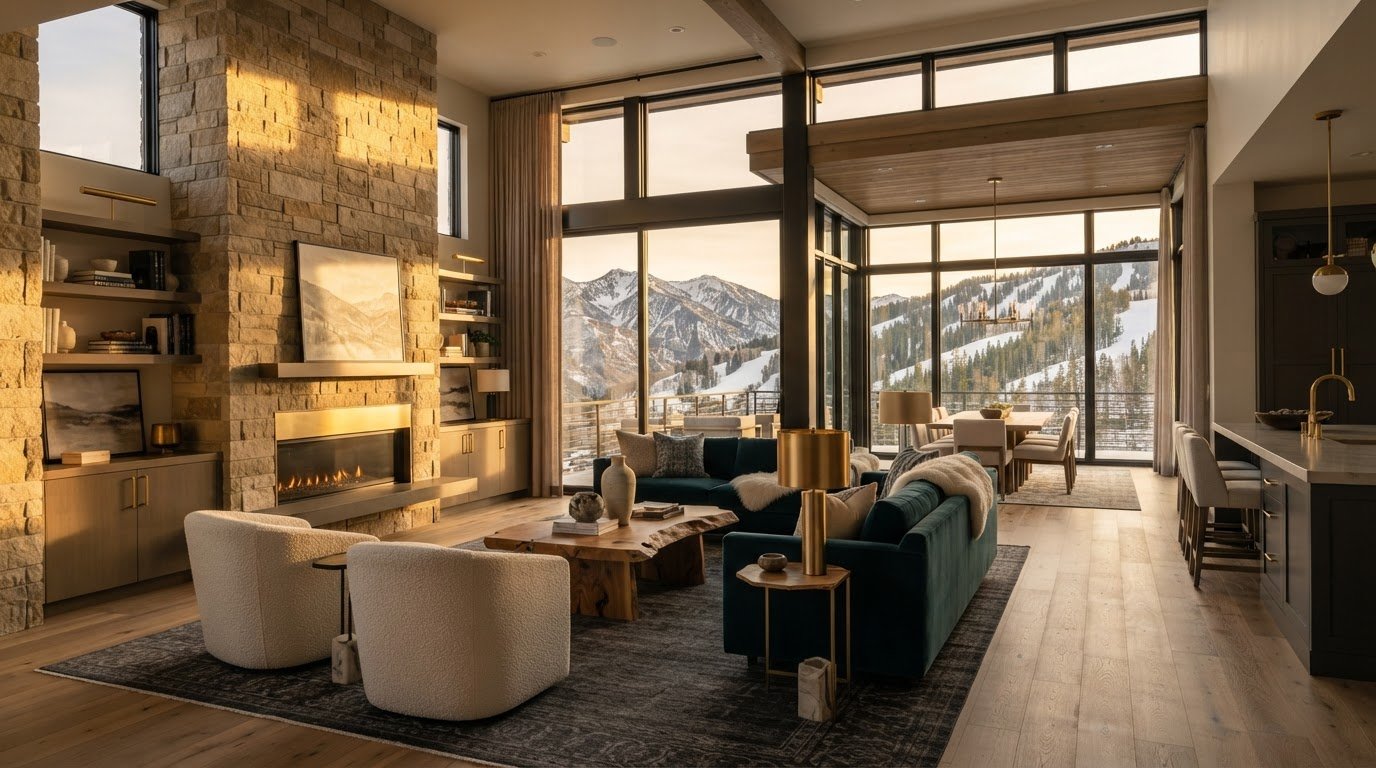
What if the most memorable Canyons Village home felt less like a mountain lodge and more like a natural extension of the landscape and the way you live? That balance is at the heart of thoughtful canyons village park city interiors: alpine character brings warmth and a sense of place, while considered forms, finishes, and furnishings keep a home polished, personal, and comfortable for everyday use. Beautiful materials matter, but so does choosing them with real life and seasonal use in mind.
This guide explores how to shape a cohesive interior through practical space planning, durable material and finish selections, layered lighting, custom furnishings, and personal details. It also shows how design decisions connect from the first concept through project coordination. Principal Designer Maria Pianta leads Pianta Design’s residential work as an integrated process, bringing space planning, interior architecture, sourcing, and project oversight together. With more than 30 years of experience, the firm works with clients in Park City, Salt Lake City, San Francisco, and Miami to create interiors that reflect each home and the people who live in it.
Key Takeaways
- Let the home’s setting inform materials, palette, lighting, and views without relying on a predictable mountain style.
- Assess finishes for appearance, feel, upkeep, and intended use so elegance works alongside everyday comfort.
- Evaluate an interior design approach by its scope, communication, planning, sourcing, and oversight, not by portfolio images alone.
- Use mood boards and floor plans to connect lifestyle priorities with the design direction before making detailed selections.
- Create cohesive canyons village park city interiors by coordinating the concept, space planning, furnishings, and implementation.
Canyons Village Park City Interiors: What Makes a Mountain Home Feel Distinctive?
A distinctive mountain home isn’t defined by a predictable set of rustic details. It takes shape through the relationship between its setting, architecture, and the way its owners want to live. In canyons village park city interiors, consider how a room frames the landscape, how its layout supports daily routines, and which materials create warmth without overwhelming the design. For context on the destination’s evolution, explore the history of Canyons Village.
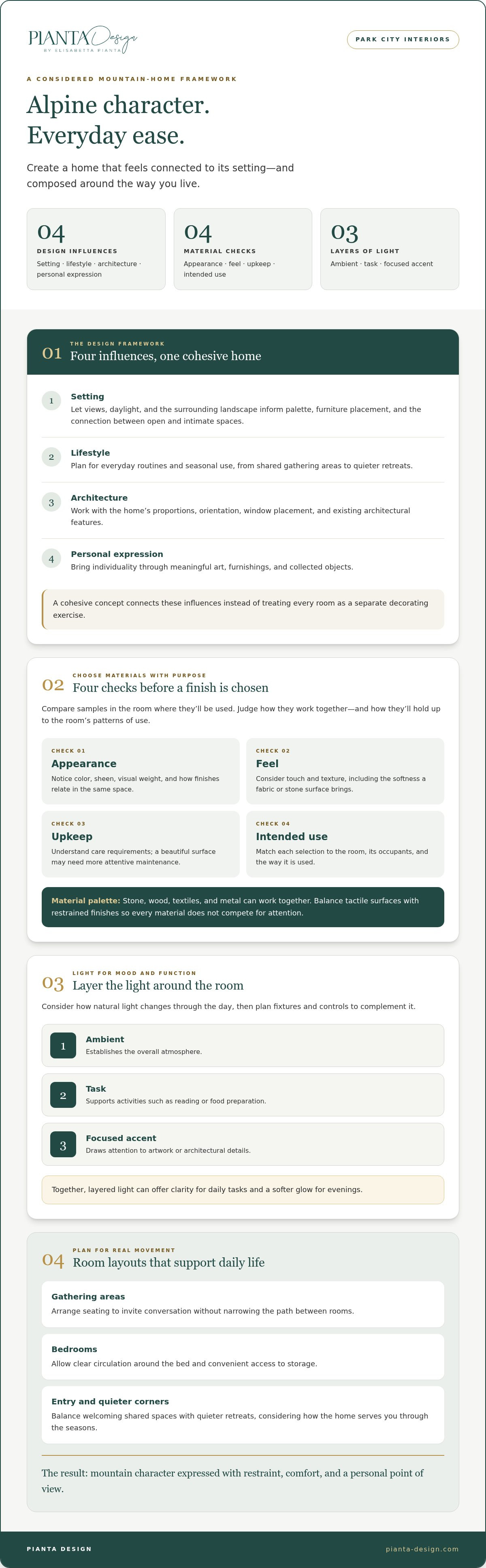
A useful starting framework has four parts: setting, lifestyle, architecture, and personal expression. The setting can guide the palette and connection to views. Lifestyle informs how rooms function. Architecture gives the design its proportions and structure, while meaningful art, furnishings, and collected objects bring personal expression. A cohesive concept brings these influences together rather than treating each room as a separate decorating exercise.
How the Park City setting can inform an interior
Views and daylight can influence furniture placement, window treatments, and the balance between open and intimate spaces. A restrained palette of warm whites, stone tones, wood, or muted greens can echo the landscape while allowing artwork and furnishings to add character. Before settling on a palette or layout, consider the home’s orientation, window placement, and existing architectural features. These details affect how colors read and where furnishings work best.
Seasonal use is another practical consideration. Think through how the home serves you throughout the year, from shared gathering spaces to quieter retreats. Understanding the resort’s background adds context, but the design should respond first to the home itself and its occupants.
Mountain character without a predictable cabin look
Natural materials feel refined when their texture and finish are balanced with clean-lined forms. A carefully chosen wood surface can bring warmth to a restrained room, while tactile upholstery or textured stone adds depth without relying on oversized alpine motifs. Compare samples together so you can judge how their colors, textures, and finishes relate in the same space.
Craftsmanship and visual comfort matter as much as the materials themselves. A sculptural light, a custom-shaped table, or a considered mix of soft and polished finishes can give a room individuality while keeping the overall composition calm. The aim is not to erase mountain character, but to express it with restraint and a personal point of view.
- Setting: Consider views, daylight, and the surrounding landscape.
- Lifestyle: Identify how each room needs to support everyday use.
- Architecture: Work with the home’s proportions and existing features.
- Personal expression: Add character through meaningful art, furnishings, and finishes.
When these elements inform one another, the result feels connected to its surroundings without becoming a theme. That balance gives canyons village park city interiors their distinctive potential: a home can feel unmistakably alpine yet remain polished, comfortable, and individual.
Designing Canyons Village Interiors for Comfort, Durability, and Ease
In canyons village park city interiors, refinement should hold up to the way a home is actually used. A welcoming entry, relaxed gathering spaces, and quieter corners all place different demands on finishes and furnishings. Rather than choosing materials by appearance alone, consider how they feel, how they’re maintained, and how they function in each room. The right selection depends on the residence, its occupants, and the routines the design needs to support.
Choosing materials for an actively used mountain home
Durability, cleanability, texture, and finish are related, but they’re not interchangeable. A surface may feel beautiful yet need more attentive care. A textured fabric may add softness, but its placement should suit the way a room is used. Compare samples in the room where they’ll be used, paying attention to sheen, touch, visual weight, and care requirements. This makes it easier to spot combinations that look appealing together but may be demanding to maintain.
Stone, wood, textiles, and metal can work together without every surface competing for attention. A quieter mix might pair a tactile textile with a restrained hard finish, then introduce a contrasting material in a smaller detail. For ideas on combining rustic warmth with contemporary restraint, see the ski chalet aesthetic. Use references as inspiration, not a formula: tailor material choices to the home and its patterns of use.
Planning light, comfort, and everyday flow
Lighting shapes both mood and function. Ambient light establishes the overall atmosphere, while task lighting supports activities such as reading or food preparation. Focused accents can draw attention to artwork or architectural details. Layering these sources gives a room flexibility, from the clarity needed for daily tasks to a softer glow for evenings. Consider how natural light changes throughout the day, then plan fixtures and controls to complement it.
Furniture placement matters just as much. In a gathering area, arrange seating to invite conversation without narrowing the path between rooms. In a bedroom, clear circulation around the bed and convenient access to storage can make daily routines feel more composed. A thoughtfully planned entry gives coats, bags, or outdoor gear a place to land, helping shared spaces stay calm. Scale each piece to the room and its architecture rather than filling every available corner.
These decisions connect material, light, form, and function. For a broader design framework, explore the seven elements of interior design. Pianta Design’s residential interior design approach brings planning, material selection, and lighting into a cohesive vision shaped around the home.
How to Evaluate a Canyons Village Interior Design Approach
A compelling portfolio can show taste, but a successful interior also depends on the thinking and coordination behind each image. For canyons village park city interiors, look for a process that translates your priorities into a connected design, from the initial concept to the details that shape how rooms function. Clear planning helps materials, furnishings, and spatial decisions support the same vision.
Use these dimensions to assess how a residential design approach can align with your home and priorities:
| Area | What to look for | Why it matters |
|---|---|---|
| Design scope | A clear outline of concept development, furnishings, space planning, and interior architecture as relevant to the project. | The right scope reflects the home’s needs rather than assuming every project requires the same services. |
| Communication | Organized decision points, clear presentation of options, and a shared understanding of priorities. | Consistent communication helps owners make informed choices as the design develops. |
| Planning | Floor plans, mood boards, and visualizations that connect layout with the intended atmosphere. | These tools make the concept easier to assess before detailed selections are made. |
| Sourcing | Considered selection of materials, lighting, furnishings, and art in relation to one another. | A coordinated palette helps individual pieces contribute to a unified interior. |
| Project oversight | Design guidance and coordination as selections move toward implementation. | Ongoing oversight helps keep design intent visible through implementation. It is distinct from general contracting and construction labor. |
Look beyond the finished image
A coordinated residential process can begin with a concept, then develop through mood boards, floor plans, and visualizations. These are practical planning tools, not just presentation pieces: they help align the aesthetic direction with room function, circulation, and the home’s architecture. From there, material and finish selection, lighting, custom furniture, and art consultation can reinforce one another rather than compete for attention.
Pianta Design connects concept development, space planning, and detailed selections within its residential design work. Project oversight coordinates the design as it moves toward implementation, keeping approved plans and selections in view.
Match the scope to your routines
A furnishing-focused project may center on selecting and arranging pieces within an established layout. Other homes benefit from more extensive space planning or interior architecture. To identify the right scope, consider how you use the residence: where guests gather, what needs to be stored, how rooms support quieter routines, and how existing art or personal collections should be integrated. A thoughtful scope responds to these details instead of imposing a preset template.
For a broader perspective on shaping a home around its occupants, explore luxury residential interior design. A coherent approach makes the path from vision to selection easier to follow and helps each decision contribute to a home that feels considered, personal, and complete.
From Canyons Village Design Brief to a Cohesive Interior
A well-defined brief gives the design process a clear point of departure: not a particular look to reproduce, but an understanding of how the home should feel and function. For canyons village park city interiors, bring everyday priorities into conversation with the residence’s architecture, views, existing furnishings, and the atmosphere its owners want to create.
Preparing a useful brief for a Park City residence
Before design decisions begin, consider what matters most in daily life. Note how you use the home, how often you entertain, what you want to display or store, and whether you’re drawn to a calm retreat or a more convivial setting. Reference images can help communicate preferences, but they work best as conversation starters rather than instructions to copy. Include architectural features, views, and furnishings you hope to retain so the concept can respond to what’s already there.
Moving from design direction to implementation
A cohesive process turns those priorities into decisions in a considered sequence:
- Define the brief. Clarify household routines, functional needs, personal collections, and desired atmosphere.
- Develop the concept. Establish an aesthetic direction that relates the owners’ preferences to the residence and its architecture.
- Plan the spaces. Use floor plans to consider room relationships, furniture placement, circulation, and how each area will be used.
- Align through visuals. Mood boards and visualizations make the palette, materials, and overall character easier to review before detailed selections proceed.
- Make coordinated selections. Source furnishings, develop custom furniture where appropriate, and select finishes and lighting in keeping with the agreed direction.
- Coordinate implementation. Project oversight follows the design details as they move toward installation, helping maintain alignment with approved plans and selections.
Each step builds on the last. Approved plans and visualizations give the design team and homeowner a shared reference, while sourcing and finish decisions carry the concept into tangible details. Custom furniture can address a particular layout or express an individual point of view. Considered material choices connect those pieces to the larger composition.
Project oversight means design coordination and attention to quality as the approved scheme is implemented. It helps keep selections and design intent in view, while general contracting and construction labor remain separate from the design role.
For a connected process from initial priorities through implementation, explore Pianta Design’s residential approach.
Creating Canyons Village Park City Interiors with Pianta Design
Thoughtful canyons village park city interiors begin with a clear understanding of the residence and the people who call it home. Pianta Design is a luxury interior design firm founded and led by Principal Designer Maria Pianta, whose experience spans more than 30 years. The firm’s residential process connects concept development and space planning with material and finish selection, lighting, art consultation, custom furniture design, sourcing, and project oversight.
That breadth allows individual decisions to support a shared vision. Layout, furnishings, and finishes can be considered together, with each choice reflecting both the home’s character and the owners’ priorities. Pianta Design collaborates with Italian manufacturers, bringing considered sourcing and attention to craftsmanship into its approach. The firm also works with residential clients in Park City, Salt Lake City, San Francisco, and Miami.
A considered balance of timelessness and modern sensibility
A coherent concept doesn’t prescribe one look for every Canyons Village residence. Instead, it helps architecture, materials, furnishings, and art feel as though they belong in conversation. The expression might be contemporary and restrained, richly textured, or shaped around meaningful pieces already in the home. What matters is that the choices feel personal and connected, rather than assembled from a formula.
Custom furniture can contribute to that individuality, particularly when a room’s proportions or the owners’ preferences call for a specific form. Explore custom furniture design for luxury homes to see how tailored pieces can become part of a larger design composition.
Begin a conversation about your Park City residence
The most enduring interiors bring place, daily life, and personal taste into balance. A design conversation can begin with the qualities you value in your home, the way you use its rooms, and the atmosphere you hope to create. From there, a residential design collaboration can shape a considered direction for planning, furnishings, materials, and implementation, tailored to the residence rather than a prescribed mountain aesthetic.
To discuss your ideas and the possibilities for your home, discuss your residential design vision with Pianta Design.
Shape a Mountain Home That Feels Distinctly Yours
Refined canyons village park city interiors bring the alpine setting into conversation with the way a home is lived in. A cohesive design balances personal expression with practical choices, from considered materials and lighting to a layout that supports everyday routines. A clear process, beginning with the residence’s needs and developing through planning and selections, helps each decision contribute to a unified whole.
Pianta Design, founded and led by Principal Designer Maria Pianta, brings more than 30 years of design experience to residential projects. Its work connects concept development and space planning with custom furniture, detailed selections, and project oversight. Collaborations with Italian manufacturers add a considered sourcing perspective to the firm’s approach to craftsmanship.
Your home can feel connected to its setting without following a prescribed mountain style. Discuss your residential design vision with Pianta Design and take a thoughtful first step toward an interior that reflects your taste and the life you want to live there.
Frequently Asked Questions
What interior design style works best for a Canyons Village home?
The best style responds to the home’s architecture, setting, and owners rather than following a fixed mountain look. Canyons village park city interiors can feel contemporary, warmly layered, or more collected, provided materials, furnishings, and lighting work together. Start with how you want the home to feel and function, then use views, existing features, and personal belongings to guide the design direction.
How do you make mountain-home interiors feel refined rather than rustic?
Balance natural warmth with restraint. Pair wood or stone with clean-lined furniture, considered lighting, and tactile textiles, then let a few meaningful pieces bring personality to the room. Avoid repeated alpine motifs or making every surface visually prominent. A focused palette and thoughtful mix of textures can acknowledge the mountain setting while keeping the home polished, comfortable, and individual.
What materials are practical for a Park City mountain home?
Practical materials depend on the room, how it’s used, and the care you’re comfortable providing. Consider cleanability, surface finish, texture, and how a material feels alongside its appearance. Wood, stone, textiles, and metal can all contribute to a layered interior, but each selection should suit its intended location and upkeep. Review samples together so color, sheen, and texture feel cohesive across the home.
How does a full-service interior design process work?
A comprehensive residential design process can begin with a lifestyle brief and concept, then move through space planning, material and finish selection, furnishings, lighting, and art. Mood boards, floor plans, and visualizations help clarify the direction before selections proceed. Project management and oversight coordinate design details and support quality control during implementation. This is design coordination, not general contracting or construction labor.
Can an interior designer help with custom furniture for a Canyons Village home?
Yes. Custom furniture design can address a room’s proportions, functional needs, and the character of the overall interior. A tailored piece might support a particular layout or bring a distinctive material and form into the design. Pianta Design’s residential work connects custom furniture with planning and finish selections, helping furnishings feel integrated with the home rather than chosen in isolation.
When should I involve an interior designer in a Park City home project?
Involve a designer early, while you’re shaping the project’s priorities and considering how rooms should work. Early space planning can inform furniture placement and circulation, while concept development helps guide materials, lighting, and furnishings before decisions become disconnected. A designer can also organize selections and coordinate design intent during implementation. For a furnishing refresh, begin before sourcing so choices support a coherent direction.
How do I choose an interior design approach for a Canyons Village residence?
Choose an approach that fits the home’s needs and the level of support you want, from furnishing decisions to space planning and interior architecture. Consider how the process addresses communication, concept development, sourcing, and project oversight, as well as household routines, entertaining, storage, and personal collections. Pianta Design works with residential clients in Park City, Salt Lake City, San Francisco, and Miami, tailoring design decisions to each project’s priorities.
