
Yacht Interior Materials: The 2026 Guide to Marine Luxury and Durability
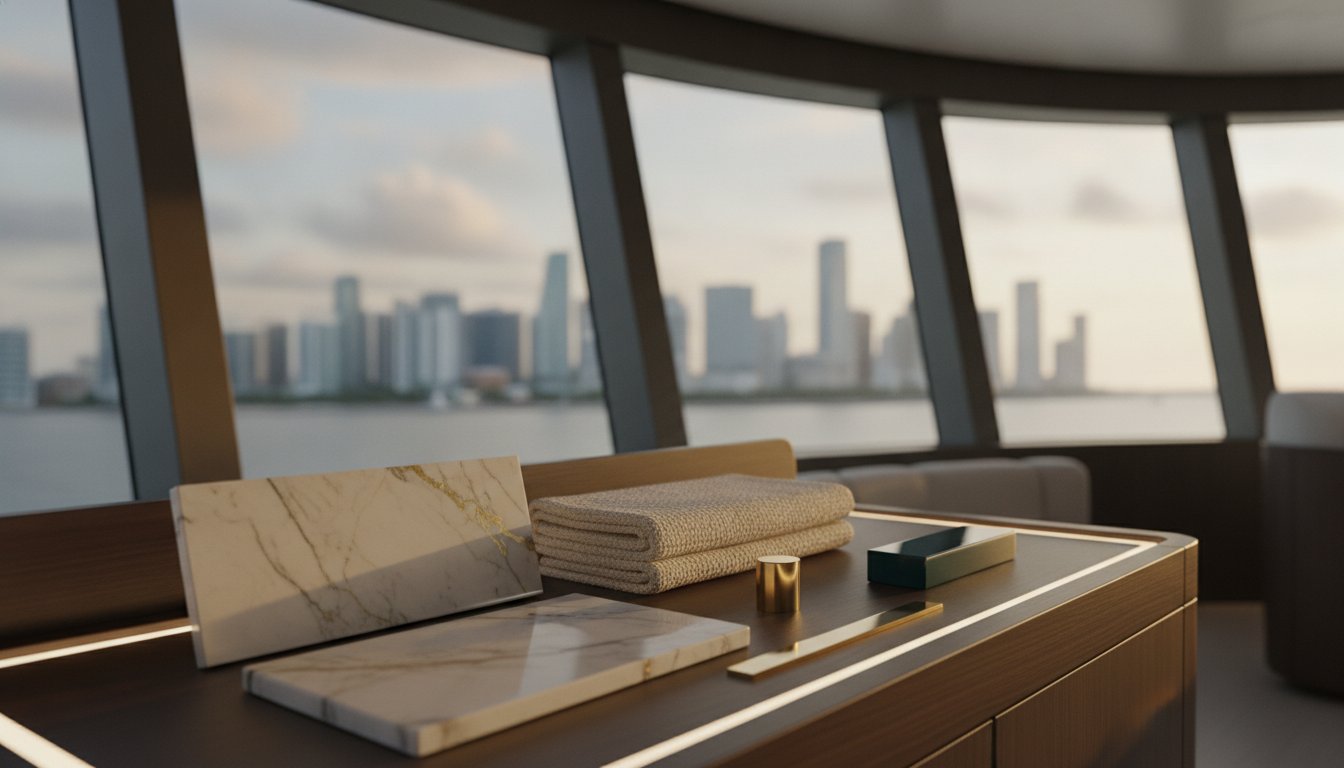
The most enduring mistake in yacht interior design california is the belief that one must sacrifice the tactile warmth of a high-end villa for the sterile durability of maritime compliance. While the salt air and relentless UV rays of the Pacific are unforgiving, true luxury shouldn't feel like a compromise. You likely recognize the tension between wanting a bespoke, artful sanctuary and the reality of weight constraints or strict fire safety regulations that often limit your creative vision.
We believe that the quality of your environment directly shapes the quality of your life, even when miles from the shore. This 2026 guide promises to reveal the essential materials that balance uncompromising Italian elegance with the rigorous technical demands of the sea. You'll learn how to navigate new mandates like the Responsible Textile Recovery Act while integrating sustainable bio-composites and the warm, earthy textures that define the modern maritime aesthetic. We will explore how to achieve durable finishes that require minimal maintenance while meeting every global safety standard, ensuring your vessel remains a timeless masterpiece of both form and function.
Key Takeaways
- Discover why residential-grade materials fail at sea and how to select marine-certified alternatives that withstand salt air and intense UV exposure.
- Learn how innovative engineering, such as aluminum-backed stone and lightweight veneers, allows you to bring the grandeur of Italian marble onto your vessel.
- Stay ahead of 2026 regulations with smart textiles that offer self-cleaning properties and IMO fire safety without sacrificing tactile softness.
- Master the nuances of yacht interior design california by choosing finishes that manage the unique humidity of the Pacific coast while maintaining a cool, inviting atmosphere.
- Understand the value of bespoke curation and direct Italian sourcing to create a sanctuary that is as technically sound as it is aesthetically profound.
The Unique Challenges of Luxury Yacht Interior Materials
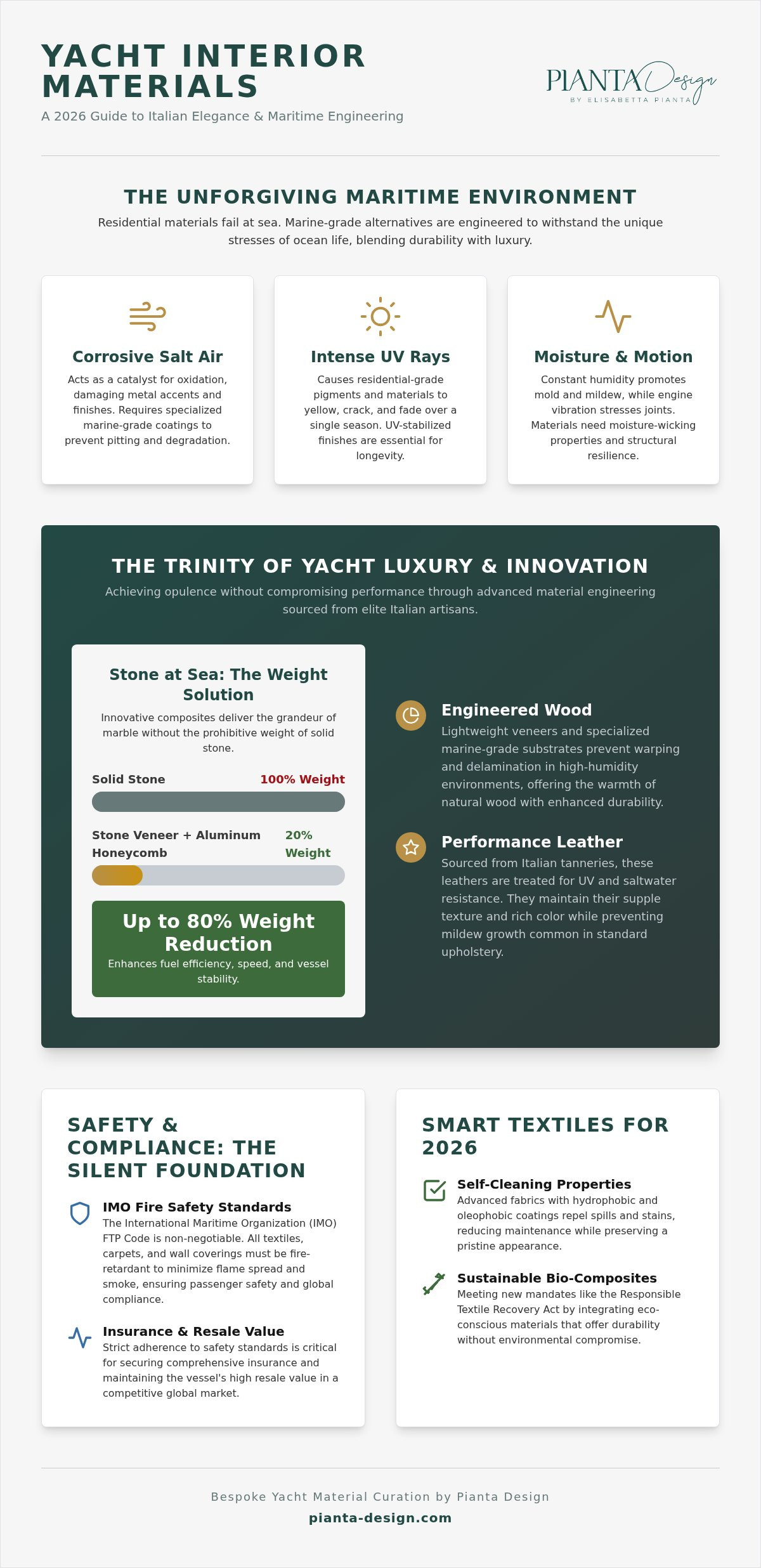
Creating a masterpiece on the water requires a departure from the traditional rules of land-based architecture. In the specialized field of yacht interior design california, we recognize that a vessel is a living, moving entity that breathes the salt of the ocean and basks in the unfiltered glare of the sun. Residential materials, despite their opulence, are simply not engineered for this reality. They lack the molecular resilience needed to withstand the constant vibration of the engines and the rhythmic assault of the waves. When we define marine-grade, we aren't just talking about water resistance; we're referring to a material's ability to maintain its structural integrity and aesthetic soul under extreme atmospheric pressure.
While the visual allure of an interior is what first captures the heart, weight management remains the silent priority for any serious designer. Every kilogram added to the interior is a kilogram that the hull must carry, affecting fuel efficiency, speed, and the overall stability of the vessel. When considering the Design considerations for a cruising yacht, we must balance the desire for heavy, noble materials like solid marble with the technical necessity of lightweight engineering. This often involves using innovative honeycomb cores and ultra-thin veneers that offer the look of solid stone without the burdensome mass that hinders a boat's performance.
Atmospheric Resilience: Salt, Sun, and Sea
The chemistry of the ocean is inherently aggressive. Salt air acts as a persistent catalyst for oxidation, which can turn pristine metal accents into pitted remnants of their former selves within a single season. To combat this, we meticulously source metals with specific marine-grade coatings and cabinetry finished with UV-stabilized pigments that won't yellow or crack under the intense Pacific sun. The invisible details matter most; for instance, moisture-wicking substrates in marine upholstery are essential to prevent the hidden growth of mildew within the very cushions you rely on for relaxation. This ensures your sanctuary remains fresh and inviting, regardless of the humidity levels outside.
Regulatory Compliance (IMO Standards)
Safety is the silent foundation upon which true luxury is built. The International Maritime Organization (IMO) sets the global standard through the Fire Test Procedures (FTP) Code, a rigorous set of requirements that govern how materials behave in the event of a fire. Navigating these regulations is a complex task that requires deep technical knowledge. We ensure that every textile, carpet, and wall covering is treated or manufactured to be fire-retardant, minimizing the spread of flame and the release of toxic smoke. Adhering to these standards is essential for more than just peace of mind. It's a critical factor in securing comprehensive insurance coverage and maintaining the high resale value of your vessel in a competitive global market. As your partners in yacht interior design california, we take on the responsibility of verifying supplier compliance, ensuring that your vision meets every legal and safety benchmark without sacrificing a single note of elegance.
The Trinity of Yacht Luxury: Stone, Wood, and Leather
The heart of any exceptional vessel lies in the materials that define its character. In the sphere of yacht interior design california, we often return to three foundational elements: stone, wood, and leather. These aren't merely decorative choices. They are the tactile language of luxury. Sourcing these materials from elite Italian manufacturers remains the undisputed gold standard in 2026. This isn't just about heritage; it's about a unique mastery where centuries of artistry meet the technical constraints of modern international maritime regulations. Italian artisans understand that a yacht's interior must be as resilient as it is beautiful, blending tradition with cutting-edge engineering.
The Evolution of Marble and Onyx at Sea
The dream of solid marble countertops is often met with the harsh reality of vessel weight. To solve this, we utilize 5mm stone veneers bonded to aluminum honeycomb cores. This technology provides the visual depth and cool touch of Calacatta or Onyx while reducing weight by up to 80 percent. Natural stone integration requires the same precision as residential interior design, yet it demands specialized sealing techniques to prevent salt air from penetrating the stone's pores. In high-humidity environments, a nano-ceramic seal is often the difference between a pristine finish and permanent clouding. This level of technical care ensures your stone surfaces remain a focal point of elegance for decades.
Exotic Woods and Sustainable Veneers
Wood provides the soul of the cabin, offering a warmth that synthetic materials cannot replicate. While teak remains the traditional choice for its natural oils and rot resistance, 2026 trends favor the deep, architectural grains of American Walnut and sustainable European Oak. We focus on eco-conscious sourcing, ensuring that rare woods are harvested through responsible forestry practices. The visual impact of book-matched veneers in a salon creates a symmetrical, flowing artistry that mimics the organic movement of the sea itself. By aligning the grain across large panels, we create a sense of expansive, uninterrupted harmony that defines the modern yacht interior design california aesthetic.
Leather adds a final layer of intimacy to the interior, but traditional hides can quickly succumb to damp marine air. We source performance leathers from Italian tanneries that treat the skins during the tanning process rather than as a simple top coat. This ensures the leather remains breathable yet entirely resistant to the elements. These specialized hides offer several advantages for the maritime environment:
- Mold Resistance: Anti-microbial treatments prevent spores from taking hold in the fibers.
- UV Stability: Pigments are locked in to resist the fading effects of direct Pacific sunlight.
- Tactile Longevity: The hides maintain their buttery softness without cracking or stiffening over time.
If you're ready to explore how these noble materials can transform your vessel, our team provides bespoke material and finish selection tailored to your unique vision and technical requirements.
Performance Fabrics and Smart Textiles for 2026
The transition from the architectural strength of stone and wood to the soft surfaces of a vessel is where the true character of a sanctuary is born. In the sophisticated world of yacht interior design california, textiles are no longer mere coverings; they've become high-performance components that must endure the rigors of the Pacific while offering a tactile experience that rivals any mainland villa. Alcantara and Ultrasuede remain the perennial favorites for ceiling panels and seating because they provide a suede-like richness that's inherently resistant to the dampening effects of sea air. These materials offer a weight-saving advantage that traditional heavy velvets can't match, ensuring the vessel's performance remains uncompromised by its luxury.
By 2026, the standard for high-traffic areas has shifted toward self-cleaning and anti-microbial fabrics. These textiles utilize nanotechnology to repel liquids and prevent the deep-seated staining that often plagues maritime upholstery. Innovation doesn't stop at surface protection. We're seeing a rise in smart textiles that integrate fiber optics and acoustic dampening directly into the weave. Imagine a salon where the walls themselves emit a soft, ambient glow or cabin panels that actively neutralize engine hum. This era also marks a significant move toward responsibility, as elite manufacturers now offer luxury upholstery crafted from recycled ocean plastics, turning environmental recovery into a statement of refined taste.
Comparing Natural vs. Synthetic Marine Fibers
Linen and silk remain the poets of the textile world, offering a natural luster and breathability that synthetic fibers strive to emulate. However, these noble materials should be used sparingly in dry, climate-controlled zones to prevent sagging and moisture absorption. For areas exposed to direct sunlight, high-performance acrylics have become the gold standard. Modern weaving techniques allow these acrylics to achieve a soft, organic hand-feel while maintaining the legendary durability of outdoor fabrics. Solution-dyed fabrics are particularly essential in sun-drenched cabins. Because the pigment is locked into the fiber during the liquid stage of production, the colors won't fade or bleach, even after years of exposure to the intense California sun.
Acoustics and Sound Dampening
True luxury is often found in what you don't hear. The rhythmic vibration of a yacht's engines is a constant presence, making acoustic management a vital part of the design process. We utilize specialized wall coverings and fabric-wrapped panels to minimize noise transfer, creating a sense of "quiet luxury" that's especially critical in guest staterooms. Proper acoustics are one of the core elements of interior design, as they transform a metallic hull into a serene, private retreat. By layering different textile densities, we can tune the sound profile of a room, ensuring that every conversation feels intimate and every moment of rest is undisturbed by the mechanical heartbeat of the ship. In the context of yacht interior design california, this attention to auditory comfort is what separates a standard refit from a professionally curated masterpiece.
Designing for the California and Miami Yachting Lifestyle
Luxury is never a universal formula. It's a dialogue between the vessel and its environment. While the fundamentals of yacht interior design california remain rooted in Italian excellence, the execution must shift to meet the local climate. A yacht cruising the vibrant, sun-drenched waters of Miami faces different stressors than one navigating the atmospheric mists of the Pacific Northwest. We understand that a truly bespoke interior isn't just about what you see; it's about how the space feels when the external temperature climbs or the fog rolls in across the bay.
Material Selection for Tropical Climates
In the intense heat of Florida, the tactile temperature of a material is as important as its visual appeal. We avoid high-polish metals on sun-exposed decks because they become dangerously hot to the touch within minutes. Instead, we select light-colored stones like honed travertine or specific limestones that naturally dissipate heat. Managing the transition from humid, salt-laden decks to crisp, air-conditioned interiors requires thoughtful material continuity. We use cohesive color palettes and textures that bridge these two worlds, ensuring the transition feels like a natural progression rather than a thermal shock.
Refitting for the Bay Area
San Francisco's unique light is often cool and diffused. To counter this, we lean into warmer wood tones and richer textures that bring an inviting glow to the cabin. Managing humidity and mildew is a constant battle in the Pacific. We integrate high-performance insulation and vapor barriers during the refit process to ensure year-round cruising comfort. Working with a specialist interior designer ensures your vessel is adapted to these regional nuances, preventing the "cold" feeling that often plagues interiors designed for warmer latitudes.
The indoor-outdoor flow is the hallmark of modern yachting. We achieve this by selecting materials that can withstand the elements on the aft deck while maintaining the sophistication required for the main salon. For a recent California refit, we focused on airy, light-reflective finishes. We used pale oaks and reflective glass accents to maximize the natural light, creating a space that felt twice its size. This approach not only enhanced the aesthetic but also improved the mood of everyone on board. If you're planning a vessel update that demands this level of regional expertise, you can schedule a consultation with our yacht design specialists to begin your journey.
The Pianta Approach: Bespoke Yacht Material Curation
Designing a vessel is an exercise in both profound ambition and disciplined restraint. At Pianta Design, we view the curation of materials as the most critical stage in the journey toward a maritime masterpiece. As a premier choice for yacht interior design california, our approach is defined by a meticulous alignment of your aesthetic vision with the uncompromising technical needs of the sea. We don't merely select finishes; we engineer an atmosphere that remains as stable and serene as the horizon itself.
Our process begins with an initial consultation that serves as a deep dive into your lifestyle and the intended use of the vessel. We bridge the gap between European craftsmanship and American yachting hubs by leveraging over 30 years of experience and deep-rooted relationships with elite Italian manufacturers. During the sourcing phase, we procure materials directly from these artisans, ensuring that every slab of stone and every hide of leather meets the highest maritime standards. Our project management extends beyond the studio and directly into the shipyard, where we oversee the installation of sensitive materials to ensure the final reveal is a seamless blend of residential comfort and peak performance.
Why Custom Furniture is Essential for Yachts
Standard furniture often fails to meet the unique spatial and safety requirements of a cruising vessel. Every inch of a yacht's layout must be optimized, which is why we specialize in multi-functional, built-in pieces that maximize utility without sacrificing elegance. Designing for stability is a fine art; we ensure that luxury art and bespoke furniture are secured for open waters, preventing movement during even the most spirited crossings. You can invest in the long-term beauty and functionality of your vessel with custom furniture design tailored specifically for the rigors of the sea.
Your Yacht Refit Partner in California and Miami
Successful yachting projects require more than just a creative eye; they demand local oversight and established industry connections. With offices in both Miami and California, we leverage our long-standing shipyard relationships to ensure efficient project delivery and technical precision. We understand the nuances of yacht interior design california, from the specific humidity challenges of the West Coast to the high-heat demands of the Florida coast. Choosing a full-service design firm means having a dedicated partner who manages the complexities of procurement, compliance, and installation, allowing you to simply enjoy the evolution of your sanctuary. If you're ready to redefine the standard of luxury on your vessel, we invite you to schedule your yacht interior consultation with our expert team today.
Charting the Future of Your Maritime Sanctuary
Your vessel is more than a mode of transport; it's a profound expression of your lifestyle and an intimate sanctuary on the water. Achieving the perfect harmony between uncompromising Italian elegance and the rigorous technical demands of the sea requires a partner who understands both the art and the engineering of the marine environment. We've seen how lightweight stone engineering and smart textiles allow for a high-end villa experience without compromising vessel performance or safety. Every choice you make today defines the legacy of your vessel for years to come.
As leaders in yacht interior design california, Pianta Design brings over 30 years of luxury expertise to every refit and new build. Our exclusive network of Italian manufacturers ensures that your materials are as rare as they are resilient. With offices in Miami, San Francisco, and Park City, we provide the local oversight necessary for a seamless transition from vision to reality. It's time to transform your maritime environment into a masterpiece of form and function.
Elevate your vessel with Pianta Design’s bespoke yacht interior services.
The horizon is waiting. Let's create a space that's as limitless as the ocean itself.
Frequently Asked Questions
What are the most durable materials for a yacht interior?
Durability at sea requires materials that resist salt air, UV rays, and constant vibration. High-performance acrylics, solution-dyed textiles, and marine-grade leathers are essential for upholstery. For surfaces, we prioritize marine-certified teak and lightweight stone veneers. These materials maintain their aesthetic soul in the Pacific's humidity without the fading or structural degradation that often plagues residential-grade finishes over time.
Does a yacht interior need to be IMO certified?
Yes, most luxury vessels and all commercial yachts must comply with International Maritime Organization (IMO) standards. These regulations, specifically the FTP Code, ensure that all textiles, carpets, and wall coverings meet strict fire-retardancy requirements. Adhering to these safety protocols is non-negotiable for securing comprehensive insurance and maintaining the vessel's resale value in the global 2026 market.
Can I use residential furniture on a yacht?
Residential furniture isn't designed for the unique movement and atmospheric stressors of a vessel. Pieces must be securely fastened to the deck and built with moisture-resistant substrates to prevent warping. In professional yacht interior design california, we emphasize custom-built furniture that optimizes limited space while using weight-saving materials that won't hinder the boat's performance during open-water crossings.
How do you prevent mold in yacht upholstery?
Prevention begins with selecting moisture-wicking substrates and anti-microbial fabrics. We integrate vapor barriers and ensure proper ventilation within the cabin structure to manage the Pacific's damp air. By 2026, smart textiles with self-cleaning properties have become a standard solution. These fabrics inhibit fungal growth at the molecular level, ensuring your sanctuary remains fresh regardless of the external humidity or San Francisco fog.
What is the best wood for a luxury yacht interior?
Teak remains the undisputed choice for its natural oils and rot resistance. However, current 2026 trends favor the warmth of American Walnut and sustainable European Oak for cabin interiors. We use these exotic woods as ultra-thin veneers bonded to lightweight cores. This technique provides the rich, noble grain of solid wood while respecting the strict weight constraints essential for modern superyacht engineering.
How much does a yacht interior refit cost in California?
The investment for a refit varies based on the vessel's length and the complexity of the material selection. Labor rates for skilled trades in San Diego typically range from $75 to $110 per hour as of July 2026. While a cosmetic refresh is a different undertaking than a full structural overhaul, factors like custom Italian sourcing and the 10.25 percent California sales tax on vessel materials will influence your total project budget.
What are the current trends in superyacht interior design for 2026?
Sustainability and wellness are the defining pillars of 2026 design. We're seeing a shift toward bio-composite panels, reclaimed woods, and earthy neutrals like sand and clay. The Responsible Textile Recovery Act (SB 707) has also pushed designers to prioritize circularity in fabric sourcing. Additionally, circadian-tuned LED lighting and dedicated wellness zones are now standard features for owners seeking a holistic environment at sea.
Can I use real marble on a yacht without affecting performance?
You can achieve the grandeur of solid stone without the burdensome weight by using innovative honeycomb technology. We bond 5mm stone veneers to aluminum honeycomb backings, reducing the weight of marble or onyx by up to 80 percent. This is a hallmark of sophisticated yacht interior design california, allowing us to install breathtaking stone features in salons and master suites without compromising the vessel's speed or fuel efficiency.
