
Timeless Interior Design: Myth-Busting the Trends in San Francisco, Miami, and Park City
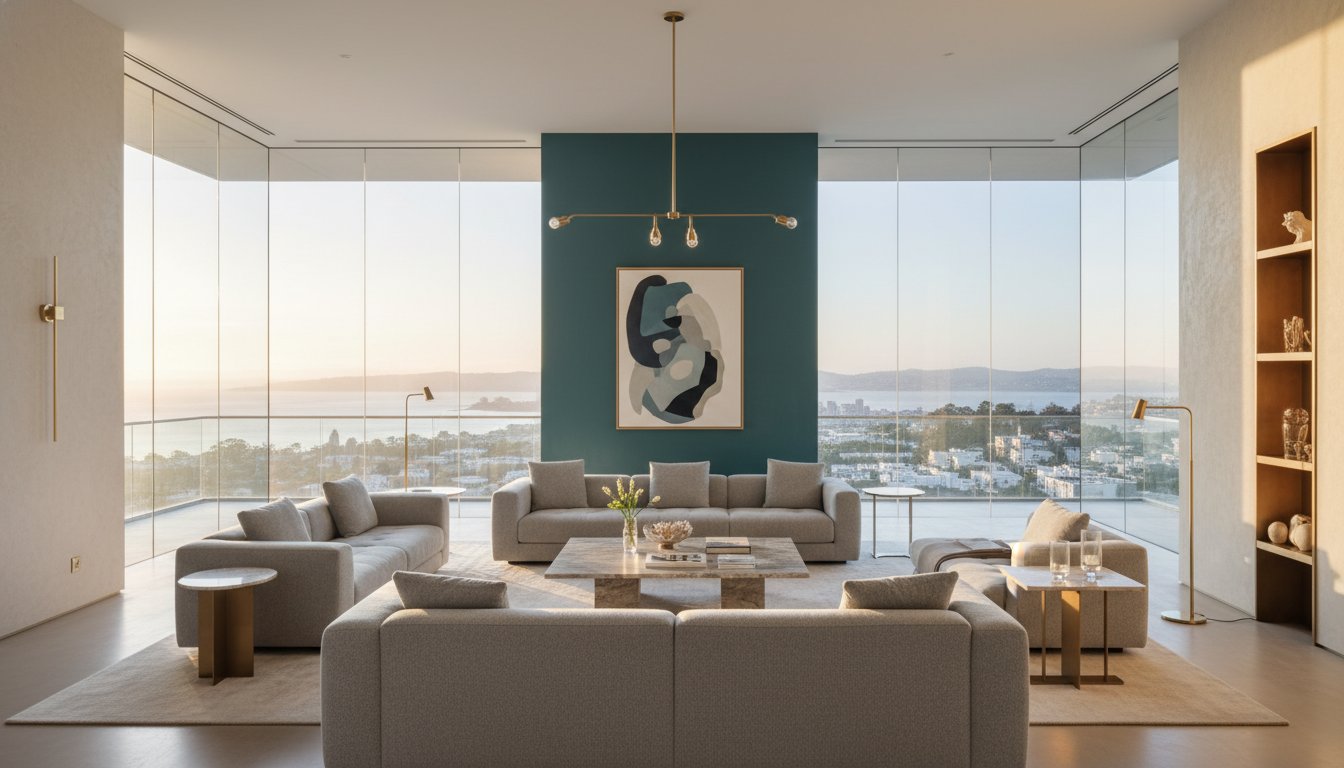
Choosing the latest aesthetic fad is often the most certain way to ensure your home feels obsolete within 24 months. In exclusive enclaves from the Pacific Heights of San Francisco to the sun-drenched coast of Miami, the pursuit of timeless interior design is frequently misunderstood as a rejection of the modern. It's natural to feel a sense of hesitation when faced with conflicting advice, fearing that a high-end investment today might become a design regret by 2026. You seek a home that embodies a premium lifestyle, where the quiet confidence of quality meets an inviting, personal warmth.
This article provides the clarity you need to move beyond the cycle of fleeting trends and into a realm of enduring sophistication. You'll discover a strategic framework for selecting noble materials and artisanal details that anchor a home's character regardless of the climate or current fashion. We'll explore how to harmonize your unique aesthetic vision with a design philosophy that protects your property's long-term value. From the rich textures of Italian heritage to the precision of modern engineering, you'll learn to curate an environment where every element serves the unity of beauty and function.
Key Takeaways
- Learn how to distinguish between fleeting trends and true architectural integrity by prioritizing proportion and scale over historical imitation.
- Discover how to move beyond basic neutrals by utilizing sophisticated timeless interior design color palettes that add depth and character to your space.
- Understand why enduring luxury must adapt to its environment, reflecting the unique light and landscape of San Francisco, Miami, or Park City.
- Explore how high-end Italian craftsmanship and bespoke materials serve as the foundation for a home that outlasts aesthetic cycles.
- Identify the strategic approach to blending modern sensibilities with old-world quality to create a personal residential legacy.
The Myth of the "Forever Look" vs. Architectural Integrity
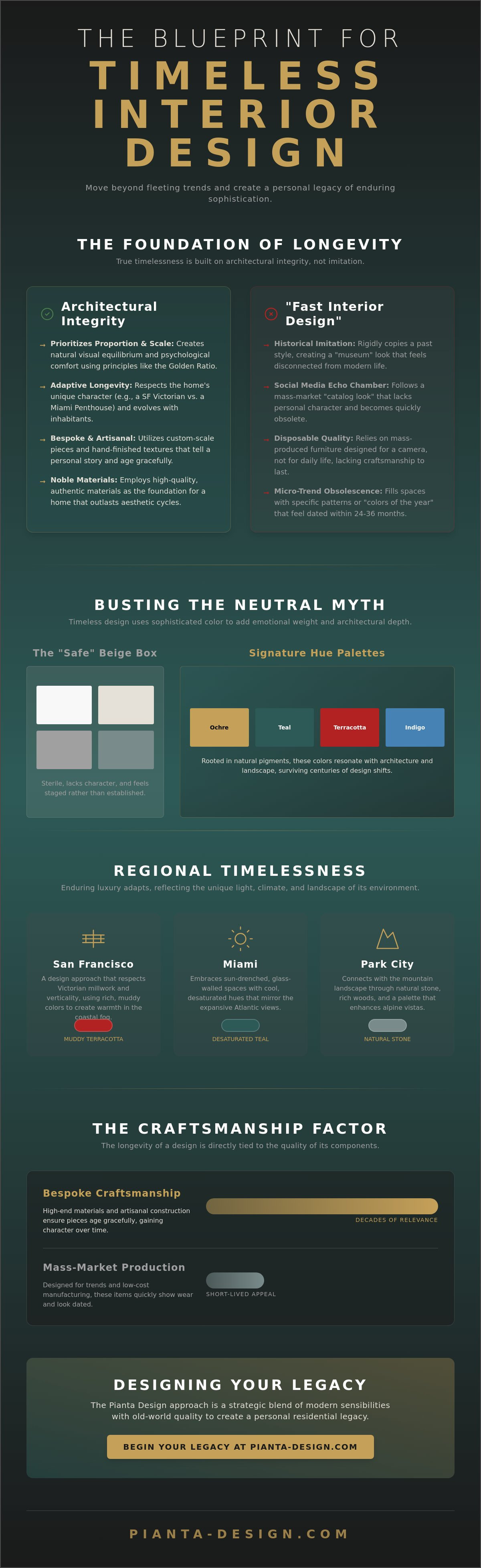
Many homeowners mistake timeless interior design for a rigid adherence to a single historical period. They believe a home must function as a museum to avoid becoming dated. This is a fundamental misconception. True longevity in a home doesn't come from mimicking the past; it emerges from a sophisticated balance of proportion, scale, and a deep respect for the building's existing character. It's about the dialogue between the structure and the soul of the inhabitants.
A 1920s San Francisco Victorian, defined by its intricate millwork and vertical orientation, requires a vastly different approach than a glass-walled Miami penthouse overlooking the Atlantic. Attempting to force a "one size fits all" classic look onto these diverse shells results in a space that feels disconnected. We champion the concept of "Adaptive Longevity." This philosophy ensures that a design evolves with the family while remaining anchored to the site's unique DNA. By prioritizing the principles of interior design over fleeting fashion, we create environments that feel intentional today and remain relevant decades from now.
Why Trends Fade but Proportions Endure
Visual beauty isn't a subjective accident; it's often rooted in mathematics. We utilize the Golden Ratio, the 1.618 proportion found in nature, to guide our luxury space planning. When residential interior design prioritizes these structural "bones" over superficial baubles, the room achieves a natural visual equilibrium. This balance provides a form of psychological comfort that is increasingly rare in our fast-paced digital world. A well-proportioned room feels "right" to the human eye regardless of the year, offering a sense of order and serenity that transcends the current news cycle.
The Danger of "Fast Interior Design"
The rise of social media has accelerated the "fast interior design" cycle, pushing a "catalog look" that lacks individual character. These spaces are often filled with mass-produced furniture that is designed for the camera rather than for life. Such items are the primary enemy of a home's timeless interior design. Consider the following pitfalls of following the crowd:
- The Social Media Echo Chamber: When every home on a feed looks identical, the design loses its ability to tell a personal story.
- Disposable Quality: Mass-market pieces lack the artisanal craftsmanship required to age gracefully.
- Micro-Trend Obsolescence: Items like highly specific geometric patterns or "color of the year" accents often look dated by 2028.
Avoiding these traps requires a commitment to noble materials and bespoke solutions. By choosing hand-finished textures and custom-scale pieces, you ensure your home remains an authentic reflection of your lifestyle rather than a time capsule of a short-lived internet trend.
Busting the Neutral Myth: Why Timeless Doesn’t Mean Colorless
A common misconception suggests that achieving a timeless interior design requires a strict adherence to a palette of whites, beiges, and greys. While these tones offer a safe foundation, a truly enduring home avoids the sterile atmosphere of a "beige box." Color, when applied with intention, provides the emotional weight and architectural depth necessary for a space to feel established rather than staged. By utilizing sophisticated luxury interior design color palettes, you can create a residence that feels relevant today and thirty years into the future.
The secret lies in the distinction between a "trendy" color and a "signature" hue. A signature hue is one that resonates with the architecture of the building and the landscape outside its windows. In the sun-drenched villas of Miami, this might involve cool, desaturated teals that mirror the Atlantic. In a San Francisco Victorian, it could be a rich, muddy terracotta. These choices aren't dictated by annual trend reports but by a deep understanding of visual equilibrium and historical context.
The Power of Natural Pigments
Natural pigments such as ochres, deep indigos, and forest greens have survived centuries of design shifts because they're rooted in the physical world. These colors possess a complexity that synthetic, high-vibrancy shades lack. When designing Salt Lake City estates, these saturated tones are often used to highlight grand architectural features, such as coffered ceilings or hand-carved mantels. According to historical color surveys, earth-based pigments have remained staples in luxury residences since the 18th century. They provide a sense of permanence. A room wrapped in a deep, muted navy feels like an anchor, whereas a room painted in a "color of the year" often feels like a temporary costume.
Texture as the New Pattern
You don't need loud, geometric prints to make a statement. In fact, aggressive patterns are often the first elements to date a room. Instead, focus on the longevity of materials that speak to the senses. Consider these three pillars of tactile design:
- Venetian Plaster: Its subtle movement and light-reflecting properties create walls that look like art.
- Honed Marble: Choosing a matte finish over high-gloss ensures the stone ages gracefully, developing a patina that tells a story.
- Hand-woven Silks: These fabrics offer a luster and weight that machine-made alternatives cannot replicate.
By layering these textures, you create a sensory experience that transcends visual fads. A 2022 industry report noted that homes prioritizing tactile variety over bold patterns saw a 12% increase in perceived value among high-end buyers. This approach allows the home to breathe and evolve. If you're looking to refine your home’s aesthetic, Pianta Design specializes in balancing these rich textures with a sophisticated color philosophy to create spaces that are both vibrant and eternal.
Regional Timelessness: From San Francisco Fog to Miami Sun
Geography dictates the soul of a home. A design that feels grounded in the high-desert silence of Utah would feel disconnected in the humid, vibrant air of South Beach. True timeless interior design isn't a rigid set of rules applied globally; it's a sophisticated response to local light, history, and the natural landscape. When we design across these three distinct American hubs, we prioritize the "genius loci" or the spirit of the place. This ensures that a residence doesn't just look beautiful today, but remains relevant as the decades pass.
Designing for the California Light
San Francisco's light is legendary for its soft, diffused quality, often filtered through the iconic Pacific fog. This cool-toned environment requires a specific material palette to prevent a home from feeling clinical. In the city's historic districts, we focus on blending 1920s architectural integrity with a modern Italian sensibility. The goal is a curated look where heritage meets innovation.
Consider a 1924 "storybook house" in the Marina District. A timeless transformation here doesn't involve erasing the past. Instead, it's about honoring the original plasterwork and arched doorways while introducing low-profile, handcrafted Italian furniture. By using warm oaks and tactile linens, we create an indoor-outdoor flow that feels permanent. This approach respects the 100-year-old bones of the building while providing the functional luxury required for 21st-century living.
Miami Sophistication and the Coastal Element
The myth that a coastal home must be draped in navy blue and seashells is a trend that has fortunately reached its expiration date. In Miami, sophistication is found in the "yacht-inspired" aesthetic. This involves using high-performance materials like book-matched marble, brushed bronze, and expansive glass to create a sense of land-based permanence. The current shift in luxury residential projects is heavily influenced by the precision found in high-end commercial interior design, where durability and opulence coexist.
- Avoid "tropical kitsch" by choosing sand-toned travertines instead of bright whites.
- Use floor-to-ceiling glass to treat the Atlantic Ocean as a living piece of art.
- Incorporate reflective surfaces that capture the golden hour without overwhelming the room.
Mountain Modernism in Utah
In Park City and Salt Lake City, the challenge lies in balancing the ruggedness of the Wasatch Range with refined comfort. While "rustic" often relies on heavy, distressed woods that can quickly feel dated, "organic" design focuses on the inherent beauty of the raw material. At an elevation of 7,000 feet, the intensity of the sun and the harshness of the winters demand a sanctuary-like atmosphere.
We are currently designing for the 2026 winter season and beyond by integrating Italian-sourced walnut with local limestone. Large-scale windows are essential for capturing the mountain views, yet they must be balanced with deep, textured fabrics to maintain warmth. Timeless interior design
The Craftsmanship Factor: Why Italian Materials Outlast Trends
True elegance doesn't shout; it resonates through the weight of a solid brass handle and the cool touch of hand-carved stone. We often mistake timeless interior design for a specific look, but it's actually a byproduct of uncompromising quality. While mass-produced items lose their luster within 36 months, Italian-made components are engineered to endure for generations. This longevity is why procurement is the most critical phase for elite interior design firms. It's the bridge between a beautiful sketch and a home that retains its value 20 years later.
Choosing bespoke, Italian-sourced solutions over off-the-shelf alternatives is a strategic investment. A 2023 industry report indicated that homes featuring high-end natural materials and custom millwork see a 15% higher valuation than those with standard luxury finishes. Quality materials don't just survive; they improve.
Marble, Wood, and Leather: The Holy Trinity of Longevity
There's a common myth that "new" synthetic materials are superior because they're stain-proof or uniform. This misses the point of soul in a home. Authentic Carrara or Calacatta marble ages with grace. It tells the story of every meal shared in a kitchen through a soft, honed patina that synthetic quartz can't replicate. The same applies to European white oak and full-grain leathers. High-quality leather doesn't wear out; it develops a character and depth that becomes a design asset rather than a flaw. These materials are the foundation of a timeless interior design because they're rooted in the earth, not a chemical lab.
The Invisible Details of Luxury
The difference between a house and a sanctuary often lies in what you can't see at first glance. Expertly executed interior lighting design is the secret to a timeless atmosphere, allowing a room to transition from a bright morning workspace to a moody evening retreat. It's about the precision of the joinery, the silence of a soft-close hinge, and the seamless integration of technology that stays hidden until needed. Within the context of 30 years of Pianta expertise, bespoke means every element is tailor-made to fit the unique architectural rhythm of your life, ensuring nothing feels dated or out of place. This level of detail requires a meticulous workflow where every screw and shade is accounted for.
Discover how we source the world's finest materials for your home by exploring our bespoke design services.
Designing Your Legacy: The Pianta Approach to Timeless Luxury
True luxury isn't a snapshot from a current catalog; it's an evolution of space that honors both history and future. At Pianta Design, we fuse a modern sensibility with the meticulous craftsmanship of the old world. This philosophy ensures your home doesn't just look relevant today, it remains significant for decades. The Pianta Design portfolio showcases 30 years of this enduring style across the most demanding markets in the country. Whether we’re designing a waterfront estate in Miami or a mountain retreat in Park City, our work reflects a commitment to timeless interior design that transcends fleeting aesthetics.
Our process is comprehensive. We guide you from the initial conceptual sketches through rigorous project management to the final art consultation. This holistic approach means every texture, light fixture, and structural element is chosen with a long-term vision in mind. We don't believe in temporary solutions. We believe in creating environments that grow more beautiful as they age, supported by three decades of technical expertise and an unwavering eye for balance.
Your Home as a Curated Narrative
We're debunking the final myth: that enduring design is a "one size fits all" formula. It's quite the opposite. A home should be a curated narrative, unique to your personal history. We often anchor rooms around private art collections, treating each piece as a historical pillar that gives the space gravity. This deep collaboration between designer and client is what transforms a standard renovation into a legacy home. We don't follow a rigid manual; we translate your life’s journey into a physical environment that feels both personal and permanent. By integrating your own stories with our aesthetic discipline, we create a residence that is authentically yours.
Next Steps for Your 2026 Project
Planning for a 2026 completion requires starting the conversation now. During a professional interior design consultation, we dive into your lifestyle requirements and long-term goals for the property. We handle the logistical complexities, coordinating directly with trusted local contractors in Florida and California to ensure architectural integrity. Choosing quality over the "quick fix" is the only way to protect your investment. Our team manages every detail, ensuring the transition from concept to reality is seamless and sophisticated.
Ready to define your own legacy? We invite you to schedule a private consultation at our offices in San Francisco, Miami, or Park City. Let’s move beyond the trends and begin timeless interior design for your next chapter.
Elevate Your Space Beyond the Fleeting Moment
Realizing a home that transcends the cycle of trends requires more than just a neutral palette or expensive furniture. It's about the marriage of architectural integrity and the world's finest materials. For over 30 years, Pianta Design has mastered this balance by curating spaces that reflect the unique light of their surroundings, from the fog-swept hills of San Francisco to the sun-drenched coast of Miami. True timeless interior design isn't a static concept; it's a living legacy built on exclusive partnerships with premier Italian manufacturers who prioritize craftsmanship over mass production.
Our portfolio, which spans high-end residential estates and luxury yacht projects, proves that quality is the only trend that never fades. You deserve an environment that feels as relevant in twenty years as it does today. By focusing on the harmony between texture and structure, we create sanctuaries that resonate with your personal history and future aspirations. Begin your journey toward a timeless home with Pianta Design. Your vision of enduring elegance is waiting to be realized.
Frequently Asked Questions
Is timeless interior design the same as traditional design?
Timeless design isn't synonymous with traditional style. While traditional design relies on specific historical cues from 18th-century Europe, a timeless approach focuses on the enduring quality and visual balance of a space across any era. It's common to see a 1950s Eames chair paired with a contemporary minimalist sofa in a timeless home. This philosophy prioritizes high-quality materials and proportions that remain relevant regardless of the decade.
How do I incorporate modern technology into a timeless home without it looking dated?
Integrate technology through invisible solutions like motorized Lutron shades or architectural speakers hidden within the ceiling. The 2023 CEDIA industry report noted a 15% increase in requests for hidden home automation that doesn't disrupt the room's aesthetic. By concealing wires and screens inside custom Italian cabinetry, the tech serves your lifestyle without becoming a focal point. It's about ensuring the function supports the form without dictating the visual narrative.
Can a timeless home still feel trendy or current?
A timeless home feels current when you layer 80% classic foundations with 20% contemporary accents. You might maintain a permanent limestone floor but refresh the atmosphere with a 2025-inspired velvet textile or a bold art piece from a San Francisco gallery. This balance allows the home to evolve gracefully. It's a strategic approach that mimics a capsule wardrobe, where the core remains stable while accessories reflect the present moment.
Why is Italian furniture considered a staple of timeless design?
Italian furniture remains a cornerstone of timeless interior design because it bridges the gap between 500 years of artisanal heritage and modern engineering. Brands like B&B Italia or Minotti use premium materials like top-grain leather and solid walnut that develop a beautiful patina over time. Their silhouettes focus on ergonomic proportions that have stayed relevant since the 1960s. Investing in these pieces ensures your home retains its soul through shifting fashions.
How much does it cost to hire a high-end interior designer for a timeless project?
Professional fees for luxury designers typically follow a percentage-based model ranging from 10% to 25% of the total project budget according to 2023 Architectural Digest industry surveys. In elite markets like Park City or Miami, hourly rates for principal designers often sit between $200 and $500. These costs cover the procurement of exclusive materials, technical drawings, and the project management required to execute bespoke architectural details at a global standard.
What are the most timeless materials for a kitchen renovation in 2026?
Natural stone, specifically Calacatta marble and honed quartzite, will remain the gold standard for kitchen surfaces in 2026. Pair these with solid rift-sawn oak cabinetry and unlacquered brass hardware that changes with use. The 2024 NKBA Trend Report indicates that 75% of high-end homeowners now prioritize organic textures over synthetic, high-gloss finishes. These materials offer a tactile quality and a sense of permanence that man-made alternatives can't replicate.
How do I know if a current trend will become a classic or a fad?
Identify a trend's longevity by examining its historical cycle and material integrity. If a design element has appeared in various forms over the last 30 years, it's likely a classic. Fads often rely on fast-furniture materials like MDF or molded plastics. A 2022 study by the Resale Price Index suggests that natural materials and neutral palettes retain their market appeal 3 times longer than color-saturated, plastic-heavy aesthetics.
Does timeless design help with the resale value of a home in Miami or San Francisco?
Investing in timeless interior design significantly boosts resale value, as 2023 Zillow data shows homes with high-end, neutral finishes sell for 10% more than those with hyper-niche styles. In competitive markets like San Francisco and Miami, buyers seek turnkey properties that don't require immediate remodeling. A sophisticated, balanced interior acts as a luxurious canvas that appeals to a wide pool of affluent international buyers looking for immediate comfort.
