
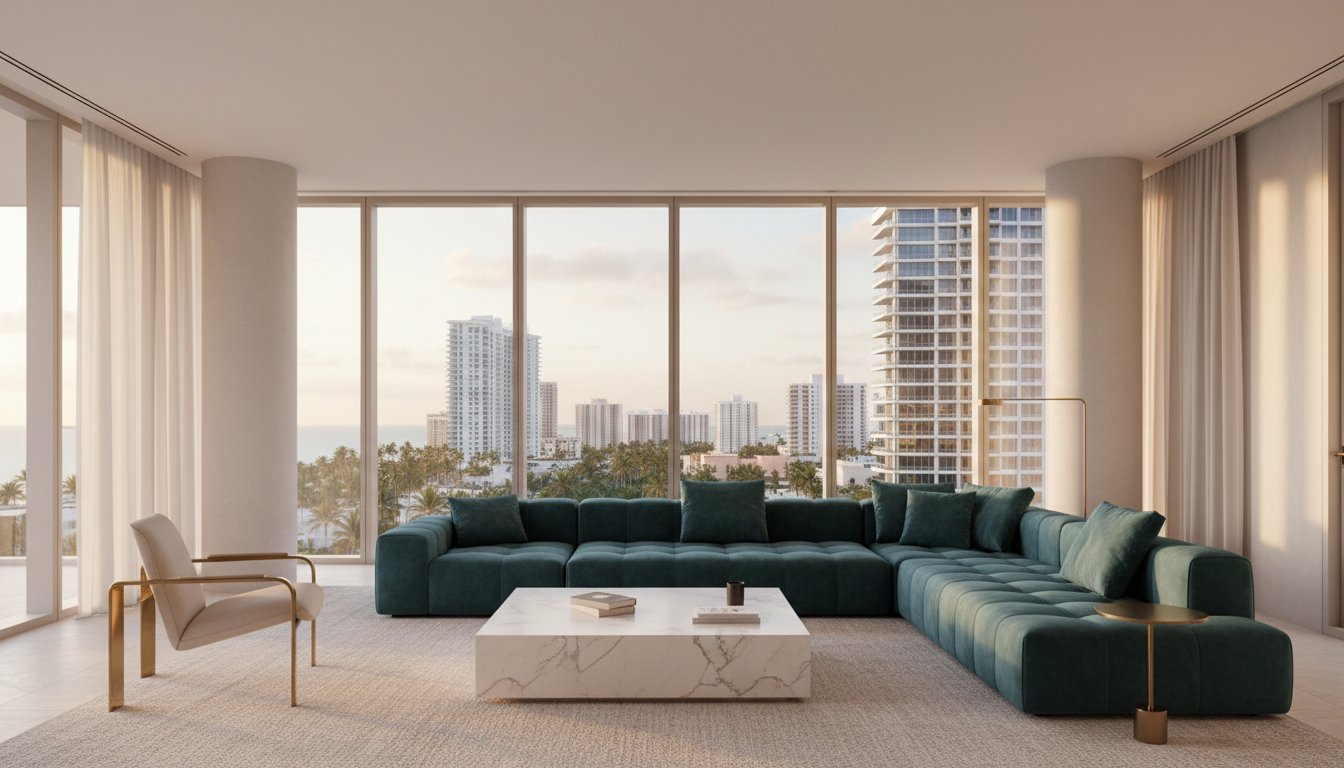
What if the true measure of a luxury home isn't the square footage, but the silence and order it brings to your daily life? You've likely spent years curating a life of excellence, yet the prospect of articulating a cohesive vision for a sprawling estate in Park City or a penthouse in San Francisco often feels overwhelming. It's a valid concern. The 2024 luxury real estate market reports show that even minor errors in material selection can lead to construction delays exceeding six months. You deserve a space that reflects your personality without the logistical exhaustion of managing dozens of vendors.
Partnering with an elite interior designer ensures your residence becomes a timeless sanctuary rather than a collection of expensive, disconnected objects. We'll show you how strategic space planning and exclusive Italian craftsmanship transform a property into a soulful, bespoke masterpiece. This article outlines the path to seamless project execution, where expert management protects your time and heritage-grade materials define your legacy. Discover how the right professional helps you achieve a modern version of the dolce vita through a blend of engineering precision and artistic vision.
Key Takeaways
- Learn why a professional interior designer with decades of experience brings more than just aesthetics to a project, combining technical mastery with an elevated artistic vision.
- Understand how strategic space planning and interior architecture serve as the invisible foundation for high-performance homes, optimizing both flow and volume.
- Explore why regional nuances in San Francisco, Miami, and Park City demand tailored design strategies that respect local heritage while embracing modern minimalism.
- Discover the logistical advantage of full-service procurement and how exclusive access to Italian craftsmanship ensures your residence features truly one-of-a-kind bespoke elements.
- Identify the essential criteria for selecting a design firm that balances timeless sophistication with the functional demands of a modern, cosmopolitan lifestyle.
Defining the Modern Interior Designer: More Than Just Aesthetics
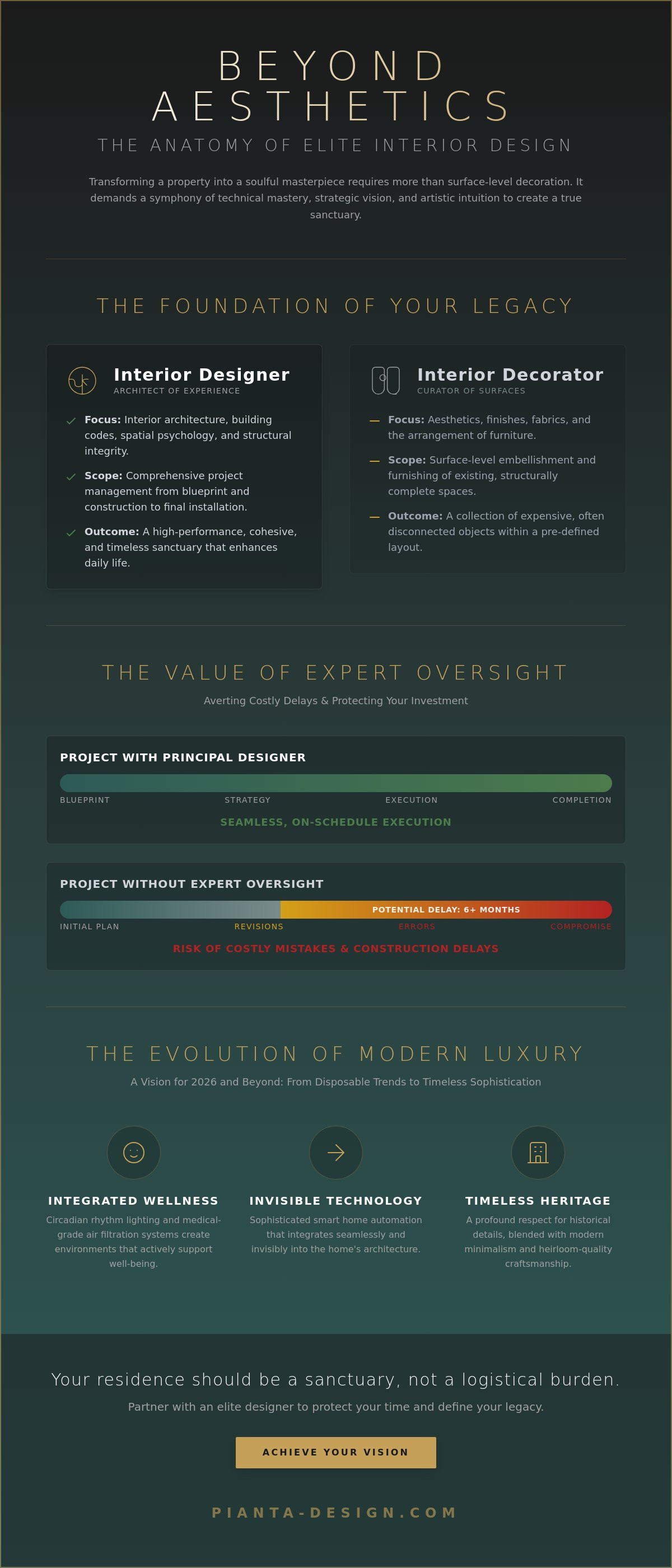
The distinction between an interior decorator and a professional interior designer often determines the ultimate legacy of a multi-million dollar estate. While decoration focuses on the surface layer of fabrics and finishes, a designer’s role begins months before the first piece of furniture is selected. This profession demands a rigorous blend of formal education and technical mastery. For elite projects in San Francisco, Miami, or Park City, a designer with 30 years of experience brings a level of foresight that prevents costly structural revisions. They manage the delicate equilibrium between engineering constraints and the psychological impact of a space. Defining Interior Design involves understanding that this discipline requires a deep grasp of building codes, spatial planning, and the structural requirements of a high-end residence.
High-end residential projects require a "Principal Designer" approach. This ensures a singular point of accountability for the artistic and technical integrity of the home. In San Francisco’s competitive real estate market, where 2024 data shows a continued demand for bespoke historical renovations, the designer acts as a master strategist. They don't just choose colors; they curate an environment that reflects the inhabitant's soul through the lens of architectural precision and artistic intuition.
The Designer as a Project Visionary
Luxury living requires a leader who can translate abstract lifestyle needs into a comprehensive technical design brief. This document serves as the roadmap for the entire project, ensuring that every square foot of a 10,000-square-foot estate serves a purpose. The importance of a cohesive narrative cannot be overstated; it’s what prevents a large-scale home from feeling like a disjointed collection of rooms. The interior designer serves as the essential connective tissue that binds the architect's structural vision to the builder's physical construction.
The Evolution of Luxury Interiors in 2026
As we look toward 2026, the definition of luxury has shifted away from "disposable trends" toward a philosophy of timeless sophistication. Modern clients are moving away from fast-fashion furniture in favor of heirloom-quality pieces that tell a story. This evolution prioritizes several key elements:
- The integration of wellness-focused design, including circadian rhythm lighting and medical-grade air filtration systems.
- Sophisticated smart home technology that remains invisible to the naked eye.
- A profound respect for historical architecture, particularly in San Francisco, where 19th-century Victorian details are being preserved alongside contemporary glass and steel.
This modern sensibility isn't about excess. It's about the quiet confidence of noble materials and handcrafted details. By focusing on the harmony of textures and visual balance, the designer creates a sanctuary that transcends the noise of the outside world, offering a bespoke experience that is both intimate and grand.
The Strategic Value of Space Planning and Interior Architecture
A luxury home's soul isn't found in the upholstery, but in the mathematical precision of its layout. True space planning serves as the invisible framework for a high-performance interior. It dictates how light travels, how sound carries, and how residents move through their private sanctuary. An elite interior designer doesn't just fill a room; they sculpt the volume of the space itself by modifying interior architecture to suit a specific lifestyle. This process involves a technical mastery of lighting plans, electrical layouts, and custom millwork that integrates seamlessly into the building's bones.
Data from the U.S. Bureau of Labor Statistics regarding the interior design profession highlights that the role involves far more than aesthetics. It requires a deep understanding of blueprints and building codes. To bridge the gap between technical drafting and client intuition, 3D visualization has become an essential 2024 standard. These photorealistic renderings allow homeowners to walk through their future halls before a single nail is driven, ensuring every sightline and ceiling height feels exactly right.
Optimizing the Floor Plan for Lifestyle
Designing for a Miami penthouse requires a different spatial logic than a Park City ski lodge. In coastal environments, we prioritize open sightlines that draw the eye toward the horizon, while mountain retreats often demand intimate, protected zones for warmth. The scale of furniture plays a critical role here. An undersized sofa in a grand San Francisco Victorian can make the room feel hollow, whereas oversized pieces in a compact urban space disrupt the flow of movement. We balance these proportions to enhance the perception of luxury, ensuring the home feels expansive yet grounded.
Technical Integration and Coordination
The most beautiful rooms fail if the technical infrastructure is an afterthought. We spend hundreds of hours collaborating with architects and structural engineers during the drafting phase to ensure that HVAC vents don't interrupt a hand-plastered ceiling and that electrical outlets are hidden within bespoke cabinetry. This coordination is especially vital when meeting the strict California Title 24 energy standards or Florida’s High Velocity Hurricane Zone requirements.
Meticulous space planning acts as a financial safeguard, preventing expensive structural regrets that often surface once the foundation is poured. By resolving these complexities early, we protect the project's timeline and the client's investment. If you're ready to see how technical precision can transform your daily experience, you can explore our architectural approach to see the Pianta Design philosophy in practice.
Navigating Regional Luxury: SF, Miami, and Park City
Luxury design loses its soul when it ignores the environment. A "one-size-fits-all" philosophy fails because it overlooks the visceral connection between a home and its surroundings. An elite interior designer acts as a translator of the local spirit, ensuring that a residence feels like an organic extension of its geography. A penthouse overlooking the Golden Gate Bridge requires a fundamentally different sensory language than a beachfront villa in South Beach or a ski-in chalet in the Wasatch Mountains.
In San Francisco, the aesthetic focuses on the tension between history and innovation. It's a delicate balance of honoring Victorian architectural heritage while introducing sleek, modern minimalism. Miami, by contrast, is a city of light and reflection. The design language there embraces high-gloss finishes, pale palettes, and an effortless indoor-outdoor flow that captures the Atlantic breeze. Park City represents the evolution of "Mountain Modern" style. It moves away from heavy, dark rustic clichés, favoring warmth through layered textures and expansive glass walls that invite the rugged landscape inside.
Material Selection for Specific Climates
Technical precision is the invisible foundation of beauty. Success depends on sophisticated material and finish selection that accounts for specific environmental stressors. Miami interiors require non-corrosive finishes that resist coastal salt air, while Utah homes need woods and natural stones treated to withstand extreme temperature fluctuations and humidity levels as low as 15 percent. This level of expertise is rooted in the foundational Principles of Interior Design, where material science and color theory meet aesthetic intent. For instance, luxury yacht interiors in the Miami harbor utilize specialized performance fabrics that offer the hand-feel of velvet but possess the durability to survive tropical UV intensity.
Local Context and Cultural Aesthetics
Cultural aesthetics define the final, intimate layer of a home. The "Silicon Valley" influence in San Francisco has birthed an aesthetic that is tech-integrated yet deeply organic, prioritizing wellness and biophilic elements. In Florida, the "Miami Art Deco" legacy continues to inspire contemporary spaces through geometric motifs and bold, sculptural furniture. In Park City, the interior designer treats the window as a frame. The design prioritizes "The View" as the primary art piece, using neutral, earth-toned palettes that complement rather than compete with the snowy peaks or summer greenery. This contextual approach ensures that every project reflects a unique, world-traveled perspective tailored to its specific corner of the world.
The Procurement Advantage: Italian Craftsmanship and Custom Design
The distinction between a decorated house and a curated estate lies in the logistical power of a dedicated procurement department. While retail showrooms offer mass-produced solutions, a premier interior designer operates as a gateway to a global network of artisans. This infrastructure allows for the seamless acquisition of pieces that don't exist in the public market. By leveraging exclusive relationships with Italian manufacturers in regions like Brianza and Tuscany, we secure furnishings that embody centuries of heritage. These pieces aren't just furniture; they're architectural investments built to the exact proportions of your San Francisco penthouse or Miami beachfront villa.
Custom furniture design consistently outperforms high-end retail in both structural integrity and aesthetic fit. Retail items are designed for the average room, but luxury architecture is rarely average. A bespoke sofa might feature a frame carved from solid European beechwood, reinforced with hand-tied springs, and upholstered in fabric that's been treated for the specific humidity of a Florida climate. Moving these assets from a workshop in Italy to a home in the United States involves a 6,000-mile journey. Our team manages every mile, overseeing container logistics, customs clearances, and climate-controlled storage to ensure the timeline remains intact.
The Art of Sourcing Authentic Materials
Authenticity is found in the tactile details that e-commerce cannot convey. The Italian difference is evident in the selection of stone from the Apuan Alps or hand-tanned leathers from the Arzignano district. We curate materials based on their grain, patina, and longevity. This process involves more than just selecting a color; it's about identifying the 20% of raw materials that meet the highest grading standards. As curators of global talent, we bring together:
- Hand-blown glass from Murano for custom lighting installations.
- Rare wood veneers like Macassar ebony or figured sycamore.
- Artisanal textiles woven on traditional looms in Como.
Project Management and Quality Control
The final phase of procurement is the most critical for protecting the client's investment. We supervise the installation of custom millwork and bespoke furnishings with a focus on millimetric precision. Our "White Glove" delivery process involves specialized teams who understand the fragility of luxury assets, ensuring that every piece arrives in pristine condition. Through our established procurement commissions, clients gain exclusive access to trade-only pricing and manufacturing quality that is strictly unavailable to the general public. This professional oversight ensures that the interior designer's vision is executed without compromise, from the initial sketch to the final placement.
Experience the seamless integration of global sourcing and local expertise. Partner with Pianta Design to begin your custom procurement journey today.
Selecting the Right Interior Design Firm for Your Project
Selecting a partner to curate your private sanctuary requires more than a casual glance at a digital portfolio. It demands a deep dive into a firm's historical depth and their specific local knowledge. Whether you're navigating the historic zoning nuances of San Francisco's Pacific Heights or the hurricane-rated structural requirements of a Miami waterfront estate, your interior designer must possess the technical acumen to match their aesthetic vision. The Pianta Philosophy bridges the gap between museum-grade sophistication and the practical demands of modern life. It's an approach where every hand-applied plaster finish or custom marble inlay serves a purpose beyond mere decoration, ensuring that beauty never compromises daily comfort.
The relationship between a homeowner and the Principal Designer is the cornerstone of a successful transformation. You're entrusting an expert with the intimate details of how you wake up, how you entertain your closest peers, and how you find rest. This personal connection ensures the final result isn't just a beautiful room; it's a reflection of your individual character. The process begins with a rigorous consultation and technical planning phase. During this stage, abstract dreams are translated into precise architectural drawings, lighting schedules, and bespoke millwork details that define the project's soul.
Questions to Ask During Your Consultation
Clarity is the ultimate luxury during a complex build. When you meet with a potential firm, ask how they handle project management and contractor oversight to ensure your timeline remains intact. Inquire about their specific experience with residential interior design in your city, as local vendor networks are vital for quality control. Finally, confirm if they can facilitate custom furniture design through European manufacturers. Access to artisanal workshops in Italy or France often marks the difference between a standard luxury home and a true masterpiece of interior designer craft.
The Pianta Design Difference
With 30 years of excellence across California, Florida, and Utah, Pianta Design brings a global perspective to local landscapes. The firm's signature style stems from a unique blend of yacht design precision and residential warmth. This maritime heritage means every square inch is considered with engineering-level accuracy, yet the environments remain soft, inviting, and deeply personal. This rare duality allows for spaces that are as structurally sound as they are visually poetic.
Your journey toward an elevated lifestyle begins with a single conversation. It's time to transform your vision into a tangible legacy of style and substance.
Schedule your private design consultation with Pianta Design
Crafting Your Legacy Home
Designing a residence that resonates with your personal narrative requires a blend of architectural precision and artistic soul. Whether you’re navigating the historic constraints of San Francisco, the coastal vibrancy of Miami, or the rugged slopes of Park City, the right interior designer acts as the bridge between raw space and a refined sanctuary. True luxury stems from the strategic marriage of space planning and the procurement of authentic Italian craftsmanship, ensuring every texture and line serves a purpose. It’s a process where technical expertise meets the timeless "dolce vita" philosophy.
Pianta Design brings over 30 years of high-end experience to every project, leveraging exclusive manufacturing partnerships directly with Italian artisans. Our presence across three distinct luxury markets allows us to tailor solutions to specific regional demands while maintaining a cohesive, world-class standard. Your home shouldn't just look beautiful; it should reflect a standard of living that honors both form and function. Begin your transformation with Pianta Design’s expert consultation and discover how three decades of mastery can redefine your environment. The path to an extraordinary home starts with a single, intentional step toward excellence.
Frequently Asked Questions
What is the difference between an interior designer and an interior decorator?
An interior designer manages structural elements and spatial planning, while a decorator focuses solely on surface aesthetics like paint and furniture. Designers often hold degrees and certifications like the NCIDQ, allowing them to collaborate with architects on floor plans and electrical layouts. This technical expertise ensures that the beauty of a San Francisco residence isn't just skin deep but integrated into the home's very architecture.
How much does it cost to hire a luxury interior designer in San Francisco or Miami?
Fees for high-end design vary based on project scope, but industry reports from Houzz indicate that luxury professionals often charge between 10% and 25% of the total project cost. In markets like Miami or San Francisco, hourly rates for a senior interior designer typically range from $150 to $500 according to 2023 industry benchmarks. These figures reflect the deep expertise required to curate bespoke environments that stand the test of time.
When is the best time to involve an interior designer in a new construction project?
You should involve a designer during the initial architectural planning phase, ideally before the foundation is poured. Engaging a professional at the 25% mark of the blueprint stage prevents costly revisions to plumbing and electrical locations later. This early collaboration ensures that the interior vision dictates the structural bones, creating a seamless flow between the exterior shell and the intimate living spaces within.
Do interior designers handle the purchasing of furniture and materials?
Yes, full-service firms manage the entire procurement process, from placing orders to coordinating white-glove delivery. They utilize a network of exclusive showrooms and artisans to source pieces that aren't available to the general public. This meticulous management covers tracking 100% of the logistics, ensuring that every handcrafted textile and custom marble surface arrives in perfect condition for the final installation.
How long does a full-service residential design project typically take?
A comprehensive residential transformation typically requires 8 to 18 months from the initial concept to the final reveal. This timeline accounts for the 12 to 24 week lead times often associated with custom European furniture and bespoke cabinetry. Quality won't be rushed; it demands a patient rhythm to ensure that every detail, from the floor transitions to the lighting layers, achieves the desired level of perfection.
Can an interior designer help with yacht or commercial office projects?
Elite designers frequently extend their expertise to luxury yachts and executive commercial suites to create a cohesive lifestyle across all environments. Marine projects require specialized knowledge of IMO-certified materials and weight distribution, while office designs focus on 100% ergonomic efficiency without sacrificing the brand's aesthetic identity. Whether on land or at sea, the goal remains the curation of a space that reflects the owner's unique character.
What should I have ready before my first meeting with a designer?
Please have a clear understanding of your investment range and a collection of visual inspirations that resonate with your personal style. Provide a list of 5 to 10 non-negotiable functional requirements, such as specific storage needs or entertaining habits. Sharing these details during the first 60 minutes of consultation allows the interior designer to align their creative vision with your daily lifestyle from the very beginning.
