
San Francisco Victorian Home Interior Design: A Masterclass in Modern Restoration
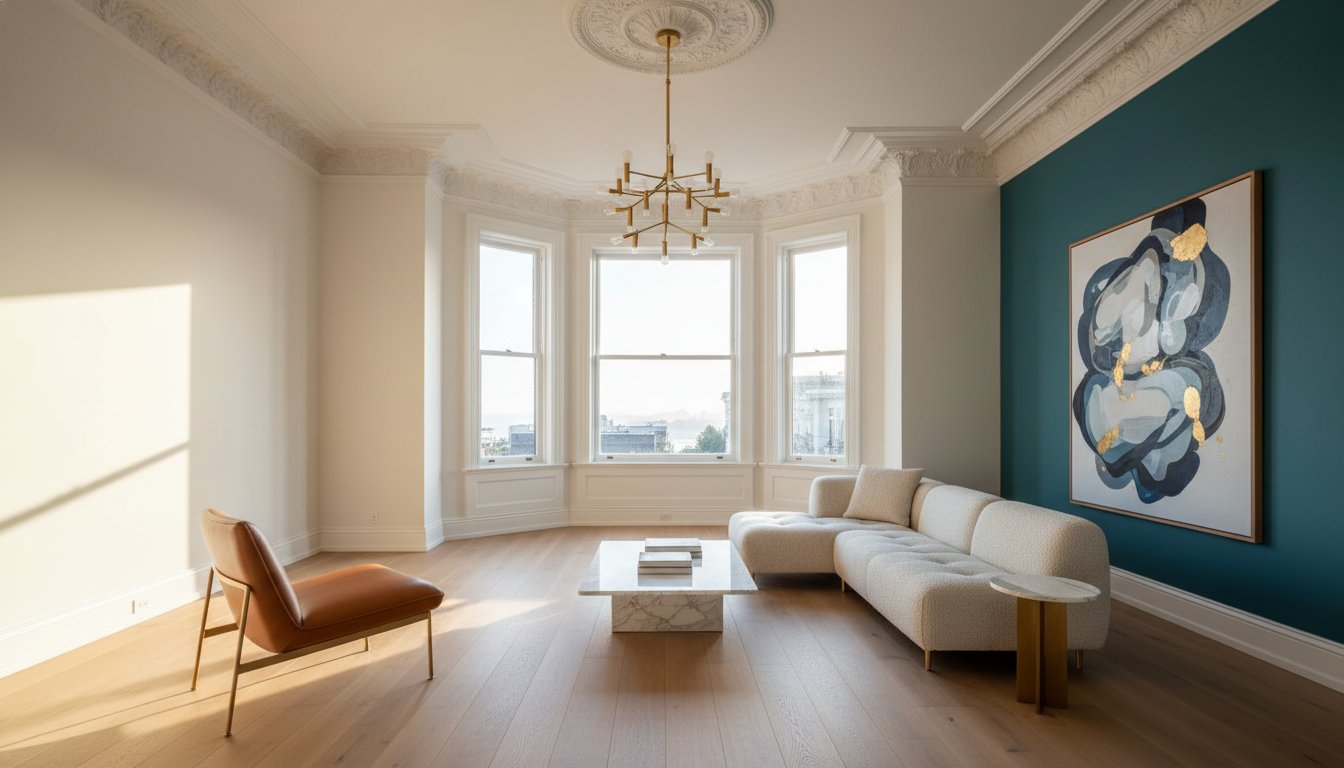
Can we truly call a home restored if it remains trapped in the compartmentalized, light-starved layouts of the 1880s? Achieving a masterful san francisco victorian home interior design requires more than just a preservation of the past; it demands a sophisticated conversation between 19th-century millwork and 21st-century Italian modernism. You likely cherish the grand proportions and ornate moldings of your residence, yet you feel the weight of dark corridors and the complexity of meeting the 2025 California Building Standards Code effective January 1, 2026.
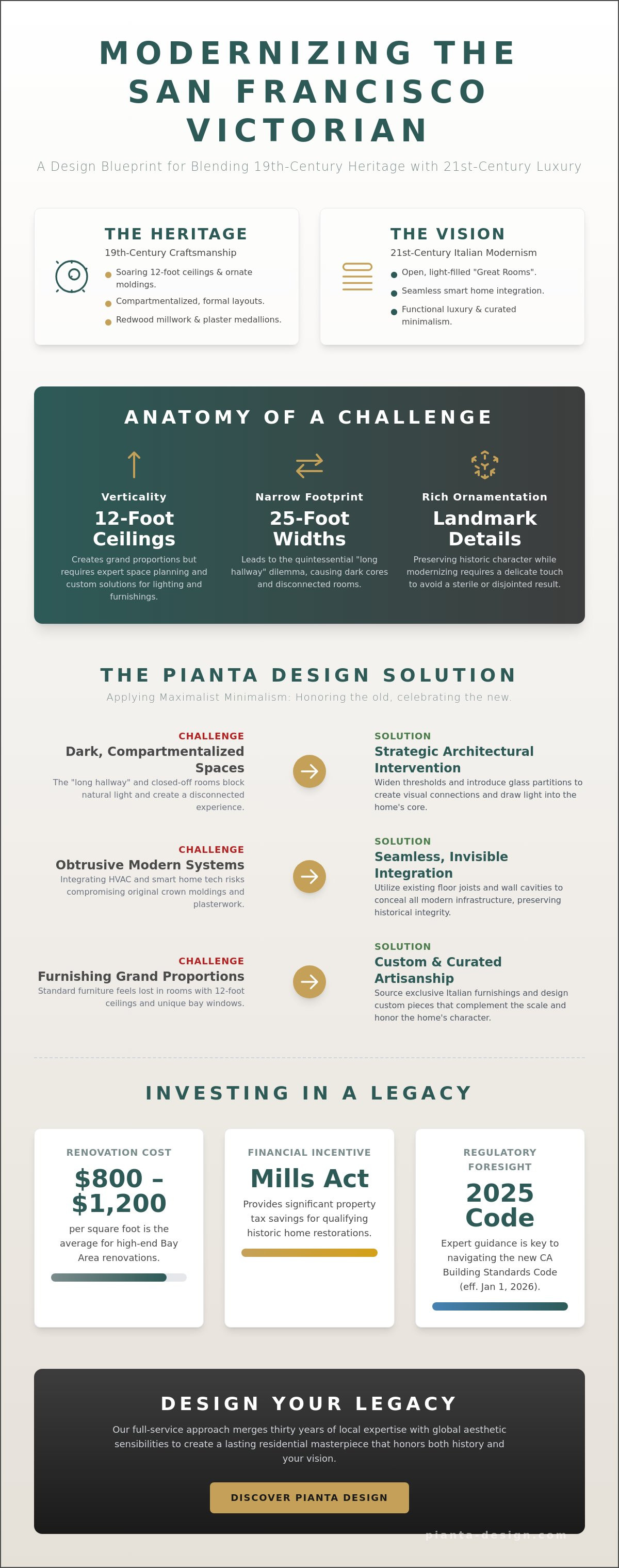
We believe your home should feel like a curated gallery rather than a drafty museum. This article explores how to imbue your space with functional luxury and better natural light while respecting strict landmark preservation rules. You'll discover how to utilize the Mills Act for property tax savings and why high-end renovations in the Bay Area now average $800 to $1,200 per square foot. We will guide you through selecting exclusive materials and sculptural forms that honor your home’s heritage through a lens of modern sophistication and emotional harmony.
Key Takeaways
- Master the art of san francisco victorian home interior design by learning how to balance 19th-century ornate craftsmanship with contemporary spatial requirements.
- Discover architectural solutions for the "long hallway" dilemma to optimize natural light and seamlessly integrate smart home technology within historic walls.
- Learn to apply a sophisticated Italian modernism lens to traditional spaces, replacing period-typical dark palettes with luminous, neutral color theories.
- Explore the necessity of custom furniture design and Italian artisanship in furnishing the grand, unique proportions of Victorian bay windows and 12-foot ceilings.
- Understand the value of a full-service design approach that merges thirty years of local expertise with global aesthetic sensibilities to create a lasting residential legacy.
Understanding the Anatomy of San Francisco Victorian Interiors
san francisco victorian home interior design is much more than a preservation of the past; it's the delicate art of balancing ornate 19th-century woodwork with the spatial fluidity required by modern life. These historic residences are defined by their soaring 12-foot ceilings and notoriously narrow 25-foot footprints, creating a vertical elegance that's unique to the Bay Area. Intricate plaster medallions, hand-carved marble mantels, and redwood millwork serve as the soul of these structures. However, the true mastery lies in navigating the psychological shift from the formal, closed-off parlors of the 1880s to the integrated "Great Room" concept that defines luxury in 2026.
The current year marks a significant move toward "maximalist minimalism" within historic SF homes. This trend pairs the richness of original architectural detail with curated, understated Italian furnishings. This approach creates visual breathing room while honoring the home's grand proportions. Key characteristics of this anatomy include:
- Verticality: Utilizing the 12-foot height to draw the eye upward with custom lighting and art.
- Narrow Footprints: Solving the "long hallway" dilemma through strategic space planning.
- Ornamentation: Restoring plasterwork to serve as a high-contrast backdrop for modern silhouettes.
The Legacy of SF Architecture
To design with intent, one must first recognize the nuances of Victorian architectural styles found across the city. The Italianate style, popular in the 1860s and 70s, features flat roofs and tall, narrow windows. The Queen Anne style, dominant in the 1890s, offers more whimsical shapes and textured shingles. The Stick-style emphasizes the verticality of the structure with decorative wood trim. Central to all these is the "Grand Entry." In San Francisco's social history, the foyer was a theater of status. Today, we identify which landmark features, like original mahogany balustrades, must be preserved and which partitions can be reimagined to invite light into the core of the home.
Why Restoration Requires a Master Touch
The risk of over-modernizing is a silent threat to the city's heritage. Stripping away too much detail results in a sterile box that feels disconnected from its roots. This is where professional residential interior design acts as a bridge between eras. An interior designer doesn't just select finishes; they serve as a curator of history. By layering modern Italian silhouettes against a backdrop of restored wainscoting, we ensure the home’s unique character isn't just maintained but celebrated. It's a process of editing and enhancing, ensuring every addition feels like a natural evolution of the home's narrative. This careful san francisco victorian home interior design ensures that your residence remains a timeless legacy for decades to come.
Interior Architecture: Optimizing Flow and Light in Historic Floor Plans
In the context of a historic residence, interior architecture is the structural reimagining of the building's internal shell to harmonize period character with modern habitability, while decoration simply addresses the aesthetic layer of furnishings. True san francisco victorian home interior design begins with the floor plan. The most persistent challenge is the "long hallway" typical of 19th-century flats, which often creates a dark, disconnected experience. By strategically widening thresholds or introducing glass partitions, we preserve the sense of sequence while allowing light to penetrate the home's core. These subtle shifts in volume turn a series of isolated rooms into a cohesive sanctuary.
Modernizing these spaces through san francisco victorian home interior design requires a surgical approach to technology. Integrating high-efficiency HVAC systems and smart home infrastructure shouldn't result in visible conduits or dropped ceilings that obscure original crown moldings. We utilize floor joists and wall cavities to hide 2026-standard electrification infrastructure, ensuring the home functions like a contemporary masterpiece while looking like an 1890s treasure. This modernization extends to the rear of the home, where we often transition the kitchen into an indoor-outdoor retreat. Connecting the historic kitchen to a rear garden through steel-framed glass doors creates a contemporary flow that honors the Bay Area lifestyle.
Step 1: The Structural Audit
Before the first sketch, a rigorous evaluation of the home's bones is essential. We distinguish between load-bearing walls that provide structural stability and decorative partitions that can be safely removed to enhance flow. This phase involves assessing original lath and plaster, which can be fragile after a century of settling. We frequently collaborate with Sutro Architects to ensure every modification meets current seismic safety standards. For homes listed on the National Register of Historic Places, this architectural precision is not just a preference; it's a requirement for preservation. Proper planning helps avoid the 10-20% budget contingencies often triggered by unforeseen structural issues.
Step 2: Lighting Design as a Spatial Tool
Lighting in a Victorian home must address extreme verticality. A single central chandelier leaves the corners in shadow and fails to highlight the 12-foot volume. We utilize sky-lights and historic light wells to pull natural illumination into the center of the footprint. Effective lighting design involves layering ambient, task, and accent sources to define different zones within an open plan. If you're ready to reimagine your home's potential, you can explore our architectural approach to see how we transform historic spaces into luminous retreats.
The Aesthetic Balance: Timeless Victorian vs. Modern Italian Sensibility
The Pianta Philosophy views san francisco victorian home interior design as a rhythmic dialogue between eras rather than a static preservation of one. We believe that a historic home shouldn't feel like a museum; it should breathe with the life of its current inhabitants. By imbuing these 19th-century shells with modern Italian sensibility, we create a tension that highlights the best of both worlds. The sleek, low profiles of contemporary Italian furniture allow the eye to travel across the room, making the ornate millwork and 12-foot ceilings the true protagonists of the space. This approach also addresses a common concern: the fear that modern elements might devalue a historic asset. In reality, a curated blend of eras signals a sophisticated, high-value lifestyle that appeals to the global collector, ensuring the home remains relevant in the 2026 luxury market.
Texture serves as the essential bridge in this transition. We often pair the cold, architectural precision of cold-rolled steel with the organic warmth of silk rugs and mohair velvets. This sensory layering prevents the "maximalist minimalism" of the interior from feeling sterile. It's a deliberate orchestration where every piece of furniture is treated as a sculpture, standing in quiet contrast to the home's historical narrative.
The Power of Contrast
Visual impact in a Victorian home is often a matter of scale and silhouette. Placing a Minotti sofa with its clean, horizontal lines against a hand-carved mahogany fireplace creates an immediate focal point. The simplicity of the modern piece makes the intricate Victorian carvings "pop" with renewed energy. We call this the "Storybook House" approach; it's about creating a space that feels whimsical yet deeply grounded in quality. When you remove the visual clutter of period-accurate Victorian furniture, the architectural bones of the house finally have room to shine. This clarity is what transforms a compartmentalized floor plan into a gallery-like experience.
Defining the 2026 Victorian Palette
Our 2026 color theory moves decisively away from the heavy, light-absorbing "Victorian drab" of the past. We've transitioned toward a sophisticated, neutral foundation that includes warm terracottas, sage greens, and deep "Bay Fog" grays. These hues respect the home's heritage while softening the transition between rooms. To combat the narrowness of the SF footprint, we utilize high-gloss lacquers on ceilings and wainscoting to reflect light deeper into the space. This meticulous material and finish selection ensures that even the most shadowed corners of a Queen Anne or Italianate home feel luminous and inviting.
Sourcing Exclusivity: From Custom Millwork to Italian Artisanship
Off-the-shelf furniture rarely satisfies the demanding proportions of a historic residence. A standard sofa often feels diminutive when placed within a room boasting 12-foot ceilings; it lacks the presence required to anchor the space. This is where san francisco victorian home interior design evolves into a bespoke experience. We utilize custom furniture design to address the unique geometry of Queen Anne and Italianate bay windows. Instead of forcing a rectangular piece into a curved alcove, we create site-specific seating that follows the architectural rhythm of the home. This ensures that the scale of the furniture complements the grandeur of the architecture rather than competing with it.
Our approach bypasses the limitations of local showrooms by providing our clients with direct access to trade-only Italian manufacturers. This ensures every stone slab and cabinetry detail reflects a level of artisanship unavailable in the mass market. This exclusivity extends to our art consultation services. In rooms with significant vertical volume, choosing a single, commanding piece of art is more effective than a cluttered gallery wall. We source works that possess the visual weight to balance the home's ornate historical details, creating a space that feels like a private gallery.
Italian Craftsmanship in the Bay Area
The precision of Italian joinery offers a stark contrast to standard American contracting methods. While local labor is essential for assembly, the engineering of our bespoke kitchens and wardrobes occurs in workshops where centuries of tradition meet modern technology. We source rare marbles and sustainable woods that resonate with the home's original 19th-century materials. Managing the logistics of international procurement is a core part of our service. We ensure that a hand-carved marble island from Tuscany arrives in San Francisco with the same care and precision it was created with, maintaining the integrity of the design throughout the journey.
Bespoke Millwork and Preservation
Preserving a landmark home often requires replicating missing or damaged trim. We use modern CNC precision to recreate Victorian moldings that are indistinguishable from the originals. This intersection of interior architecture and cabinetry allows us to design "freestanding" storage solutions. These pieces provide modern functionality without the need to cut into historic plasterwork or disturb original wainscoting. If you desire a home that transcends the ordinary through global sourcing, view our portfolio of custom interiors to see how we apply san francisco victorian home interior design to create one-of-a-kind residences.
Designing Your Legacy: The Pianta Design Approach to San Francisco Homes
Honoring a 19th-century residence requires more than an eye for beauty; it demands a deep understanding of the city's architectural soul. Maria Pianta’s 30-year history within the most iconic neighborhoods of the Bay Area has shaped a philosophy where every project is treated as a lasting legacy. Navigating the San Francisco Department of Building Inspection (DBI) for historic renovations is a complex undertaking that requires technical precision and patience. From managing permit valuations to ensuring compliance with the 2025 seismic standards, the role of an elite interior designer is essential to protect your investment. We act as the conductor of a high-stakes orchestra, coordinating between architects and artisans to ensure the san francisco victorian home interior design is executed without compromise.
Our full-service advantage removes the friction from the renovation process. We translate abstract desires into photorealistic 3D renders, allowing you to walk through your reimagined parlor before a single floorboard is lifted. This technical foresight is paired with a white-glove installation service that handles every logistical detail, from the international shipping of Italian stone to the final placement of art. It's a comprehensive journey designed for the discerning homeowner who values their time as much as their aesthetic environment. This meticulous san francisco victorian home interior design ensures that the transition from a 19th-century layout to a 21st-century sanctuary is seamless and inspiring.
The Pianta Consultation Process
The journey begins with vision alignment and lifestyle mapping. We don't just ask how you want a room to look; we ask how you want to feel within its walls. This deep empathy is followed by technical drafting and a material board presentation that showcases the tactile harmony of your future home. During the construction oversight phase, our team ensures the vision is executed to a 1/16th-inch level of accuracy. We believe that true luxury is found in the details that most people never see, but everyone feels. It's about the quiet alignment of a marble grain or the perfect shadow gap in bespoke cabinetry.
Start Your Transformation
Whether you're restoring a grand estate in Pacific Heights or a charming, light-filled flat in Duboce Triangle, we understand the unique constraints and opportunities these neighborhoods present. Seeing a historic home breathe again, filled with light and modern Italian sophistication, is an emotional experience that transcends simple renovation. It's the moment your house finally reflects your personal narrative and global perspective. If you're ready to begin this evolution and create a home that serves as a curated gallery for your life, schedule your San Francisco Victorian design consultation today.
Reimagining Your Historic Legacy
Restoring a historic home is a profound responsibility that requires an understanding of both the past and the future. You've seen how the right structural shifts and layered lighting can breathe life into a narrow layout, turning a dark corridor into a luminous gallery. A successful san francisco victorian home interior design is not about choosing between eras; it's about creating a harmonious dialogue where 19th-century craftsmanship meets 21st-century Italian sophistication. By layering sculptural forms against ornate moldings, you ensure your residence remains a timeless sanctuary rather than a museum piece.
At Pianta Design, we bring over 30 years of high-end residential experience to every historic landmark preservation project in the city. Our exclusive partnerships with world-class Italian manufacturers allow us to source materials that are as rare as the homes they inhabit. We specialize in navigating the complexities of San Francisco’s preservation rules while delivering a functional, luxurious environment tailored to your personal style. It's time to transform your vision into a lasting architectural legacy. Elevate your San Francisco Victorian with Pianta Design and discover the art of living well in a home that truly reflects your story.
Frequently Asked Questions
Can I remove walls in a historic San Francisco Victorian?
Yes, you can remove internal walls, but the process requires a rigorous structural audit and compliance with the 2025 California Building Code. We evaluate load-bearing walls versus decorative partitions to ensure seismic stability under the new ASCE 7-22 standards. This structural reconfiguration is what allows us to transform a compartmentalized 19th-century layout into a fluid, contemporary masterpiece without compromising the building's integrity.
What is the best color palette for a dark Victorian hallway?
Luminous, neutral foundations are the most effective choice for narrow, light-starved corridors. We recommend high-gloss lacquers in sophisticated 2026 shades like sage green, warm terracotta, or "Bay Fog" gray to maximize light reflection. These finishes act as a mirror, pulling illumination deeper into the home's core. This strategy moves away from the heavy, light-absorbing palettes common in the late 1800s.
How do I choose furniture that fits the scale of 12-foot ceilings?
Selecting the right scale requires moving beyond standard retail furniture, which often feels diminutive in grand volumes. You need pieces with vertical visual weight, such as custom-designed armoires or sculptural lighting, to anchor a 12-foot room. Standard sofas often disappear in these spaces. Bespoke solutions ensure the furniture complements the architecture rather than feeling like an unproportional afterthought.
Do I need a permit for interior-only Victorian renovations in SF?
Most interior renovations in the city require permits from the San Francisco Department of Building Inspection (DBI). This includes any changes to the structural walls, plumbing, or electrical infrastructure. Since January 1, 2026, all projects must also comply with updated electrification requirements. We manage this entire bureaucratic process, ensuring your project meets every local landmark preservation standard while avoiding unforeseen delays.
How long does a full-service Victorian interior design project typically take?
A comprehensive san francisco victorian home interior design project typically spans 12 to 18 months from concept to completion. This timeline accounts for the initial vision alignment, technical drafting, and the 16 to 24-week lead times required for bespoke Italian manufacturing. We oversee every logistical detail, ensuring the final installation is executed with the 1/16th-inch accuracy that high-end residential projects demand.
Is it possible to integrate a modern kitchen into a 19th-century floor plan?
Integrating a modern kitchen is achievable through strategic interior architecture that respects the home's original proportions. We often reconfigure the rear of the residence to create a seamless indoor-outdoor transition to the garden. By using custom cabinetry and high-efficiency appliances, we hide 21st-century technology within a historic shell. It's a delicate balance of functional luxury and period-appropriate aesthetics.
How does Pianta Design handle the preservation of original plaster moldings?
We use modern CNC technology to replicate damaged historic trim with absolute precision. When original plaster medallions or crown moldings are present, we design freestanding cabinetry and storage solutions to avoid disturbing landmark surfaces. Our goal is to enhance the home's character while protecting its architectural soul. This approach ensures that your home’s heritage is preserved for future generations to admire.
What is the difference between a Victorian interior decorator and an interior designer?
Interior designers address the structural and spatial shell of the home, while decorators focus primarily on surface aesthetics and soft furnishings. A designer handles interior architecture, space planning, and technical lighting design. This distinction is vital for san francisco victorian home interior design, where the floor plan often needs significant reconfiguration to meet modern lifestyle needs and current building codes.
