
San Francisco Minimalist Luxury Interior Design: The 2026 Definitive Guide
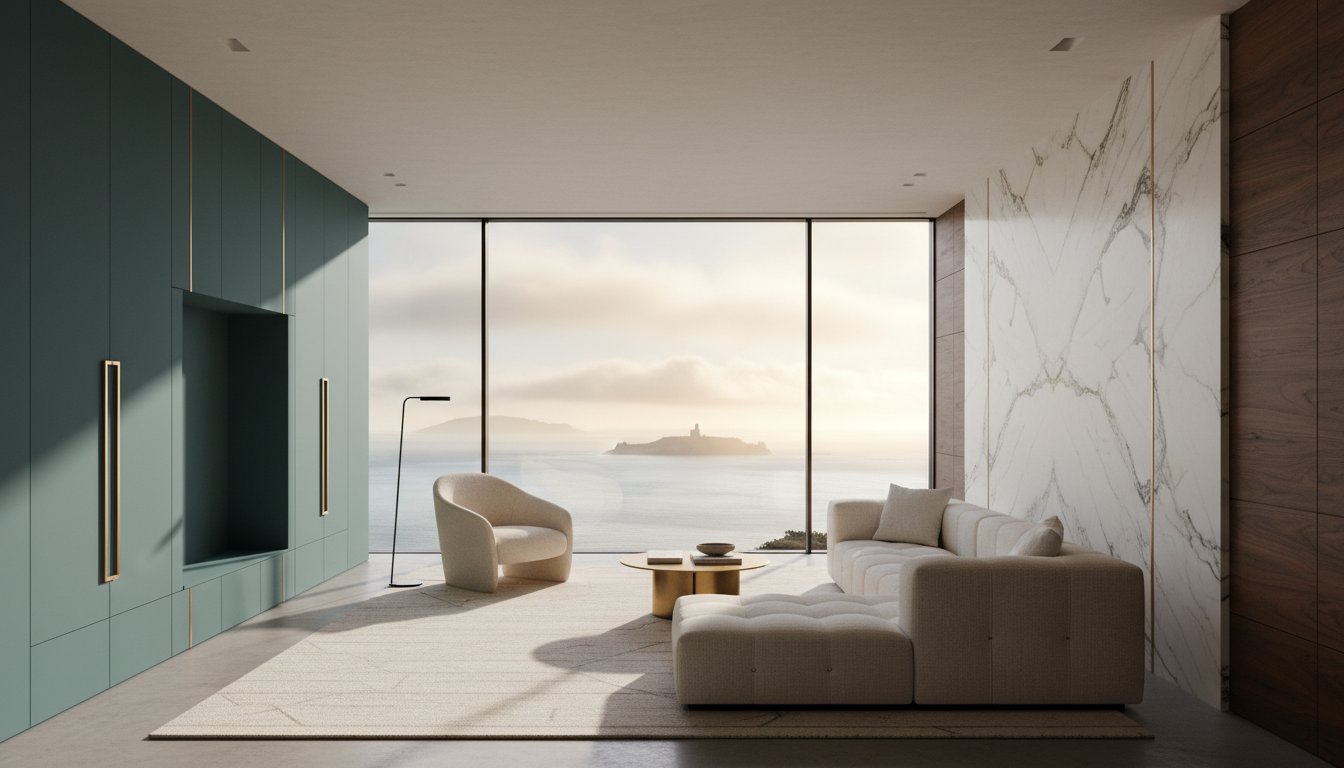
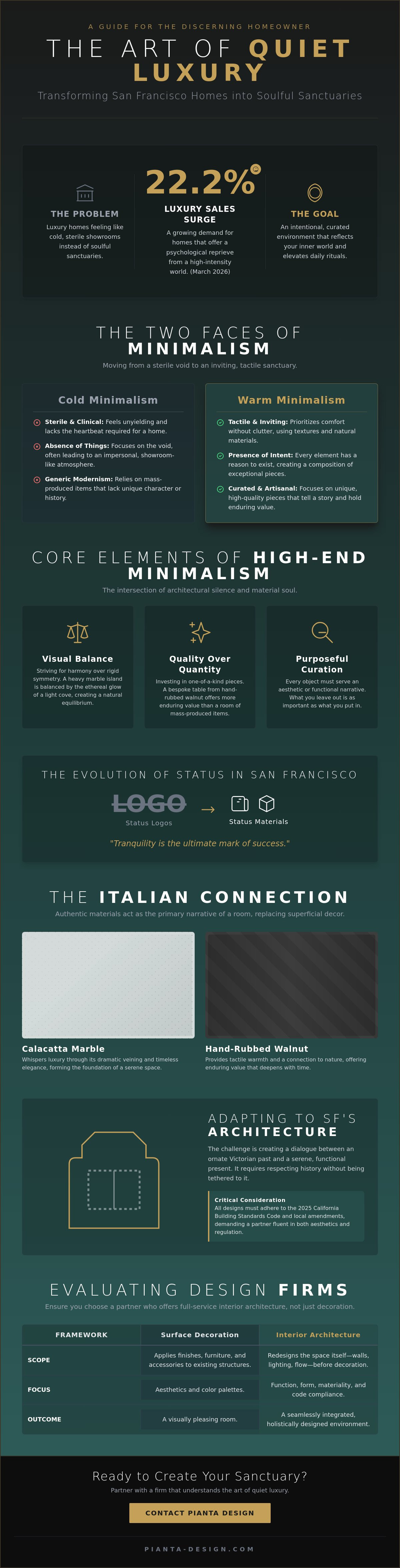
Why does a $6.81 million Pacific Heights residence often feel more like a sterile showroom than a soulful sanctuary? In a city where luxury home sales surged by 22.2 percent in March 2026, the challenge isn't just acquiring square footage. It's imbuing that space with a quiet, intentional character. You likely appreciate the clarity of a clean environment but fear the cold, sterile feeling that often accompanies modern renovations. True san francisco minimalist luxury interior design isn't the absence of things; it's the presence of exceptional materiality and architectural intent. It's the delicate tension between the ornate history of a Victorian facade and the serene, modern restraint required for a balanced life.
We recognize the frustration of searching for unique, artisanal pieces in a market saturated with generic modernism. You deserve a home that acts as a mirror to your inner world, reflecting a life of curated experiences without sacrificing warmth. This guide reveals how to blend the precision of the 2025 California Building Standards with the timeless elegance of Italian marble and custom textures. We'll explore the essential steps to achieving a seamless, curated environment that respects your time and elevates your daily ritual into an art form.
Key Takeaways
- Master the transition from sterile "cold minimalism" to an inviting, tactile environment by focusing on intentional selections that prioritize soul over void.
- Learn how to seamlessly integrate modern architectural restraint within historic Victorian and Edwardian homes to achieve a cohesive san francisco minimalist luxury interior design.
- Discover why authentic Italian materials, such as hand-rubbed walnut and Calacatta marble, act as the primary narrative of a room, effectively replacing the need for superficial decor.
- Identify the critical framework for evaluating design firms, ensuring you choose a partner who offers full-service interior architecture rather than just surface-level decoration.
- Understand how to utilize light as a structural tool to transform San Francisco’s unique atmospheric conditions into a luminous and peaceful sanctuary.
The Philosophy of Minimalist Luxury: Beyond the Void
True luxury doesn't shout. It whispers through the weight of a hand-carved stone plinth or the subtle grain of a century-old oak floor. Within the landscape of san francisco minimalist luxury interior design, we define this philosophy as the intentional selection of fewer, higher-quality elements that command attention through their sheer excellence. It's a departure from the idea that a room must be filled to be finished. Instead, we look at the space as a composition where every line and texture has a reason to exist.
Many homeowners fear the "cold minimalism" often associated with sterile, industrial lofts. That clinical approach feels unyielding and lacks the heartbeat required for a home. We practice "warm minimalism," a tactile and inviting alternative that prioritizes comfort without clutter. This style relies on the The Philosophy of Minimalism to strip away the unnecessary, leaving only what is essential and beautiful. Minimalist luxury is the intersection of architectural silence and material soul.
In this context, negative space isn't an absence of design; it's a deliberate architectural tool. It serves as the connective tissue that allows your most prized possessions to breathe. When you reduce the visual noise, a single piece of art or a custom-crafted sofa gains a monumental presence. What you leave out is just as important as what you put in, creating a sense of liberation and clarity within the home.
The Core Elements of High-End Minimalist Design
- Visual Balance: We strive for harmony rather than rigid symmetry. A heavy marble island might be balanced by the ethereal glow of a recessed light cove, creating a sense of equilibrium that feels natural and unforced.
- Quality over Quantity: Investing in one-of-a-kind pieces ensures your home remains timeless. A bespoke table crafted from hand-rubbed walnut offers more enduring value than a room full of mass-produced furniture.
- Purposeful Curation: Every object must serve an aesthetic or functional narrative. If a piece doesn't contribute to the overall serenity of the space, it doesn't belong in the sanctuary.
Why 'Quiet Luxury' is Trending in San Francisco
San Francisco is a high-intensity tech hub where the pace of life is relentless. With luxury home sales increasing by 22.2 percent in March 2026, there's a growing demographic of professionals seeking a psychological reprieve from the digital world. The home has become a necessary sanctuary for calm. This shift has moved the needle away from "status logos" toward "status materials." Homeowners now prize the feel of honed stone and organic linens over flashy branding. Our approach to residential interior design reflects this evolved Bay Area lifestyle, where tranquility is the ultimate mark of success.
Adapting Minimalism to San Francisco’s Unique Architectural Landscape
San Francisco’s architectural heritage presents a fascinating paradox for the modern minimalist. Whether you’re inhabiting a grand Victorian mansion in Pacific Heights or a Mid-Century Modern gem in Diamond Heights, the exterior often dictates a level of ornamentation that seems at odds with a restrained interior. Successfully executing san francisco minimalist luxury interior design means respecting this history without being tethered to it. It’s about creating a dialogue between the ornate past and a serene, functional present. With luxury homes going under contract in an average of just 12 days as of March 2026, the demand for homes that balance historic charm with modern clarity has never been higher.
Effective space planning is the foundation of this transition. In a city where luxury homes often feature vertical footprints and narrow floor plans, every inch must be intentional. This is particularly relevant as of January 1, 2026, when all permit applications must strictly adhere to the 2025 California Building Standards Code and local amendments. These regulations impact how we reconfigure historic interiors to achieve the open, airy flow essential for a minimalist sanctuary. A well-planned layout ensures that your home feels expansive, even when working within the constraints of a traditional San Francisco lot.
Bridging the Gap: Historic Shells and Modern Interiors
The most successful projects treat the historic shell as a curated frame. We often employ the "Box-in-a-Box" concept, where modern architectural inserts are placed within historic rooms. This allows us to preserve period moldings and ceiling rosettes while introducing clean-lined, contemporary furniture. The 2026 San Francisco Decorator Showcase recently highlighted this juxtaposition within a late-19th-century mansion, proving that a minimalist edge can actually enhance a storybook feel. By stripping away excess and focusing on pure forms, the intricate craftsmanship of the original architecture becomes more visible. If you're looking to transform your space, you might consider how expert interior architecture can bridge these two worlds.
The San Francisco Light Palette
San Francisco’s unique atmospheric conditions, often referred to as the "Grey City" light, require a specific color strategy. Neutrals that look warm in other climates can turn "muddy" or cold under our persistent fog. We select palettes that respond to the shifting mist, using reflective surfaces and strategic lighting design to maintain a sense of warmth. Drawing inspiration from the history of Italian design, we use materiality to bounce light into the deepest parts of the home. Floor-to-ceiling windows are a staple of luxury SF homes, yet they demand careful furniture placement to avoid glare and maintain the quietude of the space. This careful calibration of light and material is what prevents a minimalist home from feeling sterile.
The Italian Connection: The Soul of Minimalist Materiality
Italian design is the heartbeat of refined minimalism. It’s not just about a specific look; it’s about the concept of "Bella Figura," the art of making a grand impression through effortless grace and impeccable quality. In the sphere of san francisco minimalist luxury interior design, we move away from superficial clutter and let the materials carry the narrative. A single, monolithic slab of Calacatta marble, which in 2026 commands between $150 and $250 per square foot installed, does more for a kitchen’s atmosphere than a dozen decorative objects. It provides a focal point that’s both functional and monumental, grounding the room in a sense of permanence.
The mastery of stone, wood, and leather is a heritage that can’t be manufactured overnight. When we select a hand-rubbed walnut for a library or a supple full-grain leather for a seating arrangement, we’re choosing materials that possess a "soul." This depth of materiality replaces the need for traditional decor. It allows the architecture to remain silent while the surfaces provide the warmth and character. In this environment, every touch is an experience, and every view is a study in visual balance.
Sourcing Authentic Craftsmanship
Mastering the minimalist aesthetic requires a deep understanding of the tactile foundation. There’s a profound difference between "Italian style" and pieces that are truly "Made in Italy" by multi-generational artisans. Our procurement process bypasses the public showrooms, offering access to boutique manufacturers in regions like Brianza and Tuscany. Over our 30-year history, we’ve cultivated these relationships to ensure every material and finish selection meets a standard of excellence that retail brands simply can’t replicate. This level of quality control is essential for creating a home that feels substantial rather than fragile.
Bespoke Furniture vs. Off-the-Shelf Modern
Generic modern furniture often fails to address the unique proportions of San Francisco’s historic architecture. When you’re working with the vertical constraints of a Nob Hill townhouse or the specific light of a Marina District flat, off-the-shelf items can leave awkward gaps. We use custom furniture to solve these architectural challenges with surgical precision. Bespoke cabinetry and integrated built-ins become part of the home’s DNA, maintaining the "quiet luxury" that defines the modern Bay Area lifestyle. Custom furniture design is the ultimate expression of minimalist luxury, where the intersection of architectural silence and material soul becomes a tangible reality. These pieces offer an investment that matures alongside the property, far outlasting mass-produced luxury retail brands.
Evaluating San Francisco Design Firms: A Framework for Discerning Homeowners
Selecting a partner for san francisco minimalist luxury interior design is a deeply personal endeavor that requires more than just an appreciation for clean lines. In a market where the median luxury home price reached $6.81 million in March 2026, the stakes for your sanctuary are incredibly high. You aren't just looking for a decorator; you're seeking a visionary who understands the quiet language of space. When you begin to evaluate an interior designer, look beyond the surface of their portfolio. A true expert in this field operates at the intersection of art and engineering, ensuring that the final result feels both effortless and inevitable.
Minimalism is perhaps the most difficult style to execute because it leaves no room for error. Without ornate moldings or heavy drapery to mask architectural imperfections, every joint, seam, and shadow must be perfect. This is why technical planning and project management are non-negotiable. A decor-only approach often falls short of the rigorous standards required for a high-end sanctuary. You need a firm that can oversee the entire process, from the initial interior architecture to the final art consultation. This comprehensive oversight ensures that the original vision survives the complexities of the build phase.
Understanding the financial landscape is also crucial for a successful partnership. In 2026, elite designers in the Bay Area may charge up to $500 per hour, reflecting their deep expertise and exclusive sourcing networks. For high-end residential projects, the average cost for furnishings, rugs, and lighting typically ranges between $250 and $400 per square foot. These figures represent an investment in a lifestyle that prioritizes quality over quantity, where every piece is chosen for its ability to contribute to a peaceful, curated environment. If you're ready to elevate your home, you can schedule a private consultation to discuss your vision.
Key Criteria for Selection
- Architectural Depth: Ensure the firm has extensive experience with structural reconfigurations and construction oversight. They must be able to speak the language of architects and builders fluently.
- Global Sourcing: Look for a partner who bypasses generic local showrooms in favor of direct relationships with master artisans in Italy and beyond. This ensures your home features truly unique, one-of-a-kind elements.
- Cohesive Testimonials: Seek out clients who speak to the "seamlessness" of the execution. In luxury design, the process should be as refined and peaceful as the final interior.
The Importance of Project Management
In a minimalist home, the designer acts as your primary advocate with contractors. They ensure that the precision required for recessed baseboards or flush-mount lighting is met with surgical accuracy. This level of detail requires constant presence and a refusal to compromise on the integrity of the design. Without a dedicated project manager, the subtle nuances that define "warm minimalism" can easily be lost during construction. The designer’s role is to protect the silence of the architecture, ensuring that the final space remains a true reflection of your inner world.
The Pianta Design Approach to San Francisco Minimalism
At Pianta Design, we believe that a home should be a silent partner to your ambitions, providing a backdrop of absolute serenity. Our ethos is built upon the belief that timeless sophistication and modern sensibility aren't opposing forces, but rather two halves of a whole. In the specific context of san francisco minimalist luxury interior design, this means creating spaces that feel as relevant today as they will in three decades. We don't chase the ephemeral nature of trends. Instead, we focus on the enduring beauty of proportion, light, and texture. Our 30-year legacy in the industry allows us to anticipate and prevent the common pitfalls of minimalism, such as the tendency for a room to feel "unfinished" or "sterile."
Every project we undertake is governed by our "One-of-a-Kind" guarantee. We understand that your lifestyle is unique, and your home should reflect that individuality. We never repeat a design narrative or rely on a signature "look" that feels mass-produced. By deeply immersing ourselves in your personal aesthetic and the specific architectural requirements of your property, we ensure that the final result is a bespoke masterpiece. Whether we are selecting a rare species of timber for a library or a specific grade of Italian stone for a master suite, the goal is always a singular, unrepeatable expression of luxury.
Our Seamless 3D Visualization Process
One of the primary challenges of minimalist design is the inability to "hide" behind decor. This can create a sense of anxiety for homeowners who find it difficult to visualize the final result. To solve this, we employ a sophisticated 3D visualization process that allows you to walk through your sanctuary before a single hammer is swung. These photorealistic renders aren't just for show; they're essential tools for refining material and finish selections. We can adjust the way the afternoon fog interacts with a specific wall texture or see how a custom lighting layout illuminates a hallway at dusk. This clarity reduces client stress and ensures that the final build is executed with absolute confidence.
Your Private Sanctuary Awaits
The ultimate goal of our work is to enhance your life through order and beauty. A well-designed home acts as a reset button for the soul, stripping away the chaos of the outside world. We invite you to visit our San Francisco studio for a conceptual consultation where we can explore the possibilities of your space. From the initial space planning to the final art consultation, we provide a seamless, white-glove experience that respects your time and honors your vision. Your journey toward a more peaceful, curated environment starts with a single conversation. Begin your design journey with Pianta Design and discover the profound impact of a home designed with intention.
Crafting Your San Francisco Sanctuary
Creating a home that transcends the noise of the city requires more than just a reduction of objects; it requires a deep understanding of how architectural silence and material soul coexist. We've explored how san francisco minimalist luxury interior design thrives when it respects the historic bones of a Victorian or Edwardian shell while introducing the warmth of authentic Italian craftsmanship. By prioritizing "warm minimalism" over sterile voids, you transform your living space into a restorative retreat that reflects a life of curated intent.
With 30+ years of luxury design experience and exclusive partnerships with premier Italian manufacturers, Pianta Design specializes in bringing these sophisticated visions to life across residential, commercial, and yacht interiors. We bridge the gap between technical interior architecture and the fine art of curation to ensure a seamless process that honors your time. Your environment directly impacts your quality of life, and the perfect balance of light, stone, and space is within reach. Discover the Pianta Design Portfolio and take the first step toward an environment that truly resonates with your spirit. We look forward to helping you define your own version of the modern dolce vita.
Frequently Asked Questions
What defines 'minimalist luxury' in interior design?
Minimalist luxury is the intentional selection of fewer, higher-quality elements that command attention through their sheer excellence. It's the intersection of architectural silence and material soul, where every object has a reason to exist. This philosophy moves away from the void of "cold minimalism" to focus on the presence of exceptional materiality and visual balance.
How do I make a minimalist living room feel warm and inviting?
Warmth is achieved through "warm minimalism," a style that prioritizes tactile materials like hand-rubbed walnut, layered organic linens, and honed stone. In 2026, the trend has shifted toward earthy tones and warm whites that replace clinical grays. Integrating natural textures and sophisticated lighting design creates a sanctuary that feels human and soulful rather than sterile.
Why is Italian furniture considered the best for minimalist homes?
Italian design is the global benchmark due to a multi-generational heritage of craftsmanship and the concept of "Bella Figura." Master artisans in regions like Brianza possess an unmatched ability to manipulate wood, leather, and stone into pure, monumental forms. These pieces offer a level of longevity and aesthetic weight that mass-produced luxury retail brands simply can't replicate.
Can I achieve a minimalist look in a historic San Francisco Victorian?
Yes, a historic Victorian provides a magnificent canvas for san francisco minimalist luxury interior design when the architecture is treated as a curated frame. We often use the "box-in-a-box" concept to introduce modern architectural inserts within ornate rooms. This allows you to preserve period moldings and ceiling rosettes while enjoying the serenity of clean-lined, contemporary furniture.
What is the difference between an interior designer and an interior decorator for a luxury project?
An interior designer handles the technical and structural aspects of a space, including interior architecture, space planning, and lighting design. A decorator primarily focuses on surface-level aesthetics like color palettes and furniture. For a high-end minimalist project, the technical precision of a designer is essential to ensure that structural joints and material transitions are flawless.
How much does a luxury interior design project in San Francisco typically cost?
As of May 2026, the average cost for high-end furnishings in the Bay Area ranges between $250 and $400 per square foot. This includes all furniture, rugs, and lighting. While smaller projects vary, some elite firms require a minimum furniture budget of $250,000 to ensure the quality of materials and craftsmanship meets the standards of true minimalist luxury.
How long does a full-scale minimalist interior renovation usually take?
A full-scale renovation typically spans six to twelve months. This timeline accounts for the meticulous planning required to meet the 2025 California Building Standards Code and the lead times for custom furniture design from Europe. Minimalism leaves no room for error, so the design and build phases require a deliberate pace to achieve the perfect final result.
Do I need to hire an architect and an interior designer separately?
It depends on the complexity of your project. While we provide comprehensive interior architecture and space planning, structural changes to the building's exterior or foundation may require a separate licensed architect. In these cases, we act as your advocate and creative partner to ensure that the minimalist vision remains cohesive throughout the entire construction process.
