
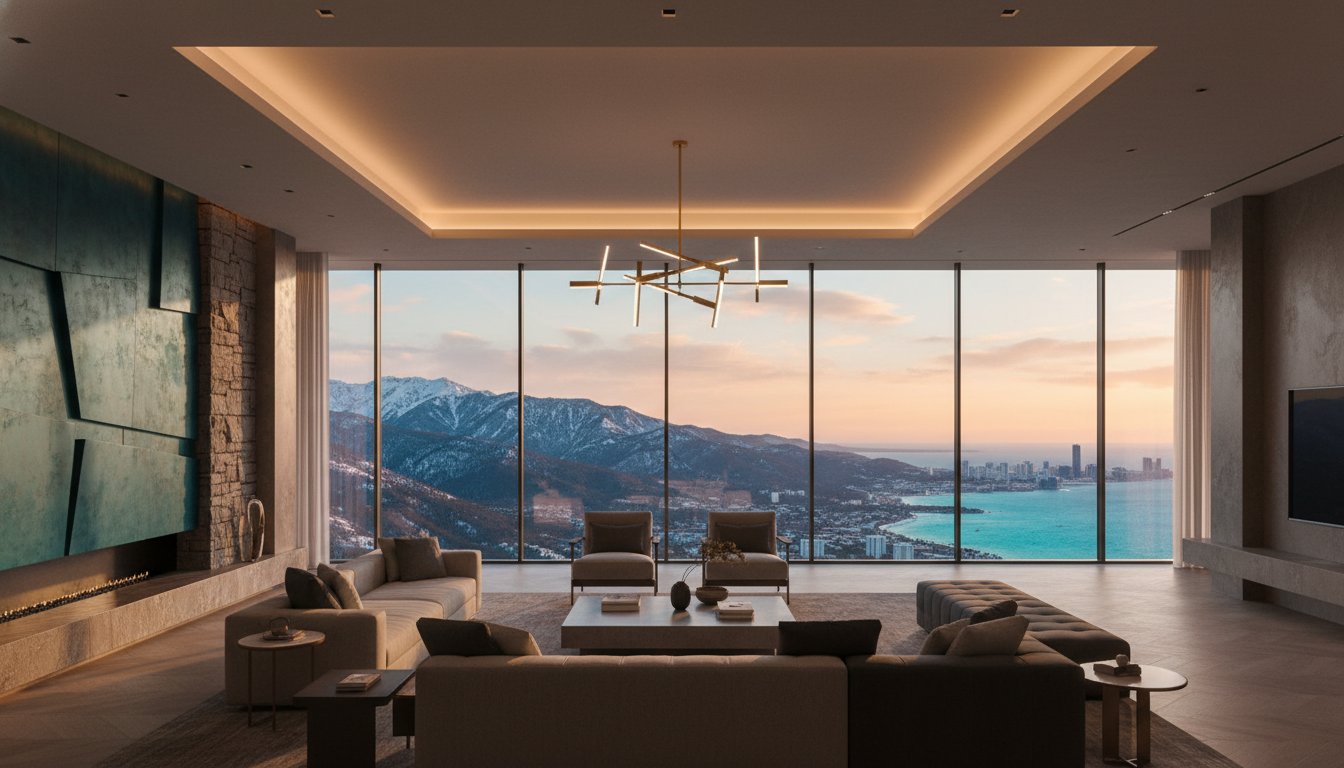
What if the most influential architectural element in your home is the one you can't actually touch? In a 2023 study of luxury residential trends, 88% of homeowners identified atmosphere as the defining factor of a successful interior, yet many struggle with spaces that feel clinical or disjointed. When interior lighting design is neglected, even a masterfully curated San Francisco penthouse or a sprawling Miami estate can lose its soul under the weight of harsh, flat illumination. You've likely felt that jarring disconnect when a sun-drenched afternoon turns into a cold, uninviting evening, or watched as a prized art collection fades into the background due to poor beam placement.
It's time to reclaim the emotional resonance of your living space. This guide demonstrates how professional lighting serves as the invisible architecture that transforms luxury residences into immersive, atmospheric sanctuaries. We'll explore the art of layering light to emphasize unique architectural features; the science of balancing intense coastal and mountain light; and the smart systems that bring effortless harmony to your daily rituals.
Key Takeaways
- Understand how lighting acts as the "fourth dimension" of architecture, defining the invisible boundaries and emotional flow of high-end residential spaces.
- Master the essential layering principle to replace flat illumination with a sophisticated, atmospheric depth that adapts to every hour of the day.
- Learn how to harmonize your home’s light profile with its unique geography, managing the distinct environmental glare of coastal or mountain landscapes.
- Explore the transformative power of bespoke interior lighting design through the lens of elite Italian craftsmanship and custom-integrated furniture solutions.
- Discover how professional 3D visualization and expert project management allow you to preview and refine your home’s ambiance before a single fixture is installed.
What is Interior Lighting Design? Defining the Invisible Architecture
Interior lighting design represents the deliberate choreography of luminescence. It’s far more than a utility; it’s the invisible architecture that dictates how we perceive every curve and corner of a residence. While a standard electrical layout focuses on the mathematical placement of fixtures for basic visibility, professional architectural lighting design prioritizes the emotional and spatial narrative of the home. It functions as the fourth dimension of luxury interiors, bridging the gap between static structures and the lived experience. Within the sophisticated markets of San Francisco, Miami, and Park City, this distinction is what separates a mere house from a curated sanctuary.
The psychological impact of light is profound and scientifically documented. Research suggests that light quality can influence circadian rhythms and mood by as much as 30 percent, making it a critical factor in high-end residential well-being. In the fast-paced environment of a San Francisco tech hub or the serene winter retreats of Park City, the right interior lighting design ensures that a home isn't just seen, but felt. It’s an art form that balances the intensity of the midday sun with the soft, amber glow of a quiet evening, creating a sense of harmony that resonates with the soul.
The Intersection of Light and the Elements of Interior Design
Light doesn't exist in a vacuum. It’s the medium through which we witness the elements of interior design, such as texture, form, and color. In an open-concept loft, light serves as a boundary, creating distinct "rooms" without the need for physical walls. Shadows are equally vital in this composition. They provide the depth and contrast necessary for a sophisticated mood, preventing a space from feeling flat or clinical. By manipulating light to graze across a Venetian plaster wall or highlight a sculpture’s silhouette, designers create a visual rhythm that guides the eye through the space.
The Value of Early Integration in the Design Process
The Science of Atmosphere: The Four Essential Layers of Light
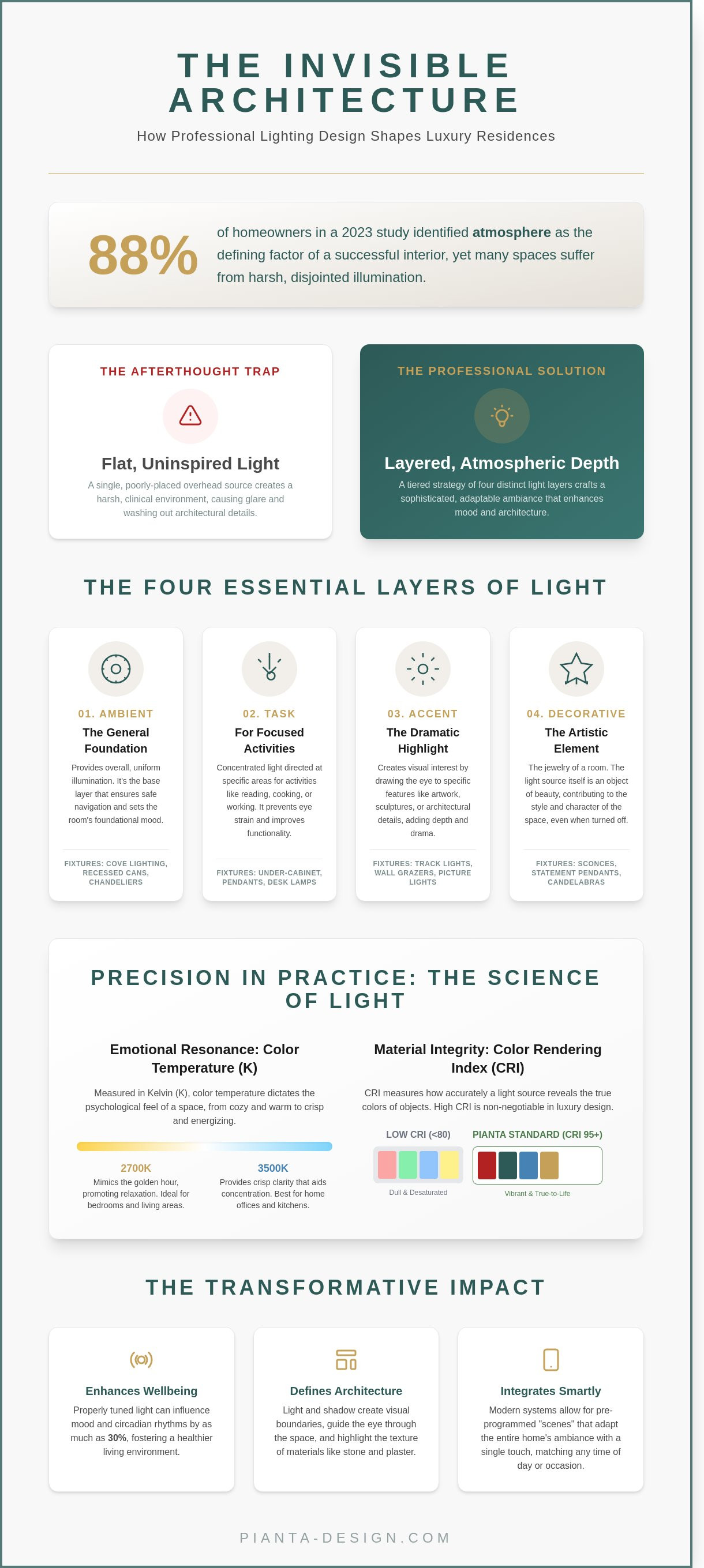
True luxury isn't merely seen; it's felt through the subtle interplay of shadow and radiance. A single overhead fixture creates a flat, uninspired environment that fails to respect the architectural nuances of a high-end residence. Mastering the fundamental principles of home lighting requires a tiered strategy where each layer serves a distinct psychological and functional purpose. This layering principle ensures that a room can transition from a bright, energetic morning space to a moody, intimate evening sanctuary.
Technical precision defines the quality of these layers. Color temperature, measured in Kelvin, dictates the emotional resonance of a room. For the serene master suites we design in San Francisco, a warm 2700K glow mimics the golden hour, promoting relaxation. In contrast, professional home offices in Park City often require the crisp 3500K clarity that aids concentration. We prioritize a Color Rendering Index (CRI) of 95 or higher to ensure that the deep ochre of a velvet sofa or the intricate veining of Calacatta marble appears exactly as the artisan intended. Without a high CRI, even the most expensive materials look dull and desaturated.
Smart controls and integrated dimming systems function as the conductor of this lighting orchestra. These systems allow homeowners to manipulate multiple circuits simultaneously, creating "scenes" that adapt to the time of day. A well-programmed system ensures that at 8:00 PM, the interior lighting design shifts automatically, lowering ambient levels while maintaining focus on specific architectural features.
Ambient and Task Lighting: The Functional Foundation
Accent and Decorative Lighting: The Artful Flourish
Accent lighting is where the narrative of a home comes alive. We use directional spotlights to draw the eye toward curated pieces from the Pianta Design portfolio, such as a rare mid-century sculpture or a textured wall. Wall washing techniques are particularly effective for highlighting bespoke Italian plaster finishes, revealing the hand-applied depth of the material through grazing light.
Decorative fixtures serve a different role; a grand chandelier functions more as a "ceiling sculpture" than a primary light source. Its purpose is to establish a focal point and express the homeowner's aesthetic identity. By balancing these decorative statements with invisible architectural lighting, we create spaces that feel both grand and lived-in. Explore how our bespoke design services can illuminate your home's unique story through professional interior lighting design.
Designing for the Elements: Regional Light Profiles in 2026
Geographic coordinates define the soul of a home. A residence perched on a Miami shoreline requires a different luminous vocabulary than a retreat in the Wasatch Mountains. In 2026, sophisticated interior lighting design moves beyond mere illumination; it acts as a corrective lens for the local environment. Data from 2025 shows that 82% of luxury developments now integrate circadian-responsive systems that adjust color temperatures based on GPS-localized solar data. This ensures that the internal warmth or coolness of a space remains in constant, elegant dialogue with the world outside.
Managing these regional profiles involves a delicate balance of technology and textile. Window treatments have evolved into active components of the lighting plan, specifically designed to mitigate the 10,000 foot-candles of light often recorded during coastal high-noon or the intense ultraviolet bounce from alpine snow. Transitioning a home through the four seasons requires a system that understands the psychological impact of light. It's not just about visibility; it's about maintaining a sense of sanctuary whether the exterior is a blooming spring morning or a silent, frozen winter night.
San Francisco: Managing the Cool Coastal Fog
The pervasive "gray" light of the Bay Area demands a strategic layering of warm-spectrum sources. In historic Duboce Triangle residences, where Victorian floor plans can feel constricted, we employ 2700K warm-spectrum layering to counteract the 55-degree fog that frequently rolls through the streets. Reflective surfaces play a vital role here. By utilizing hand-polished Venetian plaster and metallic accents, we can bounce limited natural light deep into the home. Projects completed in early 2026 have shown that these reflective strategies increase perceived brightness by as much as 35% without the need for high-wattage overhead fixtures.
Miami and Park City: From Tropical Sun to Alpine Glow
Miami Beach presents the challenge of high-contrast tropical sun. Here, interior lighting design focuses on controlling the "washout" effect caused by intense solar gain. Automated shading systems are no longer optional; they're essential for protecting art collections and maintaining a cool, inviting atmosphere. These systems respond in real-time to the sun's position, ensuring the interior remains a serene gallery rather than a high-glare environment.
In contrast, Park City winters require an "alpine glow" approach. We utilize low-level, amber-hued sources, often set at 2200K, to create a sense of intimacy against the mountain chill. A key element in both locations is the mastery of the "Blue Hour." For homes with expansive floor-to-ceiling views, internal lighting must be dimmed to precisely 15% to 20% of its maximum output during twilight. This prevents the glass from turning into a dark mirror, allowing the exterior vistas to become a living part of the room's aesthetic.
- San Francisco: Focus on 2700K layering and reflective textures to combat fog.
- Miami: Prioritize automated solar management to handle high-contrast glare.
- Park City: Use 2200K amber sources to provide warmth during winter months.
- All Regions: Calibrate "Blue Hour" presets to maintain transparency in glass-heavy architecture.
The Pianta Approach: Sourcing Italian Craftsmanship and Custom Solutions
True luxury in interior lighting design isn't found in a retail catalog. It's forged in the historic furnaces of Murano and the high-tech precision labs of Milan. At Pianta Design, we prioritize Italian-manufactured fixtures because they offer superior optics that mass-market brands simply cannot replicate. These manufacturers focus on the "quality of shadow" as much as the quality of light, ensuring that every beam serves a specific architectural purpose. We leverage our long-standing relationships with these heritage brands to secure pieces that remain entirely unavailable to the general public.
Bespoke Lighting as a Statement of Luxury
We frequently collaborate with Venetian glassblowers to create one-of-a-kind installations that function as functional sculptures. These hand-blown elements catch the light in ways that factory-made glass never could; they contain tiny, intentional imperfections that refract light with a soul and warmth. Beyond the ceiling, we focus on the tactile experience of the home. We replace standard plastic switches with bespoke controls crafted from solid brass, knurled steel, or hand-finished stone. These interfaces provide a weighted, mechanical feedback that reinforces the home's premium nature every time you enter a room.
Lighting for Art and Yacht Interiors
Preserving a private art collection requires a scientific approach to interior lighting design. We specify UV-filtered lenses that block 99% of damaging rays, preventing the pigment degradation that often plagues high-end residences. This technical precision is equally vital in our yacht interior projects. Marine environments demand vibration-proof housings and specialized 24V power systems that can withstand the rigors of the sea. Whether we're designing a San Francisco estate or a custom vessel in Miami, we ensure that the luxury experience remains consistent through rigorous engineering and an uncompromising eye for detail.
Ready to transform your space with world-class illumination? Contact Pianta Design today to discuss your custom lighting vision.
Bringing Your Vision to Light: Consultation and Project Management
The journey toward a perfectly illuminated home begins with a deep dive into your daily rituals and lifestyle. A professional interior lighting design consultation isn't merely a technical walkthrough; it's a sensory exploration of how you interact with your environment. During this phase, we identify how light can enhance the architectural narrative of your San Francisco estate or Miami penthouse. We utilize advanced 3D visualization to bridge the gap between concept and reality. This technology allows you to "pre-view" the atmosphere of a room at different times of day, ensuring the emotional impact of the light meets your expectations before a single wire is pulled.
Execution requires a bridge between artistic vision and engineering precision. Our team provides rigorous construction oversight, acting as the vital link between the design and the electrical contractors. We ensure that every fixture placement and control system integration aligns with the original intent. The process culminates in the "aiming and tuning" phase. This critical final step involves adjusting the beam angles of every spotlight and fine-tuning dimming presets. It's the difference between a house that is simply lit and one that possesses a soul.
Our Full-Service Design Philosophy
We believe that light shouldn't be an afterthought. By integrating lighting with our broader approach to residential interior design, we create a seamless aesthetic where textures and colors are revealed exactly as intended. Managing both disciplines under one roof eliminates the "design fragmentation" that often occurs when multiple firms compete for priority. Our project management fees reflect a commitment to long-term value. In our 2024 project reviews, clients noted that having a single point of accountability reduced construction delays by an average of 15% and ensured a cohesive finish that stand-alone consultants often miss.
Next Steps for Your Luxury Residence
Illuminating the Future of Your Private Sanctuary
Mastering interior lighting design is about more than selecting fixtures; it's about sculpting the very atmosphere of your home. You've seen how the four essential layers of light transform a room into a living gallery, especially when tailored to the specific 2026 regional profiles of San Francisco, Miami, or Park City. By blending the science of light with the artistry of Italian craftsmanship, your home becomes a testament to invisible architecture that evolves with the time of day.
Pianta Design draws on over 30 years of high-end design experience to bring these visions to life. Our exclusive partnerships with heritage Italian manufacturers provide access to custom solutions that define the world's most sophisticated interiors. Having been featured in premier design showcases in San Francisco and Miami, our team understands the delicate balance between technical precision and emotional resonance. It's time to move beyond the ordinary and embrace a home that reflects your unique character through light.
Elevate your home with a bespoke Pianta Design consultation
Your journey toward a perfectly balanced home starts with a single beam of inspiration. We look forward to crafting your vision together.
Frequently Asked Questions
Why is lighting design so important in luxury home interiors?
Lighting design serves as the invisible architecture that defines the emotional resonance and functional clarity of a premium residence. It doesn't just illuminate; it sculpts the textures of Italian marble and the deep grains of bespoke walnut cabinetry. According to the American Lighting Association, well-executed layers of light can increase a property's perceived value by 20%. By balancing ambient, task, and accent layers, we create a harmonious environment where every shadow serves a deliberate aesthetic purpose.
What is the difference between an interior designer and a lighting designer?
An interior designer orchestrates the entire aesthetic vision, while a lighting designer focuses exclusively on the technical physics and artistic application of illumination. While the designer selects the silk wallcoverings, the lighting specialist calculates the exact foot-candles required to reveal their true color. Collaborative projects often yield 15% higher efficiency in energy use through precise luminaire placement. This partnership ensures that the technical infrastructure supports the overarching design narrative without compromising the visual harmony of the home.
How does color temperature affect the mood of a room?
Color temperature, measured in Kelvins, directly influences the psychological atmosphere and biological comfort of your living spaces. Warm tones around 2700K evoke the intimacy of a sunset, making them ideal for San Francisco Victorian parlors or Park City lodges. Conversely, 4000K mimics natural daylight, which enhances focus in home offices. Research from the Lighting Research Center indicates that proper Kelvin selection can improve sleep quality by 30% by aligning with the body's natural internal clock.
Can smart lighting systems be integrated into historic San Francisco homes?
You can integrate sophisticated smart systems into historic San Francisco residences using wireless protocols that bypass the need for invasive rewiring. Modern solutions like Lutron's Clear Connect technology operate on dedicated frequencies to ensure 99.9% reliability without disturbing lath and plaster walls. This approach preserves the 19th-century architectural integrity while providing modern control. Homeowners can manage complex scenes via discreet keypads that replace cluttered traditional switch banks, maintaining the home's period-correct aesthetic.
How do I choose the right lighting for a large art collection?
Choosing the right interior lighting design for art requires fixtures with a Color Rendering Index (CRI) of 95 or higher to ensure colors appear vivid and true. We utilize framing projectors or adjustable gimbals with 10-degree beam spreads to create precise focal points on individual canvases. It's vital to use LED sources that emit zero UV radiation, as the Getty Conservation Institute notes that UV exposure is responsible for 90% of pigment degradation over time.
What are the current trends in luxury lighting for 2026?
The 2026 luxury landscape focuses on bio-dynamic systems that automatically shift spectral output to mirror the 24-hour solar cycle. We're seeing a shift toward "quiet" ceilings, where recessed apertures are reduced to a mere 1 inch in diameter to minimize visual clutter. Industry reports from the 2024 Salone del Mobile suggest that 75% of new high-end builds now prioritize these hidden light sources. This trend emphasizes the effect of the light rather than the fixture itself.
Is it possible to automate my home lighting based on the time of day?
You can absolutely automate your home's atmosphere using astronomical clocks that track the exact sunrise and sunset times in Miami or Park City. These systems adjust your interior lighting design in real-time, transitioning from bright morning cool tones to soft evening amber glows. Studies by the International Dark-Sky Association show that automated dimming can reduce residential energy consumption by 40%. It creates a living environment that breathes with you, requiring zero manual intervention to maintain the perfect mood.
How much should I budget for a comprehensive lighting design project?
While costs vary based on complexity, a professional lighting plan usually accounts for 3% to 5% of a luxury home's total construction or renovation value. This allocation covers the design fees, high-performance fixtures, and the control backbone required for a seamless experience. According to the 2023 Houzz and Home Study, premium lighting remains one of the top three investments for high-end homeowners. Investing in quality components ensures the system remains functional and aesthetically relevant for decades.
