
Interior Design for Victorian Homes in San Francisco: The 2026 Luxury Guide
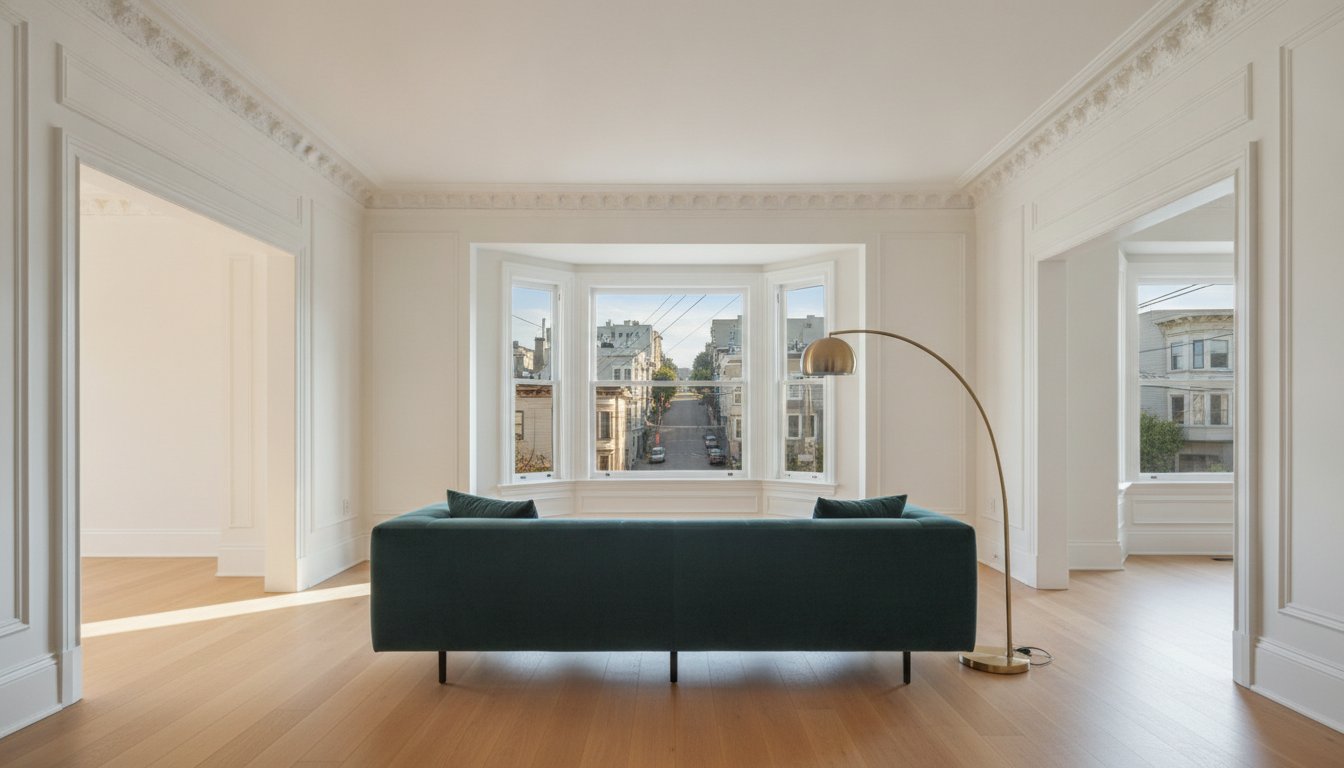
A true San Francisco Victorian shouldn't be a museum piece. It should be a living testament to how 1880s grandeur can dance with the sharp, clean lines of modern Milanese craft. Achieving the perfect interior design for victorian homes san francisco requires more than just an eye for color; it demands a deep respect for architectural heritage paired with a sophisticated understanding of 21st-century luxury. You likely fell in love with the ornate crown molding and the undeniable soul of your residence, yet you've realized that the dark, fragmented floor plans of the past don't always serve the way we live today.
It's understandable to feel overwhelmed by the 2026 seismic requirements and the intricate electrification mandates that now define high-end renovations in the city. This guide promises to help you master that delicate balance, offering a roadmap to transform your historic property into a functional masterpiece. You'll learn how to navigate complex urban logistics and gain access to exclusive, non-retail Italian furnishings that elevate a home beyond the ordinary. We'll preview the essential steps for blending 19th-century detail with modern Italian elegance, ensuring your renovation is as seamless as it is breathtaking.
Key Takeaways
- Discover how to transform fragmented 1880s floor plans into fluid, light-filled environments that honor their historic origins while serving modern lifestyles.
- Learn how to integrate world-class Italian craftsmanship and bespoke finishes to elevate the interior design for victorian homes san francisco to a level of timeless luxury.
- Master the navigation of San Francisco’s complex 2026 seismic regulations and electrification mandates through expert interior architecture and planning.
- Understand the strategic role of professional oversight in managing international logistics and the precise installation of exclusive, non-retail furnishings.
- Identify the design principles that ensure your renovation serves as both a sophisticated personal sanctuary and a high-value real estate investment.
The San Francisco Victorian Home: A 2026 Vision for Modern Luxury
In 2026, the San Francisco luxury market has moved beyond the simple preservation of the past. A modernized Victorian isn't a museum; it's a curated experience where the intricate details of Victorian architectural styles serve as a majestic backdrop for contemporary life. High-end buyers in neighborhoods like Pacific Heights or Noe Valley no longer settle for drafty rooms and dark, fragmented hallways. They seek a seamless integration of 19th-century soul and 21st-century Italian precision. This sophisticated dialogue between eras defines the current state of interior design for victorian homes san francisco.
The primary challenge of these vertical, narrow structures remains the lack of natural illumination. Historic floor plans often feel restrictive, trapping shadows in the center of the home. By opening sightlines and utilizing reflective, high-end materials, we pull the soft Bay Area light deep into the residence's core. A professional residential interior design firm understands these local nuances, balancing the strict Planning Department regulations with the homeowner's desire for an airy, expansive atmosphere that honors the building's legacy.
The Aesthetic Evolution of the Bay Area Home
We've moved past the era of "shabby chic" and cluttered ornamentation. The 2026 aesthetic favors a lean, timeless sophistication that emphasizes organic textures. Imagine the tactile contrast of raw linen against smooth Venetian plaster, or the way a contemporary Italian marble island anchors a room framed by rigid, historic crown moldings. In a city of iconic facades, the interior must be a one-of-a-kind sanctuary. It's about creating a home that feels both grounded in San Francisco's history and aligned with a global, modern sensibility.
Why Interior Design Must Precede Construction
Attempting a "construction-first" approach in a complex Victorian layout is a recipe for aesthetic and financial friction. Because these 1880s builds possess unique structural quirks, the vision must be fully realized before the first wall is moved. Conceptual mood boards and detailed 3D visualizations are essential tools. They allow you to see how light interacts with new openings and how custom Italian cabinetry fits within historic alcoves. This level of foresight prevents costly mid-build changes and ensures that the interior design for victorian homes san francisco maintains a cohesive narrative from the initial sketch to the final, polished finish.
- Strategic space planning overcomes the limitations of narrow, vertical architecture.
- Advanced visualizations ensure the harmony of old-world charm and modern functionality.
- Professional coordination manages the intersection of seismic safety and aesthetic excellence.
Interior Architecture: Reimagining the Victorian Floor Plan for Flow and Light
The traditional 1880s floor plan was a labyrinth of specialized parlors, designed for a social etiquette that has long since faded. Today, modern luxury demands a fluid connectivity that these segmented spaces don't naturally provide. Successful interior design for victorian homes san francisco requires a surgical approach to the "choppy room" problem. We don't simply remove walls. We relocate them to create a sophisticated dialogue between the kitchen and the living spaces, allowing for a contemporary "Great Room" concept that still feels grounded in the home's historic proportions.
This structural reimagining often intersects with San Francisco’s rigorous 2026 seismic retrofitting requirements. When reinforcing the home’s skeleton to meet current safety standards, we find unique opportunities to treat staircases as sculptural design elements. By using glass, refined metalwork, or open-riser timber, the staircase becomes more than a utility; it's a conduit for light, pulling brightness through the vertical axis of the building and into previously shadowed corridors.
Strategic Space Planning for Historic Homes
Transforming a vertical Victorian requires a three-step architectural strategy. First, we identify load-bearing historic details, such as original plasterwork or ornate medallions, that must remain undisturbed to preserve the home's soul. Second, we create sightlines that align with existing window placements to maximize the soft, ambient light of the Bay Area. Finally, we repurpose "dead spaces," like the notoriously narrow Victorian hallways, into functional luxury zones such as bespoke wine galleries or intimate library nooks that add depth to the daily living experience.
The Role of Interior Architecture vs. Decoration
True transformation happens at the intersection of interior architecture and technical precision. While decoration focuses on the final layers of textiles and art, interior architecture involves drafting plans that respect original 19th-century proportions while introducing 21st-century functionality. We use custom millwork and intricate ceiling treatments to define functional zones without the need for physical barriers. This ensures the home feels expansive yet intimate, maintaining a sense of order and calm. If you're ready to redefine your home's potential, exploring professional space planning is the first step toward a legacy-worthy interior that balances heritage with modern ease.
- Opening parlor walls creates a modern flow without sacrificing historic character.
- Sculptural staircases serve as vertical light wells in narrow structures.
- Interior architecture defines spaces through millwork rather than restrictive walls.
Materiality and Finish Selection: Sourcing Authentic Italian Craftsmanship
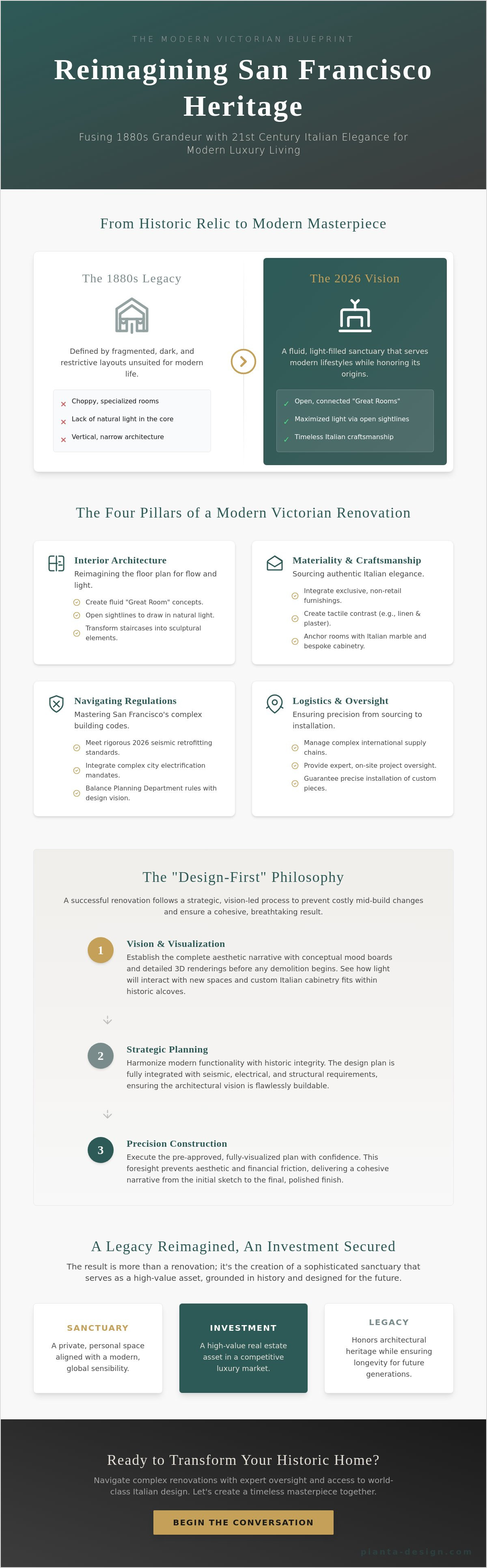
Italian manufacturers are the gold standard for interior design for victorian homes san francisco because they share a common language of permanence with 19th-century architecture. While the exterior facade represents the city's historic identity, the interior finishes must represent the pinnacle of modern durability and aesthetic grace. By pairing the rough-hewn, original redwood often found in these structures with polished European stones like Calacatta marble or textured travertines, we create a tactile environment that feels both grounded and ethereal. This juxtaposition doesn't just modernize a space; it ennobles it.
Accessing these materials requires moving beyond the local retail landscape. Professional designers utilize procurement commissions to source exclusive, non-retail luxury materials directly from Italian workshops. This ensures that every slab of stone or hand-applied finish is unique to your residence. Tactile luxury is paramount. We select finishes that age as gracefully as the home itself, developing a rich patina that tells a story of quality rather than wear. It's about choosing materials that feel as good as they look, ensuring the home remains a sensory sanctuary for decades.
Custom Furniture as an Architectural Anchor
Off-the-shelf furniture often feels diminutive or out of place beneath 12-foot ceilings and amidst ornate fireplaces. Creating custom furniture allows us to design pieces that act as architectural anchors, perfectly scaled to the home's unique proportions. We collaborate directly with Italian artisans to craft bespoke solutions, from oversized velvet sofas that command a parlor to minimalist dining tables that bridge the gap between historic millwork and modern living. These pieces are designed to fit the room's specific geometry, ensuring that luxury and comfort are never compromised by the building's original footprint.
Lighting Design: The Invisible Renovation Tool
Lighting is the most transformative element in a "long and narrow" Victorian footprint. We combat the lack of natural center-room light by layering illumination across different heights and intensities. Modern, high-end fixtures are integrated into historic plaster medallions, creating a striking visual contrast that celebrates both eras. Strategic lighting doesn't just illuminate; it highlights art collections and defines the transitions between the home's historic shell and its new, modern heart. It's an essential component for any successful project involving interior design for victorian homes san francisco, turning potentially dark corridors into brilliant galleries.
- Direct Italian sourcing provides access to materials unavailable in the retail market.
- Juxtaposing historic wood with polished stone creates a sophisticated, layered aesthetic.
- Bespoke furniture ensures every piece is scaled to the grand proportions of a Victorian home.
- Layered lighting design solves the inherent "dark core" problem of 19th-century layouts.
Logistics and Oversight: Navigating the San Francisco Renovation Lifecycle
Executing a sophisticated vision within the narrow, vertical confines of a 19th-century residence requires more than creative intuition. It demands a mastery of urban logistics and a deep understanding of the San Francisco Planning Department's evolving landscape. In 2026, the city's commitment to historic preservation has intensified, with a major initiative underway to designate thousands of new landmarks by 2030. For homeowners, this means that interior design for victorian homes san francisco is no longer just about aesthetics; it's about navigating a complex regulatory maze while maintaining the integrity of a high-end design narrative.
The designer serves as the central conduit between the client's aspirations and the technical realities of the site. With permit wait times often stretching between four and eight weeks, and the 2026 San Francisco Code Amendments requiring strict adherence to new energy and seismic standards, proactive coordination is vital. We don't just select finishes. We advocate for the design's survival on-site, ensuring that the installation of delicate Italian-sourced materials meets the exact specifications required for a legacy-level finish. This "White Glove" oversight is what prevents the unique architectural soul of a Pacific Heights or Haight-Ashbury home from being compromised by field-condition compromises.
The Value of Professional Project Management
A successful renovation is a multi-disciplinary symphony. We coordinate daily between architects, general contractors, and specialist artisans to mitigate the notorious "SF Delay." By establishing a clear technical framework early, we ensure that the 15 to 20 percent contingency budget typically recommended for Victorian projects is used strategically rather than reactively. Our presence on-site ensures that the original 1880s proportions are respected even as we integrate 21st-century infrastructure, keeping the project timeline intact and the aesthetic vision unclouded.
Procurement and International Logistics
The journey of a custom piece from a boutique Italian factory to a San Francisco parlor is a high-stakes logistical feat. Managing international shipping, customs, and the final white-glove installation requires a level of oversight that retail-focused firms simply cannot provide. We handle every detail of the procurement process, ensuring that exclusive, non-retail finishes arrive safely and are installed by craftsmen who understand the nuances of European materials. If you are ready to begin this journey with a partner who values precision as much as poetry, we invite you to explore our comprehensive interior architecture services today.
- Expert navigation of the SF Planning Department and 2026 building code amendments.
- Rigorous on-site quality control ensures Italian materials are installed to museum-grade standards.
- Strategic project management minimizes delays and protects the project's financial contingency.
- End-to-end international procurement manages everything from Tuscan workshops to final placement.
The Pianta Perspective: Designing for Longevity, Legacy, and Investment
A residence of this caliber is more than a sanctuary; it's a significant financial asset that requires a long-term vision. In the high-stakes world of San Francisco real estate, where the median home sale price remains robust at approximately $1.3M to $1.4M, the quality of your interior environment directly dictates your property's future value. We approach interior design for victorian homes san francisco as a legacy project. By prioritizing timeless sophistication over fleeting trends, we ensure that your home remains relevant and breathtaking for decades. Data shows that bathroom remodels in the city offer a staggering ROI of 70 to 90 percent, while kitchen renovations recoup up to 80 percent of their cost. Investing in premium Italian materials and expert space planning isn't just an aesthetic choice; it's a strategic move to solidify your home's standing in a competitive market.
The final layer of a truly curated home is the art. Our art consultation services help you navigate the transition from a house to a personal gallery, selecting pieces that dialogue with both the historic architecture and your modern furnishings. We believe that the environment's quality has a direct impact on your daily well-being. Choosing between various interior design firms can be daunting, but our 30-year legacy provides the stability and depth of knowledge required to handle the unique challenges of San Francisco’s historic housing stock.
Creating a Timeless Modern Victorian
Our philosophy centers on the belief that a home should feel both brand new and deeply rooted. We blend global influences, from Milanese minimalism to Parisian textures, with the specific heritage of the Bay Area. This balance prevents the "museum effect," allowing your 19th-century home to breathe with a modern sensibility. We don't just decorate rooms; we craft environments that reflect a lifetime of travel and refined taste, ensuring your interior design for victorian homes san francisco stands as a testament to enduring quality.
The Pianta Design Consultation
The journey begins with a deep immersion into your lifestyle and the home's potential. During the initial concept and space planning phase, we leverage our three decades of experience to identify opportunities that others might miss. We navigate the 2026 building codes and electrification mandates with ease, ensuring your project is technically sound and aesthetically sublime from day one. If you're ready to create a home that transcends the ordinary, we invite you to begin your transformation with Pianta Design and experience the intersection of art and architecture.
- Strategic renovations in San Francisco deliver some of the highest ROI in the country.
- A 30-year design legacy ensures your historic project is managed with expert hands.
- Art consultation provides the final, personal layer of a luxury interior.
- Timeless design principles protect your investment against shifting market trends.
Your Vision, Refined and Realized
Modernizing a Victorian home in San Francisco is a journey of deep respect for the past and bold anticipation for the future. We've explored how reimagining floor plans for light and sourcing exclusive Italian materials can transform a fragmented 19th-century build into a fluid, contemporary masterpiece. By navigating the complexities of 2026 seismic codes and procurement logistics, you ensure that your home remains a high-value investment and a personal sanctuary. The balance of historic preservation and 21st-century functionality is not just a renovation goal; it's the creation of a lasting legacy.
Achieving the perfect interior design for victorian homes san francisco requires a partner who understands that every detail is a choice between the ordinary and the exceptional. With over 30 years of high-end residential experience and exclusive partnerships with Italian luxury manufacturers, Pianta Design provides full-service management from the first concept to the final white-glove installation. Let's create an environment that reflects your unique narrative and global perspective. It's time to Begin your transformation with Pianta Design and step into a home designed for a lifetime of beauty. Your home’s next chapter starts with a single, inspired step toward excellence.
Frequently Asked Questions
How much does a luxury Victorian renovation in San Francisco typically cost?
High-end renovations for Victorian properties in San Francisco typically fall between $150 and $500 per square foot, depending on the complexity of structural and seismic work. Kitchen transformations often range from $75,000 to over $250,000, while primary bathrooms can reach $100,000. These figures reflect the premium labor and materials required to navigate the city's unique building codes and the intricate preservation of historic details.
How long does it take to get permits for a Victorian renovation in SF?
Most homeowners should expect a permit wait time of four to eight weeks for standard interior modifications. However, major structural changes or projects involving historic landmark status can extend this timeline significantly. Proactive coordination with the San Francisco Planning Department is essential to keep the project on schedule. We manage this process to ensure all submittals comply with the 2026 building code amendments from the start.
Can I modernize the back of my Victorian while keeping the front historic?
Yes, this "split personality" approach is a popular strategy for interior design for victorian homes san francisco. The city's Planning Department often requires the street-facing facade to remain historically accurate, but allows for significant modern glass expansions and open-concept layouts at the rear. This creates a striking transition from a formal 19th-century entrance to a light-filled, 21st-century living space that connects seamlessly with the garden or terrace.
Do I need an interior architect or just a decorator for my renovation?
A renovation involving structural changes, such as moving walls or reimagining floor plans, requires an interior architect rather than just a decorator. While a decorator focuses on surface aesthetics like paint and furniture, an interior architect handles the technical space planning, lighting design, and multidisciplinary coordination with general contractors. This level of oversight is critical for ensuring the home's historic shell safely supports modern luxury amenities and infrastructure.
How do I incorporate smart home technology into a historic Victorian structure?
Integrating smart technology into a Victorian requires a discreet, "invisible" approach to preserve the architectural integrity. We utilize wireless control systems and hidden recessed speakers to avoid disturbing original plasterwork or ornate crown moldings. Automated window treatments can be concealed within custom valances, and smart lighting panels can be tucked away in cabinetry. This allows for modern convenience without compromising the home's 19th-century soul or visual harmony.
What are the best materials for a modern Victorian kitchen?
The most successful kitchens pair traditional textures with high-performance modern finishes. We often recommend Calacatta marble or honed quartzite for countertops, as these materials provide a timeless European elegance. These stones look beautiful against custom-milled cabinetry and original redwood floors. Integrating professional-grade induction cooktops and integrated Italian appliances ensures the space meets the 2026 electrification mandates while maintaining a sophisticated, clean-lined aesthetic that honors the home's heritage.
How does Pianta Design handle the sourcing of Italian furniture for SF projects?
Our firm manages the entire international procurement process through exclusive partnerships with luxury Italian manufacturers. We source non-retail pieces directly from workshops in Italy, handling the technical specifications, international shipping, and customs clearance. This ensures that every piece of furniture is perfectly scaled to your home's unique proportions. Our "white-glove" installation team then manages the final placement, ensuring that these bespoke items are integrated flawlessly into your San Francisco residence.
Is it possible to add a basement or ADU to a San Francisco Victorian?
Adding a basement or an Accessory Dwelling Unit (ADU) is a viable way to increase both living space and property value. In San Francisco, a typical 500 to 700 square foot ADU costs between $200,000 and $350,000 to construct. These additions require careful seismic planning and adherence to strict local regulations. They offer a unique opportunity to create a modern guest suite or rental unit while preserving the historic character of the main residence.
