
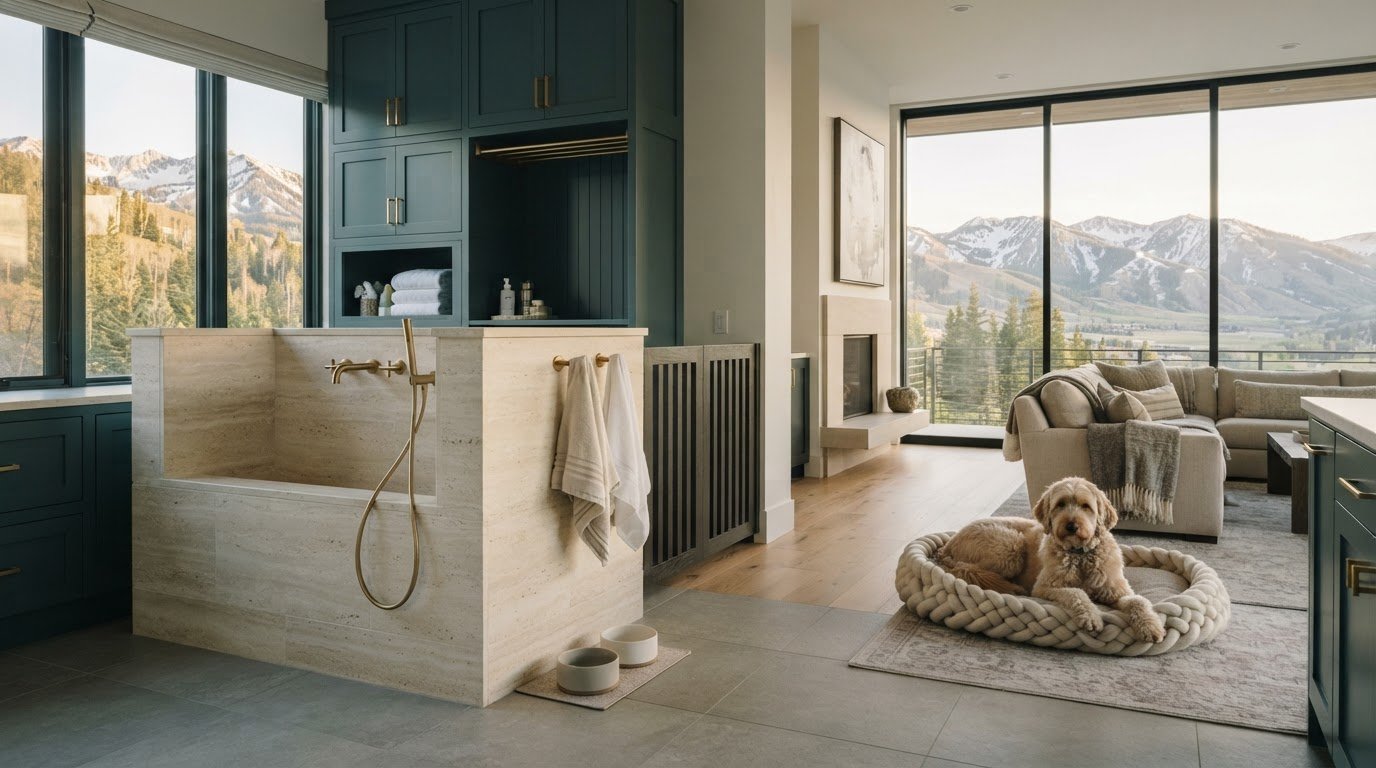
A beautiful home needn’t make pets feel like an afterthought. Designing for pets in a luxury home means planning practical features from the start, including a dedicated washing area, resilient flooring, discreet storage, coordinated accessories, and gates that complement the architecture. The result can feel cohesive and considered while supporting the routines you share with your pet.
It’s natural to want materials and details that stand up to everyday life without compromising your home’s character. This guide covers pet-washing stations, flooring, storage, beds and bowls, and built-in barriers, with ideas for fitting each into mudrooms, kitchens, living areas, and other key spaces. You’ll find ways to balance easy cleaning, thoughtful organization, and a refined visual language, so pet-friendly features feel integrated rather than added on.
Key Takeaways
- Plan a pet washing area around your home’s daily routines, with practical surfaces and storage for towels and grooming essentials.
- Compare flooring by its resistance to scratches, moisture, and everyday cleaning needs, while considering the look you want to preserve.
- Give food, leashes, toys, and care supplies designated storage so pet essentials stay accessible without creating visual clutter.
- Choose beds, bowls, and artwork that feel at home within your interior’s palette, materials, and proportions.
- Use built-in gates to guide movement between rooms while complementing the home’s architectural details.
1. Dog washing stations with raised basins and retractable shower heads
A thoughtfully placed wash station makes muddy paws easier to manage. In a mudroom, laundry area, or primary bathroom, a raised basin can bring a dog closer to a comfortable working height. A handheld or retractable shower head helps direct water around the coat, while a tiled surround contains splashes. Add slip-resistant flooring and practical drainage to make the bathing area easier to use and clean.
Plan the details around the dog and the people using the station. A deep basin suits larger dogs, while a lower step or pull-out ramp can help smaller or less mobile pets get in. Position controls within easy reach, with hooks nearby for leashes and towels. Tile across the floor and wash-area walls defines the wet zone, and a handheld sprayer offers more control than a fixed overhead shower. Store grooming tools in a nearby drawer or cabinet rather than on a ledge where they could fall.
A feeding area can share the mudroom or kitchen without making bowls the room’s visual focus. Set a built-in station into cabinetry, with a pull-out drawer that holds bowls at a convenient height. Choose a wipeable surface and leave enough clearance for pets to eat comfortably. In a kitchen island, a slide-out bowl drawer can be tucked away between meals, while a nearby faucet makes refilling water bowls simpler.
Give food storage its own place. A dedicated cabinet, pantry section, or sealed pull-out bin keeps kibble and treats organized with leashes, grooming supplies, and food scoops. Dividers can separate daily essentials from spare towels, while closed cabinetry keeps supplies out of sight. Consider the route from storage to bowls: a short, uncluttered path makes feeding easier for everyone at home.
What building codes or HOA rules affect pet doors, fencing, and renovations? Requirements vary by property and location, so review local building requirements and HOA or condominium documents before changing exterior doors, fences, plumbing, or shared elements. Account for these constraints in the design plan before choosing a pet door or wash-station location.
How much does a custom dog wash station or pet spa cost? The cost depends on the project’s scope and selections, including plumbing, drainage, waterproofing, basin type, tile, cabinetry, and finishes. A utility-sink arrangement involves different design choices from a fully integrated tiled shower.
How can smart home technology improve pet comfort and safety? A motorized pet door can let owners monitor comings and goings remotely, while a microchip-activated electronic door can help keep unwanted animals out. Integrate these choices with the wash and feeding stations so technology supports household routines without disrupting the finish.
There is no single set price. Cost depends on the project’s scope and selections.
2. Scratch- and water-resistant flooring
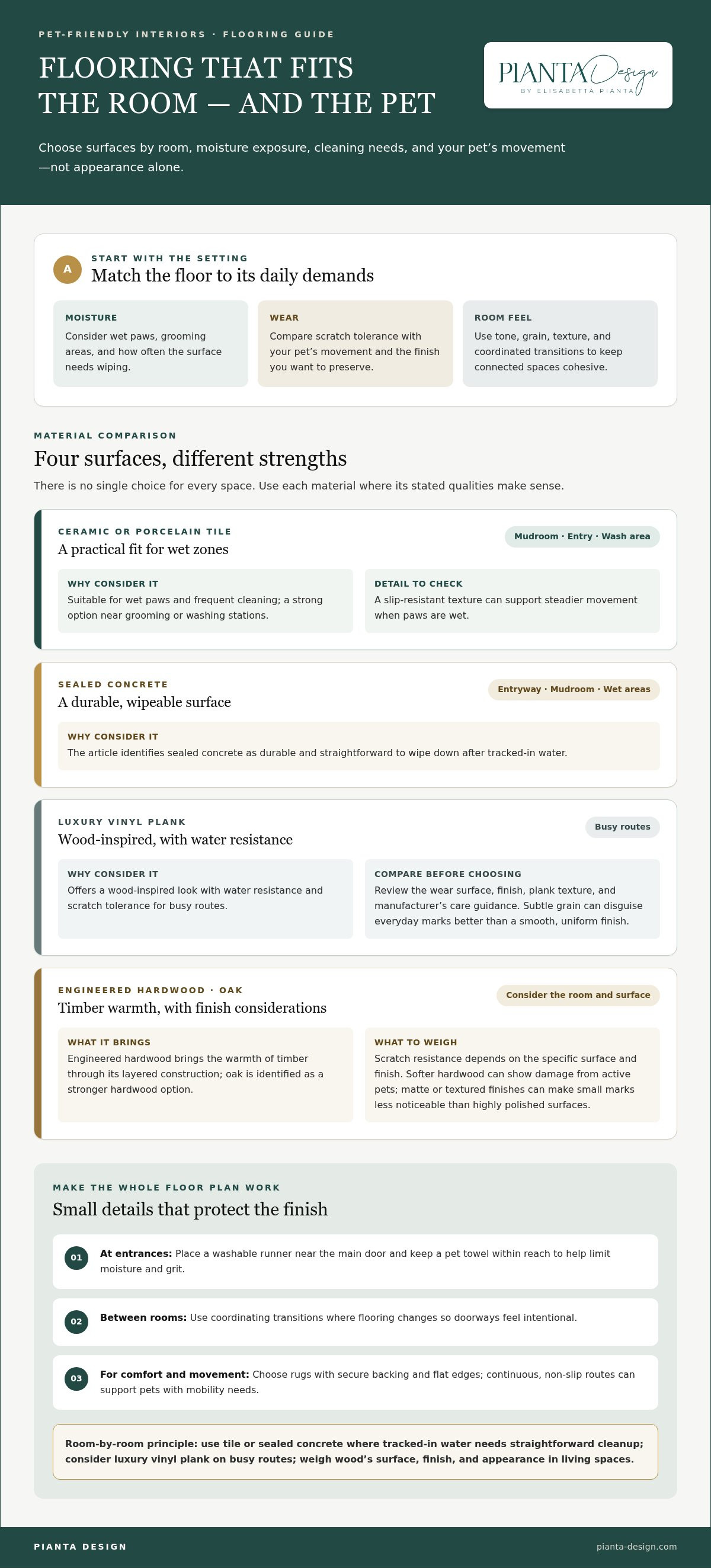
Choose flooring based on the room, moisture exposure, and your pet’s movement, not appearance alone. Ceramic or porcelain tile suits a mudroom with wet paws and frequent cleaning. In a living room, compare scratch tolerance with the wood tone and grain. This room-by-room approach gives each surface a clear purpose while keeping the home visually cohesive.
Luxury vinyl plank offers a wood-inspired look with water resistance and scratch tolerance, making it worth considering for busy routes. Compare the wear surface, finish, and plank texture, and review the manufacturer’s care guidance before selecting it. Subtle grain can disguise everyday marks better than a smooth, uniform finish. Use coordinating transitions where flooring changes, so doorways between the kitchen, mudroom, and living areas feel intentional.
Engineered hardwood brings the warmth of timber through its layered construction, while oak offers a stronger hardwood option. Scratch resistance depends on the specific surface and finish, so consider the material’s hardness rating as part of your selection. Softer hardwood can show damage from active pets, affecting its appearance and potentially increasing maintenance over time. A matte or textured finish can make small marks less noticeable than a highly polished surface.
Tile is a strong option for entryways, mudrooms, and areas near grooming or washing stations. Ceramic and porcelain are both suitable, and sealed concrete offers another durable surface. Consider how the finish feels underfoot, especially where paws may be wet; a slip-resistant texture can support steadier movement. Use rugs with secure backing for added comfort, and keep their edges flat to avoid creating a trip point.
Factor cleaning into your material choices. Tile and sealed concrete are straightforward to wipe down after tracked-in water, while wood surfaces need care suited to their finish. Place a washable runner near the main entrance and keep a pet towel within reach. These small steps can limit the spread of moisture and grit, which may dull finishes or leave marks on frequently used flooring.
How can furniture and fabrics resist pet hair, scratches, and stains? Choose washable slipcovers, tonal patterns, or durable performance textiles, and place washable throws over favorite lounging spots. Mid-toned upholstery can make shed hair less noticeable, while leather offers a cleanable surface. A well-fitted rug can also define a pet’s resting area without relying on delicate fabric underfoot.
How can a luxury home accommodate aging pets or pets with mobility issues? Favor continuous, non-slip routes between resting, feeding, and outdoor areas, and use a ramp to connect a deck or porch. For example, a low-profile transition between rooms can make everyday movement easier than a raised threshold. During custom furniture design, consider seating and rest spaces that suit the pet’s access needs as well as the room’s proportions.
3. Storage for pet supplies
Give everyday supplies a planned place close to the routines they support. In a mudroom, a shallow drawer can hold leashes, collars, waste bags, and a handheld brush. A nearby cabinet can conceal towels and grooming tools, while a lidded basket contains outdoor toys. Grouping items by use makes departures and returns easier to manage without equipment scattered across the entry.
Built-in storage makes pet care feel integrated rather than improvised. A kitchen island might conceal food and water bowls in a slide-out drawer, then tuck them away between meals. Nearby cabinetry can hold food scoops, treats, and feeding mats. A dedicated pantry section gives larger food containers a clear home, while dividers keep smaller supplies organized.
Keep feeding supplies accessible, but design storage around your household’s habits. Place daily food near the feeding station and reserve a separate shelf for treats or backup bags. A pull-out food bin simplifies portioning and keeps the container out of sight. Closed cabinetry can also help keep pets from accessing food between meals and packaging out of the kitchen’s visual field.
Choose storage interiors that stand up to routine use. Wipeable drawer liners protect shelves from crumbs, while removable bins make it easier to sort brushes, nail clippers, and grooming wipes. Label containers by purpose to help everyone return items to their place. In a laundry area, a pull-out hamper can separate used pet towels from clean linens without adding another freestanding piece.
Plan the route outdoors, too. A low cabinet beside the mudroom door can keep a leash, towel, and paw-cleaning cloth together. Use a separate bin for muddy toys so they don’t mix with clean grooming supplies. If the home has a wash station, reserve a nearby shelf for shampoo and drying cloths, keeping them close without cluttering the basin.
Small details can elevate these practical zones. Match cabinet fronts to surrounding millwork, and choose discreet pulls that are easy to open with full hands. Open cubbies work well for frequently used baskets, while hidden drawers preserve a calmer look. A custom arrangement can accommodate differently sized items, from a compact brush to bulky food bags, and remain useful as routines change.
Before finalizing cabinetry, list the supplies used every day, each week, and outdoors. Measure the largest container and tallest grooming bottle, then assign each a specific shelf or drawer. This simple inventory helps prevent beautiful millwork from becoming awkward storage. It also makes room for essentials instead of filling cabinets with unused accessories.
4. Stylish pet beds, bowls, and artwork
Start with your pet’s favorite resting place, then shape its surroundings to suit the room. A bed beneath a window bench can create a quiet nook without interrupting the main seating arrangement. Choose a washable cover in a tone drawn from nearby upholstery, and add a washable throw for muddy paws or shedding. The bed should feel like a deliberate part of the space, not an obstacle placed wherever there is room.
For feeding, a raised feeder or pull-out drawer insert can give bowls a more finished setting. Coordinate the bowl material with nearby finishes, such as stone counters, warm wood cabinetry, or brushed metal hardware. Keep the feeding surface easy to wipe and leave enough room for a pet to approach and turn comfortably. A drawer can conceal bowls between meals, keeping the kitchen calm without making feeding inconvenient.
Custom details can make a resting area feel personal while preserving visual balance. A name pillow adds a small, tailored accent, while a tonal bed keeps attention on the room’s palette. In a family room, place the bed near its people but outside the main walkway. In a bedroom, a low corner beside a nightstand can give a pet a settled place without crowding the bed or blocking access.
Artwork can bring warmth to pet spaces without adding clutter at floor level. Hang a framed portrait above a dog bed or choose an abstract piece that echoes the colors of its blanket. Secure artwork properly and keep fragile objects out of reach of a wagging tail or curious nose. In a play area, a chalkboard wall above the bed can provide a changeable backdrop and add character without another freestanding accessory.
Plants can shape a room’s mood, but pet households should choose non-toxic varieties. Place greenery on a stable shelf beyond a pet’s reach, rather than on a narrow table beside a bed. Keep trailing leaves clear of climbing routes and lounging spaces. Thoughtful placement lets plants soften a corner while reducing the chance of a pot being knocked over during play.
Finally, edit the arrangement as carefully as any other room vignette. Pair a bed, water bowl, and small toy basket instead of filling a corner with accessories. A custom niche beneath a window seat can unite the bed and storage, with supplies hidden behind a cabinet front. In shared spaces, coordinating fabrics and finishes help pet essentials feel composed, personal, and connected to the home’s design.
5. Built-in pet gates
A gate can define where a dog may go without making a doorway feel temporary. Place a built-in barrier at a kitchen entrance, stair opening, or passage between living spaces. Measure the opening and consider the gate’s swing before choosing its position. A design that echoes the staircase’s material and finish can feel architectural rather than like a separate household accessory.
Start with the rooms where access needs change throughout the day. A gate between the mudroom and kitchen can keep a wet dog near the washing area while you dry paws and towels. A barrier near a formal dining room can close off the space during meals, then open when the room is in use. Preserve clear circulation for people carrying laundry, food, or grooming supplies.
Material and detailing determine how seamlessly a gate fits the interior. A custom barrier can echo a staircase’s wood tone, metalwork, or panel rhythm. Durable finishes suit busy thresholds where paws and hands touch the gate frequently. Keep the design simple enough to complement nearby millwork, and place the latch where adults can operate it without making it an obvious focal point.
Consider how the gate will work for pets and household members. A hinged gate needs room to open without striking a console or narrowing a hall. A retractable barrier may suit a wide opening where a fixed panel would interrupt the view. Either way, position it so it doesn’t obstruct a doorway, feeding station, or route between a resting area and an outdoor exit.
What indoor and outdoor safety features should a pet-friendly home include? Indoors, secure cleaning products in cabinets, keep loose cords out of reach, and use non-slip surfaces in dog rooms. Outdoors, provide secure fencing and non-toxic plants. According to the Centers for Disease Control and Prevention, a fence can give dogs room to play and protect them from wild animals and unwanted interactions with strangers.
Planning gates alongside the rest of the space helps align their position with flooring transitions, cabinetry, and daily routines. For example, a gate beside a tiled mudroom can keep paw-cleaning supplies close while limiting access to carpeted rooms. Make sure the open gate doesn’t cover a wall switch or interfere with a nearby door. These small coordination steps help the barrier feel integrated, not added later.
For a gate designed around your home’s materials and circulation, plan a tailored pet-gate layout that fits the architecture and your household’s routines.
Pianta Design: Residential Interior Design
Pianta Design brings pet-friendly priorities into residential interior design, balancing practical routines with refined finishes. If you’re planning a renovation or a new interior, the design process can consider how washing, feeding, storage, and movement fit your household’s daily life. Custom furniture design can create tailored pieces, such as a feeding station or resting nook, that complement the home’s materials and proportions.
Thoughtful planning can connect durable surfaces and built-in gates with the wider architectural vision, so pet provisions feel intentional rather than like an afterthought. The aim is a cohesive home that serves people and pets while preserving the character you value.
Contact Pianta Design to discuss your home and the details you’d like to bring together.
Shape a Home That Grows With Your Life
Designing for pets in a luxury home works best when the plan starts with how your household lives, not a list of accessories. Consider where your pet rests, how people move through rooms, and which spaces need to serve several purposes. Those priorities can guide a cohesive design direction, making practical decisions feel connected to the home’s architecture and atmosphere.
Pianta Design offers Residential Interior Design and Custom Furniture Design for spaces shaped around individual needs. Its Commercial Interior Design offering brings the same attention to thoughtful environments beyond the home. For a residence, this expertise can translate your routines and aesthetic preferences into a considered interior plan, with tailored details that feel purposeful rather than added on.
Give your ideas room to take shape. Contact Pianta Design to plan your home and begin shaping an interior that feels welcoming, considered, and distinctly yours.
Frequently Asked Questions
What are the best luxury home design features for dogs and cats?
The best features reflect how each animal uses the home, from a cat’s desire to observe from above to a dog’s need for clear circulation. Designing for pets in a luxury home can include cat-accessible ledges integrated into existing millwork and a quiet retreat away from busy doorways. Consider sightlines, sunlight, and household activity when choosing locations, so pet spaces feel comfortable without interrupting the room’s flow.
What pet-friendly flooring is durable, non-slip, and easy to clean?
Porcelain or ceramic tile, luxury vinyl plank, and sealed concrete are practical options, with the right choice depending on the room and finish. For traction, favor a textured surface over a highly polished one, particularly where paws may be damp. If you prefer the warmth of wood, compare engineered hardwood finishes and hardness ratings to balance appearance with scratch resistance.
How should a luxury home include a dedicated pet room or mudroom?
Designing for pets in a luxury home means giving each space a clear purpose, whether it’s a transition zone or a quiet retreat. A mudroom can connect the entry with daily care routines, while a dedicated room can offer a calmer place away from household traffic. Consider ventilation, washable surfaces, and access to laundry when planning the layout, then keep the pet’s resting spot clear of the main route.
What are the best built-in feeding stations and pet storage ideas?
Place feeding bowls where pets can eat without blocking kitchen work zones or a doorway. A fitted drawer insert can keep bowls aligned with cabinetry, while a nearby pantry shelf can hold food scoops and treats together. Consider refill and cleanup routines when positioning the station, and leave enough floor space for a pet to approach, turn, and leave comfortably.
How much does a custom dog wash station or pet spa cost?
Cost depends on the project’s scope and selections, including plumbing, drainage, waterproofing, basin type, tile, cabinetry, and finishes. A utility-sink setup involves different design choices from a fully integrated tiled shower.
