
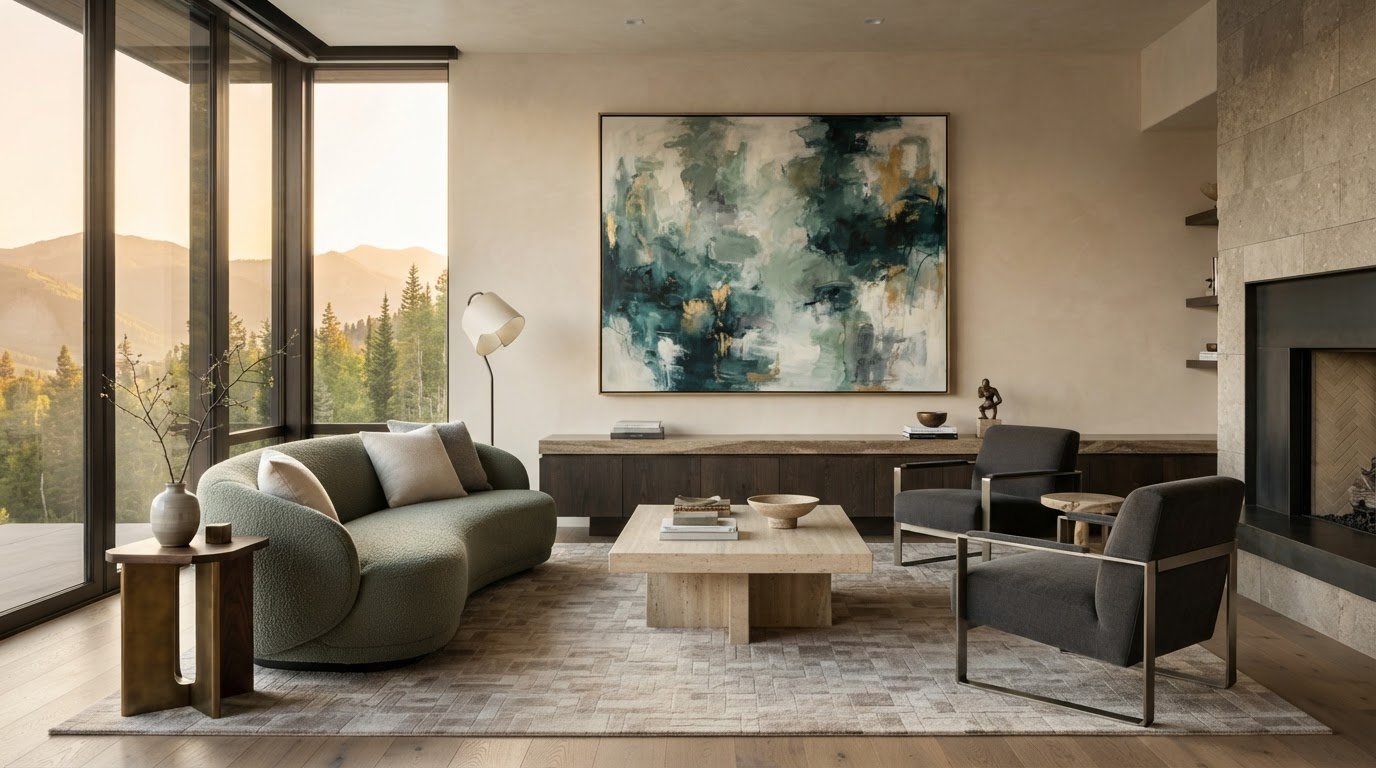
A favorite artwork can do more than decorate a room; it can give the whole interior a clear point of departure. Designing a home around a specific art piece begins with noticing what the work makes you feel, then drawing on its three most abundant colors to shape choices for the room’s palette, materials, and mood.
It’s natural to want a painting, photograph, or sculpture you love to feel at home, rather than simply hang it on an empty wall. The key is balance: let the artwork lead while furniture, lighting, and finishes support it without competing for attention.
This guide explains how to read an artwork’s colors and character, choose complementary furnishings, position it in relation to seating and light, and use finishing touches to create a cohesive atmosphere. It also covers when a design professional can help bring the artwork and the wider interior into harmony.
Key Takeaways
- Let the artwork’s mood, movement, and palette guide the room’s design direction, while keeping the surrounding finishes in balance.
- Use thoughtful spacing, cohesive framing, and carefully chosen finishing details to give the display a composed feel.
- Plan the artwork’s position in relation to furniture, doorways, lamps, and layered lighting so it feels intentional in daily use.
- Bring in sculptural pieces to add dimension and visual interest without letting them compete with the central artwork.
- Consider interior design guidance when you want help connecting the art, furnishings, lighting, and overall room plan.
1. Using a favorite artwork as a room’s design starting point
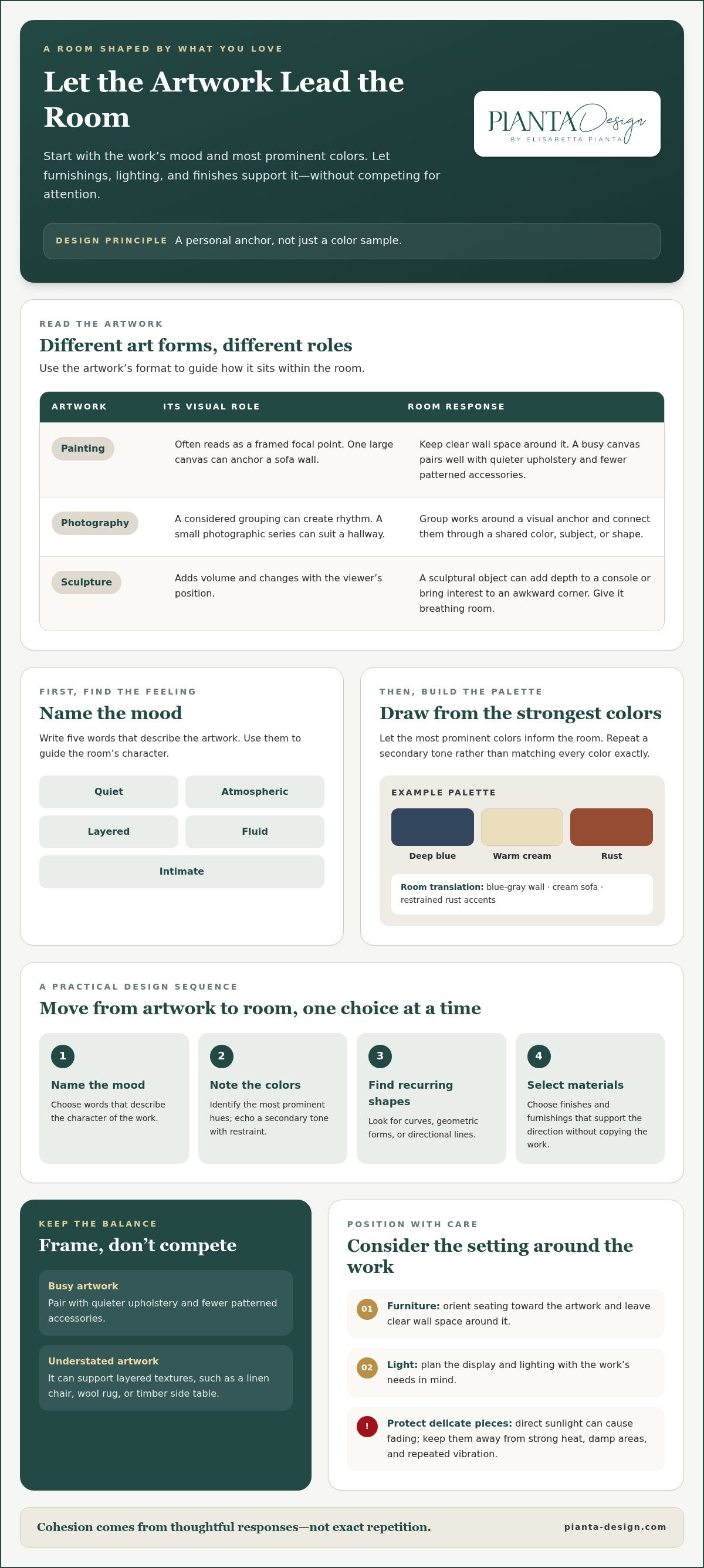
Begin with a piece you genuinely love, not a trend or ready-made palette. For a deliberate first step, write five words that describe its mood: perhaps “quiet, atmospheric, layered, fluid, intimate.” Use them to guide the room’s character, from the softness of bedroom fabrics to the crisp lines of a living-room console. Designing a home around a specific art piece works best when the artwork is a personal anchor, not just a color sample.
Next, identify the artwork’s most prominent colors. A painting with deep blue, warm cream, and rust might inspire a blue-gray wall, a cream sofa, and restrained rust accents. Repeat a secondary tone in a rug or cushion rather than matching every color exactly. A neutral backdrop can give vivid artwork greater presence, while a vibrant piece can enliven a minimal room. If the room already has a strong palette, choose art that complements it through shared hues or purposeful contrast.
Let the subject and composition inform the room’s style. A loose abstract painting with energetic brushwork can bring movement to a living room; clean-lined furniture can keep that energy from feeling crowded. A traditional landscape can sit comfortably with rich wood and classic upholstery, while monochromatic photography can bring composure to a room with stronger colors. Look beyond the subject: repeated curves, geometric shapes, and directional lines can suggest forms for furniture and lighting.
Paintings, photographs, and sculptures each call for a different visual treatment. A painting often reads as a framed focal point, photography can create rhythm through a considered grouping, and sculpture adds volume that changes with the viewer’s position. One large canvas might anchor a sofa wall, while a small photographic series suits a hallway and a sculptural object adds depth to a console.
Consider the artwork’s material and the room’s conditions when choosing its location. Direct sunlight can cause artwork to fade over time, and delicate pieces are best kept away from strong heat sources, damp areas, and surfaces exposed to repeated vibration. A sunlit wall beside a window may suit a durable object better than a light-sensitive print. Choose the display position and lighting with the work’s needs in mind.
Furniture should frame the artwork, not compete for attention. In a living room, orient seating toward the piece and leave clear wall space around it. A busy canvas pairs well with quieter upholstery and fewer patterned accessories; an understated work can support layered textures in a linen chair, wool rug, or timber side table. This balance keeps the artwork clear while making the surrounding space feel considered.
Sculptural artwork and personal objects can extend the composition beyond the wall. Place a ceramic vessel on a console beneath a painting, or use a small sculpture to complete an awkward corner. Give each element enough breathing room to remain distinct. If several objects share a shelf, connect them through a visual thread, such as similar material, shape, or a tone drawn from the artwork.
Before committing to paint or furniture, test the design direction in sequence: name the mood, note the dominant colors, identify recurring shapes, then select supporting materials. A vibrant abstract, for instance, might lead to a neutral wall, softly curved seating, and one repeated accent color. The result feels cohesive because each choice responds to the artwork without copying it.
2. Using finishing touches to create a cohesive atmosphere
Gather the room’s direction in a vision board or binder before choosing finishing details. Add a photograph of the artwork, fabric samples, finish notes, and reference images for furniture or lamps. Arrange them together and look for connections beyond matching colors, such as repeated curves, shared texture, or a similar sense of movement. This visual record helps you judge whether each new element supports the artwork or introduces a competing mood.
Design around art without making the room feel overly themed by echoing a few qualities rather than copying every motif. A landscape with soft greens might inform a linen cushion and a plant, while the rest of the palette stays distinct. Avoid repeating the painting’s subject across every accessory. A subtle relationship feels more considered than a room where every object seems part of the same set.
Give the artwork room to hold attention. Keep one major focal point in the room and let secondary details play a quieter role. A large painting above a fireplace can lead the composition, while a nearby mirror reflects light without competing. Leave open space around the frame, and choose restrained accessories when the artwork already has intricate detail.
Build a gallery wall as a single composition, not a collection of unrelated frames. Choose its center point first, then arrange the other pieces around that visual anchor. Paper templates let you test the layout on the wall before hanging anything. Group works through a shared color, subject, or shape, and use simple black or wooden frames to create continuity across different images. Keep the grouping harmonious while allowing each piece to remain distinct.
Finishing touches can connect the display to the rest of the interior without duplicating the artwork. A pillow might pick up a secondary hue; drapery can soften a strong frame; a sculptural lamp can echo a curve in the composition. Mirrors and three-dimensional objects add variety to a gallery wall, while a considered frame choice gives contrasting works a visual link. Choose details for both their relationship to the art and their usefulness in the room.
Step back from the display and notice where your eye travels. If a bright accessory pulls attention away from the painting, move it or choose a quieter finish. In a gallery arrangement, vary displays on other walls so the room offers different points of interest instead of repeating the same format. This measured editing makes the artwork feel integral to the interior, not like a theme imposed on it.
If coordinating artwork, materials, and room details feels difficult to resolve, a considered interior design approach can help shape a cohesive vision from the outset.
3. Positioning art in relation to furniture, lamps, and doorways
Start by assessing the whole wall, not just the space directly behind the artwork. Note doorways, switches, lamps, furniture edges, and the routes people take through the room. A painting centered over a sofa can anchor a seating area, while a piece between doorways may need a narrower arrangement. This first survey helps the display feel intentional from different viewpoints.
Use nearby furniture to establish a visual relationship. Center a large work over a fireplace, console, or sofa when the wall and furniture create a clear axis. In a bedroom, align the artwork with the headboard; in a dining area, let a statement piece give the table a sense of place. Keep the art in proportion to its setting, and avoid letting a tall lamp interrupt its outline.
Doorways and fixtures can become part of the composition rather than obstacles. Before hanging anything, mark the edges of switches and lamp shades on a quick wall sketch. If a doorway creates an asymmetrical space, place the artwork to balance its visual weight instead of forcing it to the wall’s exact center. A small photograph beside a doorway may work better than a broad canvas that crowds the opening.
For safe, comfortable art lighting, use adjustable accent fixtures or recessed lights aimed to illuminate the work without glare. Keep brightness controlled and adjustable; choose a color temperature that renders the artwork naturally and suits the room’s existing light. There is no single setting for every piece, since the medium, surrounding light, and desired atmosphere all affect the choice.
Coordinate furniture, lighting, fabrics, and accessories through selective repetition. A curved frame might relate to a rounded side table, while a muted tone from the artwork appears in a cushion or drapery. Let the artwork remain the main visual element. If the painting is detailed, choose quieter fabric patterns and a lamp with a simple silhouette; smaller pieces can add interest elsewhere without crowding the display.
A considered contrast can also create a beautiful, layered feeling. A home office can pair Asian antiquities with sleek 1930’s furnishings to create a worldly atmosphere. Apply the same principle at home by setting a carved wooden object against streamlined furniture, or placing a contemporary photograph above an antique console. The contrast works when materials, proportion, or color provide a connecting thread.
Plan layers of lighting around the artwork and the room’s use. Ambient light supports the overall space, task lighting serves reading or work, and accent lighting draws attention to the art. A reading chair beside a painting may need its own task lamp, while an adjustable ceiling fixture highlights the artwork. Position each source to avoid reflections across glass and distracting shadows.
Before final installation, view the arrangement from the doorway, sofa, and main circulation path. Adjust the artwork if a lamp blocks the view or the furniture makes the wall feel unbalanced. Thoughtful placement lets the artwork, furnishings, and lighting work together without interrupting the room’s everyday function.
4. Adding sculptural and three-dimensional objects
A sculpture changes a room through volume, shadow, and the way people move around it. Unlike a flat painting, it can be viewed from several angles, so consider its setting in three dimensions. Place a small ceramic form on a console with space around it, or position a freestanding piece where it won’t interrupt a doorway or circulation path. Its relationship to nearby furniture matters as much as its relationship to the wall.
Decide whether the object should be a statement or a supporting element. An oversized three-dimensional artwork, for example, can sit deliberately off-center on a broad sofa wall. This asymmetry creates a distinctive focal point without relying on a conventional centered arrangement. A similarly bold piece can balance a long sofa or broad wall, provided the surrounding furnishings leave its shape easy to read.
Contrast can make sculpture feel connected to an interior rather than added as an afterthought. A dark metal form against pale plaster creates a crisp outline; a pale stone object against richly colored wood feels quieter. Repeat one material or tone elsewhere, perhaps in a side table or lamp, but avoid matching every finish. The palette should support the sculpture while keeping its surface, silhouette, and shadows visible.
For a balanced display, relate the object’s scale to its surroundings. A compact sculpture can complete a console vignette beside a book and vessel, while a substantial piece may need open floor space. Consider the viewing angle: a work with a strong profile may deserve a position visible from the room entrance. Place delicate forms away from busy routes and surfaces where daily activity could disturb them.
Three-dimensional pieces can also bring depth to a gallery wall. Pair framed artwork with a shallow sculptural object or a small wall-mounted form, then leave enough negative space to distinguish each element. A mirror can add reflection and vary the display’s surface quality. Keep the arrangement legible by linking pieces through a shared shape, material, or subject rather than filling every gap with another object.
Symmetry creates a different effect. In a home office, matching sculptural pieces on either side of a desk can emphasize order and give the room a composed, formal character. Use this approach when the furniture and architecture support a strong central axis. For a more relaxed interior, vary the objects while keeping their visual weight similar, such as pairing a taller stone form with a wider ceramic piece.
Before settling on a placement, view the sculpture from the doorway, seating, and main walking route. Notice how daylight and room lighting create shadows across the surface, and whether the object competes with another focal point. A considered position lets the sculpture contribute texture and dimension while preserving the room’s ease of use.
5. Consulting an interior designer or decorator
A designer can help when a favorite artwork feels difficult to integrate with existing architecture or furnishings. A large, vivid canvas may suit the living room, for example, yet its scale could compete with a fireplace or constrain the furniture layout. A professional can assess the artwork alongside the room’s proportions, circulation, lighting, and intended use, then bring those decisions into a coherent plan.
You don’t need a complete renovation plan before seeking guidance. Someone new to design can begin with one or two hours of advice from an interior decorator or designer. Bring photographs of the room, the artwork’s dimensions, and images of the wall from different angles. Also note what cannot move, such as a doorway, built-in bookcase, or existing sofa.
Prepare a concise brief before meeting with a designer. Describe how you want the bedroom or living room to feel, and explain why the piece matters to you. Share practical needs, too: a reading chair should retain access to its task light, while a gallery wall must avoid switch plates. These details help the designer balance visual appeal with daily function rather than treating the artwork as an isolated object.
Ask for a clear sequence of design decisions. A useful process might begin with the artwork’s placement, then address furniture scale, materials, finishes, and lighting. Mood boards can compare color and texture relationships; floor plans clarify circulation; three-dimensional visualizations help you understand how a proposed arrangement may feel in the room. Together, these tools make it easier to discuss revisions before finalizing choices.
Specific questions make a design consultation more valuable. Ask whether the current sofa leaves enough space for the painting, whether a smaller artwork needs grouping, or whether a lamp creates glare across framed photography. If the room has several competing focal points, request a priority order. The discussion can reveal which changes matter most and which existing elements already support the artwork.
Professional input is especially useful when the art affects several connected choices. A sculptural piece may influence circulation and furniture placement; a light-sensitive work may shape window treatments and accent lighting. If you already have a defined palette and layout, a focused conversation can refine the display. If the artwork is guiding the whole interior, broader planning can connect the room’s background, furnishings, and finishes.
Choose the level of support that matches the decision ahead. Bring your artwork, room photographs, measurements, and questions, then discuss a practical design direction. For a coordinated plan that brings the artwork into conversation with the wider home, take the next step toward an art-led interior.
Pianta Design: Residential Interior Design
Pianta Design’s Residential Interior Design service brings a favorite artwork into the wider composition, aligning it with the room’s layout, materials, furnishings, and lighting. It’s a natural next step when one piece is shaping decisions across a space, or when an existing interior needs a more considered relationship between art and everyday life.
Mood boards, floor plans, and 3D visualizations help make the design direction tangible before choices are finalized. Where standard furnishings don’t suit the artwork’s scale or character, Custom Furniture Design can help create a more integrated setting. The aim is a room that supports the piece without losing comfort, function, or its own distinct identity.
Contact Pianta Design to discuss shaping your home around the artwork you love.
Let the artwork shape what comes next
A room designed around meaningful artwork can continue to evolve as your life and collection change. Leave space for future discoveries, and notice how the piece feels at different times of day, during quiet moments and shared gatherings. That lived experience can guide future choices more naturally than a fixed set of decorating rules.
Designing a home around a specific art piece is ultimately an invitation to make your surroundings more personal. Keep the artwork’s significance at the center, then let each decision reflect how you want to live with it. A considered interior doesn’t need to feel finished all at once; it can develop with care, one thoughtful choice at a time.
If you’re ready to explore how your artwork could inform a more cohesive home, contact Pianta Design to discuss your home. Let your favorite piece become the beginning of a space that feels distinctly yours.
Frequently Asked Questions
How do you design a room around a specific piece of art?
Start by treating the artwork as the room’s reference point, then make choices that support its character and your daily routine. Designing a home around a specific art piece can begin with a practical test: place a temporary paper outline where you imagine displaying it, then assess sightlines from the entrance and seating. This reveals whether the location suits the work before you commit to a layout.
How do you choose wall color and finishes to complement artwork?
Choose wall color by testing how it changes the artwork’s appearance in the room’s actual daylight and evening light. A warm white can soften a cool-toned photograph, while a muted gray may sharpen the edges of a vivid canvas. Look at paint and finish samples beside the work, not across the room. Consider sheen, too, since reflections can distract from glass or glossy surfaces.
How should furniture placement and lighting highlight a focal art piece?
Arrange furniture so the artwork is visible from natural stopping points, such as a reading chair or dining seat. Keep tall objects from cutting across its outline. Use a controllable accent light and adjust its direction until the work is clear without reflected glare. A dimmer can help the display sit comfortably alongside the room’s general illumination as daylight changes.
What are standard art hanging heights and viewing distances?
A useful starting point is to hang art around eye level for people of average height, then adjust for the room and display context. Above a sofa, consider the seated view; in a hallway, consider the standing approach. There isn’t one viewing distance that suits every work. Step back until the whole composition reads clearly, then move closer to check fine details.
How do you scale furniture and room layout to the size of a painting or sculpture?
Compare the artwork’s visual weight with the furniture and open wall area around it. A small painting above a broad console may need a companion piece or a more substantial frame; a large canvas can overwhelm a narrow wall. For sculpture, allow enough space to view its form and move past it comfortably. A floor plan or scaled paper outline can help test proportions.
When should you hire an interior designer or art consultant for a home art display?
Consider professional guidance when art placement affects several decisions, such as furniture dimensions, lighting, circulation, or finishes. Art Consultation can help resolve the display itself, while Residential Interior Design connects that choice to the complete room. Pianta Design offers Art Consultation and Residential Interior Design in Park City, Salt Lake City, San Francisco, and Miami to help bring the choices together.
