
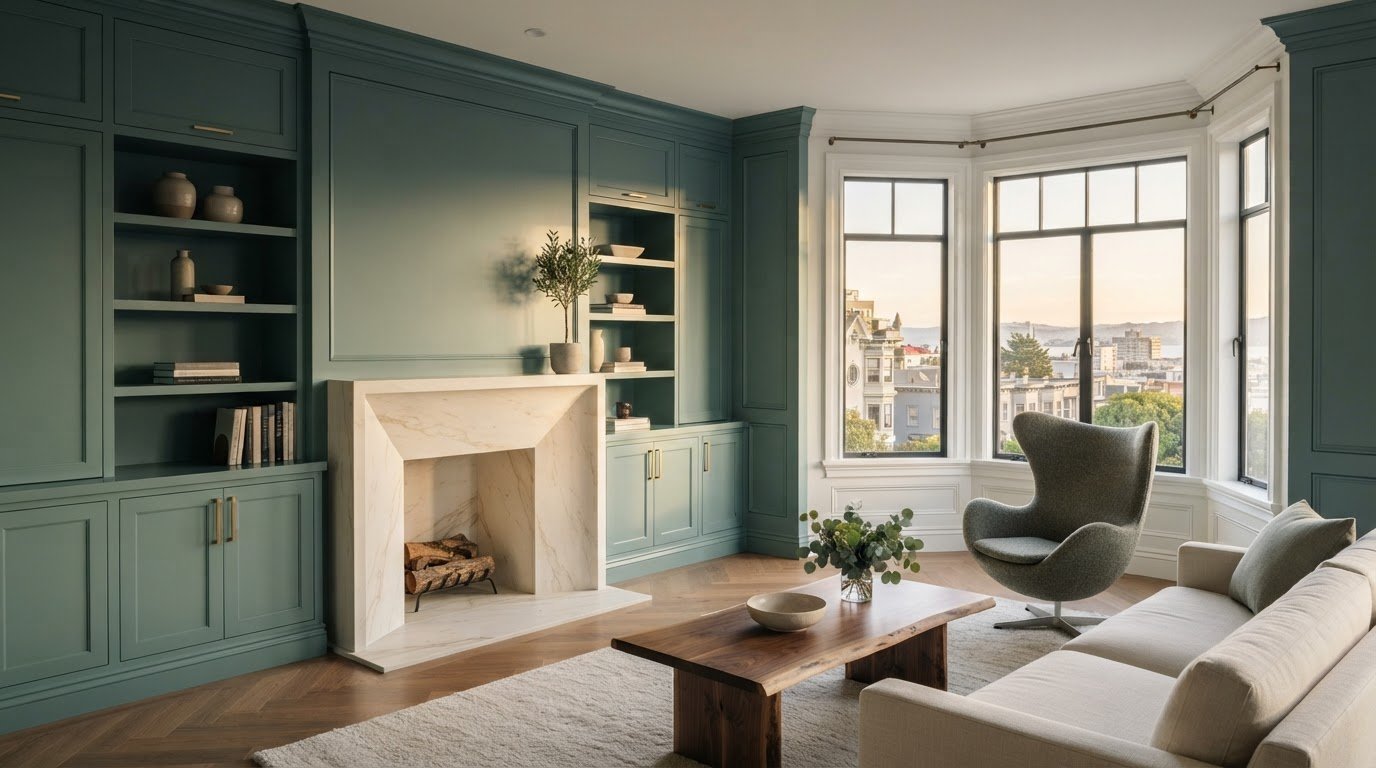
A beautifully fitted cabinet can still be only half the story. Custom cabinetry shapes storage and furniture for a particular room, while architectural millwork, such as trim, paneling, mantels, and built-ins, becomes part of the home’s architecture. Thoughtful custom millwork and cabinetry design brings the two together, giving a San Francisco home purposeful storage and a cohesive interior.
Cabinetry and millwork are easy to confuse, especially when both are made for a specific space. Their roles differ, though, and knowing how helps define what a project needs, from a considered kitchen layout to details that echo a home’s existing character.
This guide explains how custom cabinetry and architectural millwork differ, then explores how storage needs, materials, finishes, and installation decisions shape the result. You’ll see how these elements work together to create rooms that feel composed, functional, and distinctly suited to the way you live.
Key Takeaways
- Distinguish cabinetry, which organizes belongings, from architectural millwork, which shapes and complements a home’s built-in details.
- Plan storage around daily routines, so cabinet interiors and configurations serve the way each space is used.
- Choose materials, finishes, and profiles with both the home’s character and everyday wear in mind.
- Account for careful fitting during installation, especially where walls and floors are uneven, to achieve a cohesive finish.
Materials, finishes, profiles, and architectural details
Materials and profiles connect cabinetry to a home's architecture, whether a San Francisco interior is historic or contemporary. Cost depends on dimensions, material, joinery, finish complexity, and detailing; pricing is determined by the project and provided after a quote request.
Personalized Colors and Finishes
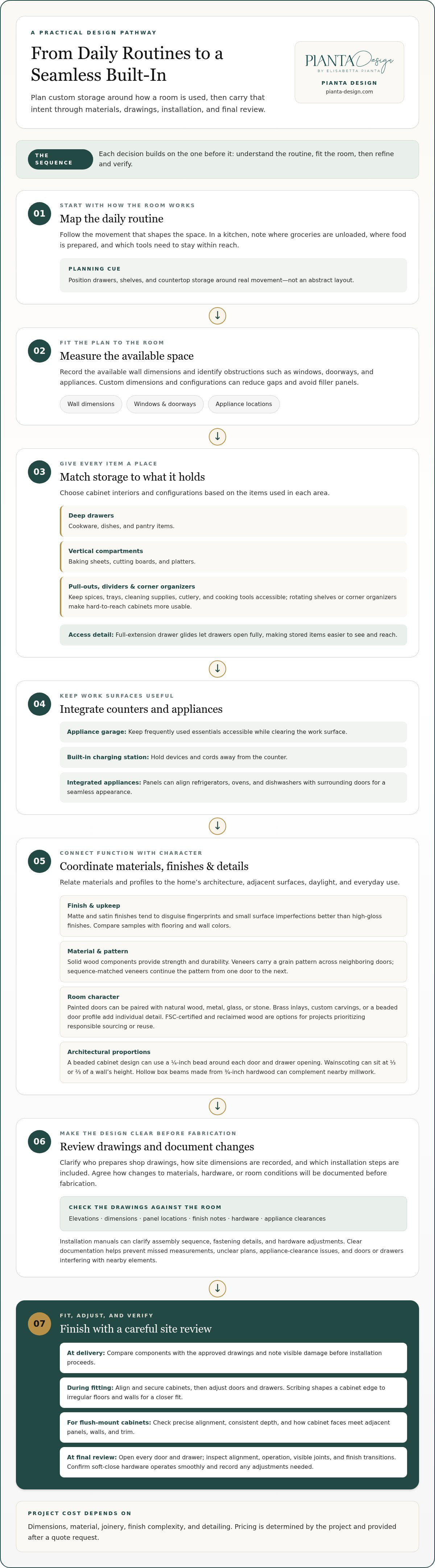
Choose color and sheen in relation to daylight, adjacent surfaces, and daily use. Matte and satin finishes tend to disguise fingerprints and small surface imperfections better than high-gloss finishes. Pairing painted doors with natural wood, metal, glass, or stone creates contrast without making the room feel disjointed. Brass inlays, custom carvings, or a beaded door profile can add a more individual touch.
Premium Materials and Finishes
Solid wood components provide strength and durability, while veneers offer a refined way to carry a grain pattern across neighboring doors. Sequence-matched veneers continue the pattern from one cabinet door to the next. For a historic home built in 1890, a custom molding profile can echo existing details. FSC-certified wood and reclaimed wood are options for projects prioritizing responsible sourcing or reuse.
Finish selection also affects upkeep and the room’s atmosphere. Low-VOC finishes and water-based paints can help reduce indoor air pollution. Natural wood finishes can develop warmth and character over time, while smooth painted cabinetry beside textured stone adds visual depth. Compare samples with the flooring and wall colors before settling on a palette.
Architectural details should relate to the home’s proportions. Beaded kitchen cabinet designs use a ¼-inch bead around each door and drawer opening. Wainscoting can sit at 1/3 or 2/3 of a wall’s height, depending on the room’s layout and the visual balance desired. Hollow box beams made from 3/4” hardwood can introduce ceiling detail while complementing nearby millwork.
Delivery, installation, and final review
Delivery and installation turn approved drawings into functional, bespoke elements within the home. Accurate site measurements, clear documentation, and a careful final review help ensure panels and cabinetry fit the intended layout.
Before work begins, clarify who prepares shop drawings, how site dimensions are recorded, and which installation steps are included. Agree on how changes to materials, hardware, or room conditions will be documented before fabrication.
Common installation problems include measurements that miss uneven walls, unclear drawings, and doors or drawers that interfere with nearby elements. Delivery damage or overlooked appliance clearances can also disrupt installation and the finished interior.
Shop drawings should make the design clear before fabrication begins. Review elevations, dimensions, panel locations, finish notes, hardware, and appliance clearances against the room’s layout. Installation manuals can clarify assembly sequence, fastening details, and hardware adjustments, helping the work follow the documented plan.
At delivery, compare the components with the approved drawings and note visible damage before installation proceeds. During fitting, installers align and secure cabinets, then adjust doors and drawers. Scribing shapes a cabinet edge to match irregular floors and walls, creating a closer fit where the room isn’t perfectly straight. This tailored adjustment creates a cleaner transition between cabinetry and architecture.
Flush-mount cabinets sit level with surrounding surfaces, so installation depends on precise alignment and consistent depth. Check how cabinet faces meet adjacent panels, walls, and trim. Small shifts can interrupt a seamless look, especially across a long run of cabinetry.
For a final review, open every door and drawer, inspect alignment and operation, and examine visible joints and finish transitions. Confirm that the completed work reflects the approved drawings and that functional details, such as soft-close hardware, operate smoothly. Record any adjustments needed before the installation is considered complete.
Storage designed for homeowners’ needs
Start with the routines that shape each room, then assign storage to the items used there. In a kitchen, note where groceries are unloaded, where food is prepared, and which tools should stay within reach. This sequence helps position drawers, shelves, and countertop storage around real movement rather than an abstract layout.
Custom cabinetry can be made to specific dimensions and configurations, reducing gaps and avoiding filler panels. Measure the available wall and identify obstructions such as a window, doorway, or appliance. Then consider what each cabinet must hold: deep drawers can accommodate cookware, dishes, or pantry items, while vertical compartments suit baking sheets, cutting boards, and platters.
Personalized kitchen storage can make small daily tasks feel more orderly. Pull-out organizers keep spices, trays, or cleaning supplies accessible without crowding shelves. Drawer dividers separate cutlery and cooking tools, while rotating shelves or corner organizers make hard-to-reach cabinets more usable. Full-extension drawer glides let drawers open fully, making stored items easier to see and reach.
Countertops also benefit from storage planned around daily routines. An appliance garage keeps frequently used essentials accessible while clearing the work surface. A built-in charging station can hold devices and cords away from the counter. For integrated refrigerators, ovens, or dishwashers, cabinetry panels can align appliances with surrounding doors for a seamless appearance.
Storage can also become a visual feature. A wine cabinet, pantry, or display niche can be tailored to its contents and the room’s proportions. Interior lighting can illuminate display shelves or cabinet contents, while a coordinated door finish connects these elements to the broader design.
Before finalizing the layout, group items by use and frequency, then map each group to a cabinet or drawer. Keep everyday cookware near the cooking zone, place cutlery beside the preparation area, and position cleaning supplies where they’re needed. This practical step ensures the storage plan supports the household while preserving a composed aesthetic.
Difference between custom cabinetry and architectural millwork
Custom cabinetry is built around storage, such as kitchen drawers, pantry units, or a bedroom wardrobe. Architectural millwork shapes the home’s built-in visual language through trim, paneling, mantels, and integrated features. A library, for example, may combine shelves for books with wall paneling that gives the room a unified architectural character.
Stock cabinets come in standard sizes and configurations. Semi-custom cabinets offer selected adjustments, such as altered dimensions or finishes, while custom cabinets are made for a specific space and brief. The distinction matters when an unusual alcove, a precise appliance fit, or a coordinated luxury interior calls for greater flexibility.
When planning custom cabinetry or millwork, review relevant completed projects, the clarity of the drawings, and how the design translates lifestyle needs into functional details. Compare a kitchen elevation with the proposed cabinet interiors, material specifications, and installation plan. These documents show whether the visual concept and practical use are being considered together.
Permit needs depend on the project’s scope and the work involved. Replacing cabinet fronts differs from changing a layout that affects walls, plumbing, or electrical systems; broader alterations may involve additional review. For a San Francisco remodel, define the proposed scope and coordinate the design with related work before fabrication.
In the United States, custom cabinetry and millwork costs depend on dimensions, materials, construction details, finishes, hardware, and installation; a project-specific price follows a quote request. Costs and lead times can also vary by location as labor, material sourcing, delivery logistics, site access, and project complexity change. A compact built-in with straightforward finishes differs from a room-wide installation with intricate profiles.
The clearest takeaway: cabinetry organizes what a household uses, while millwork integrates visual and architectural details into the spaces themselves. For a coordinated plan, explore an integrated design approach that aligns built-ins with the home’s layout and character.
Pianta Design: Residential Interior Design
Pianta Design helps homeowners bring cabinetry, millwork, and the wider interior into a coherent residential design. Its residential interior design service is suited to projects where storage, architectural details, and furnishings need to feel connected rather than considered in isolation.
The process can develop from an initial concept into space planning, with mood boards, floor plans, and 3D visualizations prepared for client approval. These design tools help clarify how built-ins relate to circulation, natural focal points, and the home’s existing character before decisions are finalized. Custom furniture design can also support a considered relationship between fitted elements and freestanding pieces.
For a San Francisco home renovation or interior refresh, this joined-up perspective can help translate practical needs into a composed design direction. Contact Pianta Design to discuss your home project.
Shape a Design Direction That Feels Like Home
The next step is to define what you want your home to express, beyond its storage needs. Consider which rooms should feel calmer, more connected, or more distinctly your own. That intention gives custom millwork and cabinetry design a meaningful role in a broader vision for daily living.
Pianta Design offers Residential Interior Design, Commercial Interior Design, and Custom Furniture Design. Its perspective can connect the character of built-in elements with the atmosphere and furnishings of a complete interior, so individual decisions contribute to a considered whole.
Bring your ideas, questions, and priorities into a conversation about the home you want to create. Contact Pianta Design to discuss your project, and take the next step toward a space that reflects the way you live.
Frequently Asked Questions
What is custom millwork and cabinetry design?
Custom millwork and cabinetry design plans made-to-measure storage and architectural woodwork for a particular interior. Cabinetry focuses on features such as a wardrobe or built-in banquette, while millwork can include trim, wall paneling, or a mantel that relates to the room’s architecture. A project may combine both, connecting practical storage visually with the surrounding space.
What materials and finishes are best for custom cabinetry?
The right choice depends on the desired appearance, expected use, and finish performance. Quarter-sawn wood is more stable than plain-sawn wood, and rift-sawn wood is the most stable cut. Once cured, catalyzed conversion varnish resists water, alcohol, and most household chemicals. Compare wood samples and finish swatches in the room’s light, and consider how each surface will look beside nearby stone or metal.
What is the process for designing and installing custom cabinets?
The process moves from defining needs to approving the design, fabricating components, installing them, and reviewing the result. Before fabrication, align appliance specifications, door and drawer details, and finish selections in the project documents. Record revisions clearly, since a change to one cabinet can affect adjoining panels or clearances. During review, test doors and drawers and compare the finished work with the approved drawings.
How long does custom cabinetry design, fabrication, and installation take?
Project timing is shaped by design complexity, material selection, drawing approvals, fabrication requirements, and site readiness. A straightforward cabinet run has different coordination needs from room-wide millwork with integrated appliances and detailed profiles. Installation also depends on access and the sequence of related work. Agreeing on the design and documenting decisions before fabrication helps organize project stages and reduce avoidable delays.
What building codes and permits apply to custom cabinetry and millwork?
Permit needs depend on the project scope. Replacing cabinet fronts differs from changing a layout that affects walls, plumbing, or electrical systems; broader alterations may involve additional review.
