
Avoiding Common Interior Design Mistakes: A Guide to Timeless Luxury
Why does a room filled with exquisite, high-end furniture often feel more like a disconnected showroom than a cohesive sanctuary? It's a subtle yet pervasive tension that many homeowners encounter when their significant investments fail to translate into a sense of atmospheric harmony. You've likely experienced the frustration of a beautiful piece that simply doesn't fit the room's proportions or lighting that feels clinical rather than inviting. Achieving a truly elevated environment requires more than just acquisition; it demands a strategic approach to avoiding common interior design mistakes that can inadvertently compromise the elegance and architectural integrity of your home.
We believe that a residence should feel curated, not merely decorated, reflecting a life lived with intention and grace. This guide will help you identify and rectify those nuanced missteps that lead to inconsistent flow between rooms or wasted investments on items that don't serve your vision. You'll gain the confidence to make long-term design decisions by understanding the delicate balance of scale, light, and materiality. We will explore how to harmonize your space's architectural purpose with your daily inhabitation, ensuring every room resonates with a timeless, sophisticated luxury.
Key Takeaways
- Master the principles of scale and proportion to ensure your furnishings enhance, rather than diminish, the architectural volume of your home.
- Move beyond standard lighting grids by implementing a layered illumination strategy that balances ambient, task, and accent light for a truly atmospheric feel.
- Learn the art of avoiding common interior design mistakes by prioritizing personal soul and architectural context over fleeting, social media-driven trends.
- Discover how to select noble materials that provide both tactile contrast and enduring resilience, ensuring your space feels as inviting as it is elegant.
- Understand why professional space planning is the essential first step to protecting your investment and preventing the friction of mismatched furniture acquisitions.
The Architecture of Scale: Why Proportion is the First Priority
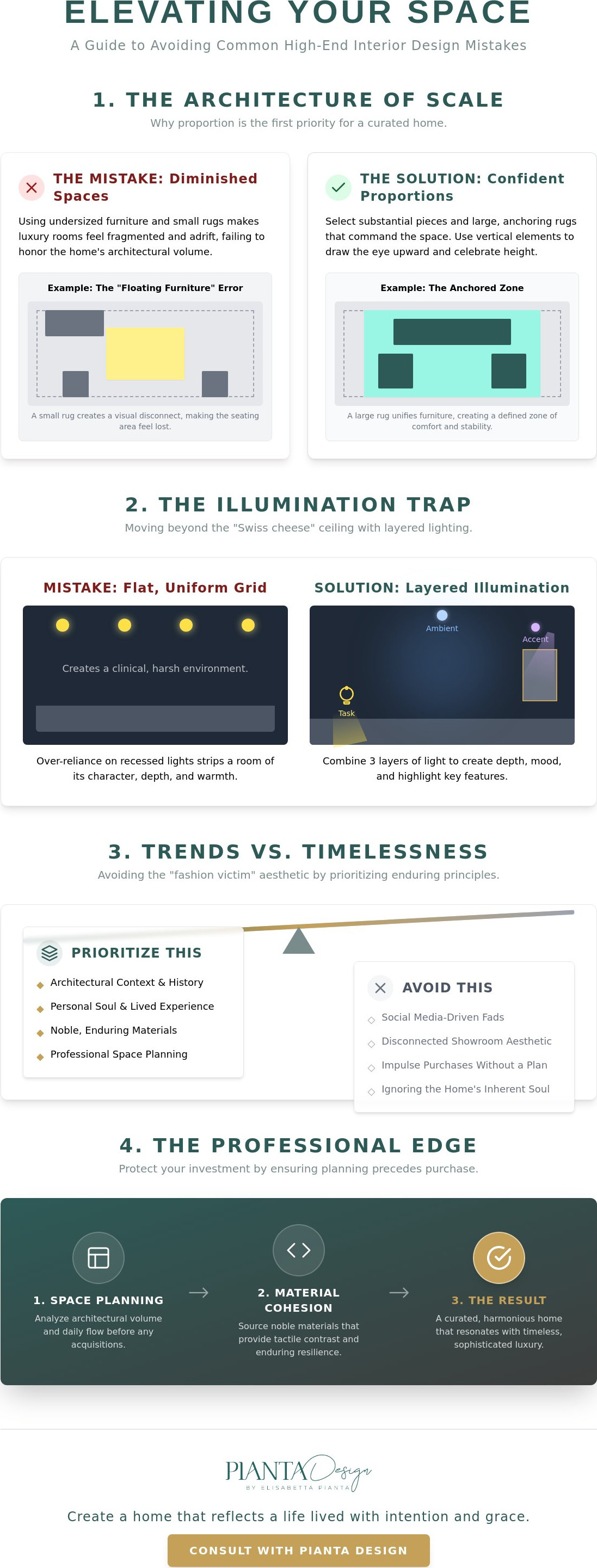
Scale isn't just about size; it's the silent dialogue between every object in a room and the people who inhabit it. Within the professional practice of Interior design, scale represents the sophisticated relationship between objects and the human body within a specific volume. Many homeowners fall into the trap of "playing it safe" by selecting smaller furniture pieces, mistakenly believing they'll make a room feel more spacious. In reality, undersized pieces often make luxury rooms feel fragmented and diminished. True elegance requires a bold, confident understanding of proportion that honors the room's true dimensions rather than shrinking away from them.
One of the most vital strategies for avoiding common interior design mistakes is the intentional use of "negative space." This isn't merely empty air; it's the essential breathing room that allows your home's unique architectural features to flourish. Whether you're curating a San Francisco Victorian with its intricate historical moldings or a modern Miami penthouse with panoramic glass, you must use height to draw the eye upward. Vertical lines and tall silhouettes emphasize the grandeur of the architecture, ensuring the floor plan remains open and intentional. This balance is a hallmark of high-end residential interior design, where every square foot is treated with reverence.
The Rug Size Misstep
The rug size misstep is perhaps the most visible error in high-end homes. A rug that is too small acts as a lonely "island" in the middle of a room, creating a visual disconnect that makes the seating area feel adrift. To anchor a room with true sophistication, ensure that all furniture legs sit comfortably on the textile to create a defined zone of comfort and visual stability. The "floating furniture" error is a failure to create a cohesive zone where the individual elements of a room feel unified and purposeful.
Balancing Ceiling Heights and Volume
Balancing volume requires a deep understanding of the home’s soul and structural bones. Strategies for Park City mountain homes with soaring rafters differ greatly from those used in lower-ceiling urban apartments. In a grand mountain residence, you need substantial pieces with enough visual weight to command the space. In smaller urban settings, using vertical elements helps emphasize architectural volume without cluttering the floor plan. Every piece of bespoke cabinetry must respect the room’s existing crown molding and structural lines to ensure the final result feels like an organic part of the home's history.
The Illumination Trap: Beyond the Grid of Recessed Lights
Many high-end residences suffer from what professionals call "Swiss cheese" ceilings. This occurs when a space over-relies on a rigid grid of recessed LED lights, a mistake that often strips a room of its character and architectural depth. While these fixtures provide necessary brightness, using them as the sole source of light creates a flat, clinical environment. It's a missed opportunity to highlight the noble materials and intricate details that define a luxury home. Avoiding common interior design mistakes in lighting requires a move away from uniform overhead glare toward a more nuanced, intentional approach.
To achieve a truly atmospheric environment, you must master the three essential layers of light: ambient, task, and accent. These layers must coexist to create a sense of three-dimensional depth. According to professional lighting design techniques, failing to balance these sources is a primary reason why expensive textures, such as hand-applied Italian plasters or rich wood grains, often appear dull. When light is poorly placed, it flattens the very finishes you've invested in, depriving the space of its tactile allure.
Geographical context also dictates how light should be managed. In Park City, the brilliant glare from winter snow can bounce into a home with overwhelming intensity, requiring soft, diffused interior solutions to maintain comfort. Meanwhile, Miami homes face a relentless tropical sun that can wash out interior palettes if not properly tempered. A sophisticated design acknowledges these environmental factors, ensuring the home remains a sanctuary regardless of the conditions outside.
The Warmth of Layered Light
In expansive, open-concept residences, lighting design is the key to creating pockets of intimacy. Wall sconces and floor lamps are essential because they bring the light source down to eye level, which feels more natural and inviting than overhead sources alone. Dimmers and smart integration systems are non-negotiable in the modern luxury landscape. They allow you to orchestrate the mood of a room as the day transitions, ensuring the environment always feels curated and intentional.
Harnessing and Controlling Natural Light
Ignoring the orientation of the sun is a critical error that leads to faded custom furniture and compromised artwork. In the dense urban fabric of San Francisco, automated window treatments are vital for balancing the need for privacy with the desire to showcase iconic views. We often recommend selecting glass and finishes that interact beautifully with shifting daylight, allowing the home to evolve visually from dawn to dusk. Our bespoke Lighting Design services ensure that your home’s brilliance is never left to chance, but rather carefully composed to enhance every architectural detail.
Trends vs. Timelessness: Avoiding the 'Fashion Victim' Aesthetic
Digital mood boards offer a seductive promise of perfection, yet they often lead homeowners into the trap of the 'fashion victim' aesthetic. A room that looks "Pinterest-perfect" frequently lacks the personal soul and architectural context required for true longevity. When you prioritize fleeting styles over the inherent character of your home, the result is a space that feels dated within a few seasons. Avoiding common interior design mistakes means recognizing that a residence is a living narrative, not a static stage set. A home should evolve with its inhabitants, blending historical reverence with modern vitality.
One prevalent error is the overuse of "feature walls," which often feel like a disconnected afterthought in high-end residential interior design projects. Rather than isolating a single surface, a sophisticated approach integrates texture and color throughout the entire volume of the room. Similarly, over-committing to a singular style, such as a strictly Mid-Century Modern look, can make a home feel like a cold museum. A curated mix of eras and origins creates a much richer dialogue. Contemporary art should be integrated with warmth, ensuring the home remains an intimate sanctuary rather than an impersonal gallery space.
The Longevity of Quality Materials
Fast-furniture alternatives are a significant misstep, as they fail both the test of time and the standards of environmental sustainability. These pieces lack the structural integrity and tactile depth found in noble materials. Investing in custom furniture design is the most effective way to bypass the cycle of retail obsolescence. We recommend the "80/20 Rule" for a balanced interior: dedicate eighty percent of your vision to timeless foundations and high-quality craftsmanship, leaving the remaining twenty percent for seasonal accents that reflect your current inspirations.
The Pitfalls of One-Dimensional Color Palettes
The "all-grey" or "all-white" mistake often drains a room of its essential character, leaving it feeling hollow and uninspired. A monochromatic scheme only succeeds when it utilizes deep tonal variation and rich tactile contrast to create visual interest. Your palette should resonate with your local environment to feel grounded. The cool, ethereal blues that suit a Miami waterfront villa would feel out of place against the warm, rugged earth tones of a Park City mountain estate. Selecting colors that acknowledge the external landscape ensures your interior feels like a natural extension of its surroundings, a process that is best supported by experts like Performance Painting who specialize in bringing sophisticated palettes to life with professional precision.
Materiality and Cohesion: Sourcing with Intention
True luxury is felt as much as it is seen. A common error in high-end residential projects is the selection of "luxury" materials that are fundamentally impractical for their specific environment. Imagine porous, delicate stones in a humid Miami kitchen or textiles that can't withstand the salt-laden air of a San Francisco terrace. Selecting high-quality, resilient pieces from ReModern Living ensures that your furniture selections align with both aesthetic and functional requirements. Avoiding common interior design mistakes begins with a commitment to authenticity and technical foresight. When materiality is treated as an afterthought, the result is often a space that looks impressive in a photograph but feels "hard" or uninviting in person.
Generic sourcing is the enemy of the bespoke home. Relying on high-end retail catalogs often leads to a "showroom" aesthetic that lacks personal history or architectural resonance. Sophisticated interior architecture requires that finishes align with surgical precision, ensuring that a transition from stone to timber feels intentional rather than accidental. This level of planning prevents the visual friction that occurs when noble materials are poorly integrated into the structural bones of the building.
Italian Craftsmanship and Authentic Sourcing
Authenticity cannot be imitated. One significant mistake is the use of "look-alike" materials that mimic the appearance of authentic Italian marble or hand-woven textiles but lack their characteristic depth and tactile allure. We leverage direct relationships with European manufacturers to bypass generic retail pitfalls, ensuring every slab and thread meets an exacting standard of quality. Whether it's custom-milled wood or hand-applied plaster finishes, these elements provide a sensory richness that mass-produced alternatives simply cannot replicate. The soul of a home is found in these artisanal details, often brought to life by specialists like Deluxe FX Painting & Decorating who excel in high-end decorative applications.
Consistency of Hardware and Finishes
Visual clutter often stems from a lack of consistency in the home's "jewelry"—its hardware and finishes. Mismatched metal tones across a suite of rooms can disrupt the sense of calm and order that defines a premium environment. We look for a "red thread" of materiality that connects the master wing to the primary living spaces, creating a narrative of cohesive elegance. High-touch points like handles, switches, and faucets require the most significant design attention; they are the physical interfaces through which you experience your home daily. Explore our bespoke Material and Finish Selection services to define your home's unique tactile identity.
The Professional Edge: Why Planning Precedes Purchase
The most expensive error in the creation of a luxury home isn't found in a specific material choice or a single piece of art. Instead, it's the failure to follow a logical sequence. The number one mistake homeowners make is purchasing furniture before finalizing a comprehensive floor plan or space planning strategy. This impulse leads to a fragmented environment where beautiful objects compete for space rather than complementing the architecture. Avoiding common interior design mistakes is often a matter of professional foresight, ensuring that every measurement and sightline is considered before a single order is placed.
Professional project management serves as the essential safeguard against the "costly pivot." During the construction phase, even a minor oversight in electrical placement or millwork depth can lead to expensive delays and structural compromises. By employing sophisticated 3D visualization, we eliminate the "I can't picture it" anxiety that often plagues large-scale renovations. This allows you to walk through your future sanctuary with total confidence. Beyond the immediate aesthetic rewards, partnering with an interior designer is a strategic investment in your property’s long-term resale value. A home with a cohesive, architecturally sound interior will always command a premium in the competitive markets of California, Florida, and Utah.
The Complexity of Yacht and Commercial Projects
Yacht interiors and commercial spaces present a unique set of challenges that extend far beyond residential aesthetics. Unique mistakes in yacht design often involve ignoring weight distribution, marine-grade material resilience, or the extreme spatial constraints of a vessel. In commercial environments, the most frequent error is a sense of "corporate coldness." We solve this by applying residential-inspired layering to create prestigious environments that remain warm and inviting. These high-stakes, technical environments demand specialized oversight to ensure that safety, functionality, and luxury coexist without compromise. For high-end hospitality projects where brand presentation is paramount, you can visit Image Square Printing to discover bespoke visual graphics and signage that enhance the guest experience.
Partnering with Pianta Design
Our firm brings a thirty-year legacy of excellence to every project, having refined a process that prioritizes rigorous technical planning. We understand that avoiding common interior design mistakes requires more than just good taste; it requires a deep understanding of the intersection between art and architecture. By blending Italian sophistication with the modern, active lifestyles found in San Francisco, Miami, and Park City, we create residences that are as functional as they are breathtaking. Schedule a consultation with Pianta Design to begin your journey toward a flawless interior that truly reflects your vision.
Orchestrating Your Architectural Legacy
A truly elevated home is far more than a collection of expensive objects; it's a carefully composed dialogue between light, scale, and materiality. By prioritizing professional space planning and layered illumination, you transform a series of rooms into a cohesive sanctuary that honors its structural bones. Achieving this level of harmony requires a commitment to authenticity and a rejection of fleeting fads. Avoiding common interior design mistakes is the essential first step toward creating a residence that feels curated and timeless rather than merely decorated, a quality highly valued by the Cardenas & Company Real Estate Group when showcasing premier properties.
Pianta Design brings over 30 years of high-end residential expertise to every project, ensuring that your investment is protected through technical precision and inspired artistry. Our direct partnerships with elite Italian manufacturers allow us to source noble materials that standard retail channels simply cannot provide. Whether you're refining a coastal villa or a mountain estate, our exclusive offices in San Francisco, Miami, and Park City are ready to lead you through the creative process with empathy and professional rigor.
Elevate your home with a bespoke design strategy from Pianta Design. Your vision deserves the clarity and sophistication that only expert hands can provide. We look forward to helping you create an environment that reflects your highest aspirations.
Frequently Asked Questions
What is the most common interior design mistake people make in luxury homes?
The most frequent error is prioritizing individual acquisitions over a unified architectural vision. This often results in a disjointed environment where expensive pieces compete for attention rather than contributing to a singular narrative. Avoiding common interior design mistakes requires a commitment to a master plan that considers the entire volume of the home before any purchases are made. This ensures every element serves a purpose and feels like an intentional part of the residence.
How do I know if my furniture is the right scale for my room?
You can determine the correct scale by assessing the relationship between an object, the human body, and the room's total volume. Furniture should feel proportional to the ceiling height and floor area; if a piece looks like a lonely island or overwhelms the walking paths, the scale is incorrect. We often use 3D visualization to ensure that every selection respects the architectural boundaries of your home, preventing the psychological friction caused by mismatched proportions.
Are feature walls still in style for 2026?
In 2026, isolated feature walls are generally viewed as a missed opportunity for true architectural depth. Instead of highlighting a single surface, sophisticated designers now favor holistic materiality that wraps around the entire room. This approach uses tonal variations and rich textures, such as hand-applied plaster or custom millwork, to create a sense of immersive luxury. The goal is to make the space feel intentionally composed rather than relying on a singular, high-contrast focal point.
Can I mix different metal finishes in the same room?
Mixing different metal finishes is encouraged when executed with a "red thread" of intentionality. To avoid visual clutter, you should select one dominant finish and use one or two others as subtle accents throughout the suite. For instance, pairing unlacquered brass with matte black accents can add a layer of modern sophistication. The key is ensuring that the hardware and high-touch points feel like a curated collection rather than a series of accidental or mismatched choices.
How high should I hang my artwork to avoid a "floating" look?
Artwork should generally be hung so the center of the piece is at eye level, approximately 57 to 60 inches from the floor. However, when hanging art above furniture, it's vital to maintain a close relationship between the two to avoid a "floating" look. Leaving about 6 to 10 inches between the top of a sofa or console and the bottom of the frame ensures the art feels anchored and integrated into the room's overall composition and visual weight.
Why is lighting often considered the most difficult part of interior design?
Lighting is exceptionally complex because it exists at the intersection of technical precision and emotional resonance. It requires balancing ambient, task, and accent layers while accounting for geographical nuances like Miami’s intense sun or Park City’s snow glare. A successful lighting plan must be integrated into the interior architecture from the start. This ensures that every fixture highlights the home’s noble materials and creates an atmosphere that transitions effortlessly as the natural light shifts.
Is it a mistake to follow current interior design trends?
It is a mistake to follow current interior design trends without considering your home’s architectural context or your personal narrative. While trends can offer inspiration, they often lead to a "fashion victim" aesthetic that feels dated within years. True luxury is found in the 80/20 rule: investing eighty percent of your vision in timeless, high-quality foundations while reserving twenty percent for seasonal accents that reflect your current lifestyle and evolving tastes without compromising the home's integrity.
How does an interior designer help avoid expensive mistakes during a renovation?
An interior designer provides the technical foresight necessary to prevent the "costly pivot" during construction. By managing space planning and material selection before work begins, we ensure that every finish and fixture aligns perfectly with the structural bones of the building. This professional oversight protects your investment and enhances the home's long-term resale value, turning a potentially stressful renovation into a journey of refined creation and enduring architectural beauty.
