
Architect vs Interior Designer for a New Build in California: The 2026 Guide
Many homeowners assume an architect is the only essential partner for a groundbreaking ceremony, yet overlooking the interior designer often results in a residence that functions well on paper but fails to capture the rhythm of your life. It's common to feel overwhelmed by the choice of an architect vs interior designer for a new build in california, especially when interpreting the 2026 updates to Title 24 and the new Wildland Urban Interface codes. This confusion often leads to anxiety over overlapping fees or a structural design that doesn't quite mirror your personal aesthetic.
In this guide, we clarify these distinct roles to help you secure a home that is both technically resilient and visually poetic. You'll discover how these disciplines interact to streamline your construction process while meeting every rigorous state regulation. We will outline a collaborative path that eliminates design gaps, ensuring your new build is a refined reflection of your lifestyle and a testament to modern architectural precision.
Key Takeaways
- Understand the fundamental distinction between the architect's focus on structural integrity and the interior designer's curation of spatial flow and tactile experience.
- Learn why the debate of architect vs interior designer for a new build in california is best resolved by a collaborative "structure-first, lifestyle-parallel" approach from day one.
- Gain insight into navigating California’s 2026 seismic and Title 24 energy standards through seamless professional coordination and integrated technical planning.
- Discover why involving an interior designer during the architectural phase prevents costly revisions and ensures your floor plan gracefully accommodates bespoke furniture and fine art.
- Explore how professional synergy creates a streamlined construction process, resulting in a home that balances technical precision with timeless, sophisticated living.
Architect vs. Interior Designer: Decoding the Roles for Your California New Build
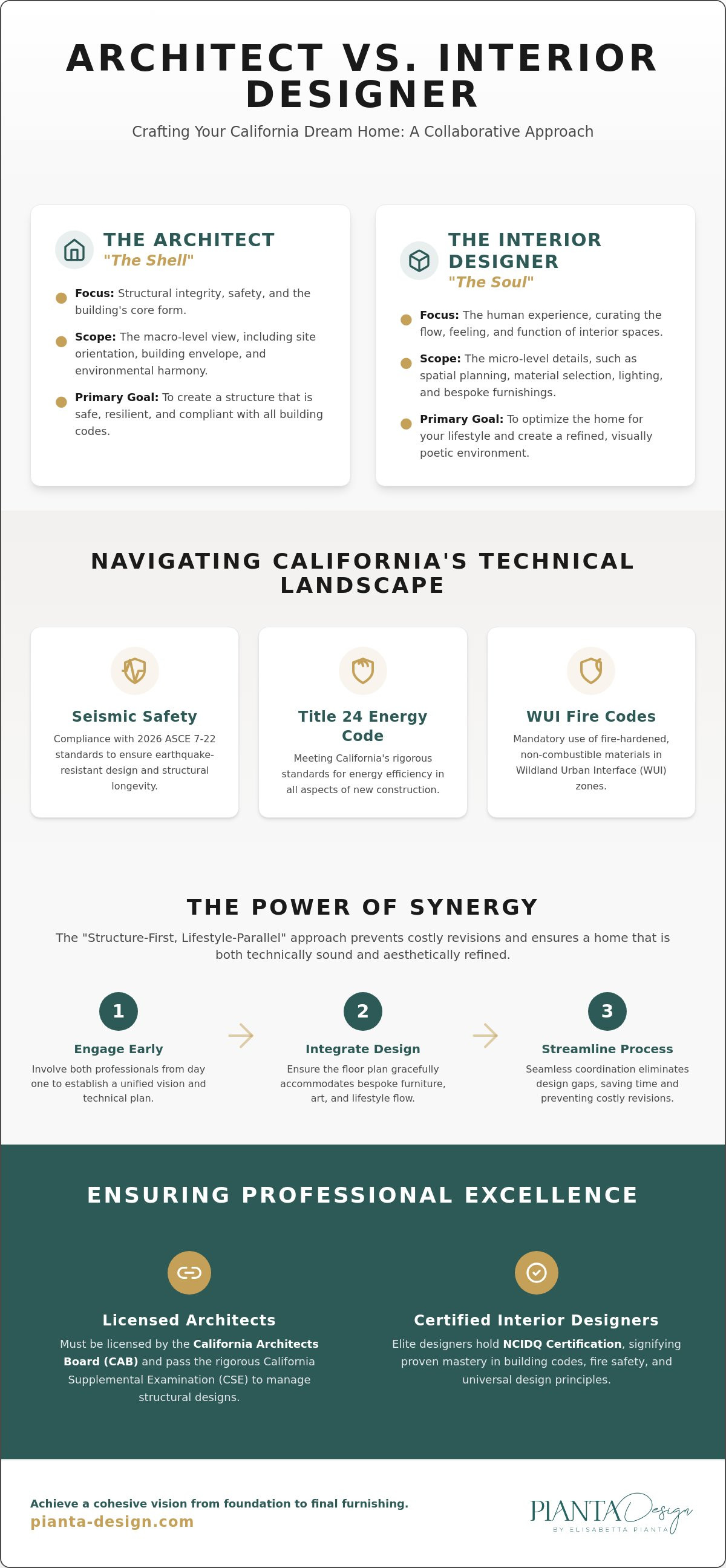
The creation of a bespoke residence is a delicate dialogue between form and feeling. To truly understand the dynamic of an architect vs interior designer for a new build in california, one should envision the "Shell vs. Soul" analogy. The architect crafts the shell; the protective, enduring vessel that stands against the elements and defines the home's silhouette against the golden California horizon. Conversely, the interior designer breathes the soul into those volumes, curating the intimate experiences that occur within the walls. This partnership ensures that the grandest architectural gestures are balanced by the intimate, tactile details that make a house a sanctuary.
Structural Integrity vs. Human Experience
Architects focus on the macro, ensuring the building’s envelope and site orientation maximize natural light while maintaining structural integrity. They define how the structure sits on the land, asking What is an Architect? in the context of safety, environmental harmony, and civic responsibility. Meanwhile, the interior designer operates on the micro level of human interaction. They consider how the spatial flow facilitates a seamless transition from a grand gallery to a private retreat, or how a specific finish responds to the touch. The architect’s primary goal is structural safety, while the designer’s is lifestyle optimization.
Education and Licensing Requirements in California
It's vital to distinguish between an interior designer and an interior decorator during the planning phase. While a decorator focuses on ephemeral elements like upholstery and paint, a designer engages in interior architecture. This involves technical space planning and material selection that must be decided long before the first nail is driven. In California, the professional landscape is strictly regulated to protect your investment and safety.
- California Architects Board (CAB): Licensed architects must complete years of specialized education and pass the rigorous California Supplemental Examination (CSE) to manage structural designs.
- NCIDQ Certification: Elite interior designers often hold this national certification, signifying mastery in building codes, fire safety, and universal design.
Choosing an architect vs interior designer for a new build in california isn't about choosing one discipline over the other. It's about recognizing that a luxury project requires both technical mastery and aesthetic empathy. Licensed professionals bring a level of accountability that prevents costly design gaps. When these two disciplines collaborate from the start, the result is a home where technical precision perfectly supports a refined, sophisticated life. This synergy is the only way to ensure your vision remains cohesive from the foundation to the final art placement.
Navigating California’s Technical Landscape: Seismic Codes and Title 24 Compliance
Building a legacy home in the Golden State requires more than a visionary eye. It demands a deep respect for the land's power and the state's rigorous environmental standards. The 2025 California Building Standards Code, set to take effect for all permit applications on January 1, 2026, presents a sophisticated challenge that highlights the unique interplay between an architect vs interior designer for a new build in california. This update, the last major residential revision until 2031, mandates a level of technical coordination that transcends mere aesthetics. Architects must now prioritize earthquake-resistant design using the latest ASCE 7-22 standards, which dictate how environmental loads affect a structure's longevity. This technical foundation ensures the home remains a safe harbor, even as the ground shifts.
Safety extends beyond the soil to the very air surrounding the property. For those building in Fire Hazard Severity Zones, the mandatory California Wildland Urban Interface (WUI) Code, also effective January 1, 2026, consolidates wildfire safety into Title 24, Part 7. This regulation influences every material choice, from non-combustible siding to specific WUI-compliant vents. A designer's role here is vital. They ensure that these fire-hardened materials harmonize with a luxury aesthetic, proving that safety and sophistication can coexist beautifully.
California Building Standards and Energy Efficiency
Energy efficiency is no longer an afterthought; it's a primary design driver. California's Title 24 Compliance standards now heavily favor electrification, making electric heat pumps the practical choice for climate control. While the architect determines the home's orientation and window placement to manage solar gain, the interior designer selects the finishes that maximize this efficiency. From high-performance glazing to integrated lighting systems that reduce consumption, early collaboration prevents the need for costly redesigns during the final permitting stages. For those seeking to bridge the gap between technical compliance and artistic expression, exploring interior architecture ensures no detail is lost to regulation.
The Permitting Process in the Bay Area and Beyond
The journey from concept to construction involves navigating a complex web of local building departments. In the Bay Area, especially San Francisco, zoning laws and Coastal Commission regulations add layers of scrutiny to any new build. The architect typically leads the submission of the primary permit package, but the interior designer’s documentation is equally critical. Detailed lighting plans, interior partition specifications, and plumbing schedules must align perfectly with the architectural shell. When the architect vs interior designer for a new build in california dynamic is one of synergy, the permit package becomes a cohesive narrative. This unified approach minimizes delays and ensures that the local authorities see a project that is as technically sound as it is visually compelling.
The Aesthetic Blueprint: Why Interior Design Must Inform the Architectural Phase
Waiting until the framing stage to engage a designer is a common oversight that often leads to design friction. When the structural shell is finalized without considering the placement of a grand piano or a specific collection of contemporary art, homeowners face costly compromises. In the dialogue of an architect vs interior designer for a new build in california, the designer acts as the advocate for your daily rituals. They ensure that the architectural volumes don't just exist but serve a purpose. This "Inside-Out" philosophy dictates that the house should be built around the way you live, rather than forcing your life to fit into a predetermined box.
Lighting should be treated as architecture rather than an accessory. Recessed fixtures, automated shading, and statement pendants must be integrated into the structural plans before the ceilings are closed. This level of foresight is what separates a standard build from a masterpiece. When you navigate the choice of an architect vs interior designer for a new build in california, remember that the most successful homes are those where the aesthetic blueprint and the structural plan are drafted in unison.
Space Planning for Modern California Living
The hallmark of California luxury is the effortless transition between the sanctuary of the home and the vibrancy of the outdoors. Achieving this requires meticulous residential interior design that starts at the drafting table. Every square foot must be intentional. For instance, a kitchen shouldn't just be a culinary hub; it should function as a social gallery where the island's proportions are balanced for both grand entertaining and intimate mornings. If the architect places a structural column without consulting the designer's vision for this flow, the room's potential is permanently diminished.
Custom Sourcing and Italian Craftsmanship
Material selection isn't a finishing touch; it's a foundational decision. Sourcing rare stones or hand-finished woods from Italian manufacturers requires significant lead times and specific structural considerations. A California Certified Interior Designer understands that a heavy marble slab for a feature wall requires reinforced framing. By integrating custom furniture design into the architectural niches from the beginning, you ensure that every bespoke piece feels like an organic extension of the room. This parallel approach to material selection ensures that the stone, wood, and metal elements are perfectly synchronized with the structural drafting, creating a home that feels curated rather than merely assembled.
Designing the Dream Team: How to Facilitate Architect-Designer Collaboration
A high-end construction project shouldn't be a battleground of conflicting visions; it should be a masterfully conducted symphony. Establishing a clear communication channel between all parties from the start creates a "Design-Build" synergy that protects the integrity of the original concept. When homeowners weigh the benefits of an architect vs interior designer for a new build in california, the focus often shifts to who has the final word. However, the most successful projects utilize unified 3D visualization tools to align the architect, designer, and client before a single foundation is poured. This digital twin of your future home allows for real-time conflict resolution, balancing structural constraints with aesthetic aspirations. If a structural beam interferes with a planned lighting cove, the team can resolve the clash digitally, saving weeks of on-site troubleshooting.
The Ideal Project Timeline
A streamlined process relies on three distinct phases of professional harmony. In Phase 1, conceptual synergy is established, where the architect's site plan and the designer's lifestyle vision merge. Phase 2 involves integrated drafting and technical planning, ensuring that plumbing and electrical layouts support the bespoke finishes. Finally, Phase 3 focuses on coordinated construction oversight. This ensures the physical build remains faithful to the approved design, preventing the "design drift" that occurs when contractors make field decisions without professional guidance. This structured approach maintains the project's momentum and protects your investment from mid-construction revisions.
Managing Construction Oversight and Logistics
During the construction lifecycle, an interior designer acts as your most dedicated advocate on the job site. They don't just select fabrics; they manage the complex logistics of coordinating with general contractors to ensure Italian-sourced stones or custom millwork are installed with millimetric precision. Logistics in a California build are particularly complex, often involving global supply chains and strict delivery windows. The designer monitors these timelines, ensuring that bespoke materials arrive exactly when the site is ready. This level of quality control is essential for maintaining the project's sophisticated standards. If you're ready to build a team that prioritizes both technical excellence and artistic vision, discover how our approach to integrated luxury design can elevate your California project.
The relationship between an architect vs interior designer for a new build in california shouldn't be viewed through a lens of hierarchy. Instead, focus on creating a collaborative environment where technical expertise and creative intuition work in parallel. This dream team approach transforms the anxiety of construction into a rewarding journey of creation. It ensures the finished home is a cohesive, enduring masterpiece that reflects your personal legacy and functions perfectly for your modern life.
The Pianta Design Approach to California New Builds
For over 30 years, Pianta Design has mastered the art of blending timeless sophistication with a modern California sensibility. We recognize that the distinction of an architect vs interior designer for a new build in california is often blurred by the technical demands of luxury construction. To address this, we position ourselves as the bridge between these two worlds through the discipline of Interior Architecture. This technical approach to aesthetic spaces ensures that the interior's structural elements, from custom ceiling coves to integrated wall systems, are drafted with the same precision as the building’s primary shell. Our legacy is built on the belief that a home’s interior should be as enduring and well-engineered as its foundation.
Our process is defined by exclusive procurement and deep-rooted relationships with premier Italian manufacturers. These partnerships allow us to offer one-of-a-kind builds that feature materials and craftsmanship unavailable through standard channels. Whether it's a rare stone slab for a kitchen island or bespoke cabinetry that fits perfectly into an architectural niche, our ability to source globally ensures your home is a singular expression of your taste. We don't just select items; we curate a cohesive material narrative that begins during the earliest structural drafting phases.
Bespoke Solutions for High-End Residences
Translating a client’s vision into an elegant, functional reality requires more than just an eye for beauty; it requires a commitment to project management. We collaborate seamlessly with top California architects, ensuring that the interior architecture remains a priority throughout the construction lifecycle. Our team understands how to advocate for the design's fidelity when technical challenges arise on-site. With established offices in San Francisco, Miami, and Park City, we provide the local expertise necessary to navigate regional nuances while maintaining a global aesthetic standard. Every square foot we design is a deliberate effort to maximize both the functionality of the home and its emotional resonance.
Our Integrated Design Philosophy
We believe that your environment has a direct, profound impact on the quality of your daily life. A well-designed home provides a sense of order and tranquility that elevates every ritual, from the morning's first light to evening gatherings. Our philosophy centers on the unity of art, lighting, and custom furniture, treating them as essential components of the architectural whole rather than separate additions. By considering these elements in parallel with the building's construction, we create spaces that feel intimate, intentional, and deeply personal. If you're ready to embark on a journey that harmonizes technical mastery with refined artistry, we invite you to schedule a consultation with Maria Pianta for your California new build. Together, we can ensure the architect vs interior designer for a new build in california dynamic works in perfect favor of your vision, resulting in a residence that is both structurally sound and aesthetically flawless.
Realizing Your Vision Through Collaborative Excellence
Building a legacy home in the Golden State is an intricate journey that demands both technical rigor and artistic intuition. By understanding the symbiotic relationship of an architect vs interior designer for a new build in california, you ensure that your residence is as structurally resilient as it is aesthetically profound. Success in 2026 requires more than just meeting codes. It requires a unified team that integrates structural safety with a curated human experience from the very first sketch. This partnership eliminates the design gaps that often lead to compromise, ensuring every volume and finish serves your specific lifestyle.
With over 30 years of high-end residential experience, Pianta Design specializes in bridging the gap through technical interior architecture and meticulous project management. Our exclusive partnerships with elite Italian manufacturers provide access to rare materials that define a truly bespoke environment. We invite you to Begin your luxury new build journey with Pianta Design and discover the quiet confidence of a home designed without compromise. Your vision deserves a team that values precision as much as poetry.
Frequently Asked Questions
Do I really need an interior designer if I already have a great architect?
Yes, because architects and designers focus on different dimensions of your living environment. While an architect ensures the building's structural integrity and site harmony, a designer optimizes the human experience within those volumes. This partnership prevents a technically sound house from feeling cold or uninspired. It ensures that every spatial flow and tactile finish aligns perfectly with your daily rituals and aesthetic aspirations.
At what stage of the new build process should I hire an interior designer?
You should hire an interior designer during the conceptual phase, ideally alongside your architect. Early collaboration allows the designer to influence space planning and technical layouts before structural plans are finalized. This proactive approach prevents the need for invasive modifications later, such as relocating walls or electrical points to accommodate bespoke Italian furniture or specific architectural lighting installations that require structural support.
Is it more expensive to hire an architect and an interior designer together?
Hiring both professionals simultaneously often reduces total project costs by eliminating design gaps and preventing mid-construction revisions. While the initial investment in professional fees is higher, the coordination between an architect vs interior designer for a new build in california streamlines the construction timeline and reduces material waste. This synergy ensures the project stays on schedule and that every design element is executed correctly the first time.
What is the difference between interior design and interior architecture?
Interior architecture is a technical discipline that bridges the gap between a building's structure and its aesthetic finishes. While traditional interior design focuses on curation and furniture, interior architecture involves the technical design of interior partitions, ceiling coves, and custom millwork. It requires a deep understanding of building codes and structural constraints to create spaces that are both technically sound and visually poetic.
Can an interior designer help with the permitting process in California?
Yes, a qualified interior designer provides the detailed documentation required for interior-specific permits. In California, this often includes lighting plans, plumbing schedules, and material specifications that must align with Title 24 energy standards. Their technical drawings support the architect’s primary permit package, ensuring that local building departments in areas like San Francisco see a cohesive and compliant vision from the start.
How do architects and interior designers divide their responsibilities on-site?
Architects typically oversee the building's envelope, foundation, and primary structural systems, while interior designers manage the execution of interior finishes and custom installations. They share responsibility for quality control, ensuring the general contractor adheres to the technical drawings. The designer often acts as the client's advocate for aesthetic fidelity, coordinating the arrival and precise installation of specialized materials like Italian-sourced stones or bespoke custom furniture.
What are the specific California seismic requirements I should be aware of?
For projects starting on or after January 1, 2026, all new builds must adhere to the ASCE 7-22 standard for seismic and environmental loads. This requires architects to design structures that can withstand specific lateral forces, while designers must ensure that heavy interior elements, such as stone feature walls or large-scale art installations, are securely anchored. These regulations are vital for protecting both the structural shell and the occupants within.
How does an interior designer help with Title 24 energy compliance?
Interior designers play a critical role in meeting Title 24 standards by selecting energy-efficient lighting systems and high-performance materials. For 2026 builds, this often involves integrating automated shading to manage solar gain and choosing LED fixtures that meet strict California efficiency ratings. Their expertise ensures that your home remains environmentally responsible and compliant with state law without sacrificing the luxury or the intimate ambiance of the interior environment.
