
The Core Principles of Luxury Interior Design: A Masterclass in Elegance
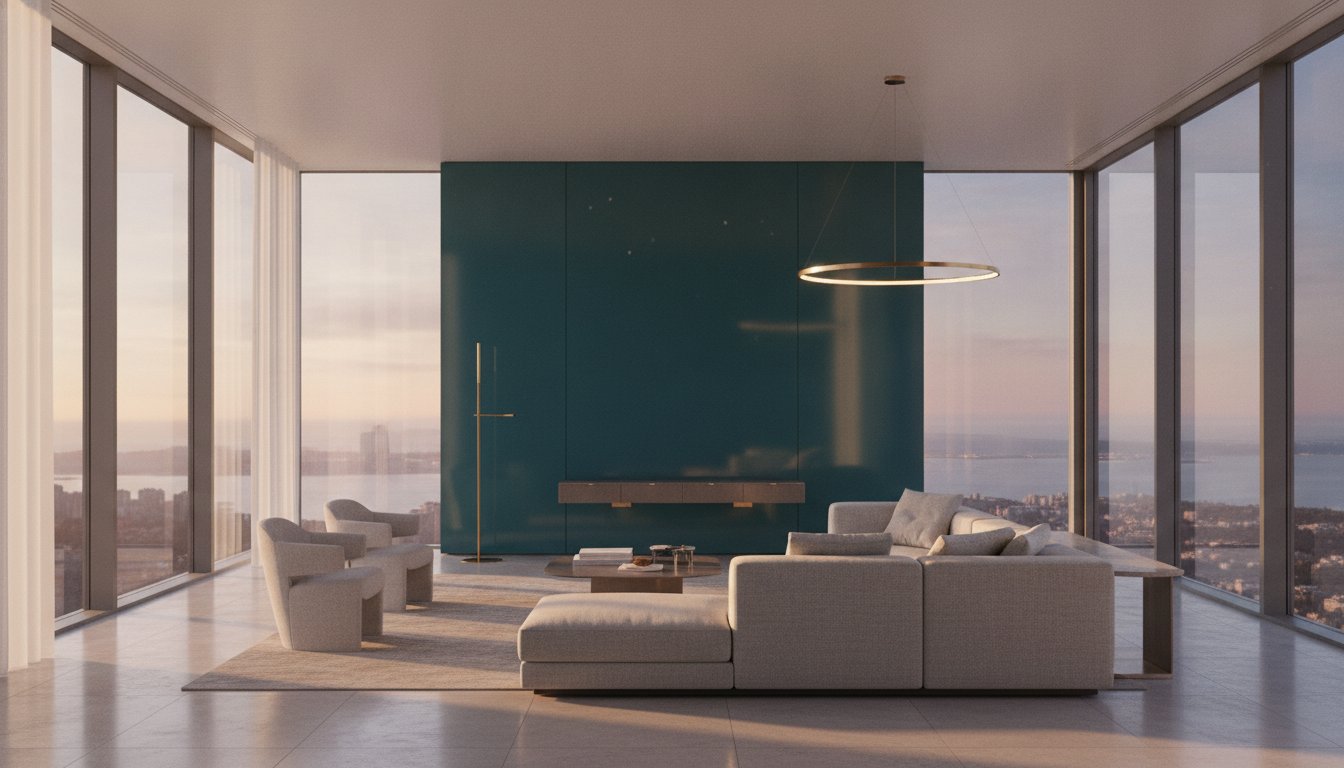
Why does a room filled with the world's most expensive objects often feel cluttered, while a masterfully designed space feels like a deep, collective breath? The most profound luxury is often invisible. It's felt in the quiet harmony between light and shadow rather than seen on a price tag. You've likely felt the anxiety that comes with a high-end renovation. It's the fear that your investment might result in a home that feels tacky or over-decorated. Articulating your personal style amidst a sea of endless choices can feel overwhelming, especially when you want a result that's both sophisticated and uniquely yours.
We're going to demystify this process by exploring the core principles of luxury interior design. You'll discover the foundational rules that transform high-end spaces into timeless masterpieces of comfort and sophistication. We'll examine the strategic value of professional interior architecture, the importance of bespoke elements, and how a clear framework can give you the confidence to invest in quality that lasts. From the precision of space planning to the soul of custom furniture, this is your guide to creating a home that reflects a life well-lived.
Key Takeaways
- Learn why true luxury is defined by a feeling of effortless harmony rather than a price tag, helping you create a space that's sophisticated without being over-decorated.
- Discover how the foundational principles of luxury interior design, such as the Golden Ratio and the Italian Standard of materiality, ensure long-term visual balance.
- Understand the role of invisible design layers, including circadian lighting and sensory planning, in elevating your daily well-being and comfort.
- Gain confidence in choosing bespoke furniture and art consultation to ensure your home reflects a unique narrative that off-the-shelf pieces can't achieve.
- Explore the strategic value of interior architecture in balancing grand aesthetics with the intimate functionality required for high-end residential and commercial spaces.
What is Luxury Interior Design? Defining the Experiential Standard
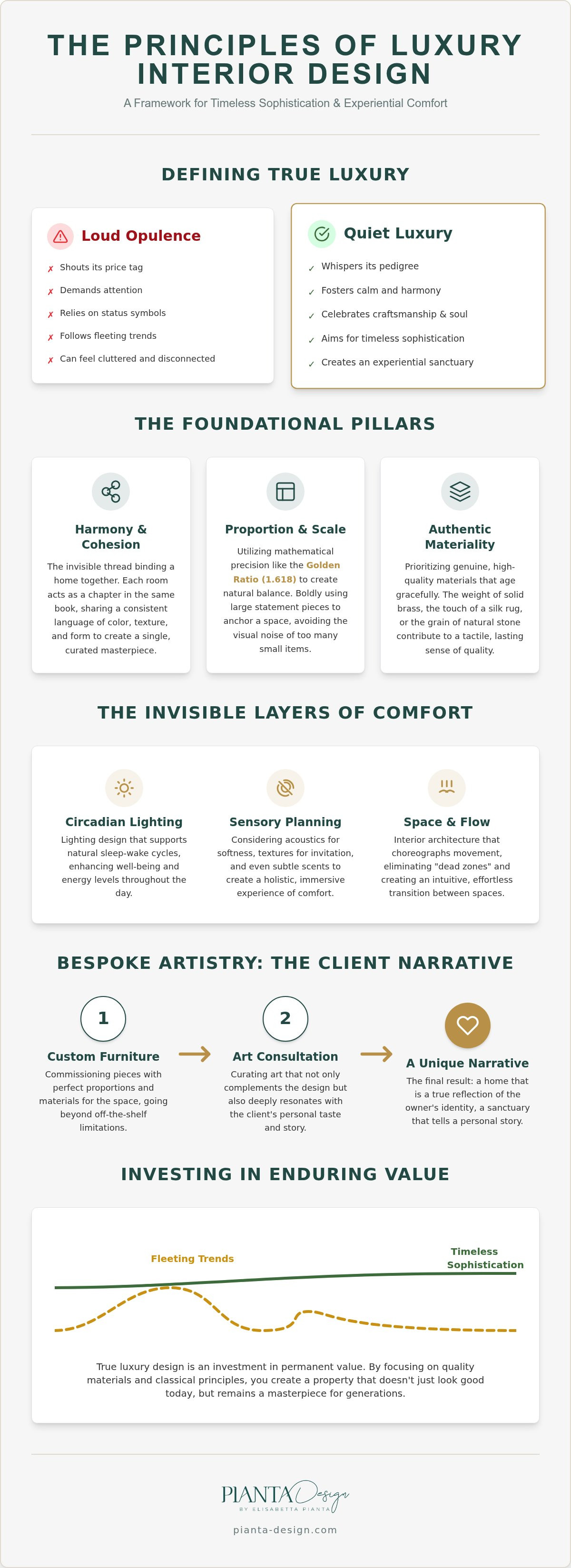
Luxury interior design is often misunderstood as a mere display of wealth. In reality, it represents the pursuit of effortless perfection where every element serves a deliberate purpose. While opulence tends to be loud and demanding of attention, true luxury is a quiet conversation between the inhabitant and their surroundings. It's the difference between a room that shouts its price tag and one that whispers its pedigree. The core principles of luxury interior design prioritize this refined approach, focusing on how a space functions as a seamless, intuitive extension of the person living within it.
As we look toward the design landscape of 2026, the gold standard remains "quiet luxury." This philosophy moves away from status-seeking symbols and toward curated environments that celebrate heritage, soul, and craftsmanship. It's found in the subtle touch of a bespoke silk rug or the satisfying weight of a solid, hand-finished brass handle. These details aren't meant to impress guests; they're designed to nourish the owner. True luxury isn't about what you own, but how those possessions make you feel within your private sanctuary.
The Shift from Aesthetics to Experience
Modern high-end design has moved far beyond the purely visual. It now embraces the subjective well-being of the inhabitants through the lens of spatial psychology. A masterfully planned room uses order and flow to create an immediate, visceral sense of calm. When we design a home, we aren't just placing furniture; we're choreographing an experience. Comfort has become the ultimate luxury in our high-speed world. It's the ability to retreat into a sanctuary where the acoustics are soft, the textures are inviting, and the layout feels entirely natural. This experiential standard ensures that a home isn't just a gallery of beautiful objects, but a functional engine for a better life.
Timeless Sophistication vs. Fleeting Trends
Chasing trends is a dangerous game in the high-end market. Fast-fashion interiors devalue a property over time because they lack the "bones" of true quality. To identify elements that will remain elegant for decades, look for authentic materials and classical proportions that respect architectural history. This commitment to longevity is a hallmark of the art of residential interior design, where the goal is to elevate living through permanent value. By adhering to the fundamental principles of luxury interior design, you ensure that your investment doesn't just look good today, but remains a masterpiece of sophistication for generations to come.
Foundational Principles: Harmony, Proportion, and Materiality
The skeletal structure of any high-end environment rests on mathematical precision. One of the most essential principles of luxury interior design is the application of the Golden Ratio. This ratio, approximately 1.618, dictates the relationship between objects and architectural elements, ensuring that a room feels naturally balanced to the human eye. Without this underlying geometry, even the most expensive furniture can feel out of place. Similarly, the principle of scale demands a bold approach. A common mistake is filling a large room with numerous small items, which creates visual noise. True elegance often stems from a single, massive statement piece that anchors the space and allows the architecture to breathe.
Cohesion acts as the invisible thread that binds a home together. Every room should feel like a distinct chapter in the same book, sharing a consistent language of color, texture, and form. This doesn't mean every space must look identical. Instead, they should share a common soul. This prevents the "showroom" effect, where rooms feel disconnected and jarring. By adhering to these principles of luxury interior design, we create a residence that feels like a singular, curated masterpiece rather than a collection of separate ideas.
The Architecture of Space and Flow
Professional space planning is the bridge between interior design and interior architecture. It's about more than where a sofa sits; it's about eliminating "dead zones" that serve no purpose. In expansive estates, we ensure an intuitive transition between social galleries and private sanctuaries. This flow creates a sense of order that feels effortless to the inhabitant. If you're looking to refine your home's structural narrative, exploring our Interior Architecture services can provide the clarity needed for such complex spatial challenges.
Material Provenance and Authentic Craftsmanship
The "Italian Standard" of materiality is the global benchmark for luxury. It emphasizes that the origin of a material is as important as its appearance. For instance, authentic Carrara marble carries a specific density and veining that mass-produced substitutes simply cannot replicate. Tactile quality is paramount. A hand-finished timber surface possesses a warmth and soul that factory-sanded wood lacks. At Pianta Design, our 30 years of experience have allowed us to build direct collaborations with Italian manufacturers. These relationships ensure that every stone slab and timber beam meets a heritage-grade standard, resulting in one-of-a-kind environments that honor their material roots.
The Invisible Layers: Lighting and Sensory Design
True luxury is often felt before it is observed. It exists in the invisible layers that orchestrate a room's atmosphere, moving beyond the physical objects to influence our immediate emotional state. While furniture and art provide the visual narrative, lighting and sensory design provide the soul. One of the most transformative principles of luxury interior design is the mastery of light as a sculptural tool. It isn't enough to simply illuminate a room; we must layer light to create depth, drama, and emotion. This approach ensures that a space remains dynamic, shifting its character as the day progresses.
We utilize three distinct layers to achieve this effect: ambient for general warmth, task for functional precision, and accent to highlight the architecture's finest details. Modern high-end design also integrates circadian lighting. These intelligent systems mirror the sun's natural progression, shifting from cool, energizing tones in the morning to warm, amber hues at sunset. This isn't just a technical feature; it's a commitment to the inhabitant's biological wellness. Beyond sight, the acoustic profile of a grand hall or a master suite defines its character. Soft textures like silk wall coverings and hand-tufted rugs aren't just aesthetic choices. They serve as acoustic dampeners, absorbing sound to create the quiet, hushed environment associated with premium living. Even scent and temperature are curated elements, acting as the silent markers of a space designed with absolute care.
Mastering Lighting Design
Lighting should always serve the architecture and the art it houses. In coastal Miami residences, we optimize natural light to reflect off water and neutral surfaces, creating an airy, expansive feel. Conversely, in Park City mountain estates, we focus on a warm, intimate glow to contrast the crisp landscape outside. Smart-lighting systems are essential here, allowing for "scenic" settings where a single touch adjusts the mood for an intimate dinner or a vibrant gallery viewing. This level of control ensures your environment always feels intentional and perfectly balanced.
The Tactile Experience
Touch is the most underrated sense in interior decoration. Luxury is found in the juxtaposition of textures: the coolness of raw stone against the softness of velvet or the organic grain of aged timber. We prioritize materials that don't just look beautiful on day one but develop a rich patina over time. A leather-wrapped handrail or a bronze fixture that ages gracefully tells a story of quality and permanence. This tactile depth prevents a space from feeling flat, inviting you to engage with your environment on a physical, visceral level. By following these principles of luxury interior design, we ensure every surface offers a moment of discovery.
Bespoke Artistry: Customization and the Client Narrative
A home only reaches its full potential when it reflects the specific soul of its owner. While high-end showrooms offer beautiful pieces, off-the-shelf furniture rarely aligns with the exacting principles of luxury interior design. True luxury is defined by exclusivity; it's the knowledge that your environment contains elements that exist nowhere else in the world. This bespoke approach transforms a residence from a collection of items into a living narrative. By prioritizing custom solutions, we move beyond the limitations of standard manufacturing to create spaces that are as unique as a thumbprint.
Customization serves a dual purpose. It solves complex spatial challenges that mass-produced pieces simply cannot address, while simultaneously elevating the aesthetic to a level of functional art. Whether it's a dining table carved to fit the specific geometry of a room or a library system integrated into the very architecture of the house, these elements ensure that every inch of space is utilized with intention. This commitment to the one-of-a-kind is what separates a decorated house from a masterfully designed home. If you wish to elevate your space with pieces that are truly your own, our studio offers specialized Custom Furniture Design services to bring your unique vision to life.
The Value of Custom Furniture Design
Designing for the exact dimensions of your life requires a deep collaboration between the designer and the artisan. We don't just select furniture; we envision it. This process ensures that every material, from the choice of grain in the timber to the specific tension of the upholstery, is tailored to your lifestyle. For a deeper look into this meticulous process, explore our Custom Furniture Design Guide. This level of detail ensures that your investment provides both immediate comfort and long-term value.
Curation as a Design Principle
A designer's role often mirrors that of a museum curator. Curation as a design principle involves more than just buying new art; it's about the seamless integration of family heirlooms with modern acquisitions. We look for the common thread between a 19th-century antique and a piece of contemporary sculpture to tell a cohesive story. Focal points are strategically placed to draw the eye, ensuring that your most cherished pieces receive the architectural stage they deserve. Through professional art consultation, we help you build a collection that serves as a visual legacy for generations to come, ensuring your home remains a curated gallery of your personal history.
Applying Luxury Principles Across Diverse Environments
The true test of a designer's skill lies in the ability to translate the principles of luxury interior design across vastly different environments. Whether we are crafting a private residential sanctuary or a high-stakes commercial headquarters, the core tenets of harmony and quality remain constant. In residential projects, the challenge is balancing architectural grandeur with the quiet intimacy required for a home to feel lived-in. Commercial design, by contrast, uses luxury as a tool to communicate brand authority and prestige, ensuring that every material choice reinforces a company’s status and professional vision.
Yacht interior design represents the absolute pinnacle of this adaptive process. Here, the technical execution shifts toward high-precision engineering. We must manage extreme spatial constraints without ever compromising on the "Italian Standard" of elegance we have championed for over 30 years. Every element, from the stability of timber in humid maritime air to the weight of stone slabs, must be meticulously calculated. This ensure both beauty and safety at sea, proving that luxury isn't just an aesthetic but a triumph of thoughtful planning.
The Unique Challenges of Yacht Interior Design
In a maritime environment, material stability is non-negotiable. Weight considerations often dictate the selection of finishes, requiring innovative solutions like honeycomb-backed stone or lightweight veneers that retain the tactile soul of their solid counterparts. We focus on maximizing views and natural light in compact, high-luxury cabins to prevent a sense of confinement. It's where bespoke engineering meets high-end aesthetics; creating a seamless experience that feels as stable and sophisticated as a land-based estate while navigating the open water.
Elevating Local Landscapes (SF, Miami, Park City)
Luxury is never a one-size-fits-all solution; it must respect its geographical context. In the rugged mountains of Park City, we incorporate raw, natural textures into refined mountain estates to bridge the gap between the wild outdoors and interior sophistication. Miami projects demand a different palette, focusing on vibrant light and airy finishes that reflect the city's coastal energy and modernism. San Francisco offers a unique opportunity to blend historic architectural heritage with a modern, forward-thinking sensibility. By adapting the principles of luxury interior design to these specific landscapes, we create environments that feel deeply rooted in their location while maintaining a global standard of excellence.
Crafting Your Timeless Sanctuary
True luxury isn't found in a catalog; it's the result of applying the foundational principles of luxury interior design to the unique narrative of your life. It's the quiet harmony between mathematical precision and the tactile soul of bespoke materials. Whether you're refining a coastal villa in Miami or a high-altitude retreat in Park City, the goal is always a space that feels like an effortless extension of your identity. Quality is a long-term investment that pays dividends in daily comfort and enduring value.
With over 30 years of excellence in high-end design, our studio provides exclusive access to Italian manufacturing and bespoke furnishings that aren't available to the general market. Our award-winning expertise in residential and yacht interiors ensures that every technical challenge is met with artistic brilliance. Begin your journey toward a bespoke interior with Pianta Design today. Your environment has the power to elevate your daily well-being; it's time to create a home that truly reflects the standard of life you've built.
Frequently Asked Questions
What are the 7 elements of luxury interior design?
The seven essential elements include space, light, form, texture, color, pattern, and line. In a high-end context, these aren't just checked off a list; they're orchestrated to create a singular, immersive experience. We focus on how mass creates presence in a room and how texture influences the acoustic profile. Every element must work in absolute harmony to achieve a result that feels both effortless and intentionally curated by following the principles of luxury interior design.
Is luxury interior design always expensive?
Luxury is defined by the quality of the experience and the permanence of the materials rather than just the initial cost. While premium materials like heritage-grade timber or hand-finished stone require a higher investment, true luxury avoids the expensive label when it delivers lasting value. It's about investing in craftsmanship that doesn't need to be replaced. A masterfully planned space saves costs over time by avoiding fleeting trends and expensive structural mistakes.
How do I choose the right luxury interior design firm for my project?
Look for a firm with a proven history of managing complex spatial challenges and a portfolio that reflects diverse environments. It's vital to choose a partner who offers more than just aesthetic advice; they should provide technical expertise in interior architecture and procurement. Check for direct relationships with artisans and manufacturers. A firm like Pianta Design, with over 30 years of experience, bridges the gap between creative vision and technical execution.
What is the difference between a decorator and a luxury interior designer?
A decorator primarily focuses on the aesthetic surface, such as selecting paint colors, fabrics, and furniture. A luxury interior designer operates at a deeper level, often involving interior architecture and space planning. We modify the bones of a building to improve flow, lighting, and function. This comprehensive approach ensures that the beauty of a room is supported by a foundation of structural precision and intuitive living, creating a home that functions as a sanctuary.
Can I achieve a luxury look in a smaller space through space planning?
Luxury isn't a matter of square footage; it's a matter of proportion and intentionality. In smaller environments, we use professional space planning to eliminate clutter and maximize the impact of every architectural feature. Custom, multi-functional furniture allows for a high-end aesthetic without overcrowding the room. By prioritizing the principles of luxury interior design, even the most compact urban residence can feel expansive, sophisticated, and perfectly tailored to your specific lifestyle.
How does lighting affect the perception of luxury in a room?
Lighting is the invisible architect that defines how we perceive textures and volumes. A single, flat light source can make even the most expensive materials look dull. We use layered lighting, including ambient, task, and accent sources, to create depth and drama. By highlighting specific art pieces or architectural details, light guides the eye and sets the emotional tone. It transforms a physical space into a curated atmosphere that feels both warm and inviting.
Why is custom furniture considered a principle of luxury design?
Custom furniture is essential because it guarantees exclusivity and a perfect fit for your home's unique dimensions. Off-the-shelf pieces often require compromises in scale or material that can disrupt a room's harmony. Bespoke design allows us to select specific timber grains, stone patterns, and fabric tensions that align with the overall narrative. It turns functional objects into one-of-a-kind art pieces that reflect the owner's personal taste and specific lifestyle requirements.
How long does a typical high-end residential design project take?
The duration of a project depends on its complexity, but most comprehensive residential transformations take between six to eighteen months. This timeline accounts for the meticulous phases of space planning, material procurement from Italy, and the creation of bespoke furniture. True quality cannot be rushed. Every detail requires careful attention and precision to ensure the final result meets the high standards of a masterfully crafted sanctuary that will last for generations.
