
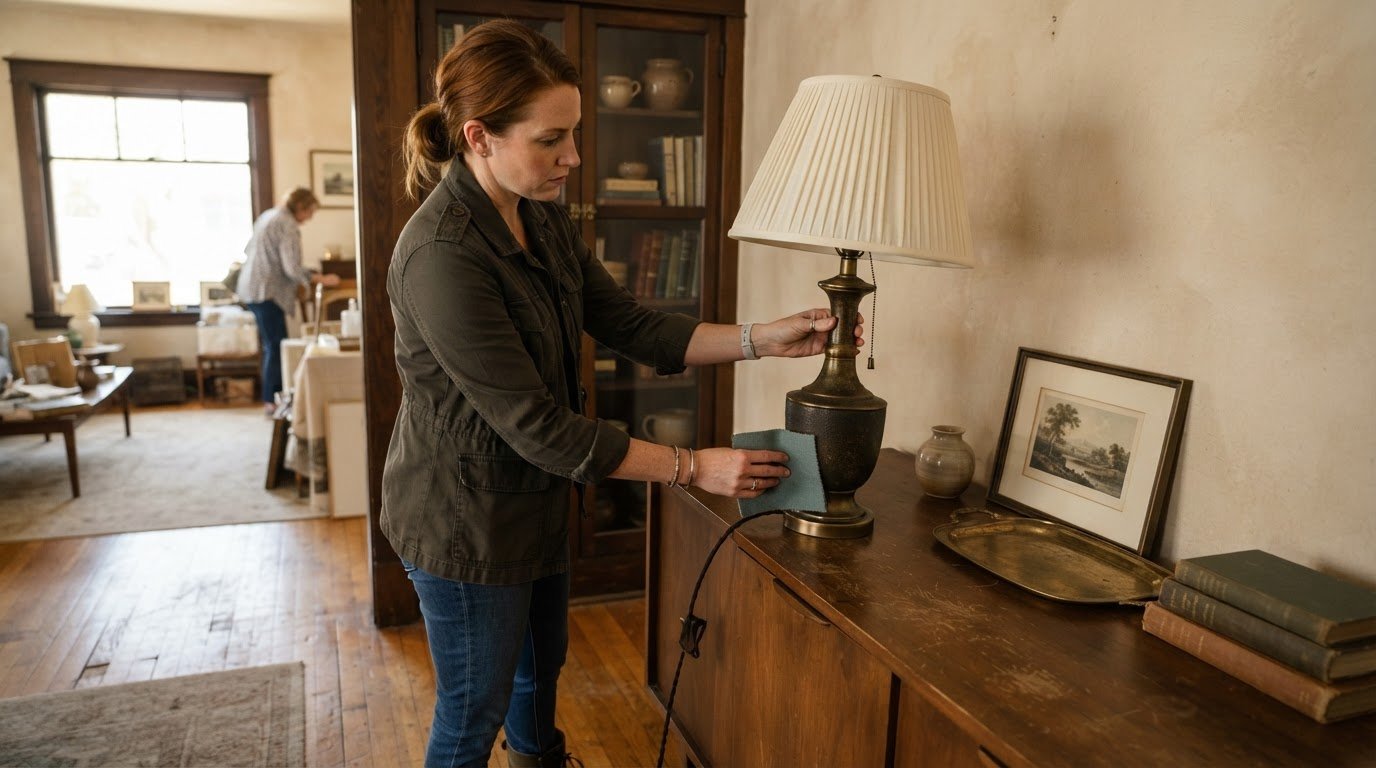
Distinctive rooms often begin with a second look at what already exists. Sourcing one-of-a-kind decor and accessories can start at local thrift stores and estate sales, where furniture, artwork, lighting, and smaller objects may bring character that new pieces can’t replicate. Keep your room’s scale, palette, and practical needs in mind, and choose finds that have a clear place in the space.
Second-hand shopping appeals because a single well-chosen object can add history, texture, and individuality. The best finds are not simply unusual: they also suit the pieces around them and the way you live.
This guide covers where to look, how to assess vintage and pre-owned pieces, and how to choose art, furniture, accessories, and lighting. You’ll also find practical ways to mix eras and materials, shop gradually, and build a considered interior around the objects you genuinely love.
Key Takeaways
- Explore thrift stores, vintage shops, estate sales, and online marketplaces to uncover pieces with character.
- Use a room’s palette, proportions, and intended use to decide whether a second-hand find belongs in your home.
- Choose art, furniture, accessories, and lighting for their craftsmanship and how they work together, not simply because they are unusual.
- Build a personal interior gradually, mixing eras and textures while giving each meaningful piece room to stand out.
1. Shopping second-hand, vintage stores, and online marketplaces
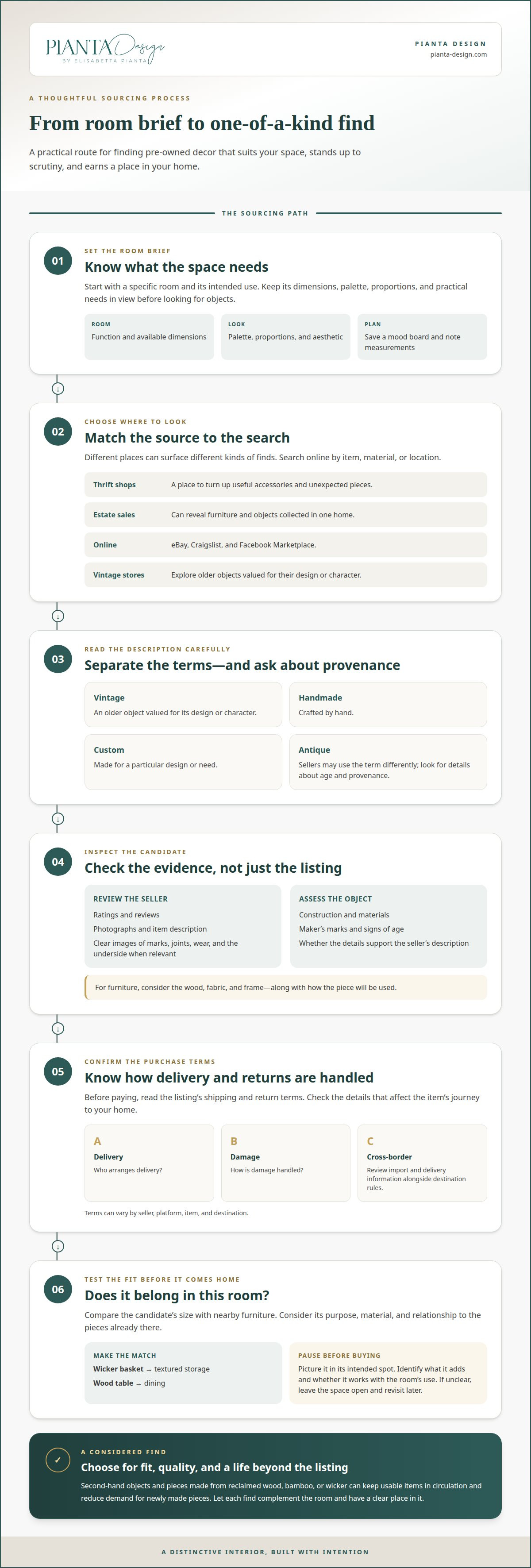
Local thrift shops, vintage stores, and estate sales offer different routes to distinctive finds. Thrift shops may turn up useful accessories, while estate sales can reveal furniture and objects collected in one home. Online, eBay, Craigslist, and Facebook Marketplace let you search by item, material, or location.
Vintage, handmade, custom, and antique describe different qualities. Vintage pieces are older objects valued for their design or character; handmade pieces are crafted by hand, while custom pieces are made to a particular design or need. Sellers may use “antique” differently, so look for details about an object’s age and provenance.
For a room-specific search, save a mood board and note the room’s dimensions, palette, and intended use. Look for a material or form that suits the space, such as a wicker basket for textured storage or a wood table for dining. Compare a candidate’s size with nearby furniture before buying.
On online marketplaces, review the seller’s ratings, reviews, photographs, and item description before purchasing. Ask for clear images of marks, joints, wear, and the underside when those details matter. Professionals can use the same checks, comparing product information and seller credibility across platforms before selecting pieces for a project.
Before paying, read the listing’s shipping and return terms, including who arranges delivery and how damage is handled. For purchases crossing borders, review the seller’s import and delivery information alongside the rules that apply at the destination. Terms can vary by seller, platform, item, and destination.
To assess quality and authenticity, compare construction, materials, maker’s marks, and signs of age with the seller’s description. For more sustainable choices, consider second-hand objects or pieces made from reclaimed wood, bamboo, or wicker. Reusing decor keeps usable items in circulation and reduces demand for newly made pieces.
2. Buying decor slowly and choosing pieces you love
Let a room develop through deliberate choices rather than filling every surface at once. Before bringing home a decor item, consider its purpose, material, and relationship to the pieces already in the space. A ceramic bowl might add color to a console, while a vintage book can bring a personal touch to a shelf. Buying gradually gives each object a reason to stay.
Begin with foundation pieces that serve everyday needs and can remain useful as tastes change. A well-made wooden dining table or leather armchair can anchor a room, while sturdy frames and durable fabrics help furniture suit its intended use. Consider construction as well as appearance: a beautiful chair should feel comfortable, and a dining table should fit the room and its routine.
Choose decor with a meaningful connection to the people who live there. Family photographs, collected artwork, vintage books, and inherited objects can make a home feel more personal than a display of unrelated trends. Even a small object has presence when its story or material matters to you. Choose something you’ll enjoy seeing each day, not simply something to fill an empty corner.
Pairing eras can make an interior feel collected rather than coordinated. Place a contemporary lamp beside an antique side table, or hang modern artwork above a traditional console. A shared color, shape, or material can connect the contrast. Wood, wool, and ceramic bring warmth, while varied textures keep a restrained palette from feeling flat.
Try a simple pause before purchasing: picture the piece in its intended spot, identify what it adds, and decide whether it works with the room’s use. If the answer is unclear, leave the space open and revisit the idea later. For rooms that need a more cohesive direction, thoughtful interior planning can help bring lasting pieces into a balanced whole.
3. Home decor categories including art, furniture, accessories, and lighting
Art, furniture, accessories, and lighting each play a distinct role. A painting can establish a room’s color direction; a sofa or dining table shapes how people use it. Vases, ceramics, and textiles add texture, while floor lamps, sconces, and pendants create different layers of light. Together, these choices make a room feel considered rather than assembled by category.
Assess each piece for its purpose and construction. For furniture, examine the wood, fabric, and frame, then consider how you’ll use it. Art should suit the wall’s scale and the surrounding palette. Smaller decor made from glass, wool, or ceramic can add tactile contrast without competing with a room’s focal point.
Professional buyers may source through trade-only suppliers, whose offerings can include products not available to the general public. Home decor businesses may also buy wholesale in bulk, often at lower prices than retail. For professionals with a valid supplier trade account, trade discounts typically range from 20% to 50% off retail prices. Check product quality before placing a bulk order.
Working with distributors can provide product knowledge and resources for future projects. Review portfolios and referrals to find suppliers whose work suits your needs, then assess samples or showroom pieces for color, scale, and material. Clear project requirements help make sourcing choices more purposeful.
A curated home should reflect its residents, not a catalogue or passing trend. Combine a family photograph, collected artwork, and an architectural object used as sculpture to express personal history. Pieces from different eras can sit comfortably together when a shared material, shape, or color connects them. Each object can contribute to a home’s character and function.
4. Sourcing decor from thrift stores and estate sales
Start a thrift-store visit with a room in mind, not a list of objects to buy. Note the space’s function, available dimensions, and aesthetic, then look for a piece that meets a need. A small framed print might enliven a narrow hallway, while a substantial mirror can add presence above a console. This approach connects purchases to the interior rather than novelty.
At an estate sale, scan each room for objects that may be overlooked outside their usual setting. A wooden box could become desk storage; a ceramic vessel might work as a sculptural accent. Examine the underside, joints, finish, and maker’s marks. For furniture, check that drawers open smoothly and the frame feels sound before considering restoration or placement.
To find local artisans, antique shops, and estate sales, search map listings and community event calendars using your town or neighborhood name. Try specific phrases such as “antique furniture” or “estate sale this weekend,” then follow local makers and shops on social media for new work and upcoming events. Nearby craft fairs can introduce you to artisans whose materials and techniques suit your aesthetic.
Keep a short reference file on your phone with room photographs, measurements, and the colors or materials you’re looking for. At a sale, compare an object’s scale with your images and note its condition. For a chair, inspect the frame and upholstery; for a lamp, examine its base, shade, and visible wiring. Practical fit matters as much as a compelling silhouette.
After a promising find, picture it in its intended position and consider what it will sit beside. A weathered wood stool can complement contemporary furniture when its tone echoes another natural material in the room. Keep useful notes about the object’s dimensions, condition, and intended placement, so future purchases build on the same direction. For help bringing collected finds into a coherent interior, plan a thoughtfully balanced space.
Pianta Design
Pianta Design can help bring distinctive finds into a cohesive interior, balancing their character with the room’s proportions, materials, and everyday use. In Park City, Salt Lake City, San Francisco, and Miami, Residential Interior Design can shape the space around vintage pieces, while Custom Furniture Design can address needs a found piece cannot meet.
Whether you’re refining a single room or considering a broader residential, commercial, or yacht interior, the aim is a thoughtful relationship between collected objects and the overall design. Contact Pianta Design to discuss how your finds and ideas could shape a considered space.
Let Your Finds Shape What Comes Next
A room can evolve as your life, routines, and collections change. Let a new discovery guide the next decision rather than dictate the entire interior: notice what it brings to the space, then build around that quality with patience. This gives sourcing one-of-a-kind decor and accessories a purpose beyond the thrill of finding something unusual. The result is a personal, considered setting that can grow over time.
When you want a more cohesive direction, Pianta Design can connect collected pieces with the larger vision, whether you’re shaping a residential interior, a commercial space, or custom furniture. Start with the objects you’ve found, the atmosphere you want to create, and how the space needs to work.
Contact Pianta Design to discuss your project and explore how your favorite finds could become part of a distinctive, harmonious interior.
Frequently Asked Questions
Where can I source one-of-a-kind home decor and accessories?
Look to local antique shops, artisan markets, estate sales, and online listings for distinctive finds. When sourcing one-of-a-kind decor and accessories, focus on a particular room or object, such as a hand-thrown vase for an entry table. Local sources make it easier to see an item in person, while online listings can expand your choices beyond the neighborhood.
What are the best marketplaces for unique vintage and handmade decor?
The right marketplace depends on whether you want vintage, handmade, or antique pieces. General platforms such as eBay and Facebook Marketplace offer varied home goods, while local artisan fairs help you discover makers and their work directly. Compare listings for dimensions, materials, condition, and clear photographs to judge whether an item suits your space.
How much do one-of-a-kind decor and accessories typically cost?
There is no single typical price for distinctive decor; cost depends on the piece. Material, condition, maker, age, provenance, rarity, and size can all affect its value. A handmade object and an antique with documented history may be priced differently, even if they serve a similar purpose. Compare pieces of similar type and condition before deciding what fits your priorities.
How can I safely buy one-of-a-kind decor online and avoid scams?
Use established marketplaces, keep communication and payment within the platform, and review the seller’s history before purchasing. Request current photographs of the exact item, including close-ups of wear, maker’s marks, and areas not shown in standard listing images. Read the shipping and return terms carefully, and keep a record of the listing and messages. Be cautious if details change or the seller presses you to pay elsewhere.
