
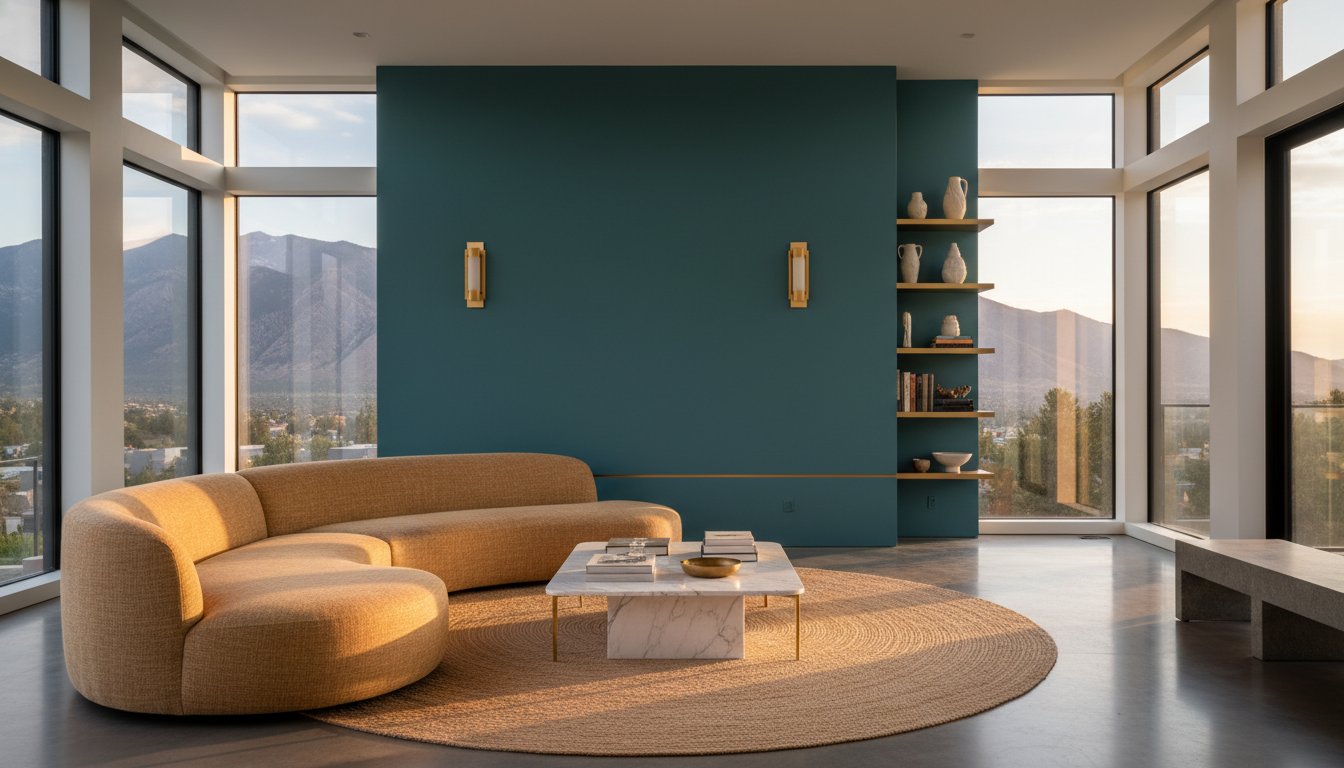
What if the secret to a truly modern Salt Lake City home isn't found in minimalist glass and steel, but in the soft patina of unlacquered brass and the inviting curves of a sculptural linen sofa? Many homeowners worry that adopting contemporary aesthetics might leave their living space feeling sterile or disconnected from the traditional architecture of the Mountain West. You likely desire a residence that honors the permanence of the Wasatch range without feeling like a dated mountain cabin. Mastering the salt lake city transitional design style allows you to strike this delicate balance, creating a sanctuary that feels both deeply personal and ultra-sophisticated.
In this 2026 guide, we'll show you how to blend heritage and modernity through a curated roadmap of materials, furniture, and lighting. We'll explore why the local market is shifting away from stark grays toward earthy tones like sage and warm ochre, and how bespoke finishes can elevate your home's narrative. You'll discover the precise steps to curate an environment that feels assembled over time, reflecting a life well-lived through the lens of high-end interior architecture and intentional design.
Key Takeaways
- Learn how to seamlessly marry traditional silhouettes with contemporary finishes to create a home that feels both established and modern.
- Understand the essential role of interior architecture in establishing the structural "bones" required for a truly sophisticated, high-end space.
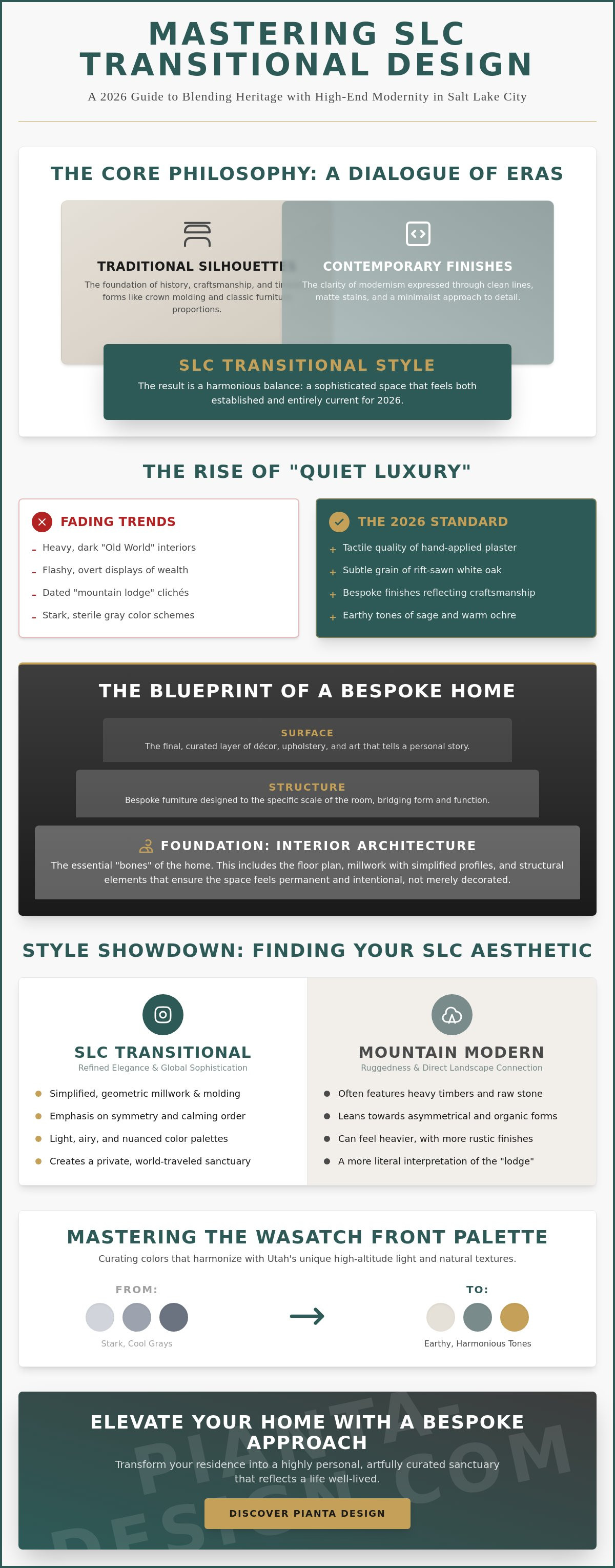
- Distinguish between the ruggedness of Mountain Modern and the refined elegance of the salt lake city transitional design style to find your perfect aesthetic.
- Discover how to select a color palette and materials that harmonize with Utah’s unique high-altitude light and the natural textures of the Wasatch Front.
- Gain insight into the bespoke design process that transforms a standard luxury residence into a highly personal, artfully curated sanctuary.
Defining the Salt Lake City Transitional Design Aesthetic
Salt Lake City's architectural landscape is undergoing a profound metamorphosis. The days of heavy, dark, and rustic "Old World" interiors are fading, replaced by a more nuanced approach that favors light, space, and texture. This evolution has solidified the salt lake city transitional design style as the premier choice for the region's luxury market. At its heart, this aesthetic is the seamless marriage of traditional silhouettes and contemporary finishes; it's a dialogue between the past and the present that feels entirely current for 2026.
To understand What is Transitional Design, one must look beyond a simple mix of furniture. It isn't merely placing a modern lamp on an antique table. Instead, it's a cohesive philosophy rooted in interior architecture. It demands a disciplined eye to ensure that the clean lines of modernism don't feel sterile and the weight of tradition doesn't feel stifling. In the 2026 design landscape, this is often expressed through "quiet luxury." This movement prioritizes the tactile quality of a hand-applied plaster wall or the subtle grain of white oak over flashy, overt displays of wealth. A cohesive transitional home feels intentional from the foundation up, rather than looking like a collection of mismatched eras.
The Core Philosophy: Balance and Harmony
The true power of this style lies in the tension between old-world craftsmanship and new-world minimalism. We find beauty in the contrast: a crown molding with a simplified profile or a classic pedestal table finished in a matte, contemporary stain. Symmetry plays a vital role here, providing a sense of calm and order that the human eye naturally craves. Transitional design is a timeless evolution of living rather than a fleeting trend. It creates a space where every element feels intentional, balanced, and harmonious.
Why Salt Lake City Homeowners are Choosing Transitional
The shift toward this aesthetic in Utah is driven by a more globalized perspective. With the growth of the local tech sector and increased international travel, Salt Lake City homeowners are seeking interiors that reflect a sophisticated, world-traveled sensibility. They're moving away from the "mountain lodge" clichés of the past in favor of lighter, airy environments. These homes serve as private sanctuaries, offering a visual and emotional reprieve from the bustling outside world. By choosing the salt lake city transitional design style, residents can maintain a connection to the rugged Utah landscape while enjoying the refined comfort of a modern, bespoke interior.
The Architectural Elements of Transitional Interiors in Utah
Achieving a truly sophisticated salt lake city transitional design style requires looking far beneath the surface of decor and upholstery. It begins with the structural "bones" of the home. While many homeowners focus on furniture selection, the most successful luxury residences rely on a rigorous foundation of interior architecture to bridge the gap between traditional heritage and modern clarity. This architectural approach ensures that the space feels permanent and intentional, rather than merely decorated.
Custom furniture design plays a pivotal role in this structural dialogue. When standard showroom pieces fail to capture the specific scale of a grand Wasatch Front living room, bespoke creations become necessary. These pieces allow for the integration of classical proportions with contemporary, streamlined silhouettes. By focusing on the intersection of form and function, we create a residence that feels cohesive from the initial floor plan to the final, hand-finished detail. This level of precision is what distinguishes a professionally designed home from a generic retail interior.
Millwork and Molding: Simplified Elegance
Traditional millwork serves as a primary anchor in transitional spaces, yet it must be executed with a modern restraint. Instead of the heavy, ornate carvings often found in older Utah estates, we favor wainscoting and crown molding with cleaner, more geometric profiles. Rift-sawn oak is a preferred material for these elements, offering a tight, linear grain that feels inherently contemporary. To achieve the perfect balance, we often contrast substantial timber beams with light, hand-applied plaster walls. This juxtaposition allows the architectural weight to feel grounded without overwhelming the room's airy, elevated atmosphere.
The Impact of Professional Space Planning
The flow of a home dictates the daily experience of its inhabitants. In Salt Lake City, the challenge often lies in managing the transition between expansive, open-concept living areas and the intimate, traditional zones required for privacy. Expert residential interior design requires a deep understanding of floor plan optimization to ensure these transitions feel natural. We use statement art and carefully positioned furniture groupings to anchor large rooms, creating distinct "destinations" within a singular space. If you're looking to redefine your home's layout, our professional space planning services can help you unlock the full potential of your property's footprint.
This structural clarity provides the necessary canvas for the more sensory elements of design. By establishing a strong architectural framework, the subsequent layers of color, texture, and light can shine with greater intensity. It's this commitment to the "bones" of the building that allows a home to stand the test of time, remaining relevant as trends shift and evolve.
Transitional Style vs. Mountain Modern: Navigating SLC Trends
A common misconception in the Utah market is that "Mountain Modern" and "Transitional" are synonyms. While both styles seek a middle ground between eras, they operate on different emotional frequencies. Mountain Modern leans into the rugged permanence of the landscape, often utilizing heavy timbers and raw, unrefined stone. In contrast, the salt lake city transitional design style offers a more metropolitan and polished alternative. It prioritizes the elegance of the city over the rustic nature of the woods, even when the mountains are visible from the window.
You don't need to abandon the local character to achieve this look. Instead of a rough-hewn timber mantle, consider a limestone surround with a honed, matte finish. Replace the heavy log accents with sleek, rift-sawn oak cabinetry. This allows you to reference the environment without falling into the "cabin" clichés that can make a luxury home feel dated or thematic. Transitional design is about refinement and curation, ensuring that the connection to nature feels sophisticated rather than literal.
When to Lean Traditional
Preserving the architectural heritage of Salt Lake City's historic neighborhoods is essential for an authentic home. If your residence features original leaded glass windows or hand-carved staircase railings, these shouldn't be stripped away. They serve as the perfect traditional counterpoint to a contemporary art collection. Mastering the core elements of interior design, particularly texture and form, allows these heirloom pieces to act as focal points that ground a room's modern energy. Heritage features provide a sense of soul that new construction often struggles to replicate.
When to Introduce Modernity
Modernity should be introduced where it adds function and visual lightness. Steel-framed doors or slim-profile glass partitions can open up a traditional floor plan without sacrificing its architectural integrity. Lighting design is perhaps the most effective tool for this transformation. A sculptural, contemporary chandelier can instantly modernize a room with traditional crown molding. The goal is to avoid the "coldness" of pure minimalism by ensuring every modern material is balanced by a warm, tactile surface. Think of industrial steel paired with velvet, or expansive glass softened by hand-loomed wool drapery. This balance ensures the salt lake city transitional design style remains inviting and livable.
Mastering the Palette: Colors and Textures for the Wasatch Front
The sensory experience of a luxury home is dictated by the interplay of light, color, and touch. In the salt lake city transitional design style, this relationship is particularly complex due to the unique geographic conditions of the Wasatch Front. For 2026, we're seeing a definitive departure from the clinical, high-contrast black and white interiors of previous years. Instead, the focus has shifted toward a "collected" aesthetic that feels grounded in the natural world, utilizing a palette that draws inspiration directly from the surrounding stone, sage, and sky.
Depth is achieved through the artful layering of textures. We combine the crispness of fine linen with the weight of mohair velvet and the organic warmth of hand-stitched leather. This tactile variety prevents a neutral room from feeling flat or uninspired. By mixing these materials, we create a residence that feels as good as it looks, fostering a sense of well-being that is central to our design philosophy. This approach ensures that even the most sophisticated spaces remain inviting and intimately connected to the inhabitant's lifestyle.
Working with Utah’s Natural Light
High-altitude light possesses a specific quality that can dramatically alter interior paint. The reflection from the mountains often introduces cool blue or purple undertones into a room, which can make traditional "warm" beiges look pink or muddy during the long SLC winters. To counter this, we curate a selection of "New Neutrals" for 2026, including soft clays, warm ochres, and creamy whites that maintain their integrity regardless of the season. Large, expansive windows are essential, yet they require custom window treatments to control the intensity of the sun. Lighting design is the jewelry of the home, providing the final, essential layer of warmth and atmosphere once the sun dips behind the peaks.
Materiality: From Italian Marble to Utah Quartzite
Our global perspective allows us to blend the finest imported materials with local treasures. We often pair authentic Italian marble, sourced for its unique veining and historical prestige, with durable Utah quartzite. This juxtaposition creates a visual dialogue between international luxury and regional permanence. To add further interest, we vary the finishes of these stones; a honed, matte floor might be contrasted with a polished vanity top. This subtle play of light across different surfaces adds a layer of quiet sophistication that defines a truly bespoke home. If you're ready to define your home's unique signature, our expert material and finish selection services can guide you through every choice.
The 2026 palette isn't about following a script; it's about creating an atmosphere. By understanding how local light interacts with global materials, we craft environments that feel both ultra-sophisticated and deeply rooted in the Salt Lake City landscape. It's this level of detail that transforms a house into a sanctuary.
Elevating Your SLC Home with Pianta Design’s Bespoke Approach
Creating a residence that perfectly captures the salt lake city transitional design style requires more than just an eye for aesthetics; it demands a deep understanding of architectural integrity and global sourcing. Pianta Design brings a 30-year legacy of excellence to the Wasatch Front, offering a perspective shaped by high-end projects in both the California and Utah luxury markets. This dual-market expertise allows us to infuse the metropolitan sophistication of San Francisco and Miami into the rugged, expansive landscapes of Salt Lake City. Our role as your interior designer is to act as both a visionary and a meticulous project manager, ensuring that every choice reflects a commitment to quality and longevity.
A significant advantage of our bespoke approach is our exclusive access to premier Italian manufacturers. While many local studios rely on domestic showrooms, we bridge the gap to international craftsmanship, providing our clients with custom furniture design that cannot be replicated. This direct connection to heritage artisans ensures that every stone, fabric, and timber element in your home possesses a unique patina and an unparalleled level of finish. We manage the entire procurement and project management cycle, allowing you to enjoy the creative evolution of your home without the burden of logistical complexity.
The Pianta Process: From Concept to Curation
Our collaborative journey begins with a comprehensive initial consultation, where we align your lifestyle needs with our design philosophy. We utilize advanced 3D visualization to allow you to walk through your future home before a single material is ordered. Once the vision is set, we provide rigorous construction oversight and contractor coordination to ensure the architectural plans are executed with precision. The process culminates in a "white glove" installation and professional art consultation, where every piece is placed to optimize the flow and emotional resonance of the space.
A Legacy of Sophistication across Salt Lake City
We specialize in handling complex, one-of-a-kind residential builds that require a nuanced touch and a global eye. Whether you're renovating a historic estate or embarking on a new construction project, our goal is to deliver timeless sophistication blended with a modern sensibility. We believe that the quality of your environment directly influences your daily well-being, and we're dedicated to creating spaces that serve as authentic, elevated sanctuaries. To begin the journey of transforming your residence into a masterpiece of the salt lake city transitional design style, we invite you to reach out for a private consultation.
Shaping Your Future Sanctuary
The journey to a refined home requires a delicate understanding of how history and innovation coexist. You've seen how the salt lake city transitional design style transcends simple decor, relying instead on the structural integrity of interior architecture and a palette tuned to the Wasatch Front's unique light. By prioritizing high-end materials and custom silhouettes over fleeting trends, you can create a residence that feels both profoundly grounded and effortlessly modern.
With over 30 years of high-end residential experience and a global footprint spanning San Francisco, Miami, and Salt Lake City, Pianta Design is uniquely positioned to guide this evolution. Our exclusive partnerships with Italian manufacturers bring a level of artistry to your home that remains unmatched in the local market. We invite you to explore the possibilities of a space designed with precision and passion. Begin your transformation with Pianta Design’s bespoke services. Your home should be more than a place of residence; it should be a curated reflection of your highest aspirations.
Frequently Asked Questions
What is the difference between transitional and traditional design?
Transitional design is a marriage of traditional silhouettes and contemporary finishes, whereas traditional design adheres strictly to historical motifs and ornate flourishes. While traditional spaces often feel formal and heavy, a transitional home simplifies these classical forms. It favors clean lines and a restrained palette while maintaining the comfort and familiarity of heritage architecture.
Does transitional design work in Park City mountain homes?
Transitional design is exceptionally effective in mountain environments like Park City. It offers a sophisticated evolution of the "Mountain Modern" aesthetic by replacing rustic clichés with refined materials. By blending organic textures with polished finishes, you can honor the rugged Utah landscape while maintaining a world-class, metropolitan standard of luxury.
How do I choose the right color palette for a Salt Lake City home?
Selecting the right palette requires understanding Utah's high-altitude light. The blue-toned reflections from the mountains can make cool grays feel sterile or muddy during the winter. Instead, choose "New Neutrals" like warm whites, soft clays, and earthy tones to create a cohesive salt lake city transitional design style that feels inviting year-round.
Is transitional design still popular in 2026?
This aesthetic remains the dominant choice for luxury homes in 2026. The current design landscape favors "quiet luxury" and collected spaces that feel personal rather than staged. Transitional design provides the perfect framework for this movement, offering a timeless elegance that avoids the coldness often associated with pure minimalism.
Can I mix modern art with transitional furniture?
Mixing contemporary art with transitional furniture is a core principle of high-end curation. A bold, modern canvas provides a striking counterpoint to traditional millwork and classic upholstery. This juxtaposition creates the visual tension and sophisticated energy that define a professionally designed home, ensuring the space feels both curated and alive.
What are the best materials for a transitional kitchen in Utah?
The best materials for a Utah kitchen include rift-sawn oak cabinetry and natural stone like quartzite or Italian marble. Favor honed or matte surfaces over high-gloss finishes to add tactile depth to the space. Integrating unlacquered brass hardware and hand-applied plaster walls will further elevate the room's architectural character and permanence.
How long does a full-service interior design project in SLC usually take?
Full-service residential projects in Salt Lake City typically require 12 to 24 months from concept to completion. This timeframe allows for meticulous space planning, bespoke material procurement, and construction oversight. Achieving a high-end result requires a disciplined approach to ensure every custom detail is executed with the necessary precision.
Do I need an interior architect or just a decorator for a transitional look?
You typically need an interior architect to achieve a truly sophisticated transitional look. This style relies on the structural "bones" of the home, such as custom millwork, integrated lighting design, and optimized floor plans. A decorator focuses on surface layers, while an architect reshapes the environment to ensure the salt lake city transitional design style feels intentional and permanent.
