
The true mark of a legacy home isn't the price of its stone; it's how that stone breathes under the salty mist of the San Francisco Bay or the intense alpine sun of Park City. You recognize that the right material and finish selection defines the soul of your environment, yet it's easy to feel overwhelmed by the technical demands of different climates. Whether you're battling Miami's 80% average humidity or the dry, abrasive snow of the Wasatch Range, the wrong choice can turn a masterpiece into a maintenance burden within just three seasons.
It's natural to worry that a "trendy" texture might look dated by 2030, or that a rare Italian marble won't withstand the daily rituals of a modern family. You're looking for something beyond commodity finishes found in every high-end catalog. This article will help you curate a timeless, high-performance palette that balances global luxury with the specific durability requirements of your region. We'll examine how to source bespoke Italian craftsmanship and integrate a cohesive design language that ensures your home remains as resilient as it is beautiful.
Key Takeaways
- Understand how to navigate the complexities of material and finish selection to ensure your home remains timeless while withstanding the unique environmental demands of coastal or mountain microclimates.
- Discover the art of using premium finishes as the "skin" of your interior architecture to communicate a cohesive narrative of luxury and sophistication from the very first touch.
- Unlock the procurement advantage of manufacturer-direct Italian craftsmanship, moving beyond standard showrooms to secure bespoke commissions that define the gold standard of design.
- Master practical techniques like the "Rule of Three" and the "Anchor" method to harmoniously balance contrasting textures and noble materials across your living spaces.
- Explore the Pianta Design approach to technical implementation, from initial aesthetic curation to the drafting of precise finish schedules tailored to your specific lifestyle needs.
The Strategic Importance of Material and Finish Selection in Luxury Design
In the world of high-end architecture, materials function as the literal skin of a building. They define the boundary between structural necessity and human experience. A thoughtful material and finish selection process transforms a static structure into a living narrative, where every surface tells a story of heritage and intent. When you step into a curated space, the narrative begins at the fingertips. The cool touch of honed Carrara marble or the subtle grain of wire-brushed European oak communicates a sense of place long before the eye processes the full layout. This tactile dialogue is a cornerstone of Interior design principles, ensuring that the visual harmony of a room is supported by a physical reality that feels authentic and grounded.
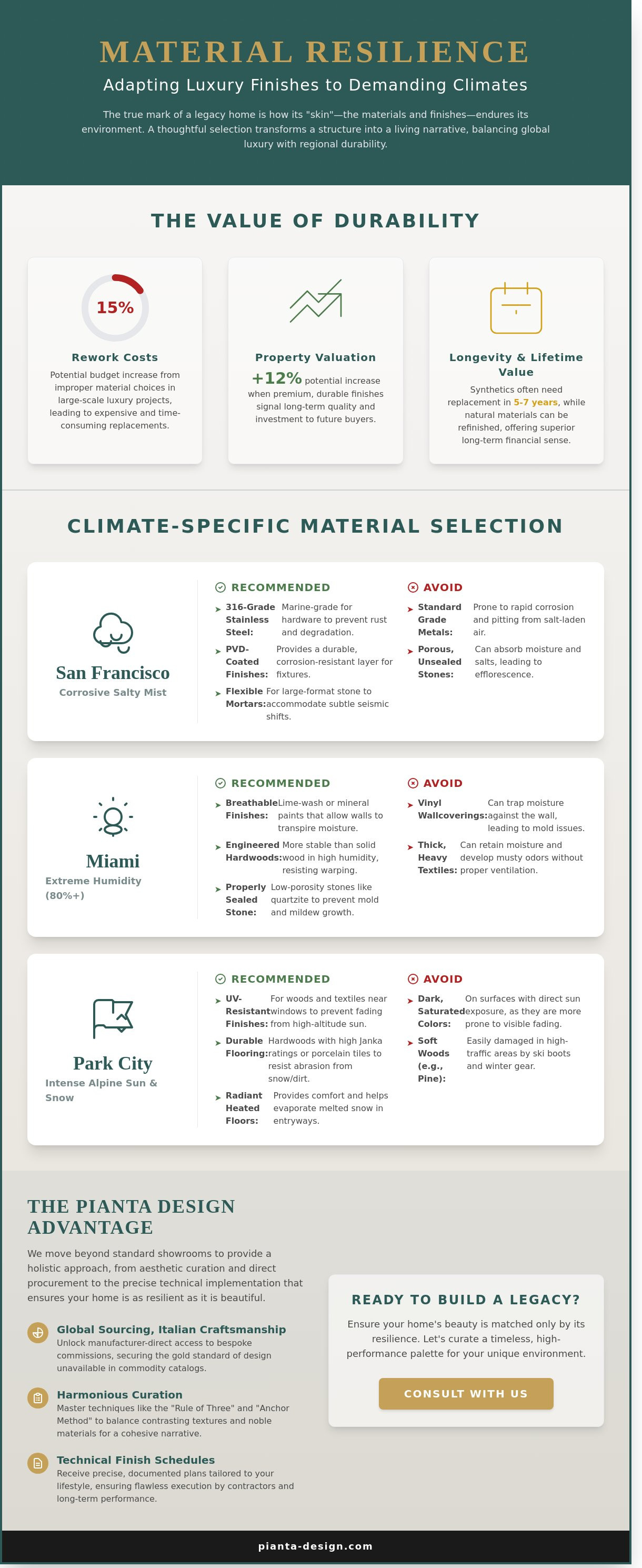
Professional designers prioritize this selection phase to eliminate the expensive trial and error that often plagues luxury builds. In projects exceeding 5,000 square feet, improper material choices can lead to rework costs totaling 15% of the overall construction budget. By curating a cohesive palette early, we ensure that light interacts beautifully with every texture, preventing the flat or jarring atmosphere that occurs when finishes are chosen in isolation. It's about creating a sensory equilibrium where the weight of a brass handle and the softness of a silk-blend wallcovering work in concert to evoke a feeling of effortless permanence.
Beyond Aesthetics: The Functional Framework
Materials do more than look beautiful; they perform vital roles in a home's environmental health. Hard surfaces like polished concrete reflect light deeply into a floor plan, while porous materials and heavy textiles absorb sound to manage internal acoustics. The success of residential interior design depends on matching a finish's durability to its daily use. In high-traffic zones like kitchens or entryways, we select stones with low porosity scores to resist staining. Conversely, ornamental gallery spaces allow for more delicate, artisanal finishes where the focus remains on visual impact rather than heavy wear. This strategic zoning ensures the home remains pristine for decades, not just the first year.
The Financial Logic of Quality
Investing in premium materials is a calculated financial decision rather than a mere indulgence. While engineered alternatives might offer a similar look at a lower initial cost, premium natural stone and solid hardwoods provide a superior lifetime value. These materials can be refinished and restored by experts like Cabinet refinishing Denver, whereas synthetic options often require total replacement after five to seven years of use. Material integrity is the foundation of luxury, representing the honest marriage of raw substance and expert craftsmanship. High-quality finishes can increase property valuation by up to 12% according to 2023 real estate market data. A curated material and finish selection signals to future buyers that the home was built with a commitment to longevity, turning the interior itself into a tangible asset that appreciates alongside the architecture.
Regional Durability: Adapting Selections to San Francisco, Miami, and Park City
True luxury transcends aesthetics; it's a sophisticated dialogue between a structure and its environment. A residence in San Francisco’s Sea Cliff faces vastly different atmospheric pressures than a penthouse in Miami’s Brickell district. In the Bay Area, the air carries a persistent salinity that can degrade standard hardware in fewer than five years. We prioritize 316-grade stainless steel or PVD-coated finishes that resist the corrosive touch of the Pacific mist. Seismic flexibility is also a vital design pillar. We specify high-performance, flexible mortars for large-format stone installations to ensure your interior remains pristine through the region’s subtle tectonic shifts.
Miami demands a different technical rigor. With average humidity levels frequently exceeding 80%, the material and finish selection must prioritize breathability and moisture resistance. We often move away from traditional vinyl wallcoverings, which can trap condensation, in favor of lime-based Venetian plasters. These natural finishes allow walls to breathe, naturally inhibiting mold growth in tropical climates. For those iconic floor-to-ceiling vistas, we select glass with specialized interlayers that block 99% of UV rays, protecting your curated art and bespoke textiles from the relentless Florida sun.
Coastal Considerations for Miami and the Bay Area
Waterfront living requires a commitment to non-corrosive elements. We utilize marine-grade bronzes and anodized aluminums that develop a graceful patina rather than structural decay. In these high-exposure zones, the material and finish selection focuses on longevity. High-performance coatings for external-facing surfaces are essential to combat the UV index, which often hits 11+ in Miami. Breathable, mineral-based paints ensure that the vibrant coastal light doesn't result in peeling or bubbling over time.
Mountain-Ready Materials for Park City and Salt Lake City
Park City and Salt Lake City present the unique challenge of a 7,000-foot altitude where the air is remarkably dry. During winter, indoor humidity often drops below 20%, which causes standard solid hardwoods to contract and gap. We recommend high-quality engineered flooring with a thick wear layer; it offers the stability needed to perform alongside radiant heating systems. The aesthetic here mirrors the Utah landscape through the use of noble raw materials. We often integrate reclaimed wood or local limestone to ground the home in its rugged surroundings. To ensure your mountain retreat maintains its elegance, we select textiles with high natural fiber content that won't become brittle in the sun-drenched, high-altitude air. If you're ready to refine your space, our experts can help you achieve a harmonious balance between form and function.
Salt Lake City projects require a delicate equilibrium. We bridge the gap between urban sophistication and mountain performance by selecting materials that feel at home in a metropolitan loft but possess the durability of a ski chalet. This involves using matte-finished stones and wire-brushed woods that hide the wear of an active, outdoor-centric lifestyle while maintaining a polished, cosmopolitan edge.
The Procurement Advantage: Sourcing Exclusive Italian Finishes
Italian craftsmanship remains the global benchmark for luxury because it treats raw matter as a living narrative. When you move beyond the static displays of local showrooms, you enter a world where manufacturer-direct commissions redefine the possibilities of a home. This level of material and finish selection isn't merely about choosing a color; it's about securing a piece of cultural history. Pianta Design facilitates this transition from consumer to patron, providing access to workshops that have refined their trade over multiple generations.
The role of an interior designer in this process extends far beyond aesthetic advice. We act as the technical bridge between a vision and its physical reality, managing the intricate logistics of international freight and rigorous quality control. Securing a bespoke dining table from a workshop in Brianza involves coordinating craftsmen, finishers, and specialized transporters. This ensures that every element meets the exact specifications of the initial design, protecting the integrity of the project from the factory floor to the final installation.
The Italian Design Connection
True luxury is found in the details that can't be replicated by mass production. Our 30-year history of building relationships with Italian artisans allows us to source materials that are often reserved for the most prestigious global projects. We collaborate with heritage mills to develop custom upholstery patterns and drapery weights that respond perfectly to a room's natural light. Whether it's sourcing rare stone directly from European quarries or commissioning hand-applied gold leaf finishes, these connections transform a residence into a curated gallery of textures.
Bespoke vs. Off-the-Shelf
Retail-grade finishes frequently lack the longevity and soul required for high-end residential design. While off-the-shelf options offer convenience, they often force a compromise in scale or material quality. Custom commissions for millwork and cabinetry allow for a precision that respects the unique proportions of your architecture. Bespoke is a commitment to unique architectural identity. By prioritizing custom furniture design, we ensure that every surface serves as the ultimate expression of the chosen material and finish selection, resulting in a space that feels personal, permanent, and profoundly balanced.
- Direct access to heritage textile mills for exclusive fabrics.
- On-site selection of rare marble blocks at the quarry level.
- Collaborations with second and third generation Italian woodworkers.
- Seamless management of international logistics and customs documentation.
A How-To Guide for Mixing Textures and Finishes
Every successful interior begins with an "Anchor." This is usually your flooring or a dominant wall finish. It acts as the canvas for your entire material and finish selection. If you choose a wide-plank European oak for a Park City mountain retreat, that organic warmth dictates every subsequent choice. The anchor provides the baseline frequency that all other materials must harmonize with to create a cohesive atmosphere.
To avoid visual clutter, follow the Rule of Three. Select one dominant texture, one secondary contrasting finish, and a third accent. For example, you might pair a honed marble countertop with brushed walnut cabinetry and a subtle silk-weave wallpaper. This ratio ensures the space feels layered and intentional, not chaotic. It's about finding the sweet spot where variety meets restraint.
Environment changes everything. The cool, blue-toned light of a San Francisco fog bank will make a gray tile look sterile, while the intense, 3,000-plus hours of annual Miami sunshine can bleach out delicate pigments or create harsh glares on high-gloss surfaces. You've got to see how these surfaces react at 10:00 AM and 4:00 PM before you make a final commitment. Light is the most volatile ingredient in design.
The Art of Visual Balance
Achieving a modern sensibility requires a dialogue between opposites. Cold stones like Carrara marble or concrete find their soul when placed next to reclaimed teak or warm oak. This interplay is essential when space planning for high-performance luxury homes. Transitions between materials define the room's mood. A matte finish absorbs light for a moody, intimate den, while polished surfaces reflect it, making a coastal kitchen feel expansive and energetic.
Sample Board Strategy
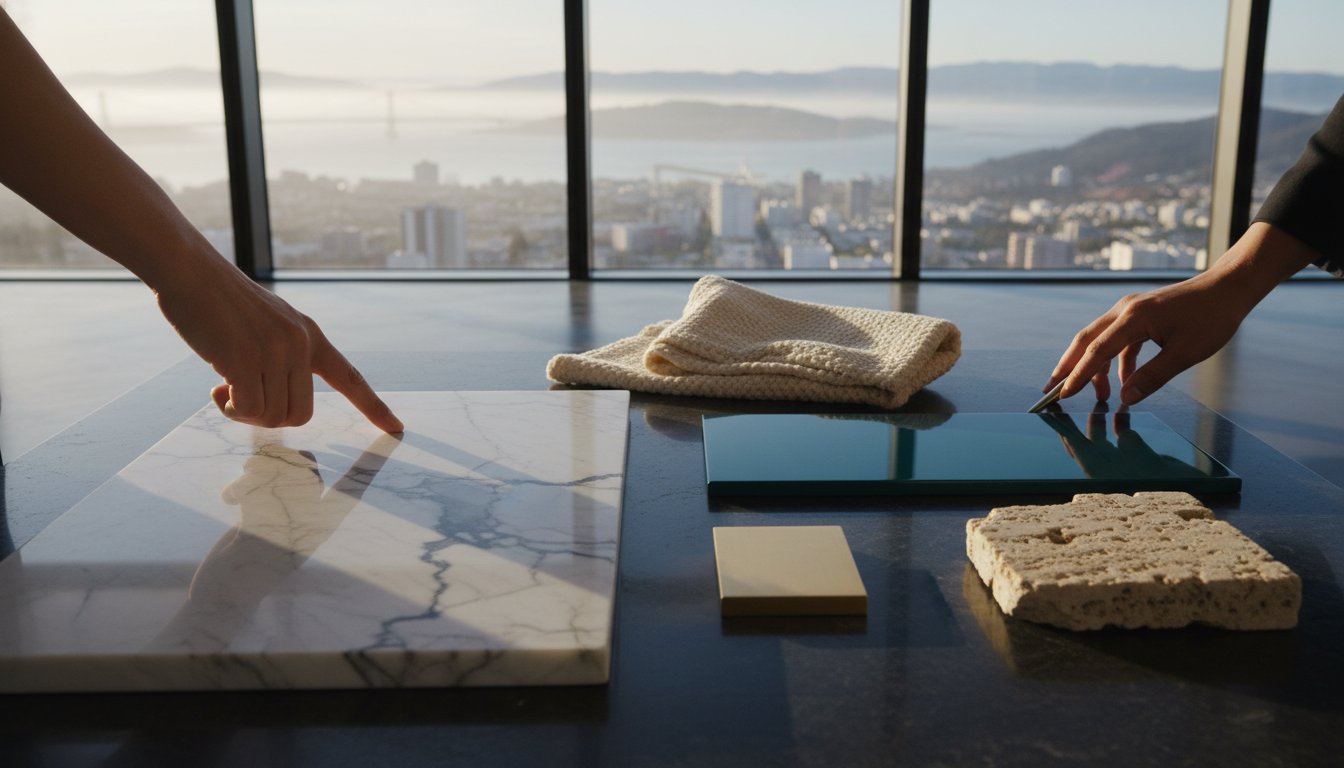
Digital renders are helpful tools, but physical samples are non-negotiable in a premium project. You can't feel the weight of a solid brass handle or the subtle grain of a hand-applied plaster finish on a screen. Take your samples to the actual site. In Salt Lake City, the high-altitude light has a crispness that differs significantly from the humid, golden glow of Florida. Building a physical material library becomes your project's North Star, keeping the vision consistent as you move from the primary suite to the living areas.
Hardware and lighting accents serve as the "jewelry" of the home. These final touches provide the polish to your material and finish selection. Mixing metals, like a matte black faucet with knurled brass cabinet pulls, adds a bespoke touch that feels curated over time. When these elements flow between rooms, they create a rhythmic thread that ties different architectural volumes into a singular, elegant narrative.
Ready to transform your vision into a tactile reality? Explore the bespoke design services at Pianta Design and discover how we curate spaces that resonate with your lifestyle.
The Pianta Design Approach: From Curation to Implementation
The journey of creating a bespoke environment doesn't end with a mood board. We treat every choice as a thread in a larger tapestry. Our process begins with an intimate consultation to identify your aesthetic and lifestyle needs. We don't just ask what colors you like; we explore how you move through your space at 7:00 AM versus 7:00 PM. This dialogue forms the foundation for a cohesive material and finish selection that balances tactile comfort with visual poetry.
Once we align on the vision, we move into the technical phase. This involves drafting meticulous finish schedules and specifications. A single master suite might require 45 distinct technical specifications, from the grout width of a hand-cut marble tile to the exact sheen level of a custom lacquered cabinet. We don't leave these details to chance. Precision is the hallmark of luxury.
During construction, our team provides rigorous oversight. We've seen that even a 3-millimeter misalignment can disrupt the visual flow of a room. We work side-by-side with contractors to ensure every material meets our exacting standards. The final reveal is the culmination of this discipline. It's the moment when curated finishes transform a house into a home, reflecting a harmony that feels both inevitable and extraordinary.
Full-Service Project Management
Managing a high-end renovation involves navigating a labyrinth of logistics. We handle the heavy lifting of procurement, often coordinating with 15 or more specialized Italian manufacturers simultaneously. Our team manages international shipping timelines and complex customs clearances to prevent project delays. We perform on-site quality control inspections at every milestone. This ensures that the rare timbers and stones we've sourced arrive in pristine condition and are installed with surgical precision. Our material and finish selection process remains protected from logistical errors through this hands-on management style.
Your Design Journey Starts Here
Pianta Design draws on over 30 years of experience in the global luxury market. We believe that a home should be an extension of the soul, crafted with materials that tell a story of heritage and innovation. Our philosophy centers on the "design as a way of life" ethos, where every texture and tone serves a specific purpose. We invite you to experience this level of dedication and expertise firsthand.
Transforming Your Vision into an Enduring Legacy
The enduring character of your home depends on a precise material and finish selection process. Choosing the right elements for a luxury residence requires a delicate balance between artistic vision and environmental reality. Whether you're navigating the salt-heavy air of Miami or the intense seasonal shifts in Park City, the integrity of your space relies on the technical performance of every stone and timber. It's not simply about aesthetics; it's about ensuring your environment remains a sanctuary for decades to come.
Pianta Design brings over 30 years of luxury design experience to every project. Our direct partnerships with premier Italian manufacturers provide access to exclusive finishes that define the modern standard of excellence. With dedicated offices in California, Florida, and Utah, we offer the local expertise needed to adapt high-end curation to your specific landscape. We believe your surroundings are a direct reflection of your life's quality. Elevate your home with professional material selection from Pianta Design. Let's create a space that resonates with your unique perspective and stands the test of time.
Frequently Asked Questions
What is the difference between a material and a finish in interior design?
A material constitutes the fundamental substance of an object, while a finish represents the final surface treatment that defines its tactile and visual character. For example, solid European oak serves as the material, whereas a hand-applied matte wax or a reactive stain acts as the finish. This distinction is vital during the material and finish selection process to ensure that the core integrity of the piece aligns with the desired aesthetic atmosphere of the room.
How do I choose flooring that works with radiant heating in Park City?
Engineered hardwood with a 4mm to 6mm wear layer or natural stone provides the best thermal conductivity for radiant systems in high-altitude climates like Park City. According to the Radiant Professionals Alliance, stone and ceramic tile transfer heat at a 95% efficiency rate. These choices prevent the warping often seen in solid wood, ensuring your mountain retreat remains warm during the 150 days of freezing temperatures typical for the region.
Why should I source materials through a designer instead of buying them myself?
Sourcing through a designer grants you access to "to-the-trade" showrooms where 70% of the inventory isn't available to the general public. We manage the intricate logistics of the material and finish selection, ensuring that every textile and stone slab meets rigorous quality standards before it arrives. This professional oversight eliminates the risk of receiving damaged goods or mismatched dye lots that often occur with independent retail purchases.
Which materials are best for a luxury yacht interior in Miami?
High-grade 316L stainless steel, marine-certified teak, and solution-dyed acrylic fabrics are essential for the 70% humidity levels found in Miami. Yacht interiors require materials that resist salt-air corrosion and intense UV exposure which can degrade standard fabrics within 12 months. We prioritize lightweight honeycomb cores for cabinetry to maintain vessel performance while delivering the opulent aesthetic expected in a private Mediterranean-style cruiser.
How do San Francisco’s microclimates affect exterior and interior finish choices?
San Francisco's 36 distinct microclimates dictate that a home in the foggy Sunset District requires moisture-resistant vapor barriers that differ from a sun-drenched Mission District loft. Exterior finishes in coastal zones must withstand a pH level influenced by salt spray, which can accelerate wood rot by 40% compared to inland areas. We select breathable lime-based plasters and high-performance sealants to protect your investment against the city's unique atmospheric shifts.
What are the most durable luxury materials for a home with pets and children?
Solution-dyed acrylics and porcelain stoneware offer the highest durability ratings for active households. Porcelain tile carries a Mohs hardness scale rating of 7, making it virtually scratch-proof against pet claws. For upholstery, we specify fabrics with a Martindale rub count exceeding 50,000 cycles. These selections provide a sophisticated look while resisting the spills and wear that define a vibrant, multi-generational family life.
How long does the international procurement process take for Italian materials?
Procuring bespoke materials from Italian artisans typically requires a lead time of 12 to 24 weeks from the date of deposit. This timeline includes the 8-week production cycle common in regions like Brianza, followed by 4 to 6 weeks for ocean freight and customs clearance at U.S. ports. Planning for these durations ensures that your project's milestones remain on track without compromising on the authentic craftsmanship of "Made in Italy" signatures.
Can I use natural marble in a high-use kitchen, or is quartz better?
Quartz offers superior stain resistance for high-use kitchens, though natural marble remains the choice for those who value a unique, evolving patina. Quartz is composed of roughly 90% ground quartz and 10% resins, making it non-porous and resistant to citric acids. If you choose marble, we recommend a 15-year permanent sealer to mitigate the 50% higher risk of etching compared to engineered surfaces.
