
Luxury Interiors and Designs: A Masterclass for San Francisco, Miami, and Park City Homes in 2026
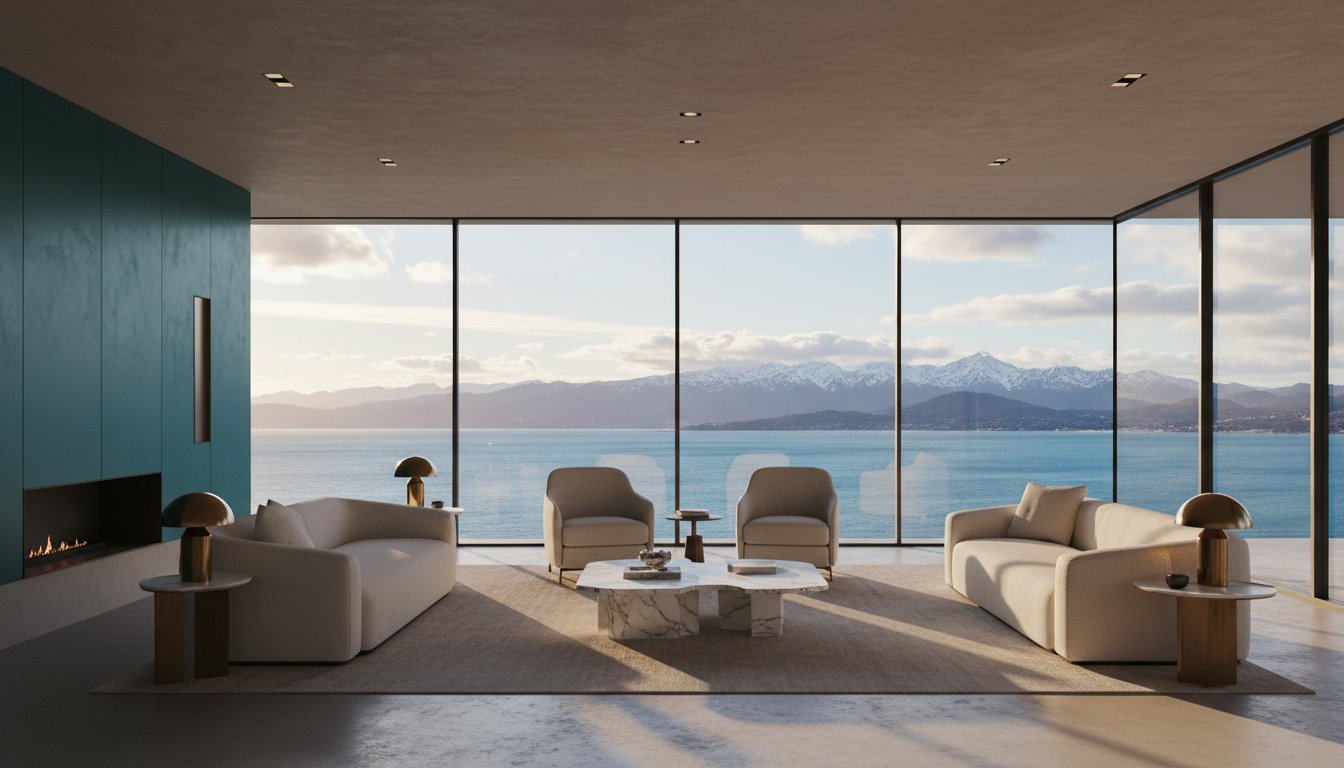
If your home is a sanctuary, why settle for a blueprint thousands of others already own? By 2026, the demand for soul-deep customization has reached a peak, yet many homeowners in San Francisco and Miami still struggle with the limitations of local showrooms. You’ve likely felt the frustration of sourcing materials that lack character or worrying that a complex renovation might lose its way. We agree that a luxury residence should be a singular masterpiece, not a catalog assembly. Achieving this requires a sophisticated approach to interiors and designs that balances global artistry with the specific demands of your local environment.
In this guide, you’ll discover how the precision of Italian craftsmanship breathes new life into the rugged peaks of Park City or the coastal elegance of Florida. We promise to show you how to bypass generic options by accessing exclusive manufacturing pipelines directly from Italy, ensuring your project remains seamless. We’ll examine aesthetic shifts for 2026 and provide a roadmap for blending heritage techniques with modern American architecture. It’s time to embrace a home that reflects an international standard of excellence and a truly bespoke lifestyle.
Key Takeaways
- Understand the 2026 evolution of "Quiet Luxury" and how soulful minimalism is transforming high-end residential spaces into personal sanctuaries.
- Learn why direct access to multi-generational Italian workshops provides an unparalleled level of craftsmanship for bespoke interiors and designs.
- Discover the critical material and architectural adjustments needed to harmonize luxury homes with the specific climates of Miami, San Francisco, and Park City.
- Master the design journey by exploring the technical planning and 3D visualization stages that ensure a flawless transition from initial concept to curated reality.
- Leverage thirty years of expertise in residential and yacht design to navigate the complexities of high-end project management across diverse American landscapes.
The Evolution of High-End Interiors and Designs in 2026
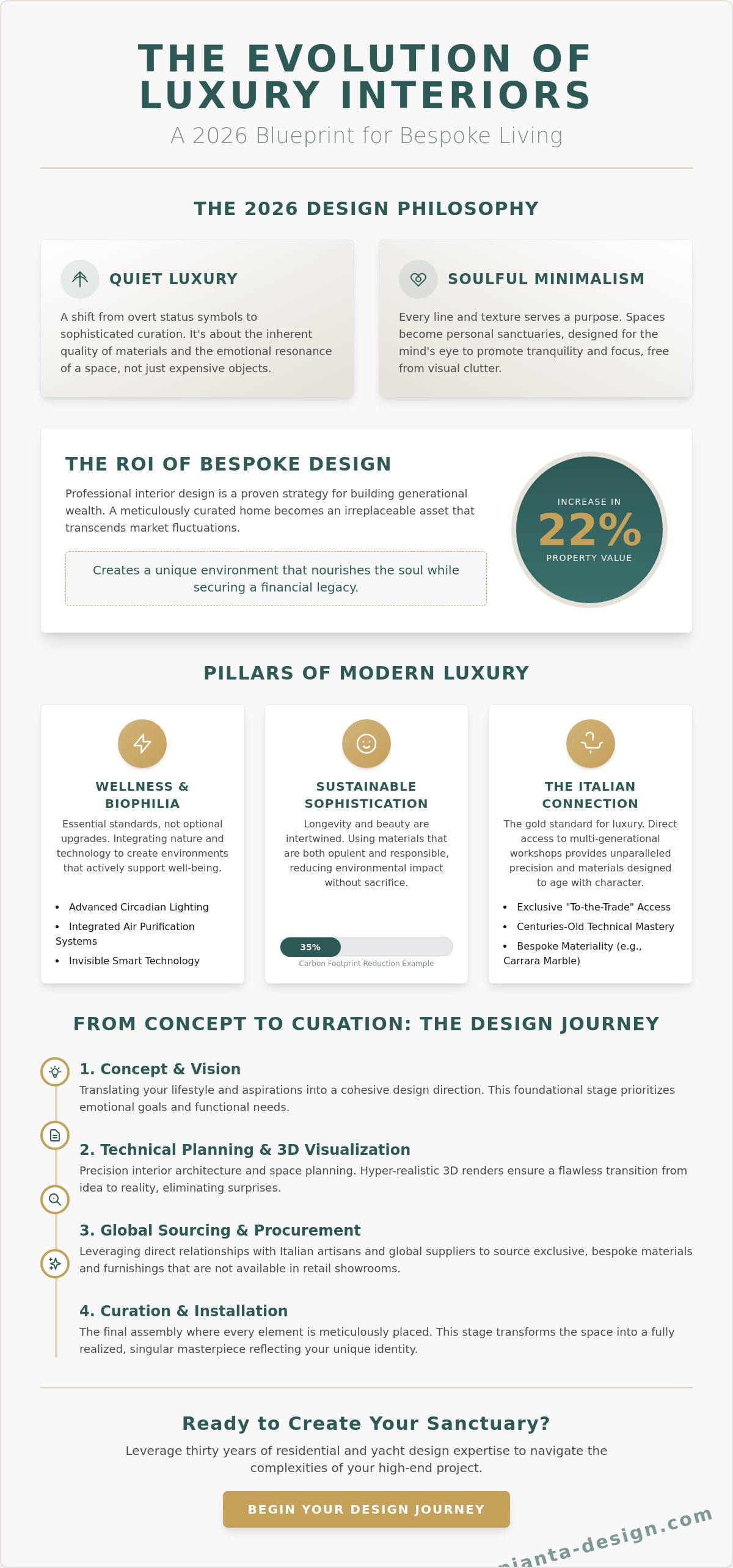
Luxury design in 2026 isn't a mere collection of expensive objects. It's the sophisticated fusion of interior architecture, precise space planning, and bespoke curation. While the history of interior design often focused on superficial status symbols, the current era prioritizes "Quiet Luxury." This shift reflects a deeper desire for "Soulful Minimalism" in major hubs like San Francisco and Miami. These interiors and designs act as a sanctuary, where every line and texture serves a specific emotional and functional purpose.
Wellness and biophilia have graduated from optional upgrades to essential standards. High-end spaces now incorporate advanced circadian lighting and integrated air purification systems that blend into the architecture. Investing in professional residential interior design remains a proven strategy for building generational wealth. A well-executed project can increase a property's market value by up to 22% by creating a unique, irreplaceable asset that transcends market fluctuations. It's about crafting an environment that nourishes the soul while securing a financial legacy.
The Interplay of Form and Function
Modern luxury focuses on the psychological weight of spatial volume. In 2026, we design for the mind's eye. Custom furniture isn't just about comfort; it solves specific architectural challenges like awkward angles or light diffusion. We balance invisible smart technology with timeless principles. It's about having a home that responds to your touch without cluttering the visual field with screens or wires. The result is a seamless flow where the function of a room is felt rather than seen, allowing the beauty of the materials to take center stage.
Sustainable Sophistication in 2026
Sustainability and beauty are no longer at odds. We utilize LEED-certified materials like carbon-neutral marbles and recycled glass that feel as opulent as traditional stone. These interiors and designs emphasize longevity over fleeting trends. A recent project for a Salt Lake City estate involved sourcing reclaimed limestone from a 19th-century structure. This choice added historical gravity and reduced the project's carbon footprint by 35% compared to new quarrying. Invisible automation manages energy consumption in real-time, ensuring the estate operates with maximum efficiency without sacrificing an ounce of elegance or comfort.
The Italian Connection: Sourcing Excellence for Global Interiors
Italian manufacturing remains the undisputed gold standard for luxury interiors and designs in 2026. This reputation isn't built on marketing but on a foundation of centuries-old technical mastery. When you look at a residence in San Francisco or a penthouse in Miami, the presence of Italian craftsmanship is immediately felt through the weight of a door handle or the seamless joinery of a kitchen island. Direct relationships with multi-generational workshops in Milan and Florence allow designers to bypass the limitations of retail. These artisans don't just build furniture; they preserve a legacy of precision that machines simply cannot replicate.
Procurement commissions are the bridge between a vision and a finished space. They offer access to "to-the-trade" exclusive pieces that never reach a public showroom. For a 2026 project, this means sourcing items that are tailored to the specific dimensions of a Park City chalet or a coastal Florida estate. Integrating these Old World techniques into modern floor plans creates a necessary tension. It balances the coldness of contemporary glass and steel with the warmth of hand-finished textures. You can explore how these elements transform a space by viewing our approach to curated interiors and designs that prioritize longevity.
Materiality: The Foundation of Luxury
Selecting materials requires an eye for how a surface will evolve over decades. Mass-market finishes often look their best on the day of installation and degrade thereafter. In contrast, bespoke Italian finishes are designed to develop a patina that enhances their character. This involves choosing marbles with specific veining from Carrara or woods treated with natural oils rather than thick synthetic lacquers. Bespoke materiality serves as the definitive cornerstone of a 30-year design heritage, ensuring that every surface tells a story of intentionality rather than mere utility.
Custom Furniture as Functional Art
Designing one-of-a-kind furniture pieces elevates a home from a residence to a gallery of lived-in art. This process begins with technical drawings that account for the specific ergonomics of the inhabitants. Custom pieces do more than fill a room; they increase the long-term value of a residential property by creating a cohesive, architectural narrative that's impossible to duplicate. The logistics of importing these goods to California or Florida require meticulous white-glove coordination. Managing lead times and international shipping ensures that a hand-carved dining table from a Brianza workshop arrives in pristine condition, ready to anchor a room for generations. The result is a home that feels deeply personal and globally significant.
Regional Design Profiles: Tailoring Interiors to Local Landscapes
The soul of a luxury residence resides in its dialogue with the surrounding environment. True mastery in interiors and designs requires an intimate understanding of how geography, climate, and light dictate the living experience. A home in the humid tropics of Florida demands a fundamentally different architectural vocabulary than a mountain retreat in Utah or a historic townhouse in Northern California. To create a space that feels both timeless and grounded, designers must master the elements of interior design, adapting line, texture, and light to the specific demands of the local landscape.
Miami and San Francisco: Coastal vs. Urban Sophistication
Miami's atmosphere dictates a specific material palette. The salt-heavy air and consistent 70% average humidity levels mean that porous materials like untreated limestone or certain raw steels can degrade quickly. Instead, luxury Miami interiors and designs favor humidity-resistant porcelain, treated brass, and high-gloss lacquers. The aesthetic often mirrors the city's nautical culture; we see yacht-inspired curves, vibrant coral hues, and a seamless flow between the infinity pool and the primary living salon. It's a celebration of transparency and movement.
San Francisco presents a different challenge. With a population density of roughly 18,000 people per square mile, luxury here often means maximizing verticality and historic character. The design philosophy blends 19th-century Victorian architectural bones with tech-forward minimalism. Space planning is surgical. Designers use custom-built millwork and strategic lighting to make compact urban footprints feel expansive. Thermal mass is critical here; stone floors or heavy masonry help regulate temperatures against the city's famous microclimates and Pacific breezes.
Park City and Salt Lake City: Mountain Modernism
In the high-altitude environments of Park City, which sits at an elevation of 7,000 feet, the light quality is exceptionally crisp and carries a distinct blue tint. This cool natural light can make a room feel clinical if not balanced correctly. We use a palette of warm ochres, deep terracottas, and rich chocolates to counteract the winter landscape. Texture becomes the primary tool for comfort. We layer bouclé fabrics, heavy wools, and reclaimed timber to create a sense of sanctuary against the snow.
The "Mountain Modern" aesthetic relies on three pillars:
- Authentic Materials: Using locally sourced stone and heavy timber beams to ground the structure.
- Expansive Glass: Floor-to-ceiling windows that treat the Wasatch Range as living art.
- Strategic Orientation: Furniture placement is never accidental; sofas and reading nooks are oriented to capture the specific angle of the sunset over the peaks.
By prioritizing the view and utilizing the thermal properties of natural stone, these homes achieve a visual balance that feels both rugged and refined. It's an approach where the interior doesn't just look at the landscape; it becomes a part of it.
The Design Journey: From Concept to Curation
Creating a high-end residence requires more than just an eye for beauty; it demands a rigorous, five-step methodology that transforms a vision into a tangible sanctuary. Every project begins with an initial consultation and feasibility study. At this stage, we analyze the structural potential of a San Francisco Victorian or the environmental constraints of a Miami beachfront estate. We then move into technical planning, a phase that bridges the gap between dreams and reality through interior architecture and precise engineering.
Procurement follows, involving the global sourcing of rare materials like hand-selected Calacatta marble or reclaimed timber from historic European estates. Effective interior design project management ensures these elements arrive on schedule and are installed with millimeter precision. The journey concludes with a white-glove installation and a curated art consultation to breathe soul into the space. This structured flow ensures that the final result is both evocative and flawlessly executed.
The Importance of Technical Planning
Floor plans and mood boards represent the conceptual seeds, but technical planning provides the necessary soil for growth. In 2026, 3D visualizations are non-negotiable tools. They allow clients to walk through their future interiors and designs before a single hammer is swung, which prevents expensive structural changes during the construction phase. Lighting design also plays a pivotal role here. It isn't just about visibility. It's about using layered illumination to define architectural volumes and highlight the rich textures of bespoke finishes.
Budgeting for Excellence in 2026
Financial clarity is the foundation of any successful build. Understanding the interior design consultation fee structure helps set realistic expectations from the outset. We typically recommend allocating 60 percent of the investment to high-impact items like custom cabinetry and statement lighting, while the remaining 40 percent covers background finishes and labor. Professional project management often yields a 15 to 20 percent savings on total construction costs by avoiding mid-project errors and streamlining vendor communication. This strategic allocation ensures that your interiors and designs maintain their value for decades.
Ready to transform your vision into a masterfully curated home? Schedule your private consultation with Pianta Design to begin your journey.
Why Pianta Design is the Premier Choice for Interiors and Designs
Choosing a partner for your home isn't just about selecting furniture or picking a color palette. It's about finding a visionary who understands how you move, breathe, and exist within your private sanctuary. Pianta Design brings a 30-year legacy to the table, having shaped the aesthetic of luxury living since 1994. With dedicated offices in San Francisco, Miami, and Park City, the firm offers a rare geographic versatility that few competitors can match. They understand that the salt-air requirements of a Florida estate differ vastly from the thermal needs of a Utah mountain retreat.
The "Pianta Philosophy" goes beyond surface-level trends. It treats interiors and designs as a profound reflection of the client’s soul. Every texture, shadow, and material is curated to resonate with your personal history and future aspirations. It’s a process of deep listening where the team translates abstract emotions into tangible, high-end environments. This approach ensures that your home doesn't just look like a gallery; it feels like an extension of your identity.
A Legacy of Excellence
Maria Pianta founded the firm with a clear vision: to blend timeless sophistication with a modern, functional sensibility. This commitment has powered the firm's success in high-stakes environments, from sprawling residential estates to complex commercial projects and 60-meter superyachts. The design team bridges the gap between the expressive, hand-crafted heritage of Italian art and the innovative structural precision of American architecture. This duality creates spaces that are both poetically beautiful and technically flawless.
Start Your Transformation
Securing a place on the firm's 2026 calendar requires proactive planning. High-end projects typically involve a 12 to 18-month cycle from the initial conceptual sketches to the final white-glove installation. Scheduling an initial consultation is the first step toward redefining your living standards. For your first meeting, it's helpful to have a few items ready:
- Architectural site plans or preliminary floor layouts if you're building from scratch.
- A list of specific lifestyle requirements, such as home automation needs or specialized gallery lighting.
- A general sense of the emotional atmosphere you want each room to project.
The team at Pianta Design will guide you through the complexities of material sourcing and spatial planning, ensuring the process is as refined as the end result. It's time to move beyond the ordinary and embrace a home that truly speaks your language.
Defining the Future of Your Private Sanctuary
As we look toward 2026, the landscape of luxury living demands a seamless blend of heritage and innovation. Transforming a residence in San Francisco's foggy hills or a sleek yacht in Miami's harbor requires more than just furniture; it requires a narrative of excellence. Pianta Design brings over 30 years of high-end design experience to every project, ensuring that your space reflects a global perspective rooted in Italian mastery. Our exclusive partnerships with premier Italian manufacturers allow us to source materials and pieces that define the next generation of interiors and designs. Whether you're curating a residential sanctuary or a commercial masterpiece, the focus remains on the harmony between your environment and your lifestyle. We've honed a specialized expertise that spans Residential, Commercial, and Yacht interiors, bridging the gap between artistic vision and technical precision. Your home's atmosphere is a direct reflection of your life's quality, and it deserves a meticulous touch.
Begin your journey toward a bespoke interior with Pianta Design
The path to an extraordinary home is paved with intention and expert curation. We look forward to bringing your vision to life with the sophistication it deserves.
Frequently Asked Questions
What is the difference between an interior designer and an interior decorator?
An interior designer holds formal education to manage structural changes and spatial functions, while a decorator focuses primarily on surface aesthetics like paint and fabrics. To ensure these surfaces are executed with professional precision, you can explore Interior Painting to see how high-quality finishes complement bespoke design. Pianta Design bridges these roles by blending technical precision with high-end curation to create spaces that are both functional and beautiful.
How much should I budget for a luxury interior design project in San Francisco or Miami?
Luxury renovation costs in coastal markets typically range from $200 to $500 per square foot based on 2024 industry benchmarks for high-end materials. These figures depend on structural complexity and the level of customization required. San Francisco and Miami projects often see higher costs due to specialized logistics and local permitting requirements. We recommend planning for a 15% contingency fund to cover unforeseen adjustments.
How long does a typical full-service interior design project take from start to finish?
A full-service project usually requires 12 to 24 months from the initial concept to the final installation. Custom furniture from European artisans often involves lead times of 16 to 24 weeks. This timeline ensures every architectural detail and bespoke piece meets our standards for quality and longevity. We prioritize meticulous planning to ensure the execution phase remains seamless and efficient.
Why is space planning considered the most critical phase of luxury design?
Space planning serves as the foundation of interiors and designs because it dictates the flow and intuitive movement within a home. A well-conceived layout ensures that even the largest rooms feel intimate and purposeful. By prioritizing the human experience, we eliminate dead zones and maximize the utility of every square foot. This phase prevents functional errors that are difficult to correct once construction begins.
Does Pianta Design handle the procurement of art and custom furniture?
We manage the entire procurement process for fine art and bespoke furniture through our network of international galleries and workshops. This includes sourcing rare materials and overseeing the production of one-of-a-kind pieces. Our team handles every logistical detail from the initial commission to the final white-glove placement in your home. You'll have access to exclusive items that aren't available to the general public.
Can Pianta Design manage construction oversight for my renovation?
Pianta Design provides comprehensive construction oversight to ensure the physical build aligns perfectly with the artistic vision. We act as your representative on-site; communicating daily with contractors and tradespeople. This rigorous supervision prevents costly errors and keeps the project on schedule throughout the renovation phase. Our presence ensures that the technical execution maintains the high standards expected in a luxury residence.
What are the benefits of hiring an interior design firm with international sourcing capabilities?
International sourcing provides access to rare materials and artisanal techniques that aren't available in local markets. We frequently source marble from Italian quarries and textiles from heritage mills in France. This global reach allows us to create interiors and designs that possess a unique character and superior craftsmanship. It ensures your home features exclusive elements that reflect a truly cosmopolitan lifestyle.
How does coastal design in Miami differ from mountain design in Park City?
Miami design emphasizes moisture-resistant materials and light-reflective surfaces to combat humidity and intense sun. In contrast, Park City homes require thermal efficiency and tactile, warm textures like reclaimed wood and wool. While Miami focuses on seamless indoor-outdoor transitions, Park City interiors prioritize cozy sanctuary spaces that frame snowy vistas. Each location demands a specific palette and material selection to harmonize with the local environment.
