
Luxury Home Renovation Design Budget: The 2026 Definitive Planning Guide
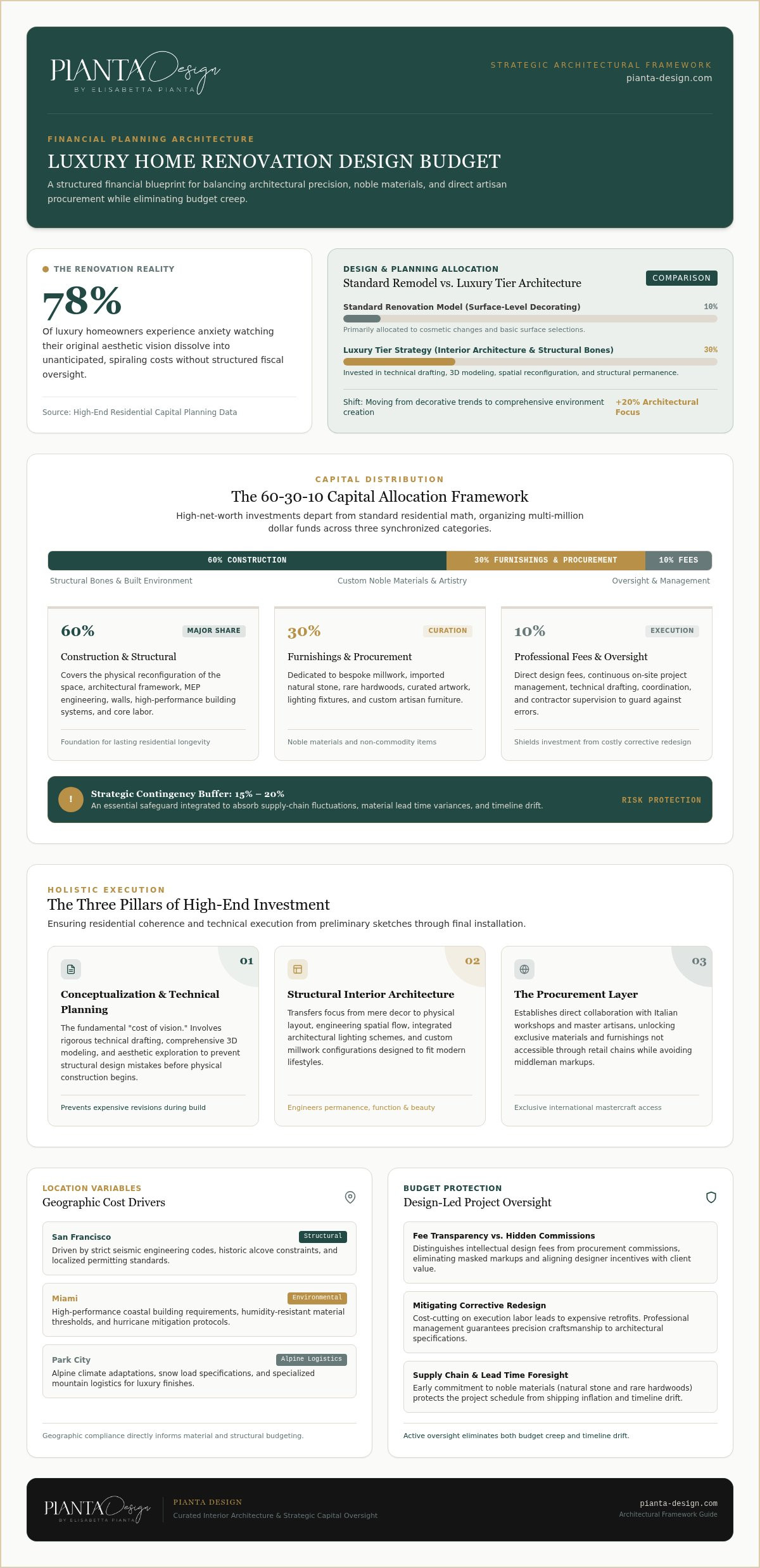
78% of luxury homeowners experience the quiet anxiety of watching their original vision dissolve into a spiral of unexpected costs. It's a staggering reality that underscores why a meticulously structured luxury home renovation design budget is the most critical element of any high-end project. You likely understand that creating a home of timeless sophistication requires more than just capital; it demands a symphony of architectural precision, a commitment to noble materials, and the steady hand of an expert who can harmonize aesthetics with fiscal discipline. When the lines between design fees and procurement commissions blur, the path to your dream residence can feel clouded by uncertainty and hidden contractor fees.
This guide will empower you to master the complexities of high-end financial planning. You'll gain expert insights into architectural fee structures, the strategic value of project oversight, and the benefits of direct collaboration with Italian workshops. We'll provide a clear financial framework for your multi-million dollar investment, ensuring every decision reflects your modern sensibility and global perspective. By the end, you'll have the confidence to select a firm that manages the entire lifecycle, protecting your vision from the common pitfalls of budget creep and timeline drift.
Key Takeaways
- Learn why a sophisticated luxury home renovation design budget prioritizes a 30% allocation for interior architecture to ensure every detail reflects a timeless, bespoke aesthetic.
- Master the 60-30-10 capital allocation framework to balance structural construction, high-end furnishings, and professional design services effectively.
- Navigate geographic cost drivers with precision, accounting for specific regional demands like San Francisco's seismic codes or Miami's high-performance coastal requirements.
- Discover how direct relationships with Italian artisans and transparent procurement models eliminate hidden commissions and elevate the material quality of your interiors.
- Identify why design-led project oversight and a strategic 15-20% contingency buffer are essential for protecting your investment from timeline drift and budget creep.
What Defines a Luxury Home Renovation Design Budget?
A luxury home renovation design budget is a curated allocation for timeless sophistication and technical precision. It isn't merely a collection of costs or a spreadsheet of material prices. Instead, it represents the intersection of bespoke craftsmanship and architectural integrity. While a standard remodel might focus on surface-level updates, a high-end project begins with the "bones" of the residence. This fundamental difference is reflected in how capital is distributed. In a typical renovation, design and planning fees might account for 10% of the total spend. In the luxury tier, this allocation often reaches 30%, reflecting the deep expertise required to harmonize complex systems with an elevated aesthetic.
True luxury is found in the details that aren't immediately visible. It's the way light interacts with a specific grade of marble or how a custom-designed millwork piece fits naturally into a historic alcove. By prioritizing Interior Architecture, you establish a financial foundation that values structural permanence over fleeting trends. This approach ensures your investment remains relevant for decades, as the space is engineered for both beauty and utility. Defining a luxury home renovation design budget requires this shift in perspective, moving from "decorating" to "comprehensive environment creation."
The Three Pillars of High-End Investment
Building a masterpiece requires a three-tiered approach to capital. Each pillar supports the overall vision, ensuring the home feels cohesive and intentional from the first sketch to the final installation.
- Conceptualization and Technical Planning: This is the cost of vision. It involves the rigorous drafting, 3D modeling, and aesthetic exploration that prevents costly errors during the physical build.
- Structural Interior Architecture: We move beyond aesthetics to address spatial flow, lighting design, and the physical reconfiguration of the environment to suit a modern lifestyle.
- The Procurement Layer: This pillar provides access to exclusive international markets. Direct relationships with Italian artisans allow for the sourcing of materials that simply aren't available through standard retail channels.
Setting Realistic Expectations for 2026
As we look toward 2026, the landscape of premium materials continues to evolve. Natural stone and rare hardwoods remain the gold standard, but their procurement requires longer lead times and a higher degree of logistical foresight. Global supply chains remain delicate; early commitment to noble materials is essential to maintaining your project's rhythm and avoiding the inflation of shipping costs.
Selecting the right team is the most effective way to protect your capital. While it's tempting to look for cost-saving measures in labor, "cheap" work almost always leads to expensive corrective design later. Investing in professional construction management ensures that every artisan and technician on site adheres to the highest standards of quality. This oversight prevents budget leakage and ensures that the technical precision of the architectural plan is executed without compromise. A well-managed luxury home renovation design budget turns a complex process into a rewarding journey of creation.
Allocating Your Capital: Architecture vs. Procurement
A luxury home renovation design budget requires a departure from standard residential math. To achieve a result that feels both cohesive and curated, many high-net-worth clients adopt the 60-30-10 rule. This framework allocates 60% of the capital to construction and structural changes, 30% to furnishings and bespoke procurement, and 10% to professional fees and project management. Data from the Harvard Joint Center for Housing Studies indicates that while overall renovation spending remains resilient, the demand for specialized design services in the luxury sector is growing as homeowners seek unique, non-commodity environments. Managing a luxury home renovation design budget effectively means viewing these percentages as a starting point for a deeply personalized investment.
Understanding the distinction between design fees and procurement commissions is vital for financial clarity. Design fees cover the intellectual and technical labor, specifically the drafting, spatial planning, and aesthetic vision. Procurement commissions represent the logistical expertise required to source authentic international craftsmanship. At Pianta Design, our 30 years of industry experience and direct partnerships with Italian manufacturers allow us to bypass traditional retail markups. We pass these trade advantages directly to our clients, ensuring that the budget is spent on noble materials rather than intermediate distributor fees. This transparent approach protects the project's integrity while maximizing the quality of every bespoke element.
Investing in Custom Furniture and Art
Choosing custom furniture design is an investment in legacy. Unlike mass-produced pieces, bespoke furniture is engineered to the exact proportions of your space, utilizing materials like hand-selected walnut or Italian leather that gain character over time. Art consultation serves as the final layer of this investment, bridging the gap between architecture and personal expression. By sourcing directly from European workshops, you secure a level of provenance and quality that retail showrooms cannot replicate, turning your home into a private gallery of craftsmanship.
The Technical Side: Lighting and Material Selection
Sophisticated lighting design often accounts for up to 10% of a high-end project's financial plan. It isn't just about fixtures; it's about the technical layers of ambient, task, and accent lighting that define a room’s mood. This phase requires meticulous technical drafting and 3D visualization to ensure every rare marble slab and bespoke cabinet is illuminated with precision. These visualizations provide the clarity needed for approval, ensuring the final result matches the initial vision without expensive on-site corrections. If you're ready to define your own project's scope, exploring our professional interior architecture services is the first step toward a coordinated investment.
Geographic Cost Drivers: San Francisco, Miami, and Park City
Location is the silent architect of your financial plan. A luxury home renovation design budget isn't a static document; it's a living response to regional environmental demands and local governance. Whether you're restoring a Victorian in Pacific Heights or building a waterfront estate in Coral Gables, the technical standards for residential interior design must align with rigorous building codes. These codes aren't mere suggestions. They're structural mandates that ensure longevity and safety in diverse climates, often requiring specialized engineering that moves the budget beyond simple aesthetic upgrades.
Coastal vs. Mountain Luxury
In Miami, the budget must account for high-performance materials capable of withstanding salt-laden air and intense humidity. This translates to marine-grade finishes and yacht-inspired interior solutions that prioritize material resilience without sacrificing elegance. Conversely, Park City’s "Mountain Modern" aesthetic demands exceptional thermal efficiency and the use of heavy timber to handle significant snow loads. The logistical premiums here are substantial. Sourcing and transporting noble materials to remote mountain locations, especially during the compressed building season between snowfalls, requires meticulous schedule enforcement. As noted by the U.S. Bureau of Labor Statistics, professional project supervisors are essential for managing these complex capital budgets and ensuring cost estimation remains accurate across such varied environments.
The Bay Area Premium
San Francisco presents a unique set of challenges that directly impact the luxury home renovation design budget. Navigating the city's complex permitting processes and architectural review boards requires a team with deep local expertise. Historic preservation isn't just about style. It's a legal requirement that involves specialized trades skilled in seismic retrofitting and period-accurate restoration. In regions like Silicon Valley and Half Moon Bay, the competition for these elite artisans can drive up labor costs significantly. Space planning in dense urban environments also requires a higher level of technical drafting to maximize every square foot of a multi-million dollar footprint, ensuring the home functions as beautifully as it looks.
Understanding these geographic nuances prevents the "budget creep" that often plagues high-end projects. By accounting for local seismic requirements or coastal material longevity from the start, you protect your investment from the corrective costs that arise when regional factors are overlooked. This geographic foresight is what separates a standard renovation from a professionally managed architectural masterpiece.
Strategic Oversight: Why Project Management is a Budget Protector
Strategic oversight serves as the bridge between a visionary concept and a flawless physical reality. While a general contractor focuses on the mechanics of construction, design-led oversight ensures that the aesthetic integrity and technical precision of the original plan remain uncompromised. This distinction is critical for your financial peace of mind. A general contractor might prioritize speed or ease of installation, but an architectural project manager prioritizes the outcome you've invested in. Dedicated project management acts as the primary defense mechanism that prevents the most common 20% budget overrun seen in unmanaged high-end builds.
Managing a luxury home renovation design budget requires a disciplined approach to what we call the "Luxury Contingency." We recommend a 15% to 20% buffer, even for the most meticulously planned projects. This isn't a sign of poor planning; it's a strategic shock absorber for the variables inherent in custom, one-of-a-kind builds. Whether it's a structural discovery behind a historic wall in San Francisco or a sudden shift in global shipping routes for Italian stone, this contingency ensures that the project's momentum never falters due to financial friction. Coordinating logistics and site visits through a single accountable team reduces the risk of expensive errors and ensures that every artisan on site is working toward a unified goal.
The Build Phase: Ensuring Design Intent Survives
During the build phase, technical oversight of specialized trades is non-negotiable. Stone masons, master millworkers, and lighting technicians require precise direction to execute complex details like book-matched marble or integrated cove lighting. Quality control must be constant throughout the project lifecycle to catch minor misalignments before they become major "change order" traps. Meticulous initial planning is the only way to avoid these pitfalls, ensuring that the design intent survives the rigors of the construction site without diluting the final aesthetic.
Logistics and Procurement Management
The complexity of importing authentic Italian craftsmanship requires a level of coordination that retail-focused platforms cannot provide. This involves managing international shipping, customs, warehousing, and eventually, white-glove delivery and installation. Leading interior design firms leverage established vendor relationships to protect the budget, ensuring that items are handled with the care their provenance deserves. By centralizing these logistics, we eliminate the hidden costs of fragmented procurement. If you're ready to secure your investment with an expert hand, our comprehensive project management services provide the oversight necessary for a truly seamless transformation.
Maximizing Value: The Pianta Design Philosophy
The ultimate goal of a luxury home renovation design budget is to create an environment that transcends temporary trends. At Pianta Design, we believe that true value lies in the delicate balance between timeless sophistication and modern sensibility. This philosophy ensures that your residence remains a relevant masterpiece for decades, rather than requiring a refresh every few years. Our "Pianta Advantage" is built upon 30 years of navigating the world’s most exclusive luxury supply chains. This deep industry history allows us to provide solutions that simply aren't available to the general public, ensuring your investment is as unique as your own signature.
Our direct relationships with Italian manufacturers form the cornerstone of our procurement model. By collaborating with artisans who have spent generations perfecting their craft, we secure materials and finishes with a level of provenance that retail showrooms cannot match. This isn't just about exclusivity; it's about the technical superiority and longevity of the final product. Transitioning from a financial framework to a finished, one-of-a-kind interior requires this level of direct access to ensure the technical precision of the architectural plan is mirrored in the final installation. A well-structured luxury home renovation design budget is the vehicle that brings this level of international craftsmanship into your private sanctuary.
Custom Solutions for Yacht and Residential Projects
The precision required for yacht interior design is unparalleled. Every millimeter matters when you're designing for the sea, and we bring this same "yacht-grade" discipline to our high-end residential renovations. Whether we're procuring bespoke millwork for a mountain estate or selecting high-performance materials for a coastal villa, our standards remain uncompromising. This level of detail ensures that your luxury home renovation design budget is utilized with surgical accuracy, resulting in a space that feels both intimate and expansive. By applying maritime engineering standards to the home, we define a luxury space that is as durable as it is beautiful.
Your Design Journey Starts Here
Every legacy project begins with a conversation. Initiating a consultation with Pianta Design is the first step in aligning your vision with a realistic financial foundation. During the initial concept phase, we explore the possibilities of your space, moving beyond surface-level aesthetics to define the structural and material requirements of your dream home. It's here that vision meets financial reality, allowing you to take the next step toward a sophisticated, curated environment with complete confidence. Your home should be a reflection of your global perspective and refined taste; we're here to guide that transformation from the first sketch to the final reveal.
Realizing Your Vision with Architectural Precision
Mastering a luxury home renovation design budget is less about simple arithmetic and more about the deliberate orchestration of architectural integrity and noble materials. We've explored how geographic nuances in San Francisco, Miami, and Park City dictate structural requirements, and why the 60-30-10 rule ensures your investment remains balanced between construction and bespoke craftsmanship. By prioritizing interior architecture and direct procurement, you transform a complex renovation into a seamless creative journey that reflects your global perspective.
With 30+ years of luxury design expertise and exclusive Italian manufacturer partnerships, our firm has been featured in premier design publications for creating spaces of timeless sophistication. We provide the one accountable team needed to bridge the gap between a technical concept and a curated, finished home. It's time to move beyond the fear of budget creep and embrace a process defined by transparency and artistic passion.
Begin Your Sophisticated Transformation with Pianta Design
Your dream of a home that reflects both modern sensibility and global heritage is within reach when guided by an expert hand. We look forward to helping you create a sanctuary that truly inspires your daily life.
Frequently Asked Questions
What is the average design fee for a luxury home renovation in 2026?
In 2026, professional fees for a luxury home renovation design budget typically range from 15% to 30% of the total project cost. This percentage reflects the depth of technical planning, spatial reconfiguration, and 3D visualization required for high-end environments. If project management and construction oversight are included, the allocation may increase to 35%. This investment ensures that every architectural detail and material selection is executed with the precision necessary for a multi-million dollar transformation.
How do I distinguish between an interior designer and a decorator in my budget?
An interior designer focuses on the architectural integrity and functionality of the space, including lighting design and technical drafting. In contrast, a decorator primarily handles surface-level aesthetics like color palettes and soft furnishings. Your budget should prioritize interior architecture first, as these structural elements provide the foundation for the home's long-term value. Designers are often involved from the initial concept phase, whereas decorators typically enter the process after the structural bones are finalized.
Why should I allocate a contingency fund for high-end projects?
A contingency fund of 15% to 20% is essential for managing the variables inherent in custom, bespoke builds. High-end projects often involve structural discoveries or global logistics shifts that can impact the initial plan. This buffer acts as a strategic shock absorber, ensuring that your renovation's momentum remains steady even if unexpected challenges arise. It protects your primary investment from financial friction and prevents the need to compromise on noble materials during the final build phase.
Does a luxury renovation always increase a home’s resale value?
A professionally executed luxury renovation typically delivers a 10% to 15% valuation premium in elite micro-markets like San Francisco or Miami. While surface updates offer modest returns, investments in interior architecture and timeless craftsmanship tend to hold value more effectively. However, resale value also depends on the quality of execution and the use of noble materials. A home that reflects timeless sophistication and technical precision will always be more attractive to discerning buyers in the high-end market.
How does sourcing furniture from Italy affect my renovation timeline and budget?
Sourcing directly from Italian manufacturers elevates the material quality of your home while bypassing traditional retail markups. While this approach optimizes your luxury home renovation design budget, it requires meticulous schedule coordination. Lead times for bespoke Italian millwork or custom stone can be significant, often requiring selection during the initial concept phase. Professional procurement management ensures these logistical complexities don't lead to timeline drift, allowing for a seamless installation of one-of-a-kind pieces.
What are the most expensive line items in a luxury interior design budget?
The most significant allocations in a high-end budget usually involve structural interior architecture and bespoke procurement. Key line items include:
- Custom millwork and hand-crafted cabinetry.
- Rare natural stones and book-matched marble slabs.
- Advanced lighting design and integrated home automation systems.
- Bespoke furniture designed specifically for the residence's proportions.
These elements define the home's character and require the highest level of technical precision and craftsmanship.
Can I manage a luxury renovation budget myself without a professional firm?
Managing a multi-million dollar renovation without professional oversight often leads to a staggering 65% cost overrun. High-end projects involve complex layers of permitting, international logistics, and trade coordination that require deep industry experience. A professional firm acts as a single accountable team, protecting your investment from change order traps and vendor disputes. This strategic oversight ensures the design intent survives the build phase while keeping the project aligned with your original financial framework.
How do geographic locations like Miami or San Francisco impact labor costs?
Labor costs in San Francisco are driven by complex seismic codes and the specialized trades required for historic preservation. In Miami, the budget must account for high-performance materials and hurricane-rated installations that require expert technicians. Both markets experience high demand for elite artisans, which can impact the luxury home renovation design budget. Regional factors like Park City's seasonal building cycles also create logistical premiums that must be factored into the initial planning to avoid expensive delays.
