
How to Budget for a Luxury Home Remodel in San Francisco: The 2026 Definitive Guide
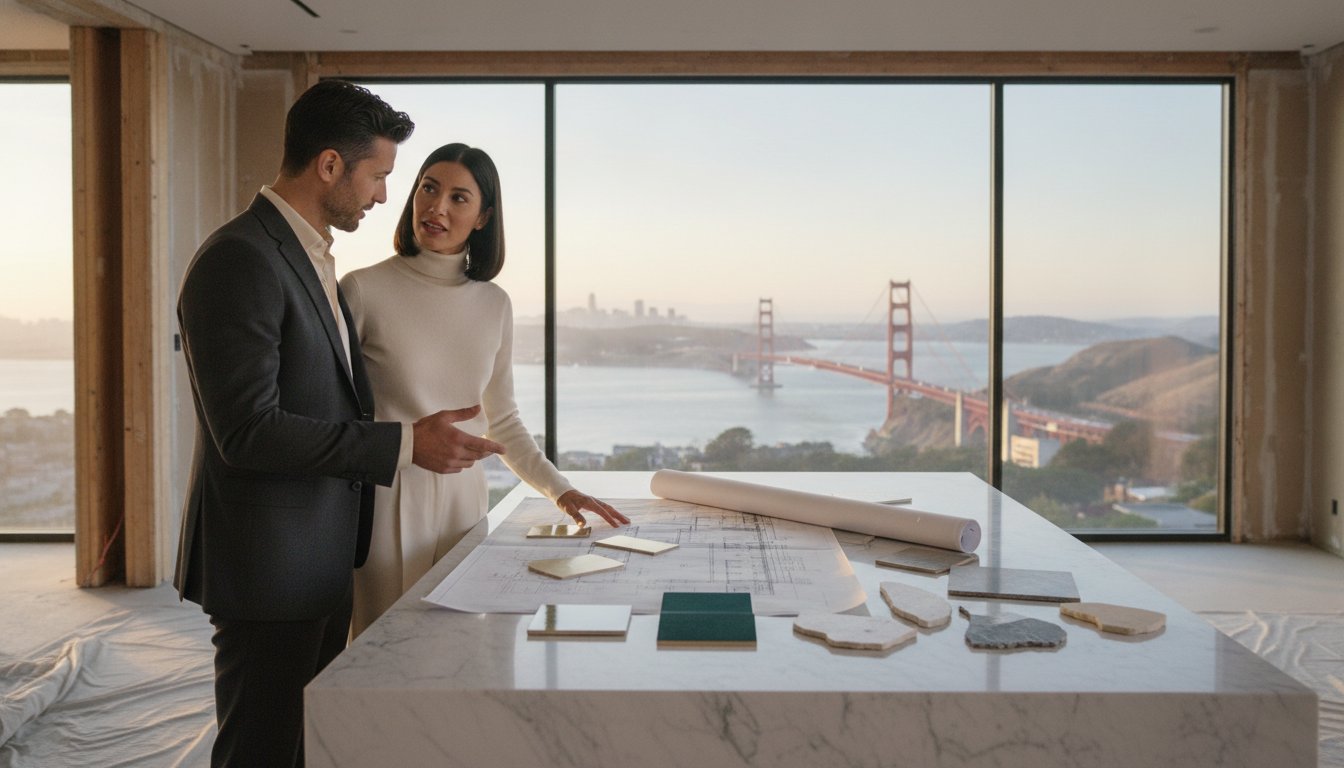
The true cost of a San Francisco estate renovation isn't found in a spreadsheet; it's born from the delicate balance between architectural heritage and modern technical precision. You understand that a home in Pacific Heights or Presidio Terrace demands more than just premium materials. It requires a strategic orchestration of design and logistics. If you're currently exploring how to budget for a luxury home remodel in san francisco, you've likely realized that standard estimates fail to account for the city's unique complexities.
You've felt the weight of unpredictable permitting delays and the anxiety of budget creep during the initial space planning phases. This definitive 2026 guide provides a sophisticated framework for your investment allocation, ensuring your vision remains uncompromised by the $526 hourly plan review rates or the new electrification mandates. We'll examine how a principal designer serves as the steward of your fiscal and aesthetic goals. You'll gain the confidence to navigate international sourcing and the 2025 California Code amendments while maintaining the quiet elegance your lifestyle demands.
Key Takeaways
- Understand the nuanced market dynamics where San Francisco’s heritage architecture and specialized artisan labor create a distinct premium for 2026 projects.
- Master the "Golden Ratio" of investment allocation to ensure a harmonious balance between structural excellence, bespoke procurement, and professional design fees.
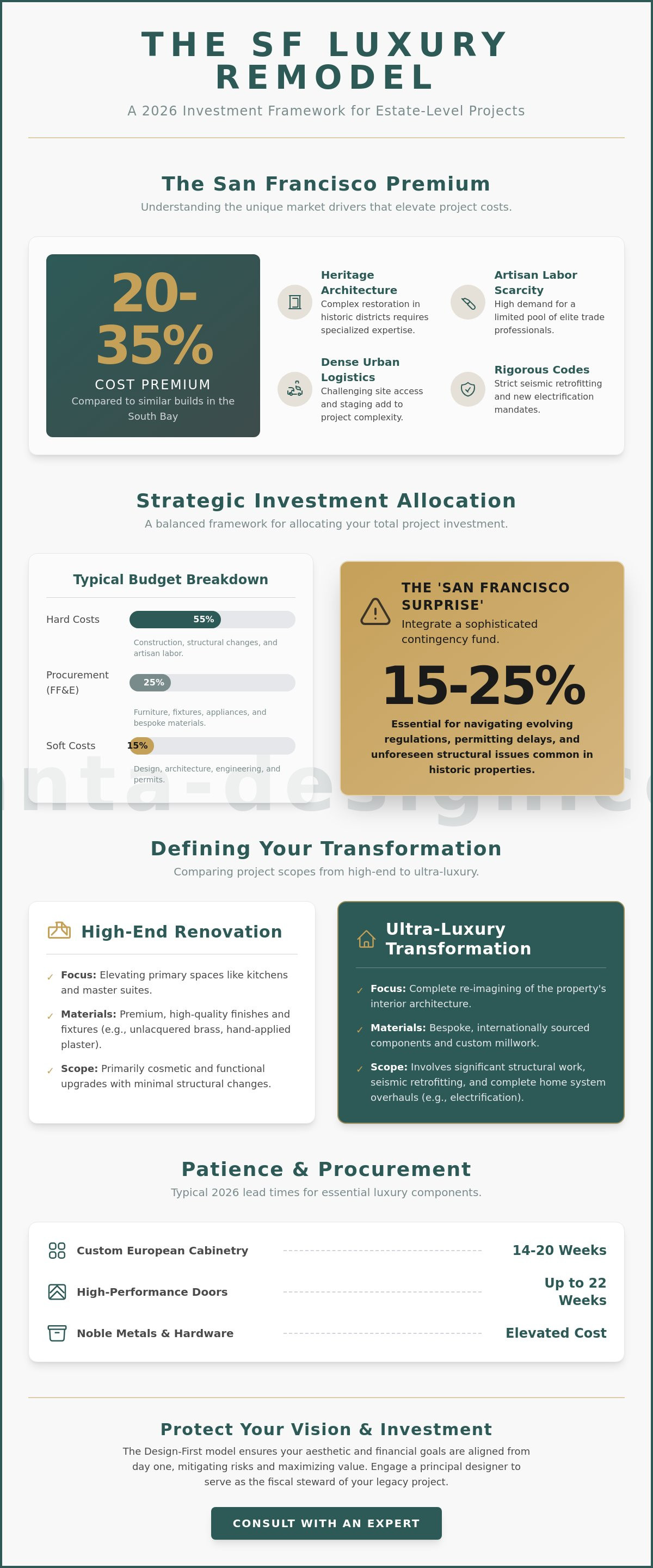
- Gain clarity on how to budget for a luxury home remodel in san francisco by integrating a sophisticated 15-25% contingency for the city's evolving regulatory landscape.
- Discover how a design-first philosophy utilizes a principal designer as a fiscal steward, protecting your vision from the friction of mid-project adjustments.
- Learn to prioritize timeless aesthetic choices and high-end material selection that secure a lasting return on investment for your private sanctuary.
Navigating the San Francisco Luxury Remodeling Landscape in 2026
San Francisco's architectural fabric is a tapestry of historical significance and modern ambition. In 2026, the definition of a luxury remodel has shifted away from mere ornamentation toward a philosophy of "quiet permanence." For the discerning homeowner in enclaves like Pacific Heights or Presidio Heights, luxury is measured by the seamless integration of state-of-the-art technology within a home's original soul; as you look to discover PREMIERE SYSTEMS DESIGN, you'll see how high-end automation aligns with this vision. Understanding **how to budget for a luxury home remodel in san francisco** requires a departure from standard construction logic. You aren't simply managing a home improvement project; you're curating an estate that must satisfy both rigorous 2025 California Code amendments and a deeply personal aesthetic vision.
Establishing a baseline for your investment depends on the depth of the transformation. A "high-end" renovation typically focuses on elevating primary spaces with premium materials like hand-applied plaster and unlacquered brass hardware. An "ultra-luxury" transformation, however, involves complex interior architecture, seismic retrofitting, and the complete electrification of the property. In San Francisco, these projects carry a 20% to 35% premium compared to similar builds in the South Bay. This reflects the city's denser urban logistics, stricter seismic requirements, and the scarcity of elite trade professionals.
Local Market Dynamics and Labor Standards
The success of a bespoke remodel rests on the hands of specialized artisans. In the Bay Area, the labor shortage persists, making the engagement of master stone-cutters and custom millworkers a primary budget consideration. Choosing lower-cost labor often results in "budget creep" as poor initial execution requires expensive corrections. Furthermore, 2026 has introduced new supply chain complexities. While some volatility has eased, the cost of noble metals like copper and nickel remains elevated. Lead times for essential luxury components are significant; custom European cabinetry now requires 14 to 20 weeks, while high-performance multi-slide doors often take up to 22 weeks to arrive on-site. Your budget must account for the logistical management of these timelines to avoid costly idle periods for your construction team.
The Cost of Preserving Heritage in Historic Districts
For those residing in Victorian or Edwardian estates, the budget must respect the home's lineage. Restoring intricate crown moldings or original facades requires a delicate touch that balances modern sensibility with strict historic preservation guidelines. These projects often demand a "design-first" approach where every structural change is vetted against the city's heritage requirements. You can explore the nuances of this balance in our guide to The Art of Residential Interior Design. By investing in the preservation of architectural integrity, you don't just maintain the home's character; you secure its long-term value in a market that rewards historical authenticity and timeless sophistication.
The Design-First Budgeting Model: Why Vision Precedes Construction
It's a common misconception that budgeting begins with a contractor's quote. In the high-stakes environment of Bay Area real estate, starting with a builder’s estimate often leads to a fragmented financial picture. A builder estimates the cost of execution based on visible parameters; a Principal Designer, however, creates a master plan that accounts for the invisible. When you're determining how to budget for a luxury home remodel in san francisco, this design-first approach acts as your financial compass. It ensures that every dollar spent aligns with a cohesive aesthetic and structural vision before a single wall is opened.
Space planning is the stage where significant structural opportunities are identified. By analyzing the flow of light and the existing architecture early, we can often avoid the "San Francisco surprise", those hidden structural issues that only appear during demolition. This proactive methodology aligns your project with San Francisco's official building guidelines, ensuring that technical feasibility is baked into the initial investment strategy from day one. It's about creating a roadmap that respects both your capital and the home's potential.
Professional Consultation and Planning Fees
Soft costs are frequently the most underestimated element in luxury budgeting. These fees cover the conceptualization, technical drafting, and material curation that define a world-class home. Investing in comprehensive residential interior design planning dramatically reduces the likelihood of expensive change orders later. Mood boards and detailed floor plans aren't just aesthetic exercises; they're the blueprints for your procurement strategy. They allow for precise material quantities and labor assessments, providing a level of fiscal clarity that a generic builder's estimate simply cannot match.
3D Visualization: Preventing Costly Revisions
Modern technology has transformed fiscal management through 3D visualization. We don't expect you to interpret complex technical drawings to understand your investment. High-fidelity renderings allow you to "walk through" the finished space before procurement begins. This visual approval process is particularly valuable for couples, as it streamlines decision-making and ensures both partners are aligned on every detail. When you see exactly how a rare quartzite slab interacts with custom millwork, you're making an informed financial commitment. This level of technical precision ensures that your final results mirror the initial vision without the friction of mid-project pivots. If you're ready to see your vision take shape with this level of clarity, exploring a curated design experience is the most effective way to protect your investment.
Allocating Investment: Hard Costs, Soft Costs, and Bespoke Procurement
Luxury remodeling isn't a linear expense; it's a strategic distribution of capital across three essential pillars. We often refer to this as the 'Golden Ratio'. While a standard renovation might funnel nearly all funds into construction labor, a bespoke San Francisco estate requires a more nuanced approach. When you consider how to budget for a luxury home remodel in san francisco, think of it as a triad. A typical allocation for an ultra-luxury project might see 50% to 60% dedicated to hard construction, 15% to 20% to professional design and architectural fees, and 25% to 30% to high-end furnishings and bespoke procurement. This balance ensures that the structural shell is as refined as the art hanging within it.
Understanding how to budget for a luxury home remodel in san francisco means recognizing that soft costs are the foundation of excellence. These include permits, which in San Francisco can amount to 6% to 9% of total construction costs, alongside architectural fees and comprehensive project management. Hard costs focus on the essential skeleton: seismic reinforcements, high-performance plumbing, and the complex electrical grids required for 2026 electrification mandates. While these numbers can seem daunting, the latest Cost vs. Value report for San Francisco highlights that homeowners in this market typically recoup a significant portion of their renovation costs at resale. Quality always meets the city's elite standards when managed correctly.
The Value of Custom Italian Craftsmanship
Bespoke solutions are the hallmark of a truly personalized home. When we source from exclusive Italian manufacturers, we aren't just buying furniture; we're commissioning legacy pieces. This is why custom furniture design is considered a cornerstone of luxury ROI. These pieces offer a level of technical precision and material longevity that off-the-shelf luxury brands cannot replicate. By working directly with manufacturers, we navigate sourcing commissions and build relationships that grant our clients access to rare finishes and limited-edition collections. It's a process that prioritizes the unique over the universal.
Material and Finish Selection: Balancing Aesthetics with Longevity
The final layer of your investment involves the tactile details that define your daily experience. Budgeting for rare stones like quartzite or hand-carved millwork requires a deep understanding of how these choices impact the fundamental elements of interior design. It's about more than just a look; it's about the harmony between light, texture, and form. Allocating funds for high-impact lighting design and professional art consultation ensures that your noble materials are presented in their best light. This creates a cohesive atmosphere of timeless sophistication that transcends fleeting trends.
Managing the 'San Francisco Surprise': Contingencies and Compliance
In the refined world of San Francisco real estate, the "surprise" isn't a possibility; it's a statistical certainty. Whether it's discovering antiquated knob-and-tube wiring behind a lath-and-plaster wall or encountering a hidden underground stream in a Pacific Heights basement, the city's terrain is as unpredictable as its history. When you're determining how to budget for a luxury home remodel in san francisco, your financial strategy must be resilient enough to absorb these moments without compromising your aesthetic vision. We recommend establishing a 15% to 25% "Luxury Contingency" specifically for these San Francisco properties, particularly those built before 1980.
Navigating the San Francisco Department of Building Inspection (DBI) represents the second step in your compliance journey. The 2026 regulatory environment is more rigorous than ever, with hourly plan review rates reaching $526 and pre-application reviews starting at $602 per hour. Beyond the technical filings, Step 3 involves budgeting for mandatory seismic retrofitting. For older estates, this isn't merely a safety measure; it's a structural necessity that protects your entire investment. Finally, Step 4 requires factoring in "Neighborhood Notification" and potential appeal costs. In certain historic districts, your neighbors have the right to review and potentially challenge your plans, a process that can introduce both delays and additional legal or design fees.
Structural Integrity and Seismic Retrofitting
San Francisco's unique geography dictates a significant portion of your budget. Upgrading foundations during a major remodel is the ultimate "silent investment." While it may not offer the immediate visual gratification of a marble island, it provides the essential stability required for ambitious interior architecture. Modern structural changes, such as creating expansive open-concept living areas or adding floor-to-ceiling glazing, depend entirely on the strength of the home's skeleton. By addressing these needs early, you ensure that your home meets the 2025 San Francisco Code Amendments while creating a canvas for world-class design.
The True Cost of Permitting and Compliance
Time is the most expensive commodity in a San Francisco remodel. Choosing between over-the-counter permits and the standard review track can alter your timeline by months. You must also account for the 2026 electrification mandate, which requires heat pump water heaters and induction cooktops in major renovations, often adding $8,000 to $15,000 to the budget. Additionally, residential school impact fees now stand at $3.79 per square foot. Managing these bureaucratic layers requires professional oversight to prevent the "budget creep" that arises from administrative delays. If you're ready to secure your investment against these complexities, we invite you to explore our bespoke interior architecture services to ensure your project remains both compliant and breathtaking.
The Pianta Design Advantage: Protecting Your Luxury Investment
A luxury estate is a legacy, not just a property. Maria Pianta’s 30 years of expertise provide more than just an eye for beauty; they offer a seasoned understanding of the fiscal rhythms inherent in high-end projects. When you are evaluating how to budget for a luxury home remodel in san francisco, you aren't just looking for a decorator. You're seeking a partner who understands that every bespoke procurement choice and structural decision carries long-term weight. By prioritizing "Timeless Sophistication" over fleeting design trends, we ensure that your home remains a relevant masterpiece for decades, maximizing your return on investment in a way that surface-level renovations cannot.
Our methodology leverages deep global relationships to deliver one-of-a-kind interiors that reflect your personal narrative. Whether we're sourcing rare stones or commissioning custom millwork, our focus remains on the unity of aesthetics and functionality. We view project management as a vital tool for financial transparency. It's the mechanism that ensures your vision is executed with technical precision, protecting you from the common pitfalls of the Bay Area's complex construction landscape. This disciplined approach allows the creative process to remain an inspiring, elevated experience rather than a source of stress.
The Elite Interior Designer as a Fiscal Steward
The role of the elite interior designer extends far beyond the selection of noble materials and textiles. We act as fiscal stewards, meticulously managing contractor bids to ensure they reflect the true scope of your vision without hidden surprises. Our project management framework provides a level of financial clarity that is often lost in traditional construction models. By providing professional oversight during every phase of construction, we catch potential errors before they become expensive corrections. This level of quality control is essential for maintaining the quiet order and harmony that a professionally curated environment should radiate.
Ready to Transform Your San Francisco Home?
The conceptualization phase for a 2026 project should begin now. Given the lead times for custom international craftsmanship and the complexity of San Francisco's regulatory environment, early planning is the most effective way to protect your budget. If you're ready to explore how to budget for a luxury home remodel in san francisco with a team that values technical precision as much as aesthetic grace, the path forward is clear. We invite you to Schedule your private design consultation with Maria Pianta. Let us transform the complexities of remodeling into a refined, inspiring journey toward your perfect sanctuary.
Creating Your San Francisco Legacy
Mastering the complexities of how to budget for a luxury home remodel in san francisco requires a shift from viewing your home as a construction site to seeing it as a curated investment. By adopting a design-first model, you transform the principal designer into a fiscal steward, ensuring that every allocation, from seismic foundation work to bespoke Italian millwork, serves a unified aesthetic purpose. We've explored how a robust 15% to 25% contingency and an understanding of the 2026 DBI mandates protect your vision from the friction of the city's unique regulatory landscape.
With over 30 years of luxury design experience and exclusive partnerships with elite Italian manufacturers, Pianta Design brings a global perspective to estates in San Francisco, Miami, and Park City. We invite you to move beyond standard renovations and embrace a process defined by technical precision and timeless sophistication. Your vision for a harmonious, elevated sanctuary is within reach when managed with expert care. Begin your bespoke transformation with Pianta Design and secure the future of your luxury investment today.
Frequently Asked Questions
How much does a luxury kitchen remodel cost in San Francisco in 2026?
What is the typical percentage fee for a high-end interior designer in the Bay Area?
Professional design and architectural fees generally range between 8% and 15% of the hard construction costs. For a project with $1.5 million in construction expenses, this translates to an investment of $120,000 to $225,000. This fee covers the intellectual labor of conceptualization, technical drafting, and the meticulous orchestration of bespoke procurement from global manufacturers.
Does a luxury remodel always increase the resale value of a San Francisco home?
A bespoke renovation significantly enhances lifestyle quality, and homeowners in San Francisco typically recoup 65% to 75% of their costs at resale. The specific return depends on the neighborhood's market ceiling and the prioritization of timeless interior architecture over fleeting trends. High-quality transformations often serve as a primary differentiator in the city's competitive ultra-luxury market, securing long-term value.
How long should I expect a full-home luxury renovation to take in SF?
A comprehensive luxury renovation usually spans 12 to 18 months from the initial conceptualization to the final installation. This timeline accounts for San Francisco's permit review periods, which often last 4 to 8 weeks for extensive structural work. Additionally, the procurement of custom international materials, such as European cabinetry with 20-week lead times, requires a disciplined schedule to maintain project momentum.
What are 'soft costs' in a luxury renovation budget?
Soft costs encompass the professional services and administrative fees required to move a project from vision to reality. When you're determining how to budget for a luxury home remodel in san francisco, you must include architectural design, interior architecture, structural engineering, and city permit fees. These elements are the foundation of a project and typically represent 15% to 20% of the total investment.
Can I stay in my home during a major luxury remodel?
It's generally recommended to vacate the property during an extensive luxury renovation to ensure both safety and project efficiency. The dust, noise, and utility interruptions inherent in high-end transformations can be highly disruptive to a premium lifestyle. An empty site allows specialized artisans to work with greater precision and speed, which often helps in maintaining the established construction timeline.
How do I choose between a general contractor and an interior design firm for budgeting?
Choosing an interior design firm for initial budgeting offers a more holistic view of the finished environment and your total investment. While a contractor focuses on the hard costs of labor and raw materials, a designer accounts for the soft costs and bespoke furnishings that define true luxury. This design-first approach ensures your financial plan covers every detail from structural integrity to final art consultation.
Why is Italian furniture often specified in San Francisco luxury remodels?
Italian craftsmanship is specified for its unparalleled technical precision and a long heritage of aesthetic innovation. These manufacturers offer exclusive access to noble materials and finishes that off-the-shelf brands simply cannot replicate. For a San Francisco estate, custom Italian pieces provide a sense of quiet permanence that aligns perfectly with the city's architectural legacy and the homeowner's desire for unique, personalized solutions.
