
High-End Interior Finish Trends 2026: The Return of Artisanal Soul
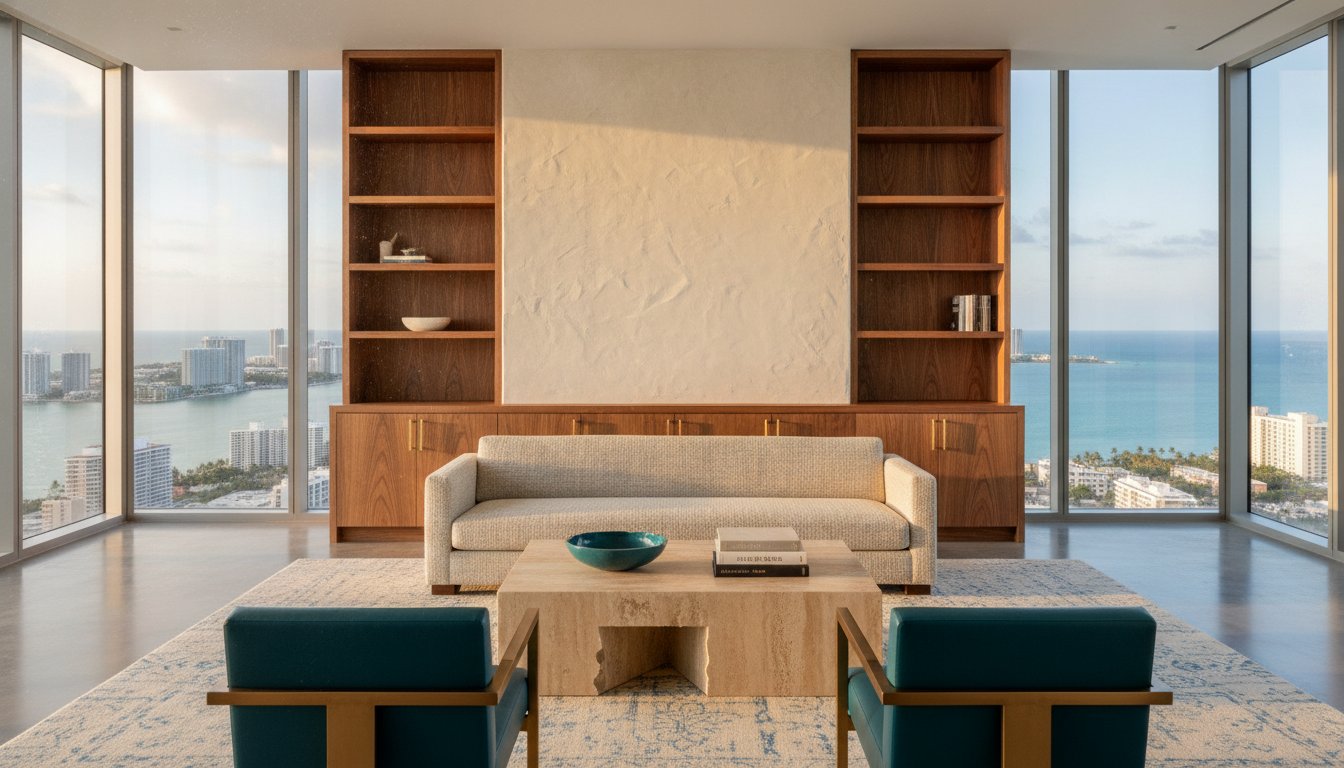
The era of the "museum house" is officially over, replaced by a profound movement toward spaces that breathe, age, and tell a story through the hand of the maker. You've likely felt the exhaustion of seeing the same sterile, catalog-ready rooms that lack a sense of history or soul. It's a common anxiety for homeowners who want to invest in quality but fear their choices will look dated by the time the paint is dry. We believe that true luxury isn't about following every fleeting whim; it's about the enduring resonance of authentic materials and the quiet confidence of expert curation.
In this guide, we'll explore the high-end interior finish trends of 2026 that prioritize "The Human Touch" over mass-produced perfection. You'll discover how to blend the precision of modern technology with the warmth of heritage Italian craftsmanship to create a home that feels both curated and deeply personal. We will walk through the return of noble materials, the rise of tactile sophistication, and why the most valuable homes of the future are those that embrace a lived-in, organic elegance. By the end, you'll have the roadmap to integrate these timeless elements into your own environment with the same technical precision we've honed over thirty years of design leadership.
Key Takeaways
- Understand the transition from sterile minimalism to "Warm Minimalism," focusing on how curated character and soulful materials evoke a deeper emotional connection to your space.
- Explore the 2026 high-end interior finish trends that celebrate noble materials, specifically the art of layering unpainted wood tones like walnut and oak for a sophisticated, timeless look.
- Learn how to elevate your interior architecture through tactile surfaces, such as Venetian plaster and textile wall coverings, that offer both visual depth and sensory comfort.
- Discover regional design strategies that blend heritage craftsmanship with modern technology, whether you're designing a rugged alpine retreat or a sculptural Miami estate.
- Gain expert insights into the procurement of exclusive Italian materials, ensuring your project benefits from authentic artisanal quality and seamless professional execution.
The 2026 Shift: From Sterile Minimalism to Lived-In Luxury
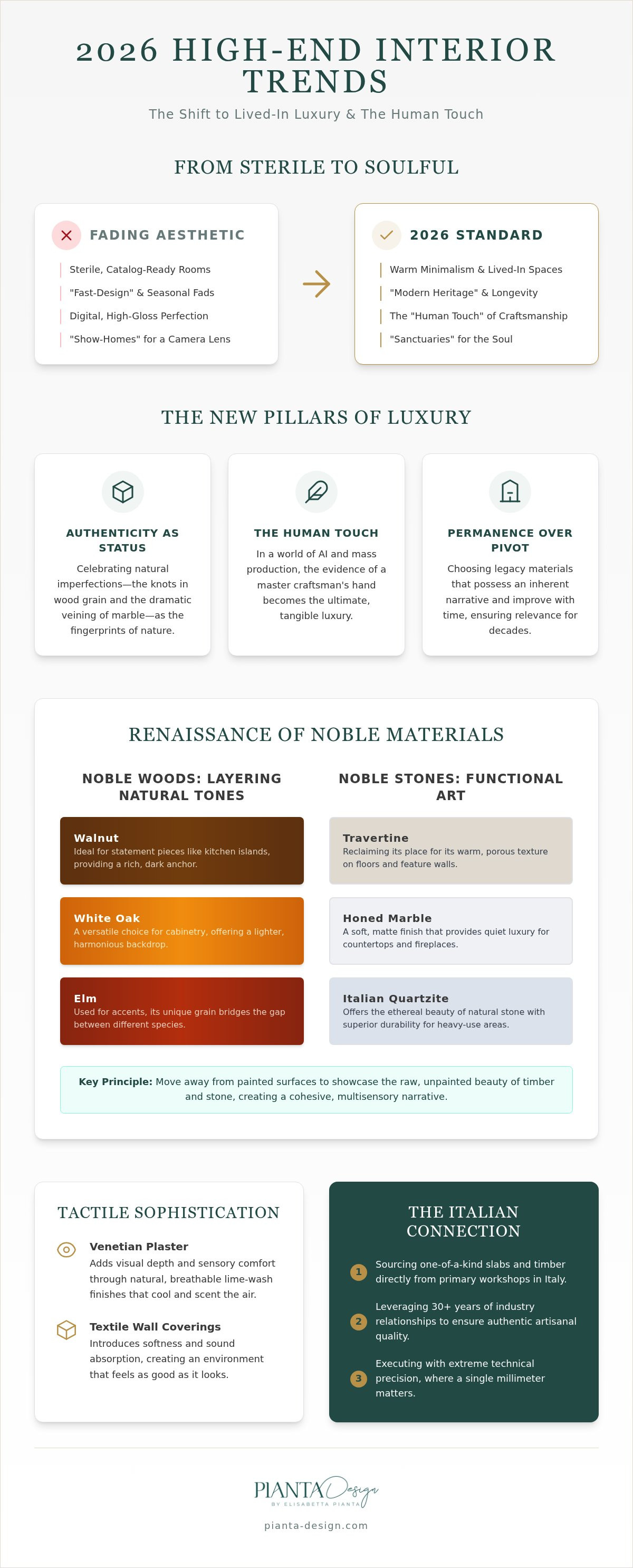
We are witnessing a quiet rebellion against the digital perfection that has dominated our screens for years. The "Anti-Algorithm" aesthetic is a conscious rejection of generic, high-gloss interiors that lack a pulse. For 2026, the defining high-end interior finish trends center on the concept of "Permanence over Pivot." Instead of chasing seasonal fads, homeowners are seeking materials that possess an inherent narrative, choosing finishes that don't just endure but actually improve with time. This shift places the "Human Touch" at the pinnacle of luxury; in a world increasingly shaped by artificial intelligence, the evidence of a master craftsman’s hand becomes the ultimate status symbol.
The Rejection of "Fast-Design" in Luxury Markets
Affluent property owners are moving away from "fast-design" templates that prioritize speed over substance. They understand that a home's foundation is built through thoughtful residential interior design, where every surface is considered for its longevity and heritage. This "Modern Heritage" approach bridges the gap between historical silhouettes and 2026 sensibilities. It's about selecting a hand-hewn timber or a custom-forged metal that carries the weight of history while functioning seamlessly within a contemporary architectural framework. True quality doesn't scream for attention. It whispers through the weight of a solid door or the cool, steady temperature of a thick stone slab. By investing in legacy materials, you ensure your environment remains relevant for decades rather than months.
Authenticity as the New Status Symbol
Luxury in 2026 is a multisensory experience. It goes beyond the visual to embrace the sound of a footstep on reclaimed oak or the scent of natural lime-wash plaster. Authenticity is found in the deliberate celebration of imperfection. We no longer hide the knots in a wood grain or the dramatic, irregular veining of a rare marble; these are the fingerprints of nature that prove a material's origin. The goal has shifted from creating a "show-home" meant for a camera lens to crafting a "sanctuary" meant for the soul. These high-end interior finish trends reflect a desire for environments that offer emotional resonance, providing a sense of calm and stability. When a space is designed with this level of intentionality, it ceases to be a mere building and becomes a living, breathing extension of your personal philosophy.
Modern Heritage: The Renaissance of Noble Materials
The architectural landscape of 2026 is defined by a return to materials that possess gravity and history. We are seeing a significant move away from painted surfaces in favor of unpainted, natural wood kitchens and millwork. This renaissance of noble materials is a cornerstone of current high-end interior finish trends, emphasizing the raw beauty of timber and stone. Successful spaces now layer various wood species with confidence. A walnut island might sit against white oak cabinetry, while elm accents provide a subtle bridge between the two. The secret lies in maintaining a consistent grain direction and ensuring the undertones remain harmonious across the different species.
Integrating custom furniture design with these architectural finishes creates a singular, cohesive narrative. We often see "Noble Stones" like travertine and honed marble extending from the floor up into bespoke cabinetry or sculptural fireplace surrounds. Rare Italian quartzites are also reclaiming their place as functional art, offering durability without sacrificing the ethereal quality of natural stone. These materials aren't just decorative; they're the permanent bones of the home that reflect a commitment to quality and longevity.
The Italian Connection: Sourcing Rare Timber and Stone
Italian manufacturers remain the undisputed gold standard for these finishes. Our team at Pianta Design leverages over thirty years of industry relationships to source one-of-a-kind slabs and timber directly from primary workshops in Italy. Working with these ultra-premium materials requires extreme technical precision; even a single millimeter of error can disrupt the entire visual flow. If you're looking for a partner to navigate these complexities, our material and finish selection services ensure every element is sourced with an eye for both aesthetic depth and technical performance.
Sculptural Millwork and Reeded Details
Modern Heritage is the seamless blend of 18th-century craft and 21st-century technology. The evolution of fluted panels has moved toward more organic, sculptural forms that feel softer to the eye. Reeded details are no longer just vertical lines; they are becoming fluid waves that wrap around kitchen islands and curved walls. We're seeing a preference for elevated door styles that utilize hidden hinges and integrated handles, allowing the material itself to take center stage. These high-end interior finish trends prove that luxury is found in the details that you feel before you even see them.
Tactile Sophistication: Beyond the Visual Aesthetic
Luxury in 2026 is no longer a spectator sport. It's a tactile dialogue between the inhabitant and the environment. While previous years focused heavily on the "look" of a room, current high-end interior finish trends prioritize the "feel." We're seeing a shift toward surfaces that invite a touch, from the velvety grain of artisanal plasters to the soft resonance of upholstered architectural panels. This sensory approach ensures that a home feels as good as it looks, grounding the resident in a space that's both physically and emotionally supportive.
The choice of materials also dictates the acoustic soul of a space. Through careful material and finish selection, we can manipulate how sound travels, ensuring a home feels like a true sanctuary rather than an echo chamber. Artisanal plasters like Venetian and Tadelakt provide a depth that standard drywall simply can't replicate. These finishes are breathable and offer a high-texture, monochromatic backdrop that creates a sense of visual "quiet." Similarly, the preference for metals has evolved toward "living finishes" like unlacquered copper. These materials develop a unique patina over time, reflecting the passage of life within the home.
The Return of the Master Plasterer
Hand-applied finishes are becoming the standard for discerning clients who reject the flat uniformity of modern construction. Natural lime-based wall finishes aren't just beautiful; they offer biophilic benefits by regulating humidity and improving indoor air quality. This artisanal approach allows for a seamless, continuous look that softens the sharp corners of modern architecture. By replacing the harshness of mass-market materials with these high-end interior finish trends, we create environments that feel more human-centric and permanent.
Textiles as Architecture
We are seeing an increase in silk, linen, and wool wall coverings used as integral architectural elements rather than mere decoration. These aren't just wallpapers. They're thick, upholstered panels that provide significant thermal and acoustic insulation. In commercial interior design, specifically for high-end executive offices, these textile panels create an atmosphere of focused calm. Balancing these soft finishes with hard stone and wood surfaces is essential for achieving the "Organic Luxe" aesthetic that defines the upcoming year. This layering of textures creates a sophisticated, lived-in feel that is the hallmark of a truly curated home.
Regional Interpretations: From Park City to Miami
High-end interior finish trends aren't a one-size-fits-all solution. They're deeply rooted in the geography they inhabit. The way light hits a mountain peak in Park City requires a different material response than the intense, direct sun of a Miami coastline. In 2026, we see a sophisticated tailoring of finishes that respects local climates while maintaining a global aesthetic standard. Light and humidity are the silent designers of any space. They dictate whether a stone should be honed to absorb glare or polished to bounce light into darker corners.
In Park City and Salt Lake City, the "Elevated Alpine" look dominates. This involves mixing heavy, structural timbers with refined, slim-profile metalwork. It's a balance of ruggedness and precision. Conversely, Miami's "Organic Luxe" leans into sculptural stone and light-reflective plasters that capture the shifting hues of the Atlantic. In San Francisco, "Refined Modernism" prevails. Here, industrial materials like cold-rolled steel and exposed concrete are softened by intricate, artisanal woodcraft, reflecting the city's blend of tech-forward thinking and bohemian heritage.
Mountain Luxury vs. Coastal Sophistication
Utah’s "Warm Minimalism" utilizes dense, insulating materials to create a sense of enclosure against the winter cold. In Florida, "Luxe Organic" focuses on breathability and openness. Material durability is paramount; finishes must withstand mountain snow or corrosive coastal salt without losing their luster. We often specify different sealants and protective coatings based on these environmental stressors. While the Bay Area palette embraces foggy greys and deep, warm oaks, Miami design prioritizes sun-bleached whites and sandy beiges to maximize natural illumination.
Yacht-Inspired Finishes in Residential Design
The precision required for luxury yacht interior design is increasingly influencing land-based estates. We're seeing a surge in high-gloss lacquers and curved millwork that mimic the fluid lines of a superyacht. These yacht-inspired finishes offer more than just beauty; they bring marine-grade longevity to residential projects. Incorporating these space-saving, high-performance materials ensures a home remains pristine despite high humidity or heavy use. It's about a level of detail where every joint is seamless and every surface is engineered for a lifetime of beauty. If you're ready to bring this level of technical excellence to your next project, contact our design team to discuss a tailored material strategy.
Implementing Luxury: The Pianta Design Approach
The successful execution of these 2026 trends requires more than an aesthetic eye. It demands a rigorous foundation in interior architecture, where the structural soul of the home is designed to support the weight and character of noble materials. When we source a rare Italian quartzite or a hand-hewn elm panel, we aren't just selecting a finish. We're engineering a permanent element of the home's anatomy. This level of implementation is where the most significant high-end interior finish trends often fail or succeed; without technical foresight, the most beautiful artisanal plaster can crack, and the finest stone can lose its impact.
Our procurement process is built on thirty years of direct relationships with Italian manufacturers and small-batch artisanal workshops. These aren't retail channels. They're exclusive partnerships that allow us to access materials that never reach the public market. Once these materials arrive, construction oversight becomes the next critical phase. We ensure that every slab and panel is installed with millimeter precision, respecting the unique grain and weight of the material. To complete the sensory experience, we integrate sophisticated lighting design that's specifically calibrated to highlight the tactile textures we've curated.
The Value of Professional Project Management
Managing the logistics of international sourcing requires a steady hand and deep industry knowledge. We oversee every detail, from the initial quarry visit in Italy to the final installation in Miami or Park City. This professional management mitigates the risks associated with long lead times and complex quality control. We don't just dream up a conceptual design; we bridge the gap between that initial vision and the built reality. Our team ensures that the artisanal soul we've promised is actually felt in the final, physical result, maintaining the integrity of the design throughout the construction process.
Start Your 2026 Design Journey
The first step toward a home that feels curated and soulful is a comprehensive interior design consultation. During this process, we begin the material selection journey by understanding your personal philosophy and the unique light profile of your property. We invite you to Consult with Pianta Design to explore how these high-end interior finish trends can be tailored to your lifestyle. Let's create an environment that doesn't just look luxurious, but resonates with lasting quality and artistic purpose.
Investing in the Future of Your Home’s Soul
The evolution of luxury isn't a race toward digital perfection; it's a return to the textures and materials that make us feel deeply at home. We've seen how the high-end interior finish trends of 2026 prioritize the "Human Touch" through noble woods, hand-applied plasters, and sculptural stone. By embracing these artisanal elements, you move beyond the fleeting cycle of fast-design. You create a sanctuary that doesn't just endure but actually improves with time. Whether you're refining an alpine retreat or a coastal estate, the secret lies in the harmony between heritage craftsmanship and technical precision.
Achieving this level of soulful sophistication requires a partner who understands the artistic vision and the complex logistics of international sourcing. With over 30 years of industry experience and direct access to exclusive Italian manufacturers, Pianta Design specializes in bringing rare finishes to high-end residential and yacht interiors. We handle the intricacies of procurement and oversight so you can focus on the life you'll lead within these walls. Elevate your home with Pianta Design’s expert finish selection and Italian craftsmanship. We're here to help you shape a space that resonates with your personal philosophy for generations.
Frequently Asked Questions
What are the most durable high-end finishes for a luxury kitchen in 2026?
Natural quartzites and honed granites are the primary choice for longevity and resilience. Unlike synthetic surfaces, these noble stones offer exceptional heat resistance and a unique mineral narrative. For cabinetry, unpainted hardwoods like walnut and white oak are favored. These materials are core to high-end interior finish trends because they can be refinished rather than replaced, ensuring a lifetime of use in high-traffic culinary environments.
How do I incorporate 2026 interior trends without making my home feel dated quickly?
Focus on "Permanence over Pivot" by selecting architectural finishes that have a deep historical precedent. You should avoid hyper-specific geometric patterns or neon-accented synthetics. Instead, lean into the "Modern Heritage" aesthetic, which uses timeless materials like lime-wash plaster and solid timber. These elements have been used for centuries; their 2026 application simply refines the silhouettes for contemporary living, ensuring your home remains a soulful asset.
Why is Italian craftsmanship considered the gold standard for interior finishes?
Italian craftsmanship is defined by a cultural lineage where design and manufacturing are inseparable. Their workshops combine ancient techniques with cutting-edge technical precision. This "Italian Connection" allows for a level of detail in stone carving and timber milling that mass-market producers cannot replicate. We leverage these direct relationships to source materials that possess a level of soul and durability exclusive to the region.
Can I mix different wood species in the same room according to 2026 trends?
Mixing wood tones is a hallmark of the 2026 "Organic Luxe" look. The key is to layer species like walnut, oak, and elm while maintaining a consistent grain direction. You should aim for a dominant wood for the primary millwork and use a secondary species for accents or bespoke furniture. This approach prevents the room from feeling like a showroom and instead creates a curated, lived-in atmosphere that feels intentional.
What is the difference between a "living finish" and a standard metal finish?
A "living finish" is a metal surface, such as unlacquered copper or brass, that is left untreated so it can naturally oxidize. Unlike standard lacquered finishes that remain static and can chip, a living finish develops a rich patina over time. This evolution is highly prized in high-end interior finish trends because it records the history of the home, adding a layer of authenticity that standard metals lack.
How does lighting design impact the appearance of high-end wall plasters?
Lighting is the essential partner to artisanal plasters like Venetian or Tadelakt. Because these finishes have three-dimensional depth, grazing light from recessed LEDs or wall washers is necessary to reveal the subtle undulations and mineral inclusions. Without professional lighting design, these expensive textures can appear flat. Proper illumination transforms a wall from a simple boundary into a dynamic, sculptural element that changes throughout the day.
Are textile wall coverings practical for high-traffic residential areas?
High-quality silk, linen, and wool coverings are surprisingly practical when installed as upholstered architectural panels. These materials provide superior acoustic and thermal insulation, making them ideal for bedrooms and private libraries. While they shouldn't be used in wet areas, marine-grade textiles are increasingly used in high-traffic residential zones. These fabrics are engineered to resist staining while maintaining the soft, luxurious feel of natural fibers.
How much should I budget for high-end architectural finishes compared to decor?
We recommend allocating 60% to 70% of your interior budget to permanent architectural finishes and interior architecture. While decor like pillows and lamps can be easily swapped, the "bones" of the home define the property's long-term value. Investing in high-quality materials ensures high resale value and a home that feels soulful from its foundation, rather than relying on accessories to create a sense of luxury.
