

A $20,000 Italian dining table is not merely a functional surface; it is a silent testament to centuries of artisanal heritage that can be irreparably silenced by a single spray of the wrong household chemical. You've likely felt that sharp moment of hesitation, cloth in hand, wondering if a specific conditioner will nourish the grain or permanently cloud the finish of your bespoke investment. It's a valid fear because true luxury demands more than just tidiness. Mastering how to care for custom italian furniture requires moving beyond generic cleaning habits and embracing the sophisticated role of a dedicated material steward.
We believe that the environment you curate directly influences your daily sense of harmony, making the preservation of your furniture's integrity a vital pursuit. This 2026 guide provides the definitive protocol for maintaining high-end craftsmanship, ensuring your pieces retain their soul and heirloom value through fluctuating humidity and light. You'll gain a clear, material-by-material understanding of everything from delicate aniline leathers to porous Tuscan marbles. We'll define the precise boundary between mindful daily rituals and the moments where professional restoration becomes the only path to protecting your legacy and the unique atmosphere of your home.
Key Takeaways
- Transition from basic cleaning to intentional stewardship by understanding how hand-applied Italian finishes and rare veneers react to their specific environment.
- Learn exactly how to care for custom italian furniture by following material-specific protocols for porous stones like Carrara marble and delicate hardwoods like Italian walnut.
- Discover how to mitigate environmental damage in extreme climates, from managing Miami’s high humidity to preventing wood shrinkage in the dry air of Park City.
- Establish a professional-grade maintenance framework with a "Daily, Monthly, Yearly" routine and a curated kit of non-toxic, material-safe supplies.
- Identify the critical thresholds where DIY care ends and professional restoration by an interior design specialist is required to preserve heirloom value.
The Philosophy of Stewardship: Why Italian Custom Furniture is Different
Custom Italian furniture represents a convergence of heritage and innovation, where every grain and stitch tells a story of intentionality. Unlike mass-produced items designed for a decade of utility, these pieces are crafted with the expectation of becoming heirlooms. Understanding how to care for custom italian furniture starts with a fundamental shift in mindset: moving from reactive cleaning to proactive stewardship. Stewardship implies a deep respect for the creator's vision and a commitment to preserving the "living" nature of materials that breathe, age, and evolve within your home.
The longevity of these works is intrinsically tied to the custom furniture design process itself, where specific finishes are chosen for their aesthetic depth rather than just their durability. Many Italian manufacturers prioritize finishes that develop a rich patina over time, allowing the piece to gain character rather than simply wearing out. This philosophy ensures that your environment remains dynamic, reflecting a life well-lived through the subtle maturation of the materials themselves.
Understanding the Italian Finish
The technical composition of a finish dictates its entire maintenance lifespan. Open-pore wood finishes, often found in contemporary Italian walnut or oak designs, allow the wood to interact with the air, making them more sensitive to humidity fluctuations than heavy, plasticized coatings. Similarly, the aniline leathers used in elite upholstery are dyed with transparent pigments that preserve the hide's natural markings and tactile softness. These leathers require breathable care protocols to prevent the natural oils from drying out, which would lead to irreversible cracking. Hand-rubbed lacquer is a delicate, multi-layered finish requiring zero-abrasion techniques to maintain its mirror-like clarity without introducing micro-scratches.
Investment Preservation vs. Basic Cleaning
Basic cleaning is often a destructive act when applied to bespoke items. Generic household cleaners, laden with harsh alcohols and silicones, are the primary enemy of custom-sourced materials, as they can strip away natural oils or create a hazy buildup that obscures the grain's beauty. Proper maintenance ensures the "one-of-a-kind" status that defines a curated space, protecting the structural integrity of bespoke joinery from environmental stress. While simple dusting is a daily ritual, true preservation often mirrors the specialized techniques found in professional Furniture repair and restoration. By treating your furniture as a collection of living assets, you safeguard both the physical object and the sophisticated atmosphere it creates.
Material-Specific Protocols: Caring for Woods, Stones, and Textiles
The allure of an Italian-designed space often resides in the sophisticated interplay of textures—the cool touch of honed marble against the warm, organic grain of European oak. Mastering how to care for custom italian furniture requires a nuanced understanding of these materials' individual chemical and physical properties. Every material, from the rarest veneer to the most delicate textile, demands a bespoke stewardship protocol that respects its unique origin and technical finish.
Hard Surfaces: Wood and Stone
Italian walnut and oak are prized for their visual depth, yet they are vulnerable to the friction of traditional cleaning methods. The "dry-first" rule is essential for high-gloss Italian lacquers; always use a high-quality microfiber cloth to lift dust rather than a cotton rag, which can leave microscopic abrasions. For natural stone like Carrara marble or travertine, the primary threat is acidity. These stones are highly porous and will etch if they encounter vinegar or citrus-based cleaners. Utilizing a pH-neutral solution is the only acceptable standard for maintaining the pristine surface of a luxury stone table. Following a comprehensive Furniture Care Guide ensures that these delicate balances are maintained throughout the life of the piece.
| Material | Primary Routine | Key Restriction |
|---|---|---|
| Wood (Lacquered/Veneer) | Microfiber dusting and occasional high-grade waxing | Avoid silicones and excess moisture |
| Natural Stone (Marble/Travertine) | Sealing every 6 to 12 months and pH-neutral wiping | Zero tolerance for acidic or abrasive cleaners |
Soft Surfaces: Leather and Textiles
Italian upholstery often features aniline leathers, which are prized for their buttery hand-feel but lack the protective coating found on mass-market hides. Knowing how to care for custom italian furniture in this category means distinguishing between nubuck, aniline, and protected leathers. Aniline hides are highly absorbent and require specialized conditioners that nourish the leather without clogging its natural pores. For textiles like silk-blend velvets or premium linens, regular vacuuming with a soft brush attachment is a vital preventative measure to remove dust before it becomes embedded in the fibers.
If a spill occurs on bespoke upholstery, immediate action is required to prevent the stain from setting. Blot the area with a clean, white cloth using a lifting motion; never rub the fabric, as friction can permanently distort the nap of delicate velvet or push liquids deeper into linen weaves. For metal accents like unlacquered brass or architectural glass, use distilled water to avoid mineral spotting. If you're uncertain about the specific composition of your furniture's accents, consulting with an expert in material and finish selection can provide the clarity needed to avoid costly maintenance errors.
Environmental Mastery: Protecting Furniture in Miami, Park City, and San Francisco
The physical space where a piece resides is just as critical as the craftsmanship itself. Within the scope of residential interior design, climate control acts as the invisible foundation for material preservation. Whether your home overlooks the Atlantic in Miami or the rugged peaks of Park City, the atmosphere dictates how your collection ages. Mastering how to care for custom italian furniture means recognizing that your home air quality is a primary tool of stewardship, ensuring that the materials remain as vibrant as the day they were installed.
In Miami, the relentless humidity is the chief adversary. High moisture levels can lead to wood warping and, more dangerously, the growth of mold within the pores of fine leathers and textiles. We recommend professional cleaning every 6 to 12 months in these tropical climates to manage moisture buildup. Conversely, the high-altitude dryness of Park City causes wood to shrink and become brittle, often leading to cracks in bespoke veneers. In San Francisco, the coastal fog and salt-laden air can be corrosive to metal accents, requiring regular surface cleaning to remove salt deposits before they pit the finish.
The Silent Killer: UV Exposure and Light Control
Sunlight carries a relentless energy that can bleach the deep pigments found in Italian dyes, turning a vibrant walnut or a rich velvet into a faded shadow of its former self. UV-filtered window treatments are a necessary investment to protect these delicate color stories from irreversible solar damage. A strategic rotation of furniture in sun-drenched rooms can also ensure that any light exposure remains even across the surface, preventing stark tan lines. The ideal humidity range for luxury wood furniture is 40-50%.
Temperature and Airflow Management
Placing a custom console or a hand-rubbed lacquer table directly in the path of an HVAC vent is a critical error that many homeowners overlook. The direct blast of conditioned air creates localized zones of extreme temperature that strip moisture from the material surface too rapidly. This leads to uneven expansion and contraction, which can eventually compromise bespoke joinery and structural integrity. For Park City mountain homes, seasonal adjustments to whole-home humidification are vital as the heating season begins, while coastal homes in Miami or San Francisco should prioritize consistent, gentle airflow to prevent stagnant pockets of moisture from settling on fine finishes.
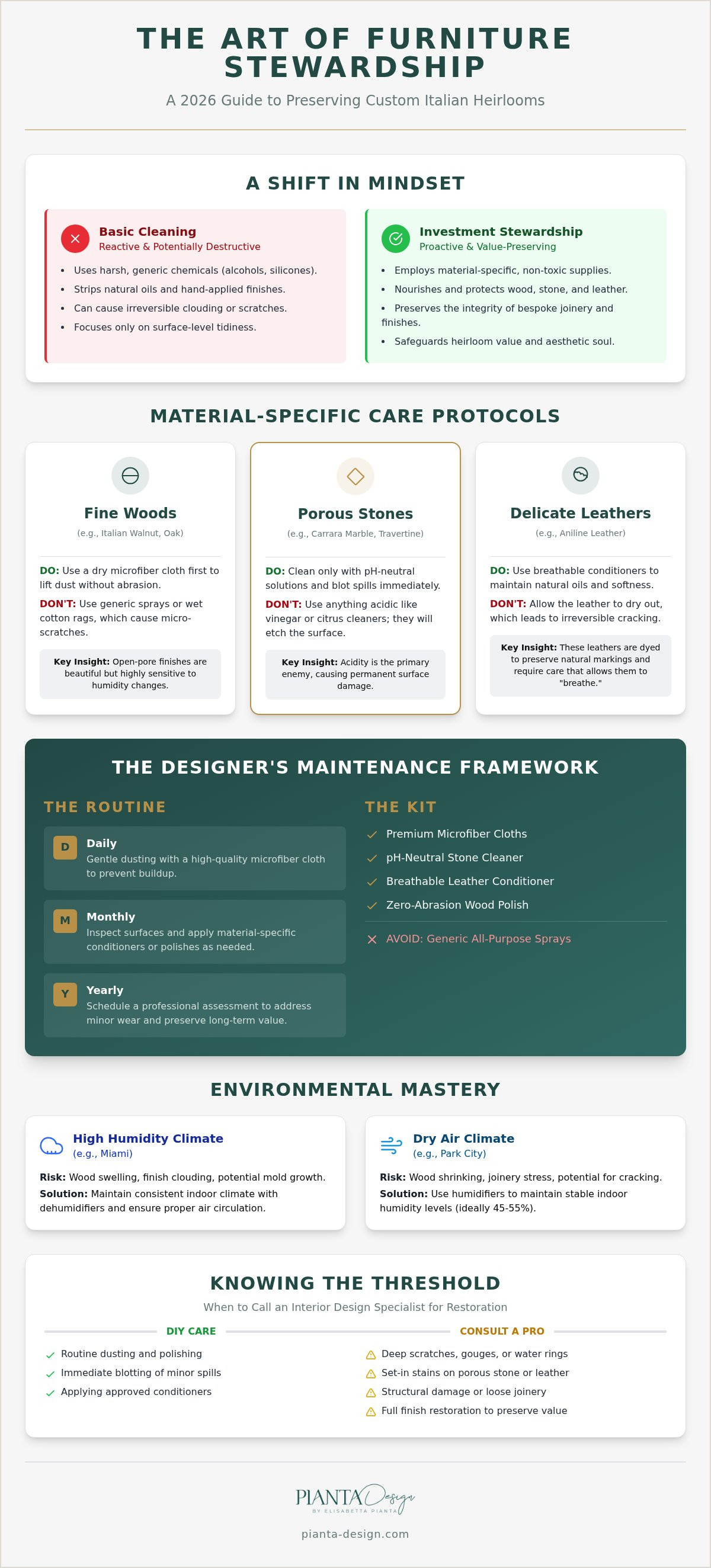
The Designer’s Maintenance Toolkit: Essential Supplies and Routines
A home filled with bespoke artistry deserves a maintenance strategy that mirrors its sophistication. Assembling a professional toolkit is the first step in mastering how to care for custom italian furniture, ensuring that every surface remains as luminous as the day it arrived from the atelier. The tools you choose are just as vital as the frequency of their use, as the wrong medium can inadvertently dull the very depth of color you seek to preserve.
Professional-Grade Supplies
High-GSM (grams per square meter) microfiber cloths are the cornerstone of any luxury maintenance kit. Their dense, plush fibers lift particulate matter away from the surface without leaving the micro-scratches often caused by standard cotton rags or paper towels. When wiping down dark, hand-rubbed finishes, always use distilled water. Tap water contains dissolved minerals that can leave ghostly white rings or a hazy film as it evaporates.
Identifying "red flag" ingredients in commercial polishes is a critical skill for any steward of fine interiors. Avoid products containing silicones or heavy paraffin waxes; these create a synthetic buildup that suffocates the material's natural ability to breathe and eventually turns cloudy. Instead, we advocate for museum-grade waxes that provide a hard, transparent barrier and pH-balanced cleaners specifically formulated for the sensitive chemistry of Italian stone. To ensure your next acquisition is paired with a perfectly tailored maintenance plan, explore our expertise in material and finish selection.
The Maintenance Calendar
Consistency is the secret to longevity. A structured routine prevents minor environmental stresses from becoming permanent damage, allowing your staff or personal care routine to remain efficient and effective. This framework transforms maintenance from a chore into a ritual of preservation.
- Daily: Perform a light dusting with a dry, high-GSM cloth to prevent grit from settling. Respond to spills immediately with distilled water and a lifting, blotting motion.
- Quarterly: This is the window for deep conditioning of aniline leathers to maintain their supple hand-feel. It's also the ideal time to inspect stone sealants, ensuring that porous surfaces like travertine remain protected against moisture.
- Annual: Schedule a professional assessment to evaluate the integrity of bespoke joinery and the overall health of finishes. This proactive check ensures that any minor shifts in the wood or finish can be addressed before they require significant restoration.
By adhering to this disciplined approach, you don't just clean your environment; you curate its future. Using the right supplies ensures that the technical precision of the manufacturer's work remains visible and vibrant for decades. When you understand how to care for custom italian furniture through the lens of a designer, you protect the soul of your home's most intimate spaces.
Professional Curation: When to Call an Interior Design Specialist
While the daily and seasonal rituals we've outlined are the heartbeat of preservation, there comes a moment when the limits of personal stewardship are reached. Sophisticated ownership involves recognizing that certain interventions require the technical precision of an expert hand. Understanding how to care for custom italian furniture at this elevated level means knowing when a surface requires professional restoration rather than a simple cleaning protocol. Whether it's a deep etch in a Carrara marble top or a structural shift in a bespoke walnut frame, specialized intervention ensures the piece's soul remains intact for the next generation.
Our role at Pianta Design extends far beyond the initial procurement. We often collaborate with other premier interior design firms to establish long-term project management plans that include ongoing care guidance. This is particularly vital for yacht interiors and high-value residential projects where environmental stressors are constant. When care rituals are no longer sufficient to maintain the desired aesthetic harmony, it may be time to transition into a new phase of custom furniture design to refresh the narrative of your space.
The Value of Expert Oversight
A professional eye detects environmental damage long before it becomes irreversible. We understand the logistics of stone polishing and wood refinishing that respects the original manufacturer's intent. If a bespoke piece requires a replacement component, our direct relationships with elite Italian artisans allow us to source authentic parts that maintain the item's provenance and value. This level of oversight is essential for preserving the "one-of-a-kind" status of your collection, ensuring that professional conservators use the correct chemical balances for specific hand-rubbed finishes.
Partnering with Pianta Design
With over 30 years of industry experience, we remain deeply committed to the entire lifecycle of the environments we create. Our presence in San Francisco, Miami, and Park City allows us to make material selections informed by the specific climate challenges of each region. We don't just source objects; we curate the enduring quality of your lifestyle. If your current collection requires a professional assessment or if you're ready to begin a new journey of bespoke creation, Contact Pianta Design to discuss your next custom furniture project or a comprehensive interior refit. We invite you to experience a partnership where technical expertise meets an unwavering passion for artisanal excellence.
Preserving Your Legacy of Artisanal Excellence
The journey of high-end furniture ownership is a continuous act of creation that extends far beyond the initial installation. By mastering the environmental nuances of your specific region and adhering to material-safe cleaning protocols, you ensure that every bespoke detail remains a vibrant part of your daily experience. True stewardship is about more than avoiding damage; it's about honoring the technical precision and soul of the artisans who crafted your collection. When you understand how to care for custom italian furniture, you protect not just a physical object but the sophisticated atmosphere it curates within your home.
At Pianta Design, we bring 30+ years of luxury design expertise and exclusive relationships with top Italian artisans to every project. Our full-service project management from San Francisco to Miami ensures that your vision is realized and preserved with the highest level of professional oversight. We believe that the quality of your environment directly influences your daily well-being, making the longevity of your interior a vital investment.
Discover our bespoke Italian furniture design services to begin curating a space that reflects your uncompromising standards. Your commitment to quality deserves a partner who values it as much as you do. We look forward to helping you create an enduring sanctuary of style and comfort.
Frequently Asked Questions
Can I use commercial furniture polish on my custom Italian wood table?
You should avoid commercial furniture polishes on bespoke Italian wood surfaces. These products often contain silicones and paraffin waxes that create a synthetic, cloudy buildup over time, suffocating the wood's natural ability to breathe. Instead, use a high-GSM microfiber cloth with a small amount of distilled water for daily dusting. For deeper preservation, we recommend museum-grade waxes that provide a transparent, hard barrier without compromising the hand-rubbed finish of your investment.
How do I protect my leather sofa from the high humidity in Miami?
Protecting leather in Miami's tropical climate requires rigorous environmental control. High humidity can lead to moisture absorption and mold growth within the pores of fine Italian hides. We suggest maintaining indoor humidity between 40% and 50% using a dedicated dehumidifier. Regular conditioning every six months is also vital. This process nourishes the leather, creating a protective barrier that prevents environmental moisture from deteriorating the structural integrity of the upholstery.
What is the best way to remove a water ring from a matte wood finish?
Removing a water ring from a matte wood finish requires immediate, gentle action to prevent permanent staining. Blot the area with a clean, dry microfiber cloth to lift any remaining moisture. If the ring has already set, avoid using abrasive household remedies like vinegar or baking soda, as these can permanently alter the matte sheen. In such cases, it is best to consult a professional restorer who understands the specific chemistry of Italian open-pore finishes.
Is it necessary to seal Italian marble furniture every year?
Yes, sealing your Italian marble furniture every 6 to 12 months is a fundamental part of its stewardship. Porous stones like Carrara or travertine are highly susceptible to etching from acidic liquids. A high-quality, penetrating sealer fills the stone's pores, providing a vital window of time to blot spills before they cause permanent damage. Always pair this routine with pH-neutral cleaners to ensure the sealant's longevity and the stone's natural luster.
How can I prevent my custom furniture from fading in a room with large windows?
UV-filtered window treatments are the most effective way to prevent custom furniture from fading in sun-drenched rooms. These films block the energy that bleaches the rich pigments found in Italian dyes and veneers. Additionally, consider a rotation strategy to ensure any light exposure is distributed evenly across the piece. This prevents stark tan lines and preserves the visual depth of the materials. Learning how to care for custom italian furniture involves managing light as much as cleaning.
What should I do if my wood furniture starts to show small cracks in a dry climate like Park City?
If your furniture shows small cracks in a dry climate like Park City, you must immediately address the room's humidity levels. Wood is a living material that shrinks when the air becomes too arid, leading to brittle veneers and compromised joinery. We recommend using a whole-home humidifier to maintain a constant 40% to 50% humidity range. Annual oil treatments can also help hydrate the wood, restoring the flexibility needed to prevent further structural damage.
Are there specific cleaning products Pianta Design recommends for Italian aniline leather?
Pianta Design advocates for pH-balanced, breathable conditioners specifically formulated for aniline leathers. These hides lack the heavy protective coatings of mass-market furniture, meaning they require products that nourish without clogging pores. We avoid any cleaners containing alcohols or silicones, as these strip away the natural oils that give Italian leather its buttery hand-feel. Our procurement and sourcing expertise ensures we can guide you toward the most sophisticated, non-toxic supplies for your specific collection.
How often should I have my custom furniture professionally inspected?
We recommend a professional assessment of your custom collection at least once a year. This annual inspection allows a specialist to evaluate the integrity of bespoke joinery and the overall health of the finishes. Catching minor environmental stresses early prevents them from becoming irreversible damage. For clients in diverse climates like San Francisco or Miami, this routine is a cornerstone of preserving heirloom value. Understanding how to care for custom italian furniture includes knowing when to call an expert.
