
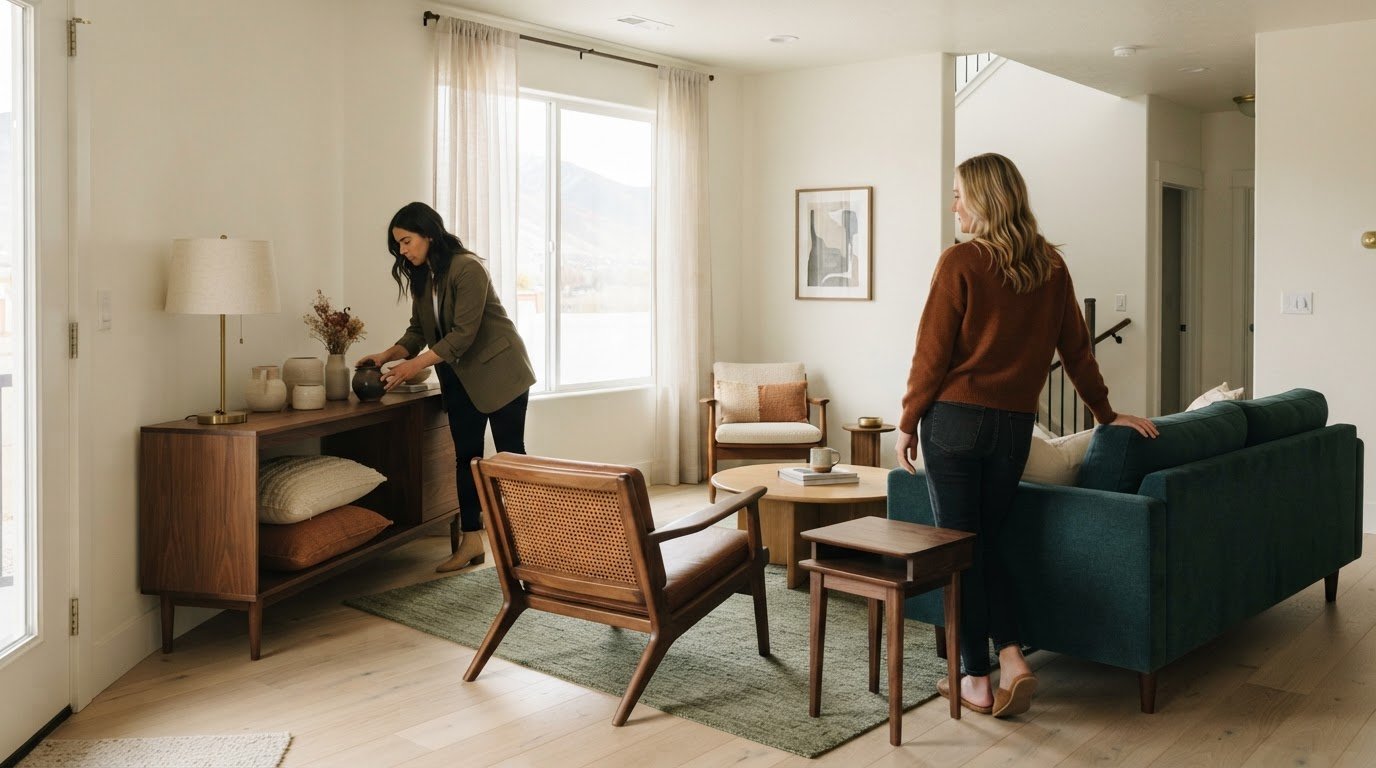
A beautifully finished room starts with a spending ceiling, not a shopping list. Budgeting for furniture and decor separately helps you see how much of the total can go to essential pieces and how much can be reserved for finishing touches. For example, an $8,000 redecoration plan gives you a clear overall limit before the room’s individual purchases are prioritized.
It’s easy to focus on the sofa, bed, or dining table and leave too little for lighting, rugs, and other details that bring a room together. Budgeting for furniture and decor separately helps you plan for both categories from the outset while keeping the most important purchases in view.
This guide explains how to estimate a room’s furnishing costs, assess the funds available, and distinguish essential, high-use, and aspirational purchases. You’ll also learn how to phase furniture spending so the room takes shape with intention, without requiring every decision at once.
Key Takeaways
- Set a room-wide spending ceiling, then divide it among furnishings and finishing touches so each category has a clear purpose.
- Plan purchases in phases, matching each decision to the room’s sequence of work and immediate functional needs.
- Give everyday seating and sleep essentials priority, while allowing accessories and aspirational pieces to come later.
- Base the budget on income, expenses, and funds set aside, then shape custom furniture decisions around the room’s needs and available funds.
1. Budget Breakdown: How Much Does It Cost To Decorate A Room?
A designer begins with a total spending ceiling, then assigns it across the room’s essential pieces and finishing details. For an $8,000 bedroom redecoration, that top-down reference sets the limit before individual choices are made. The designer then checks whether the intended bed, storage, lighting, and decor can fit within it, adjusting priorities rather than letting one purchase consume the entire budget.
A high-to-low estimate gives your plan flexibility: the lower figure reflects a more restrained selection, while the higher figure allows for costlier materials or statement pieces. These are furnishing estimates, not design-service fees.
Home size and starting funds also shape the reference. A studio living-area example uses a $1,500 limit, while furnishing a $300,000 home from scratch suggests reserving about $30,000 to $75,000 for furniture and furnishings. A dining room or larger home needs its own item-by-item scope.
New furniture usually requires a larger allocation than secondhand pieces, but the total depends on the item, its condition, delivery, and any restoration needed. Compare the full cost of each option rather than treating the purchase price as the total.
Delivery and project costs belong in the estimate from the start. A planning reserve of 10% to 15% can cover these expenses until written quotes replace it. The designer tracks planned and actual spending against the ceiling, so an increase in one category prompts a deliberate adjustment elsewhere.
How a designer plans furniture purchases in phases
A phased plan connects each purchase to the room’s function and the order of work. First, confirm the spending ceiling and measure the room and access points. Then rank worksheet items by need. This prevents you from choosing a beautiful sofa before confirming that it can enter the living room and fit the intended layout.
Sequence matters. If the walls need painting or the lighting needs replacing, make those decisions before buying new furniture. Otherwise, finished pieces may need to be moved or may not suit the room’s final palette. Also identify purchases that need to coordinate. For example, choosing a sectional first lets its scale and fabric guide your later accent-pillow choices.
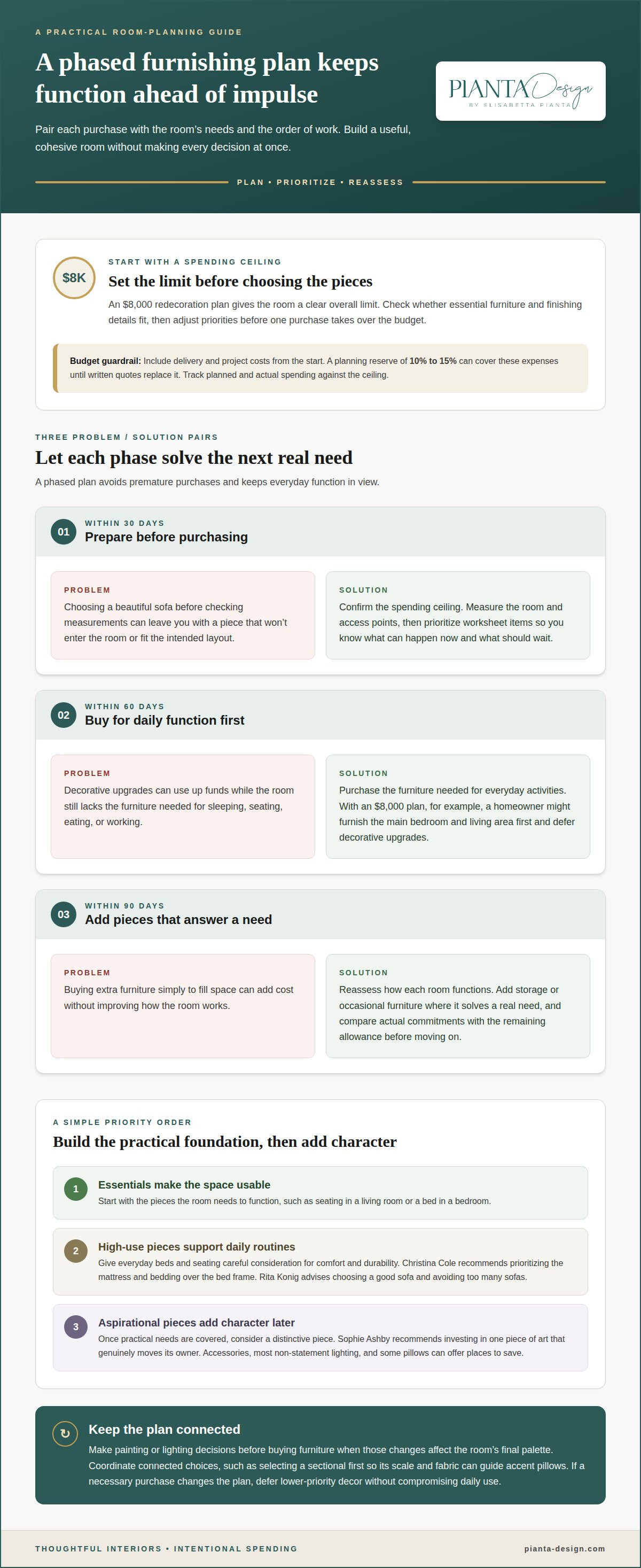
- Within 30 days: Confirm the ceiling, measure rooms and access points, and prioritize worksheet items. This stage clarifies what can happen now and what should wait.
- Within 60 days: Purchase furniture needed for sleeping, seating, eating, or working. A homeowner with an $8,000 plan might furnish the main bedroom and living area first, while deferring decorative upgrades.
- Within 90 days: Reassess how each room functions, then add storage or occasional furniture where it solves a real need.
Each phase should build on the overall design, not become a separate shopping exercise. You can plan a statement piece early even if you buy it later, using its dimensions, finish, and visual weight to guide surrounding choices. This is especially useful when a major item will define the room’s character.
Before moving to the next phase, compare actual commitments with the remaining allowance. If a necessary purchase changes the plan, defer lower-priority decor without compromising daily use. Phasing gives the room time to come together thoughtfully while keeping function, cohesion, and spending aligned.
How a designer separates essential, high-use, and aspirational purchases
Sort each room’s needs by function, frequency of use, and visual impact. Essentials make the space usable; high-use pieces support daily routines; aspirational purchases add character once the practical foundation is in place. In a living room, that often means prioritizing seating over an accent object or decorative accessory.
Give everyday beds and seating careful consideration because comfort and durability matter. For a bedroom, interior designer Christina Cole recommends prioritizing the mattress and bedding over the bed frame. Designer Rita Konig advises choosing a good sofa and avoiding too many sofas, since extra seating can absorb funds better reserved for other spaces. A children’s room can also benefit from quality, mid-market seating to help avoid replacing it within a year.
Once daily-use needs are covered, identify where a distinctive choice can shape the interior. Sophie Ashby recommends investing in one piece of art that genuinely moves its owner rather than spreading the same amount across forgettable accents. Martin Brudnizki also favors investing in materials in frequently used areas, such as floors, kitchens, and bathrooms, where daily wear makes material selection especially consequential.
Decorative purchases remain part of the plan, but they needn’t all compete for the same priority. Accessories, most non-statement lighting, and some pillows can offer places to save. Cameron Ruppert recommends good window treatments because they can last more than 20 years, making their quality and fit worth considering alongside the room’s main furniture.
To make priorities practical, place each proposed item in a tier and assess its role in the room. A living room used for frequent entertaining may need durable seating before another side table; a bedroom may need supportive bedding before a decorative frame. This keeps aspirational pieces in the plan without letting them displace essentials.
How a designer assesses available funds
A sound decorating plan starts with the household’s monthly income, regular expenses, and funds already set aside. Use these figures to distinguish money available for furnishings from funds needed for everyday commitments. This grounds the spending ceiling in the household’s actual finances, not an idealized wish list.
Next, the designer clarifies the project’s scope. Furnishing one dining room differs from furnishing an entire home from scratch, and a renovation may bring other costs into the same timeline. A furniture budget guide suggests reserving 10% to 25% of a home’s purchase price for furniture and furnishings when starting with a full home. Treat this as a planning reference, not a substitute for reviewing the funds available.
Next, map likely purchases against the available amount. For a dining room, the plan might include a table, chairs, lighting, and window treatments, while distinguishing immediate needs from later additions. Fabric, finish, scale, and intended use all affect which options suit the room. Decide what deserves investment without assuming every desired piece belongs in the first phase.
Cash flow matters as much as the overall ceiling. Align purchases with the project sequence so a major commitment doesn’t leave too little for an essential item later. If the household is also renovating, coordinate furniture decisions with the planned changes. This helps prevent premature purchases that may conflict with the finished layout or materials.
Clear inputs make the assessment more useful: the homeowner shares the amount set aside, existing pieces to retain, and priorities for comfort and function. The designer translates these into a considered plan, then revises allocations as choices develop. For a cohesive residential plan shaped around your finances and priorities, explore residential interior design.
Pianta Design: Custom Furniture Design
Pianta Design helps turn a furniture budget into a considered plan when standard pieces don’t suit a room’s proportions, function, or design intent. With Custom Furniture Design, each piece is developed in relation to the surrounding interior, aligning its dimensions, materials, and visual character with the project’s priorities.
For a residential, commercial, or yacht interior, the design process can include mood boards, floor plans, and 3D visualizations for approval. These tools help clarify how custom furniture relates to the room before decisions are finalized, and how it fits alongside the wider design scheme. This can be useful when a distinctive piece is central to the space or when the available layout calls for a tailored solution.
Contact Pianta Design to discuss your furniture and interior design project.
Shape a space around the way you live
Budgeting for furniture and decor separately does more than organize purchases. It creates room for deliberate choices about how each space should feel and function, and which details deserve a lasting place in its design. The next step is to turn those priorities into a clear creative direction, so scale, materials, and custom pieces work together rather than compete for attention.
Pianta Design brings this perspective to residential and commercial interiors, with Custom Furniture Design for spaces that call for a considered, tailored solution. A shared design direction can help connect everyday function with the character you want your home or workplace to express.
Contact Pianta Design to plan your space, and begin shaping an interior that feels considered, personal, and distinctly yours.
Frequently Asked Questions
Budget Breakdown: How Much Does It Cost To Decorate A Room?
There’s no single cost for decorating a room; the estimate depends on its scope and selected furnishings. Start by defining what the room needs, which existing items will remain, and whether the plan covers decor alone or broader updates. Room dimensions, material choices, and delivery arrangements also affect the total. A written scope makes estimates easier to compare and revise.
So which method is best?
A combined approach is usually most practical: set a total ceiling, then build an itemized estimate to see whether the plan fits. The ceiling prevents the list from expanding without limit, while the itemized view can reveal missing needs or mismatched priorities. If the estimated costs exceed the limit, revise the selection before buying. This creates a clear decision point without treating every item as equally important.
How much should you budget for furniture and home decor separately?
There’s no universal split. Budgeting for furniture and decor separately should reflect the room’s function, existing furnishings, and desired finish. First allocate funds to the furniture the room needs to work, then set a distinct allowance for decorative elements. In a furnished room, that allowance may cover a few finishing touches. In an empty room, core furnishings will naturally take more of the available funds.
What percentage of a home furnishing budget should go to furniture versus decor?
No fixed percentage fits every home because room use and existing furnishings change the balance. A home with functional furniture may direct more of its remaining allowance toward art, textiles, or finishing details. A largely empty home may need to prioritize usable furnishings first. Decide the split by listing the room’s unmet needs, then compare the planned spending in each category with the total ceiling.
How much to budget for home decor per room?
Set a room-specific decor allowance after identifying which furnishings are already in place and what visual or practical gaps remain. A living area might need window treatments for light control and privacy, while another room may benefit more from artwork or textiles. Choose the details that contribute most to the room’s intended atmosphere, then track them against the allowance instead of buying accents without a plan.
