
Architectural Lighting for High-End Homes: 2026 Luxury Guide
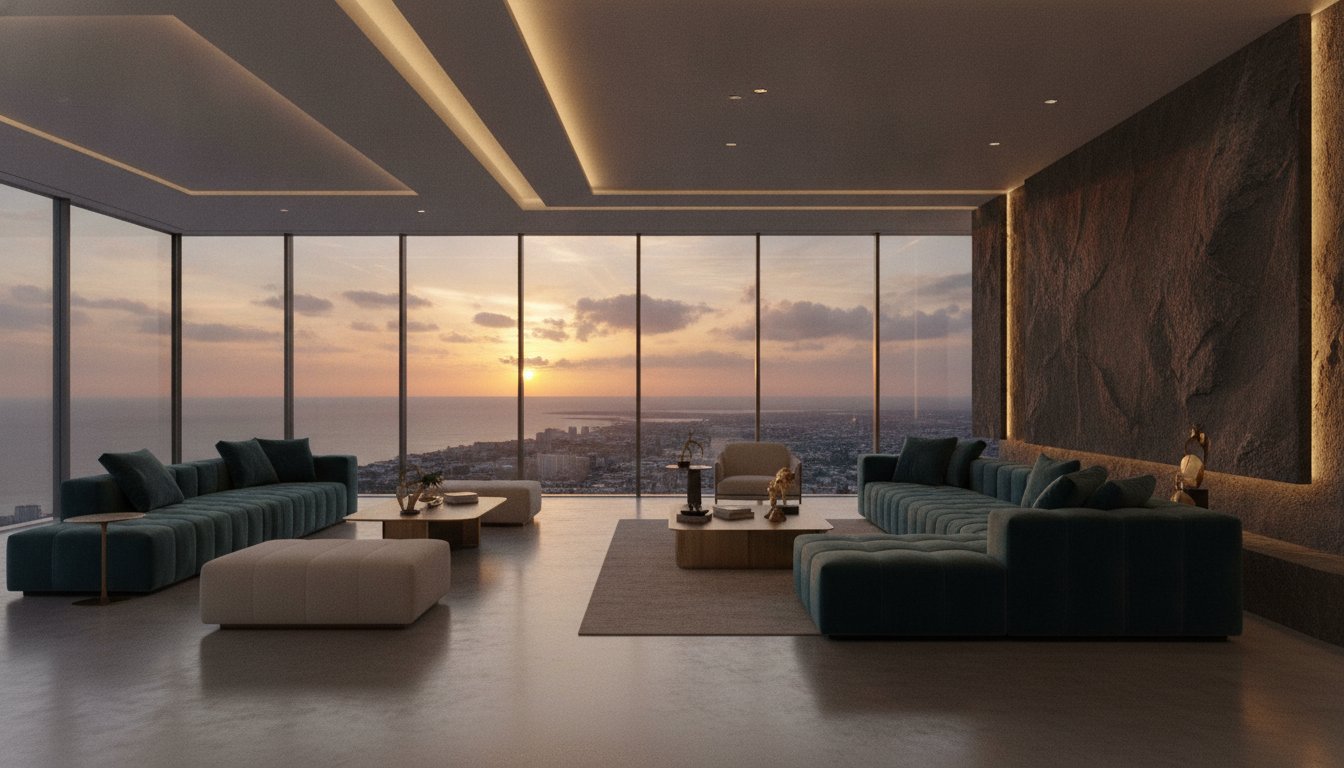
Why does a room filled with museum-grade art and bespoke Italian furniture sometimes feel as cold and uninspiring as a gallery after hours? It’s a subtle yet profound disconnect often found in expansive modern residences, where the sheer volume of a space leads to a sterile atmosphere or a confusing maze of technical complexity. You likely desire a home that breathes with warmth and intention, yet achieving that balance requires more than just expensive fixtures. Mastering architectural lighting design for high-end homes is the definitive secret to resolving these tensions, allowing you to transform static environments into immersive, atmospheric masterpieces that feel both intimate and grand.
In this 2026 luxury guide, we'll explore how the marriage of technical precision and artistic intuition creates a curated environment where light highlights every architectural detail without ever feeling intrusive. We'll examine the shift toward invisible integration and the sophisticated capabilities of systems like Lutron HomeWorks QSX to ensure your technology serves your lifestyle. By the end, you'll understand how to eliminate harsh glares and dark corners, replacing them with a seamless glow that enhances your well-being and celebrates the unique soul of your residence.
Key Takeaways
- Understand the fundamental shift from simply purchasing fixtures to mastering architectural lighting design for high-end homes, where illumination serves as the invisible thread connecting art, science, and structural form.
- Learn how to orchestrate the three essential layers of light—ambient, task, and accent—to transform vast, sterile modern rooms into warm, curated sanctuaries.
- Discover regional lighting strategies tailored for luxury markets like Miami, San Francisco, and Park City, ensuring your interior environment harmonizes perfectly with external natural light and climate.
- Explore the technical sophistication of "invisible architecture," including trimless fixtures and integrated joinery lighting that highlight your home’s finest details without distracting the eye.
- Gain insight into how bespoke art consultation drives a personalized lighting strategy, elevating your private collection through professional technical planning and elite Italian craftsmanship.
What is Architectural Lighting Design for High-End Homes?
Most people view lighting as a finishing touch, something chosen after the paint has dried and the furniture has arrived. In the world of luxury residential design, we treat it as a primary building material. True architectural lighting design for high-end homes exists at the precise intersection of art, science, and structural engineering. It's the difference between buying an expensive lamp and designing an immersive atmosphere. While a lamp is a decorative object, architectural lighting is an invisible force that defines the volume of a space and reveals the hidden textures of noble materials like hand-applied plaster or rare stone.
The Psychology of Light in Luxury Living
Light is the most powerful tool we have to influence the human psyche within a home. It dictates our circadian rhythms, telling our bodies when to feel energized and when to seek rest. In a high-end residence, lighting should never feel aggressive or clinical. Instead, we focus on creating a sense of sanctuary through layers of soft, indirect illumination that mimic the natural movement of the sun. Architectural lighting is the strategic manipulation of light to enhance structural forms. By carefully controlling shadows and brightness, we can evoke a specific emotional resonance, turning a vast living area into an intimate retreat as soon as the sun sets.
Illumination as a Structural Element
In modern, open-concept luxury homes, light serves as a silent architect. It defines zones and creates boundaries without the need for physical partitions. A perfectly calibrated pool of light can anchor a seating group within a massive great room, while a subtle wall wash can make a narrow corridor feel expansive. This level of precision is only possible when lighting is integrated into the initial professional interior design consultation and planning phase. Architectural lighting design requires deep technical knowledge of beam angles, color rendering indexes (CRI), and control systems. When we collaborate in the early stages of interior architecture, we can embed fixtures into the very fabric of the building, ensuring the light feels like an organic extension of the home rather than an afterthought. This early-stage involvement allows us to:
- Conceal technical hardware within custom millwork or ceiling coves for a minimalist aesthetic.
- Align light paths perfectly with architectural focal points and planned art placements.
- Synchronize automated scenes with the home's natural light exposure throughout the day.
By treating light as a structural element, we ensure that the home’s architecture isn't just seen, but truly felt. It's about achieving a balance where the technology is invisible, but the effect is unmistakable.
The Three Layers of Luxury Lighting Strategy
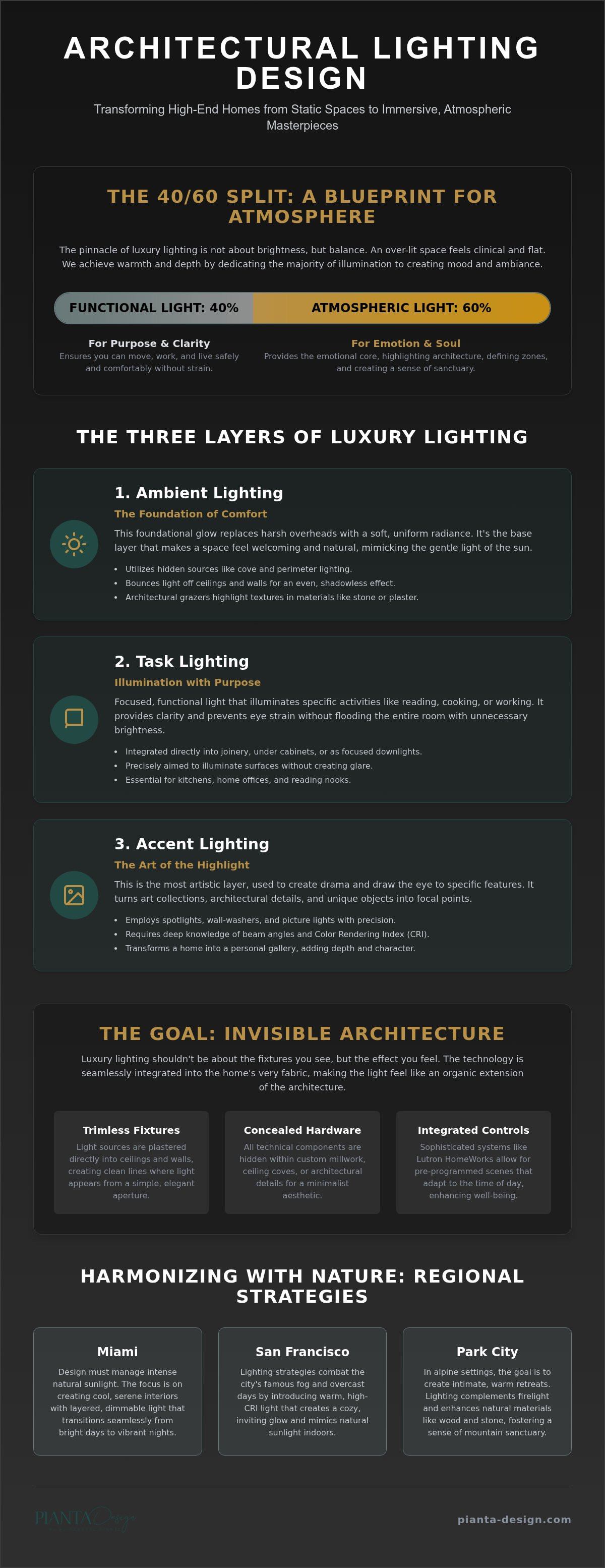
A truly sophisticated home doesn't rely on a single source of light. Instead, it employs a nuanced orchestration of layers. For those seeking the pinnacle of architectural lighting design for high-end homes, the goal is to achieve a 40/60 split between functional and atmospheric light. While functional light ensures you can move and work safely, the atmospheric 60 percent provides the emotional soul of the residence. This ratio prevents the common mistake of over-lighting a space, which often leads to a flat, uninviting environment where the architecture loses its depth and textures are washed away by a clinical glare.
Ambient Lighting: The Foundation of Comfort
Ambient light serves as the foundational glow that replaces harsh, direct sources. We move beyond standard recessed cans, which often create distracting hot spots on the floor, in favor of sophisticated cove and perimeter lighting. These hidden sources bounce light off the ceiling or walls, creating a soft, uniform radiance that feels natural and effortless. The use of architectural grazers is particularly effective for highlighting the tactile nature of stone walls or hand-plastered finishes. Precision dimming systems are non-negotiable here. They allow the home to transition from the crisp clarity of a morning breakfast to the amber warmth of a late evening salon, ensuring the environment always reflects your current state of mind.
Accent and Task Lighting: Precision and Drama
If ambient light is the canvas, accent and task lighting are the meticulous brushstrokes that define the narrative. In high-end kitchens and home offices, we design task lighting that remains completely invisible when not in use. Linear LEDs tucked under cabinets or integrated into bespoke shelving provide perfect clarity for work without cluttering the visual plane. Accent lighting, often referred to as the jewelry of the home, brings the necessary drama to a space. We utilize specialized framing projectors to illuminate fine art, ensuring the light stays exactly within the borders of the canvas. This is where Luxury Statement Lighting can be utilized to create a focal point that is as much a sculpture as it is a light source. By integrating these elements into custom furniture design, we ensure that every piece of joinery contributes to the overall luminosity of the room. Achieving this level of balance requires a master's eye for detail and a deep understanding of how light interacts with different surfaces. If you are ready to refine the atmosphere of your residence, exploring a professional lighting design consultation with an experienced esstete can reveal the untapped potential of your interior architecture.
Regional Dynamics: Lighting for Miami, San Francisco, and Park City
The geographic soul of a residence dictates its luminous requirements. A villa overlooking Biscayne Bay demands a fundamentally different approach than a mountain retreat in the Wasatch Range. Professional architectural lighting design for high-end homes must account for the specific luminosity and color temperature of the local environment. Geographic location doesn't just influence the view; it determines the Kelvin selection and the technical strategies used to harmonize artificial sources with the shifting natural light outside. It's about ensuring the home feels like a natural extension of its environment rather than a foreign object placed within it.
Coastal vs. Mountain Lighting Requirements
In Miami waterfront estates, managing the intense tropical sun and the resulting ocean glare is the primary challenge. We often utilize cooler-toned architectural lighting, typically around 3000K to 3500K, to complement the crisp, modern aesthetic and the blue-shifted natural light. Conversely, Park City residences require a warmer, more intimate approach. Because these homes often feature extensive timber and stone, we prioritize high-CRI (Color Rendering Index) sources. A CRI of 95 or higher is essential to keep wood tones rich and vibrant rather than muddy. This level of precision ensures that residential interior design feels authentic to its surroundings, whether it's reflecting the amber glow of a mountain sunset or the silver light of a San Francisco morning.
The International Association of Lighting Designers (IALD) emphasizes that successful design respects the context of the site. In San Francisco, where the marine layer can create flat, grey days, we use layered interior light to inject warmth and depth that the sun might lack. This prevents the interior from feeling clinical when the fog rolls in, maintaining a sense of sanctuary through every season. We use these environmental cues to determine how light should wrap around a room's volume.
Natural Light Integration
True luxury lies in the seamless transition between day and night. We integrate automated shading systems to manage the "Golden Hour" across different latitudes, ensuring that as the sun dips, the interior scenes rise to meet it. The placement of windows significantly impacts the planning phase, as snow-reflected light in Park City can be twice as bright as standard ambient light. By synchronizing artificial sources with the home’s natural exposure, we create a living environment that feels perfectly balanced. This holistic approach ensures that the architecture is never at odds with the world outside the glass, providing a constant sense of visual harmony.
Invisible Architecture: Integrating Light into the Fabric of the Home
In the most refined residences, the source of light is often a mystery. We are witnessing a decisive shift toward "invisible architecture," where fixtures are no longer objects to be looked at, but integrated components of the structure itself. The rise of trimless lighting has revolutionized architectural lighting design for high-end homes, allowing luminaires to be mudded into the ceiling for a perfectly flush, aperture-only finish. This eliminates visual clutter, ensuring the eye remains focused on the volume of the room rather than the hardware above. Similarly, we treat stairs and pathways as sculptural opportunities, using recessed side-wall grazers to guide movement while highlighting the rhythmic beauty of the architecture.
Integrating these elements requires more than just an aesthetic eye; it demands rigorous project management and construction oversight. Because trimless fixtures and linear channels must be installed before the final finishes, coordination between the electrician, the millworker, and the drywall team is critical. Without this technical precision, the "invisible" effect is lost to poor alignment or visible seams. This phase of the process is where the conceptual vision meets the reality of the build.
The Tech of Modern Luxury Lighting
Luxury is increasingly defined by the ability to curate one's environment through technology. Systems like Lutron and Crestron allow us to program sophisticated "Scenes" that adjust every layer of light with a single touch, transitioning the home from a bright gallery setting to a warm, candlelit dinner. One of the most significant advancements is tunable white technology, which adjusts the color temperature of interior light to match the sun’s natural progression. Tunable white light supports human wellness by maintaining the body’s natural circadian rhythms, promoting alertness during the day and deep relaxation in the evening. This ensures your home feels as restorative as it is beautiful.
Lighting Custom Millwork and Italian Sourcing
Our approach to luxurious interior decoration involves deep collaboration with elite Italian manufacturers to create bespoke integrated solutions. Whether it's lighting a walk-in closet or custom library shelving, we utilize hidden LED channels that are recessed directly into the joinery. These systems include dedicated aluminum heat sinks to ensure proper heat dissipation and longevity, protecting both the light source and the noble materials of the cabinetry. This level of detail transforms a simple storage space into a curated gallery. If you're ready to integrate these sophisticated elements into your next project, our team at Pianta Design is available to guide you through the technical and creative journey of lighting architecture.
Pianta Design brings over three decades of refined expertise to the canvas of residential architecture. We don't just specify fixtures; we curate experiences. Our approach to architectural lighting design for high-end homes is rooted in the belief that light is the invisible thread connecting every material, texture, and piece of art in a residence. By integrating our specialized Art Consultation service into the planning phase, we ensure that your private collection is not merely illuminated, but celebrated with museum-grade precision. This technical foresight prevents the common tragedy of shadows falling across a masterpiece or glares obscuring a sculpture's detail, allowing the soul of your collection to shine through.Bespoke Sourcing and Italian Craftsmanship
Accessing the world's most elite lighting solutions requires relationships cultivated over decades. We collaborate directly with premier Italian manufacturers to procure fixtures that are often unavailable to the general public. These pieces serve as architectural statements, where the choice of noble materials dictates how light reflects and refracts within a room's volume. Whether it's the soft, ethereal diffusion of hand-blown Murano glass or the sharp, directional beam of a precision-engineered spotlight, every choice is intentional. Through our procurement and sourcing commissions, we bridge the gap between standard luxury and true one-of-a-kind artistry. This ensures that the technical performance of your lighting is matched only by its aesthetic brilliance and longevity, creating an environment that feels both curated and timeless.Your Journey to a Perfectly Lit Home
The creation of a luminous masterpiece is a deeply collaborative endeavor. We work in tandem with clients and architects from the initial conceptualization to the final construction oversight, ensuring every detail of the vision is executed without compromise. Our team manages the delicate balance between structural requirements and personal lifestyle needs, ensuring the technology is as intuitive as it is powerful. Lighting is the final, essential layer that breathes life into a space, transforming a structural shell into a warm, lived-in sanctuary. It's the difference between a house that looks beautiful and a home that feels right. We invite you to begin this transformative process by scheduling a professional interior design consultationIlluminating the Future of Your Private Sanctuary
The evolution of luxury living in 2026 demands a departure from the generic. We've explored how the strategic layering of light and the seamless integration of invisible fixtures redefine the volume of a room. Whether you're managing the tropical brilliance of Miami or the silver mists of San Francisco, the right approach ensures your home remains a curated sanctuary. True mastery in architectural lighting design for high-end homes isn't just about visibility; it's about the emotional resonance created when technology meets elite craftsmanship.
At Pianta Design, we leverage 30+ years of luxury design experience and exclusive expertise in Italian manufacturing and sourcing to bring your vision to life. Through comprehensive project management from concept to completion, we ensure that every technical and aesthetic detail is executed with uncompromising precision. It's time to transform your residence into an immersive masterpiece where every corner is bathed in perfection. Elevate your home with bespoke architectural lighting from Pianta Design. Your journey toward a more luminous, inspired life begins with a single, intentional choice.
Essential Insights into Luxury Architectural Lighting
What is the difference between an interior designer and a lighting designer?
An interior designer orchestrates the entire aesthetic and functional layout of a home, while a lighting designer focuses specifically on the technical and artistic application of light. At Pianta Design, we bridge this gap by offering lighting design as an integral part of our interior architecture service. This ensures that the technical requirements of illumination are perfectly synchronized with the material selections and space planning from the very first conceptualization of your residence.
How much should I budget for architectural lighting in a high-end home?
Budgeting for architectural lighting design for high-end homes typically scales with the complexity of the integration and the selection of exclusive Italian fixtures. While standard electrical plans focus on basic visibility, a luxury lighting budget accounts for sophisticated control processors, high-CRI luminaires, and the technical planning required for invisible architecture. We recommend discussing your vision during an initial consultation to align your investment with the desired atmospheric outcomes for your property.
Why is color temperature (Kelvin) so important in luxury design?
Color temperature determines the warmth or coolness of a space, which directly influences the perceived texture of noble materials like stone or wood. In our Miami projects, we often lean toward a crisp 3000K to complement the coastal light, while Park City mountain retreats benefit from a warmer 2700K to enrich timber tones. Selecting the wrong Kelvin can make a luxury interior feel clinical or muddy, undermining the entire design intent of the home.
Can architectural lighting be added to an existing home without a full remodel?
While full architectural integration is ideal during the construction phase, sophisticated solutions exist for established luxury homes. Wireless control systems and surface-mounted linear profiles can be introduced to enhance existing architecture without invasive structural changes. However, achieving the "invisible" look of trimless fixtures usually requires access to the ceiling or wall cavities, making a partial renovation the most effective path for a truly curated transformation in San Francisco or Salt Lake City.
What are the best smart home systems for managing luxury lighting?
For high-end residences, Lutron HomeWorks QSX and Crestron stand as the gold standards for reliability and aesthetic integration. These systems allow for the seamless management of wired and wireless sources, including the high-performance Ketra lighting. By choosing a professional-grade system, you ensure that your technology remains stable and capable of handling the complex dimming requirements of a multi-layered architectural lighting strategy across large-scale properties in Miami or Park City.
How does lighting design protect and enhance a private art collection?
Professional lighting design protects your investment by utilizing high-CRI sources and UV-filtered lenses that prevent the fading of delicate pigments in fine art. Beyond protection, specialized framing projectors allow us to shape the light so it perfectly fits the dimensions of a canvas or sculpture. This creates a dramatic focal point that makes the art appear to glow from within, a hallmark of the bespoke art consultation services we provide for our clients.
What is a "lighting scene" and why do I need them?
A lighting scene is a pre-programmed configuration of multiple light sources that can be activated with a single touch to suit a specific activity. Instead of adjusting individual dimmers, a "Dinner" or "Gallery" scene instantly balances ambient, task, and accent layers to create the perfect mood. This level of automation is essential in expansive homes, where manual adjustment would be overwhelming and imprecise for maintaining a curated atmosphere throughout the day.
How does architectural lighting differ from decorative lighting?
Architectural lighting is designed to be integrated into the home's structure, often remaining invisible while highlighting forms, volumes, and textures. Decorative lighting, such as a hand-blown Italian chandelier or a bespoke floor lamp, serves as a visual focal point and a piece of furniture in its own right. A successful luxury residence requires a harmonious balance of both: architectural light provides the atmospheric soul, while decorative pieces provide the necessary visual jewelry.
